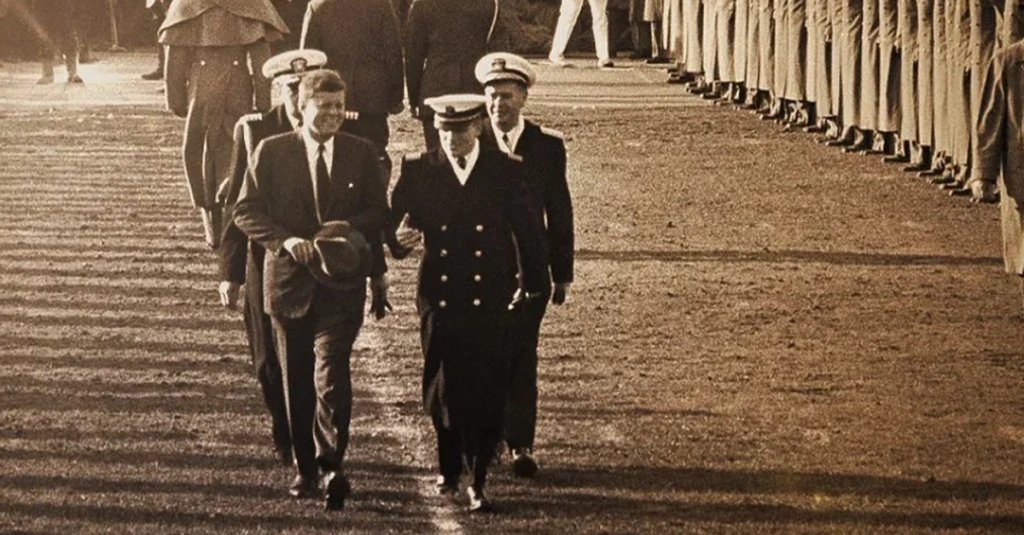
The annual Army-Navy Game is one of college football’s biggest rivalries, and there’s a lot of history around the game, not only because of the 125-plus games the Midshipmen and Black Knights have played over the years, but also because of one man who might show up to watch: the President of the United States.
Related: 7 of the coolest things to watch for during the Army-Navy Game
No matter who occupies the Oval Office, the Commander-in-Chief showing up to watch these two service academy football teams on the gridiron is a big deal. Many of the traditions surrounding the game—and perhaps the game itself—are owed to President Theodore Roosevelt.

President Roosevelt at the Army-Navy game
In 1893, after the first four Army-Navy games, football was deemed “too unsafe” by President Grover Cleveland and future games were prohibited. After all, players were bloodied, fights broke out between fans, and, at one point, an Army general and Navy admiral nearly dueled to the death over a game.
It wasn’t until 1897 that President Roosevelt, undeniably the most athletic president the United States has ever seen, wrote a letter urging the reinstatement of the game. In 1899, it returned, but was as dangerous as ever. Later, Roosevelt also saw to it that the rules of the game were revamped. He made sure pads and gear were worn, adding safety but maintaining the sport’s intensity, and attended his first Army-Navy Game as president in 1901.
The President of the United States is the most powerful man in the world and has important responsibilities. He is in no way expected to attend a football game. But if the nation’s chief executive decides to come, there are traditions for that office to follow when Army plays Navy.
1. Presidential Attendance
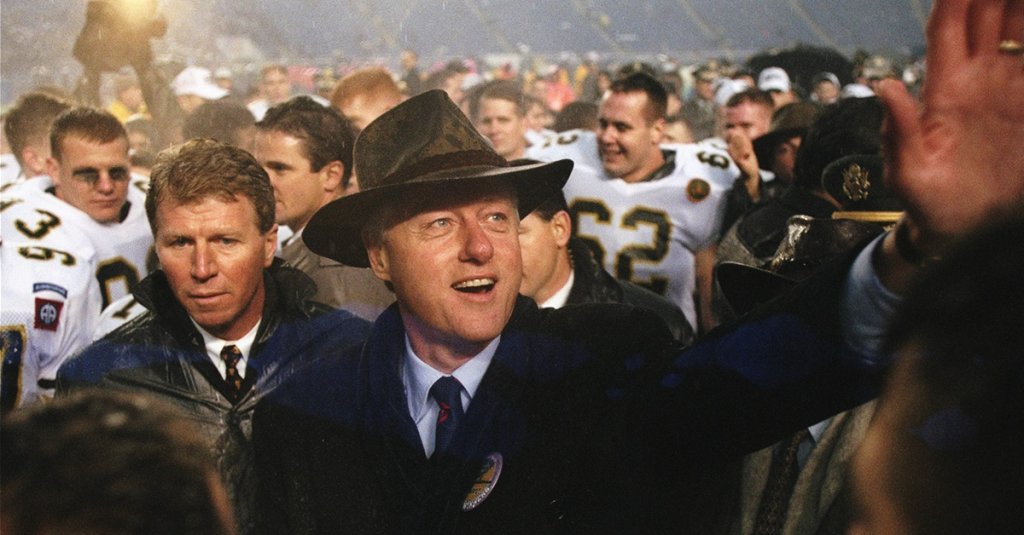
To date, only ten sitting presidents have attended the game: Theodore Roosevelt, Woodrow Wilson, Calvin Coolidge, Harry S. Truman, John F. Kennedy, Gerald Ford, Bill Clinton, George W. Bush, Barack Obama, and Donald Trump, who even attended as President-elect , making him the only President-elect to watch the game in person.
For many years following the Coolidge Administration, the president did not attend the game. After all, watching a raucous football game in the middle of the Great Depression and the Second World War might have sent a bad message to the American people. In fact, between 1924 and 1945, no sitting president attended what was once called “The President’s Game” due to security concerns. But once the U.S. economy turned around and the Axis powers were defeated, President Harry Truman returned to the game.
President Dwight D. Eisenhower was the only president to ever actually play in the game, but never attend while in office. President Jimmy Carter, despite being a Naval Academy graduate, never attended the game while in office.
2. The Coin Toss
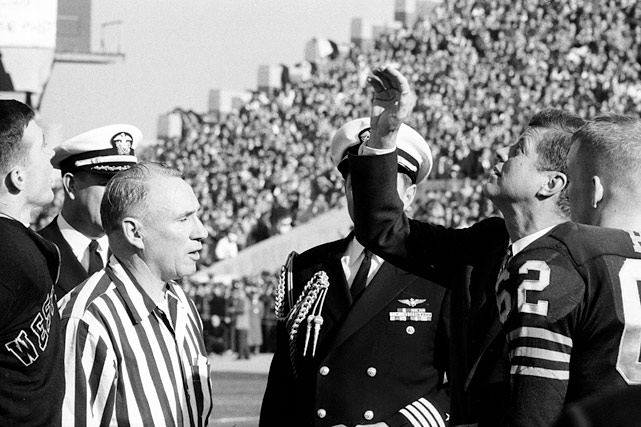
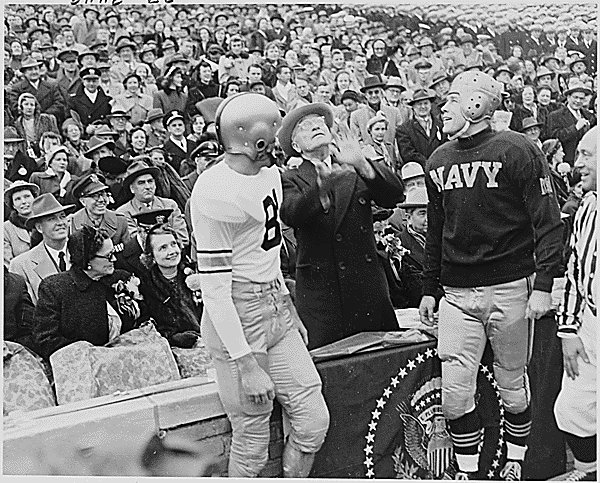
Truman actually holds the record for most games attended by a sitting president, at seven games during his two terms (missing only the 1951 game), followed by President George W. Bush with three visits in eight years. But it wasn’t until President John F. Kennedy helped throw out the pregame coin toss that another presidential tradition was born.
Kennedy’s immediate successors were all Navy veterans, but Lyndon B. Johnson and Richard Nixon never went to an Army-Navy Game. Gerald Ford, who played college football for the Michigan Wolverines, sure did. A 22-year gap followed Ford’s visit until 1996, when Bill Clinton revived the tradition of presidential attendance. Since then, sitting presidents have made at least one appearance at the game during their tenure. The exception to this was Joe Biden, who never visited the game.
3. Switching Sides
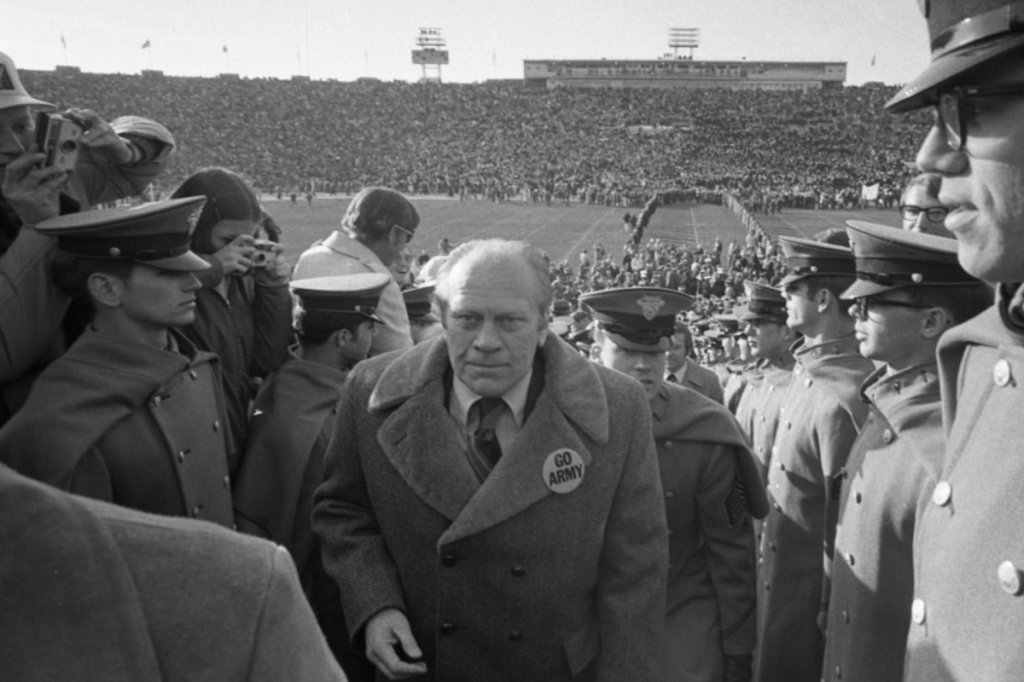
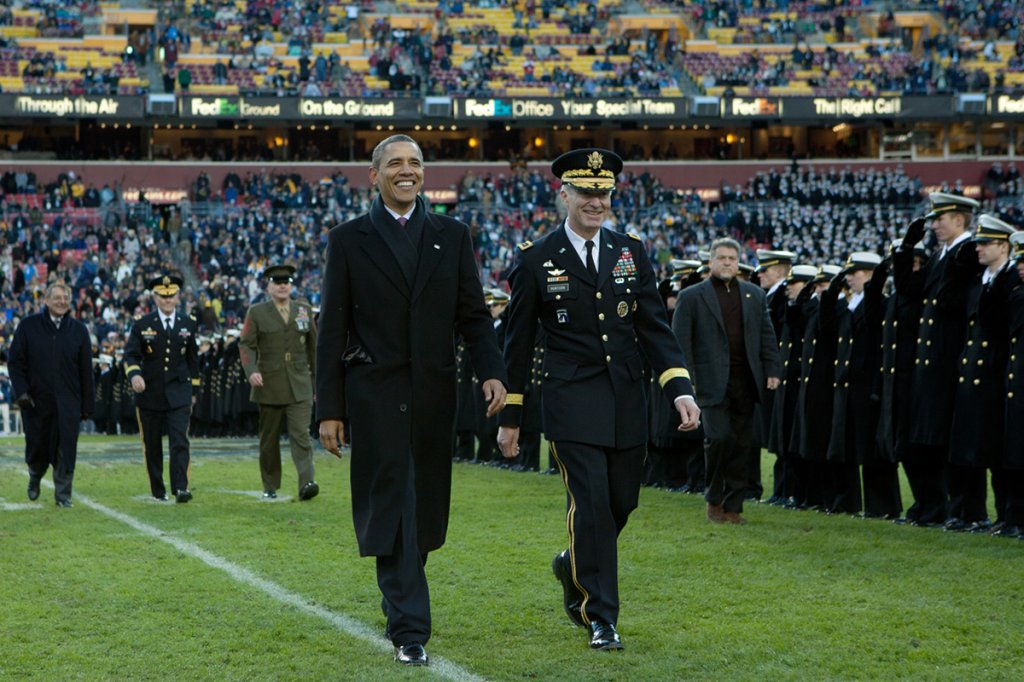
Along with reviving the game, President Roosevelt is also the reason the Commander-in-Chief walks across the field at halftime. This symbolic gesture shows goodwill and mutual trust between both teams and assures everyone that the president doesn’t play favorites. Even presidents who served in the Navy (like Kennedy and Ford) put their personal histories aside for the sake of tradition, although they both began their service on the Navy’s side.
The only president not to do this was Truman, the seven-time attendee and World War I Army veteran, who stayed comfortably on one side during the 1947 game. He did switch sides at the next Army-Navy Game because he wanted to “see a show, not be one.”
4. The Commander-in-Chief’s Trophy
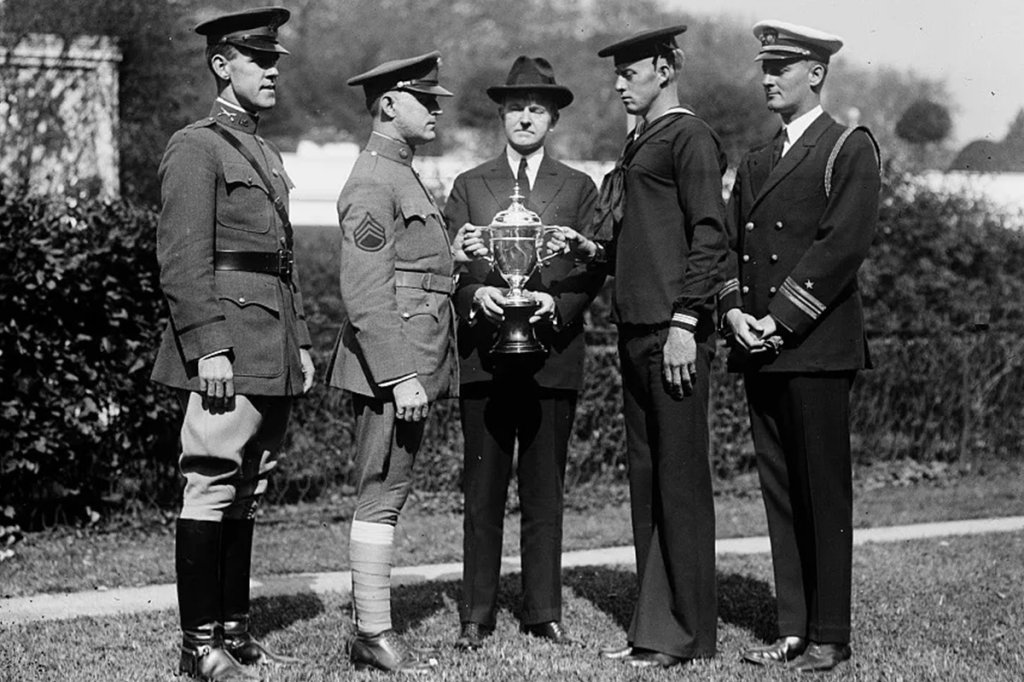
Winning the Army-Navy Game is a big deal, especially for the players. Not only will they graduate and move into the active U.S. military, where every senior leader (many of whom are service academy graduates) knows they beat the long-hated rival, the players are also competing for the chance to visit the White House and receive a massive, ornamental trophy. Moreover, they receive it in a ceremony emceed by the Commander-in-Chief himself.
Sure, it may have started as a simple cup-style trophy, but college football traditions and trophies aren’t known for being understated. Other rivalries have trophies like Paul Bunyon’s Axe (Wisconsin-Minnesota), The Old Brass Spitoon (Michigan State-Indiana), The Old Oaken Bucket (Indiana-Purdue), The Victory Bell (USC-UCLA), a bronzed cowboy boot (Wyoming-Colorado State), a bronze pig statue (Iowa-Minnesota), and even a giant cannon (Nevada-UNLV), but none of those are presented by the Leader of the Free World. And that trophy is usually what Army and Navy are playing for in their annual meeting.

President Trump Presents Commander-in-Chief's Trophy to Navy Football
5. A Presidential Tradition That Didn’t Catch On
One presidential event that didn’t catch on was when George W. Bush gave the Naval Academy Midshipmen a pregame speech and a pep talk to the Army Black Knights before the 2001 Army-Navy Game, as American troops were fighting to avenge the attacks of Sept. 11, 2001—a special consideration for a wartime president. Perhaps it will only be a tradition while the U.S. is on a war footing.

Bush gives locker room pep talk for annual Amry-Navy game
Don’t Miss the Best of We Are The Mighty
• The Army-Navy Game of 1944 stopped World War II
• 10 fun facts about the Army-Navy Game
• Previews and predictions for the 2025 Army-Navy Game