
The views and opinion expressed in this article are those of the author and do not necessarily reflect the views or positions of any entities mentioned.
On Apr. 3, 2026, President Trump signed an emergency directive to pay all Department of Homeland Security employees amid the DHS shutdown. We were grateful, but that doesn’t solve most of the agency’s problems, especially when it comes to Coast Guardsmen and their families.
Service members were able to receive their paychecks during the partial shutdown (through what was probably some incredibly creative accounting acrobatics), while the civilian workforce missed 3.5 checks.
As a Coast Guard spouse of more than 18 years, I am well-versed on the importance of our civilian employees. But the president’s order was simply a temporary band-aid—one that has already worn through.
Also Read: Coast Guard families are underreported victims of the Homeland Security shutdown
The impacts of the continued government shutdown go way beyond simply ensuring the DHS employees receive their hard-earned paychecks. This stalemate in Congress also means the department’s bills aren’t getting paid.
On Apr. 16, 2026, Commandant of the Coast Guard Adm. Kevin Lunday testified before on Capitol Hill, and it was, ironically, a scheduled hearing to discuss the FY27 budget for the service.
Speaking to the Congressional committee, he addressed the impact of the continued shutdown.
“We also have over 5,000 unpaid utility bills, over a hundred providers that have threatened to cut off electricity and water to our Coast Guard stations and air stations,” Lunday told the House Appropriations Homeland Security subcommittee. “And we’ve got a growing backlog of 18,000 Merchant Mariner credentials that are not processed at a time when the U.S. is trying to rebuild our maritime might.”
Not only will the Coast Guard have to worry about future pay, given that incoming DHS Secretary Markwayne Mullin has indicated there is no more funding for May, but it appears they may need to operate by flashlight and candles.
This should read as a joke, but it may be a harsh reality.
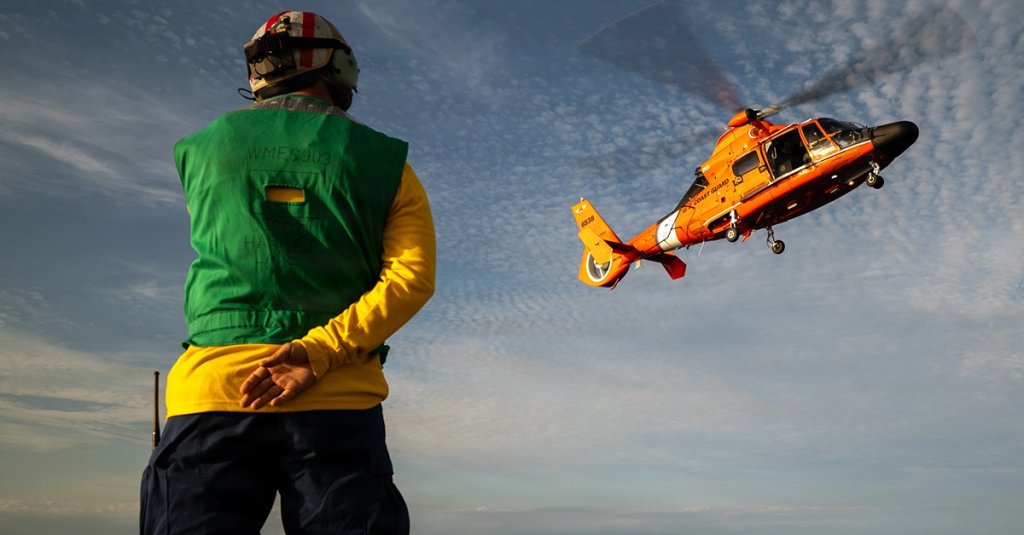
While things like electricity and water are vital for this branch of the military to execute its mission, the cash flow problem goes beyond utility bills. Invoices for ship and aviation maintenance, parts suppliers, fuel distributors, and government travel card reimbursements are being left unpaid.
Should the shutdown continue, it will also cripple the Coast Guard’s PCS capabilities, further impacting its multifaceted operations, but adding personal financial hardships to its members and their families.
I reached out to see how the shutdown was affecting coasties and their spouses. I received dozens of responses in just one day, but will share just a brief glimpse of their realities. To protect their personal security, their identities will be concealed.
“We moved in September, and it’s April, and while we used pretty much all of our savings to move, we have still yet to get the money reimbursed,” said one Coast Guard family member. “Between 2 [sic] shutdowns in less than a year, I can’t work because the money we were going to use for a car we had to use at the last minute for a DITY move out of bootcamp. We are stuck financially until we get that money back.”
“They have not funded Tuition Assistance and have no guidance to tell us if it will ever be paid or back paid,” said a Coast Guardsman. “Meanwhile, they are still saying that it’s required for promotion. Also, no advancement on DLA or MALT for PCS moves.”
“I routinely go without meals to make sure my spouse and children have sustenance,” said another. “I have also stopped health treatment because of the uncertainty of funds.”
“The DHS shutdown has made working at an efficient capacity nearly impossible,” another Coastie said. “Between new members being stationed at the unit and their moves not being paid for, putting them out of thousands of dollars; to not being able to supply my crew with proper personal protective equipment; to not having stable internet connection to conduct administrative work; to not having much needed funds for building maintenance; this shutdown has greatly decreased the Coast Guard’s ability to complete our missions.”
“Communities are missing out on highly trained search and rescue missions due to having to prioritize which case is more emergent and cost-effective for boat fueling concerns,” they continued. “Commercial mariners are working hard to move commerce through our waterways with discrepant aids to navigation that cannot be fixed due to the inability to purchase the equipment required to fix. Everyone is suffering due to our Congress failing to perform basic, kindergarten-level teachings of respect and compromise.”
Admiral Lunday was direct during that appropriations hearing, explaining that for every day the shutdown continues, the Coast Guard takes 2.5 days to recover. The members of Congress currently playing legislative chicken need to find a resolution, because it means so much more than just funding DHS and getting the Coast Guard back to a fully operational status.
This service has defended, protected, and served this nation since its founding in 1790. Its members have bled and died right alongside soldiers, sailors, Marines, and airmen in every major conflict and war. They’re part of the Iran War right now, but you wouldn’t know it by how they are treated.
While I don’t pretend to speak for all Coasties, I know from observation and what I’ve heard in the years I have been part of this community that this treatment and the lack of urgency during the DHS shutdown make a good majority of Coast Guardsmen feel “less than.”
When all branches of the military were impacted in previous shutdowns, it was daily news and didn’t stretch nearly as long. The current DHS shutdown didn’t even make it into mainstream media until it started affecting Americans’ ability to travel because of the lapse in pay for TSA agents.
It’s a slap in the face. Not only do they deserve better, but America deserves to rest easy knowing the Coast Guard is fully operational to keep them safe, secure, and prosperous.
And right now, they can’t promise that.
If you would like to submit an opinion for publication, it must be exclusive to We Are The Mighty. It should be a strong argument about an issue affecting the military, veterans, or the greater military-connected community, between 400 and 1,000 jargon-free words, and submitted as the body of an email rather than an attachment.
Send submissions to info@wearethemighty.com. Please include an email address and phone number.
We will protect the identities of current military members who wish to publish an opinion.
Don’t Miss the Best of We Are The Mighty
• Some military nonprofits are MIA when families need them most
• Reports show a military spouse commits suicide every 8 days
• A simple list of military child and family support resources





Loading comments…
Comments couldn’t be loaded. Please refresh the page.