
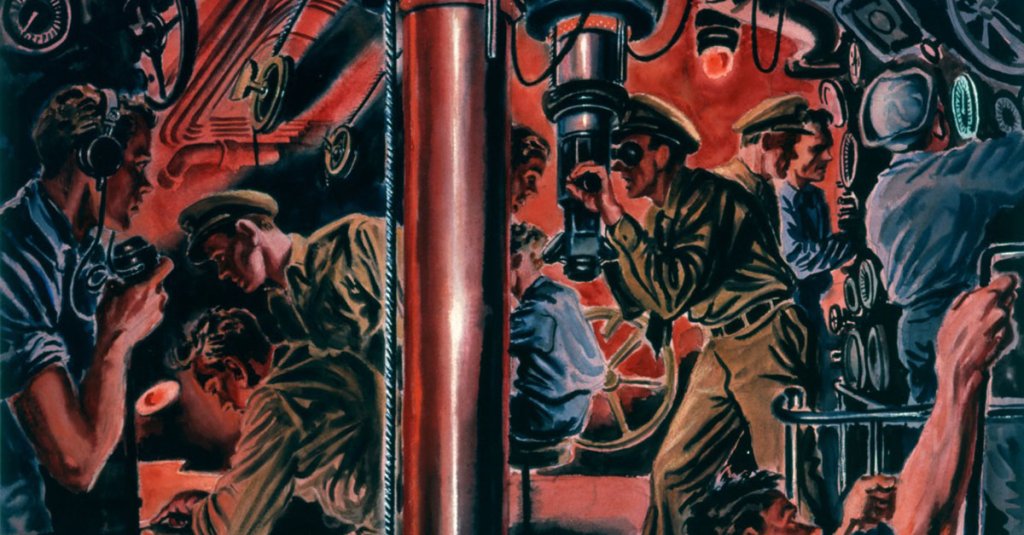
A white T-shirt represented the last chance for 38 submariners.
Without it, they could not have survived much longer in the crippled U.S. Navy submarine S-5. It sank on September 1, 1920, after a crew member mistakenly left the main induction valve open during a normally routine crash dive. That moment of forgetfulness caused the sub to flood and eventually sink.
Also Read: The US Navy’s first submarine was a hand-cranked wooden egg
As the hours passed, a lack of oxygen, high amounts of carbon dioxide, and the presence of chlorine gas chiseled away at the men’s dwindling hopes, according to a 2020 article from the U.S. Naval Institute.
The one thing in the submariners’ favor was skipper Charles Cooke’s decision to try to get the S-5 off the bottom of the Atlantic Ocean, which resulted in a portion of the stern poking above the water.
Would anybody see it?
Heading Out on a Recruiting Tour
Whenever someone has a shiny, new toy, they like to show it off.
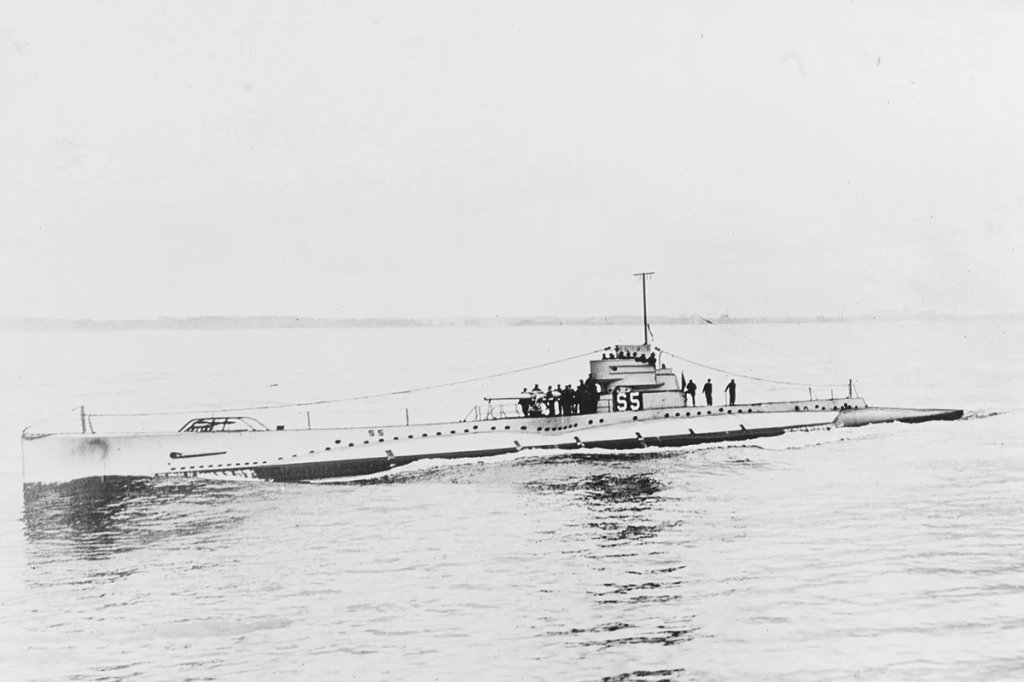
The Navy was no exception. It invested heavily in the S-5, paying $1.5 million each for arguably the most technologically advanced submarines in the U.S. arsenal at the time. After successful sea trials, the military scheduled the S-5 for a recruiting tour, per the U.S. Naval Institute story.
It selected Baltimore as the first stop. The S-5 left Boston on August 30 with an excited crew on board. It didn’t take long for that excitement to turn into nerve-rattling terror after the failure to close the main induction valve.
That open valve allowed water to pour into the control room, forcing Cooke and executive officer Charlie Grisham to evacuate before they drowned. The S-5 sank 15 miles off the coast of Cape May, New Jersey. It actually struck the bottom of the Atlantic Ocean twice, author and maritime historian Erik S. Petkovic Sr. wrote, but the men had little chance of survival if they stayed there.
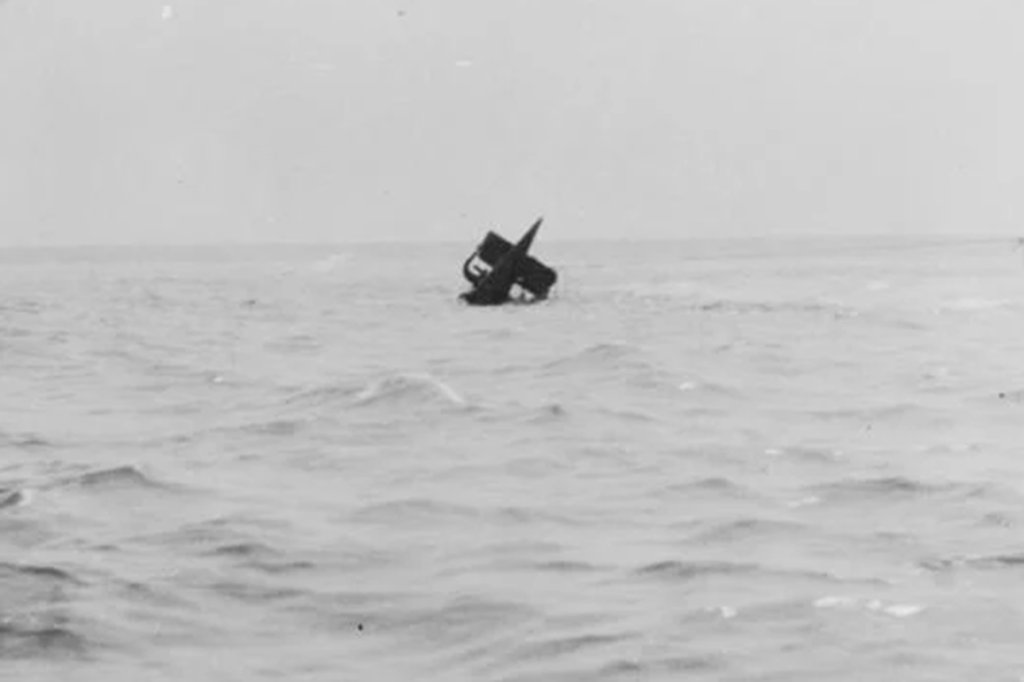
Disabled 180 feet below the surface, Cooke ordered the crew to blow the aft tanks. It helped slightly. While the bow, or front of the sub, didn’t budge, the stern rose at a 60-degree angle. The men inside the S-5 didn’t know it then, but that was enough.
The Submariners’ Rescue Plan
The situation was becoming dire.
The constant influx of seawater caused various compartments to flood, forcing the men to cluster together. With the S-5 positioned at such a steep incline, they struggled to maintain their footing. The air supply was limited, and having so many sailors in close proximity increasingly taxed it.
What’s worse, after the battery room flooded, the water mixed with the sulfuric acid in the batteries. The result was potentially deadly chlorine gas.
Despite their predicament, the submariners refused to give up. As Petkovic recounted, they began drilling holes—first with a hand-powered drill, then an electric tool. The work was laborious, made all the more difficult because of the submariners’ weakened states.
When the men created a small hole the size of a pack of gum, Cooke peered through it and saw a ship in the distance. The vessel soon went out of view. The trapped submariners kept working and created a bigger opening, this time the size of a medium-sized photo frame.
It wasn’t much, but they grabbed a copper pipe to serve as a makeshift flag pole. Now they only needed something to put at the end of it.
That’s when one of the submariners located a white T-shirt. After attaching it to the pipe, they poked the flag through the hole and furiously waved it, hoping a ship noticed their frantic movements.
Saved by a Steamship
By this point, some of the submariners were unconscious. Time was extremely limited. Thankfully, the steamship Alanthus noticed the white flag and an object poking out above the water.
Unsure what it was, they altered their course for a closer look. Petkovic provided a blow-by-blow account of the exchange between the Alanthus and S-5. The Alanthus’ captain asked for the submarine’s name, its nationality, and its destination, to which Cooke jokingly replied: “To hell, by compass!”
The Alanthus was not alone in rescuing the men on the S-5, who spent 37 hours confined in their distressed sub. The SS General George W. Goethals, a merchant ship, arrived on the scene, as did other ships at the Navy’s urging. After more holes were drilled, the relieved men left the S-5.
No one died as a result of the potentially catastrophic incident.
Not wanting to leave the high-priced sub behind, the Navy made several attempts to retrieve the S-5. Nothing proved successful, so they eventually let it be on September 3, 1921—the one-year anniversary of when a grateful group of submariners got a new appreciation for life.
Don’t Miss the Best of We Are The Mighty
• The ‘Gray Ghosts’ of the Cuban Missile Crisis
• This is what a broom tied to a mast means in the US Navy
• How a trip underwater propelled Teddy Roosevelt to improve submariners’ pay
Featured


Sponsored Content
Automated vs. self-directed investing: A guide for military families
Loading comments…
Comments couldn’t be loaded. Please refresh the page.