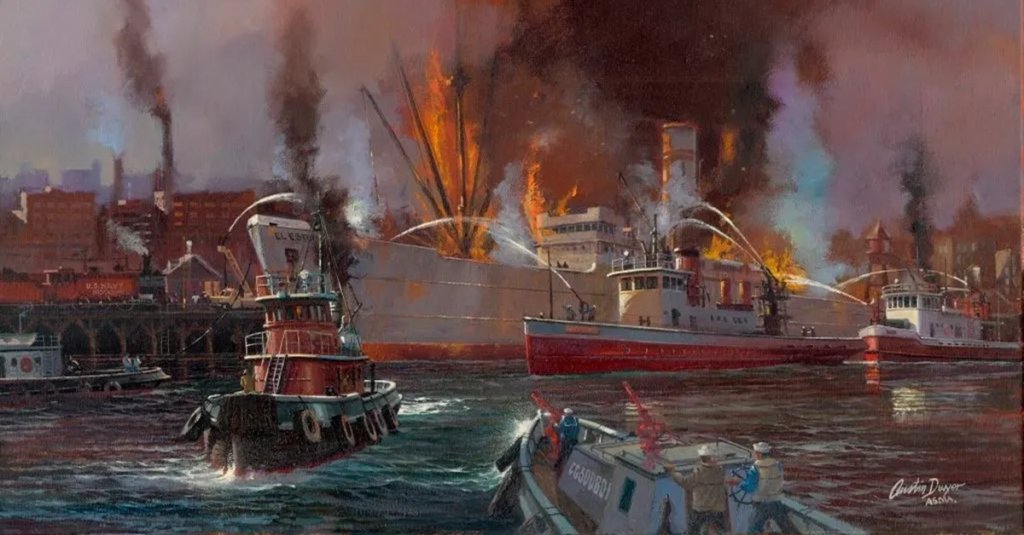
In the early evening of April 24, 1943, the Coast Guard braved leaping flames. It saved New York City from what could have been the largest man-made explosion in history to that point.
The blast would have wiped out sections of the harbor and, potentially, large swaths of the larger city and parts of New Jersey. Instead, just one ship (the SS El Estero) sank. There were no fatalities.
Related: The Coastie crossed the English Channel 10 times on D-Day
While other service branches rib the Coast Guard for being puddle pirates, it’s important to remember that, first, Coasties actually conducted a ton of deepwater missions. And, more importantly in this case, the shallow waters of the world are home to vital and dangerous missions that the Coast Guard does well.
Helping Liberty Ships During World War II
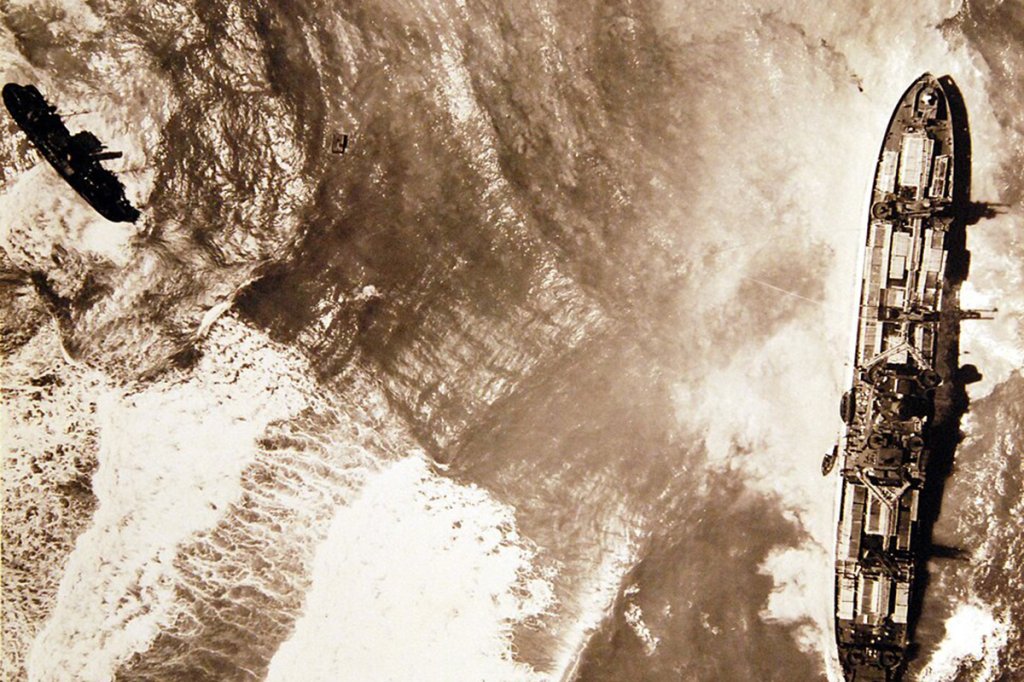
The Coast Guard often takes on a large role during conflicts to help to ensure that war materiel is safely moved from industrial powerhouses in the U.S. to theaters of war overseas. During World War II, this included loading many of the Liberty ships and other vessels that plied the Atlantic and Pacific.
But logistic expediencies created real hazards. It made sense in terms of speed and efficiency to move all the munitions, vehicles, and other vital supplies to a handful of ports and load it on ships from there. But doing so meant that strings of railroad cars and ships filled with explosive materials were stored right next to each other.
On Saturday, April 24, Coast Guardsmen finished loading 1,365 tons of ammo onto the Panamanian freighter El Estero. But before they could even get fully aweigh, smoke started to come up out of the ship’s passageways.
Investigations later revealed that the boiler had likely been leaking fuel oil into bilge water in the compartment below it. A boiler flashback ignited the pooled fuel and started a fire, they determined. But once the fire was going, it boiled oil to give itself more fuel and heat up the ammo until it exploded.
The engine room crew immediately started fighting the flames with handheld extinguishers. It wasn’t enough, so officers went to the Coast Guard barracks for volunteers.
The Loading Docks Were a Powder Keg
But the Coast Guardsmen knew what was at stake.
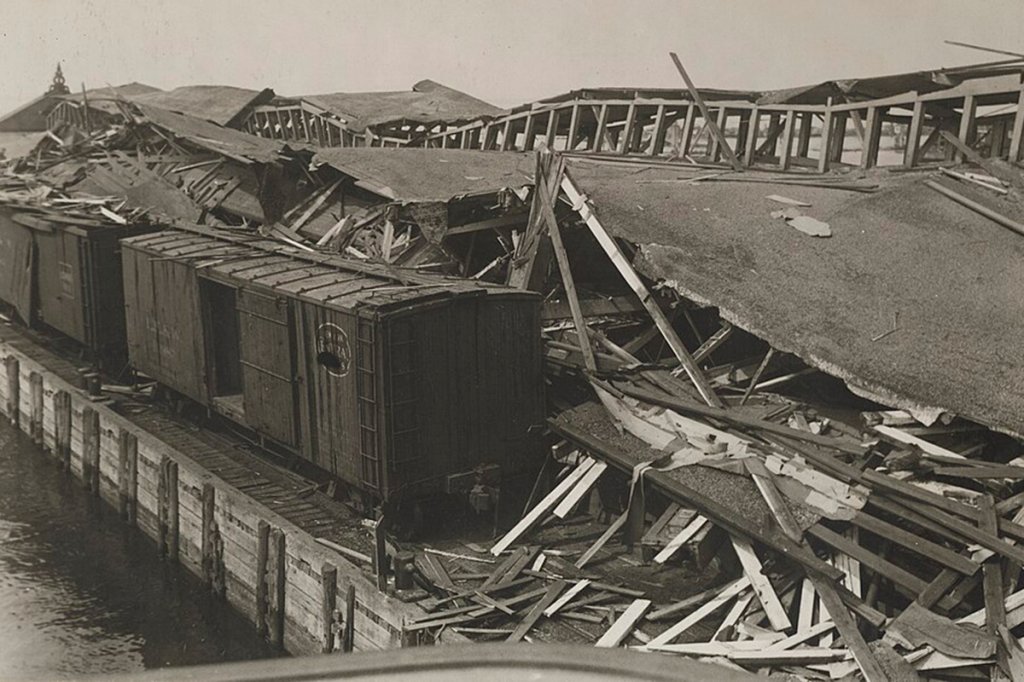
The loading docks were always filled with ammo and fuel, and on April 24, two other nearly full ships were nearby, along with railroad cars loaded with ammunition and a fuel farm that served the departing ships. A detonation on the El Estero would likely trigger a chain reaction.
And explosions like this had happened before.
Before the U.S. joined World War I, American firms sold arms to each side under equal terms, but British buyers secured more credit while German ones were unlikely to get their purchases to the fighting thanks to a British blockade. So German saboteurs blew up the shipping facilities at Black Tom Island in New Jersey, killing several people, causing $20 million in damage, and partially excavating the island.
Another World War I explosion, this one on a ship with 5,000 tons of TNT in Halifax Harbor in Canada, killed 1,500 people and leveled a large section of Halifax, Nova Scotia, in 1917.
5,000 Tons of Explosives
The combined loads of the El Estero and nearby ships and trains were somewhere around 5,000 total tons of explosives. They dwarfed the size of the Halifax explosion. An El Estero explosion would’ve been on the doorstep of New York City and could’ve flattened everything for five miles around.
And so 60 Coast Guardsmen, most of them in dress uniforms while awaiting their Easter Day liberty passes, rushed to the ship. New York firefighters arrived soon after with a firefighting ship, and they began passing hoses into the holds of the El Estero. Meanwhile, Coast Guardsmen descended into the smoke and fire.
Officer in Charge’s First Day at Station
Survivors would describe a heat that overwhelmed them. The hot deck plates warmed and then burned their feet. Paint peeled off the walls, and the heat continued to build. Lt. Junior Grade Francis McCausland was the Coast Guard officer in charge. It was his first day of work at the station.
It didn’t matter. McCausland ordered tugboats to move the other ammo ships. He also commanded Army soldiers to shift as many of the train cars out of range as they could move. By the time that additional fire trucks and Coast Guard fireboats arrived, the fiercely burning El Estero was largely isolated.
The city, fuel stores, and warehouses of ammo still surrounded the damaged ship.
The Coast Guard seemed to get the upper hand on the ship for a few minutes. The oily black smoke gave way to yellow and white streaks of flames, a signal that streams of water were hitting the major source of the fire.
But the oily smoke returned, and the heat continued to rise.
Engaged Man Ordered off the Decks

The Day New York City was Almost Destroyed: The 1943 Fire Aboard SS Elestero
About 40 volunteers were ordered off the ship. A crew of 20 stayed onboard to try to keep the fire contained as long as possible while the ship was towed to a safe detonation point. Those 20 passed their personal effects to the men ordered off, some of whom wanted to stay and keep working. These included an engaged man ordered off the decks.
The farther the ship was out of the harbor, the more lives would be saved in New York City and in the surrounding harbor from the pending explosion. Coast Guardsmen shoved anti-aircraft shells from the decks into the water. They kept directing the water from the tugs onto the hot ammo as they traveled.
Successfully Sinking the SS Estero
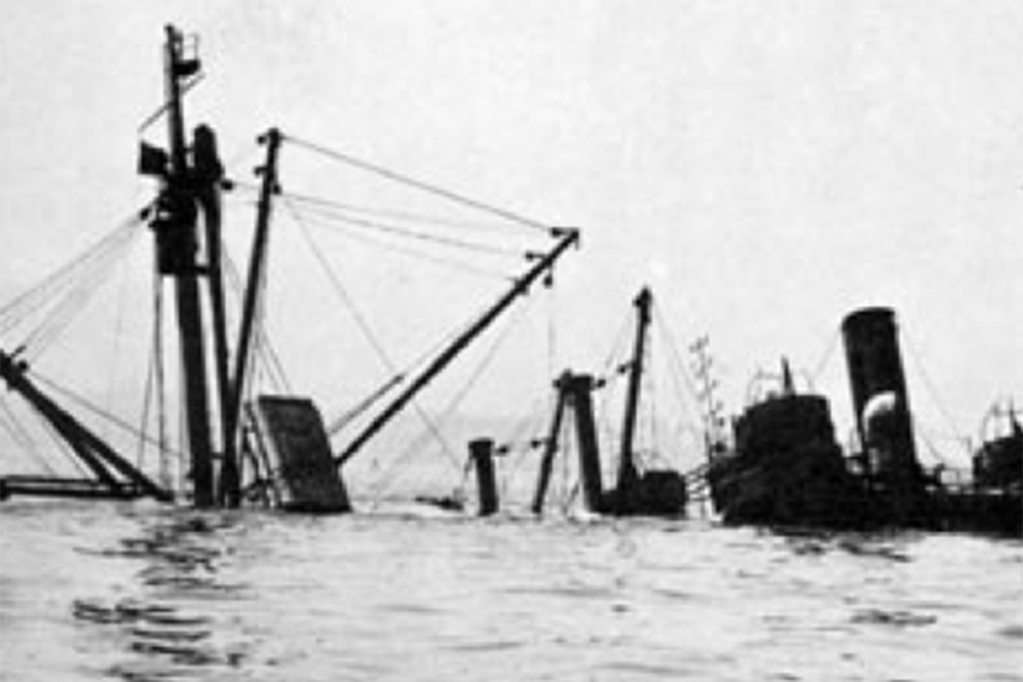
Miraculously, their work was enough. The ship was towed out as the nearby cities prepared for an explosion that never came. Fuel barrels on the decks popped and boomed open, but the burnt and exhausted Coast Guardsmen onboard eventually built up enough water in the ship to sink it.
(The ship was designed so it could only be scuttled from one spot that was directly underneath the burning boilers. Because of that, the Coast Guardsmen could only sink it by flooding it.)
Once the hull of the ship was under the waves, the threat of a full ammo explosion largely dissipated. Firefighters kept water pouring onto the still-burning superstructure for hours until the threat finally was gone. No one died in a crisis that was later found to have threatened as many as 1 million residents.
All the Coast Guardsmen involved received special medals for their efforts. In addition, the U.S. government overhauled ammo-handling procedures to move dangerous operations away from population centers. This would save lives in June 1944, when an ammo ship with 4,600 tons of ammunition exploded northeast of San Francisco, killing 320 sailors on the ship and nearby, but leaving the city untouched.