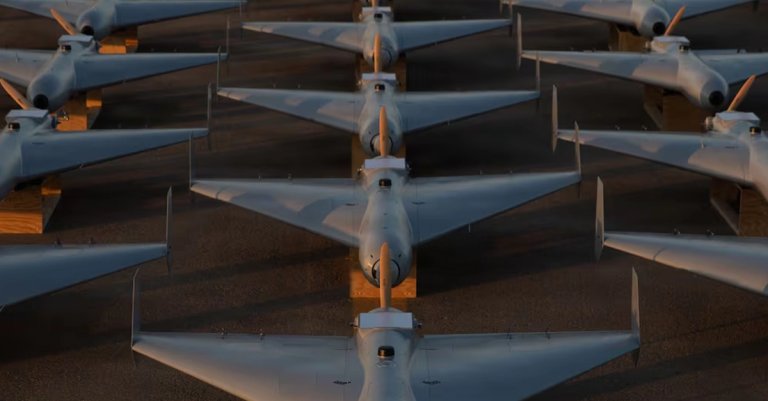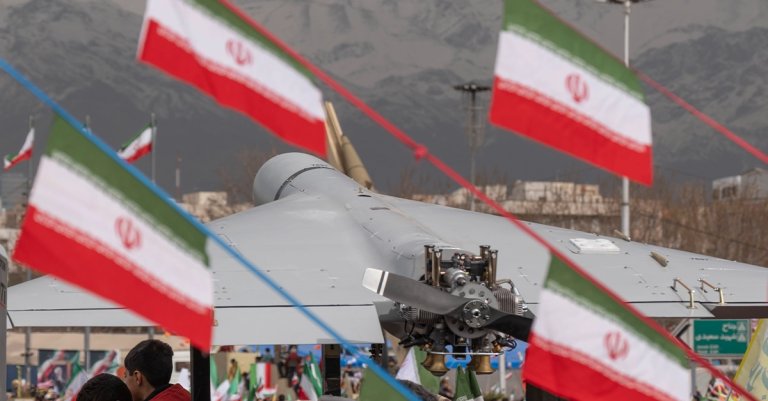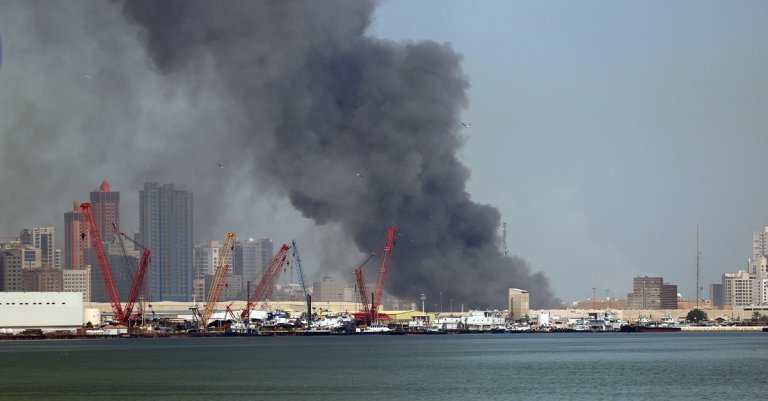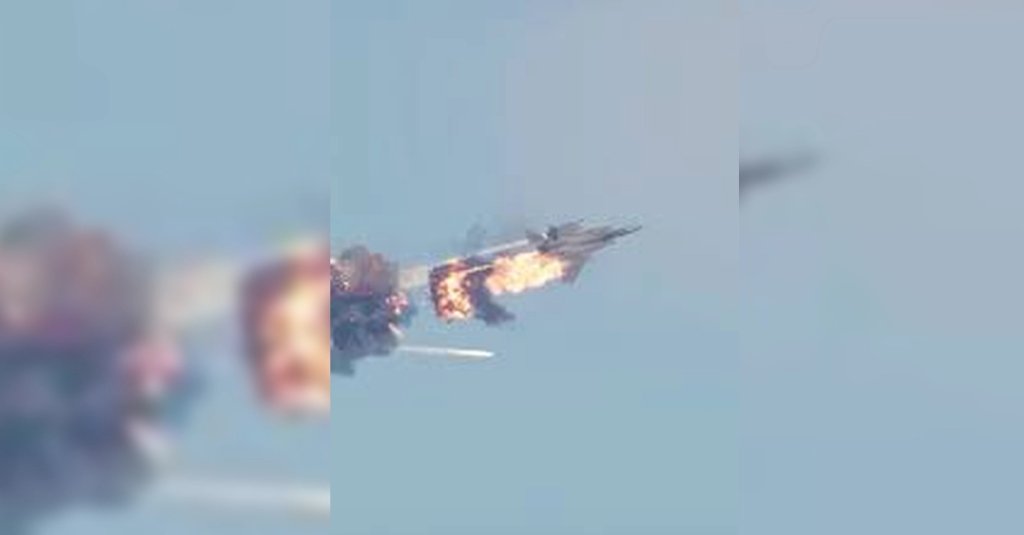
It was supposed to be a standard intercept. In the pitch-black maelstrom over the Kuwaiti desert, three F-15E Strike Eagles from the 335th Fighter Squadron were hunting for Iranian suicide drones. They’re the low-budget, flying, exploding lawnmowers that Iran had been lobbing by the hundreds into the region.
Also Read: America’s ongoing quest to stop firing $4 million missiles at $30,000 drones
But the F-15s, multi-role aircraft designed to own every inch of the sky, didn’t fall to Iranian steel; instead, they fell to our own allies.
What had eluded enemies of the United States for decades, the ability to boast about how they knocked out our aircraft in mere minutes, Kuwaiti air defense batteries succeeded in doing with aplomb. In the time it takes to blink, three $80 million warbirds were transformed into tumbling, burning wreckage.
Social media footage even captured the harrowing descent: distinct plumes of fire and white canopies drifting toward the sand of Al Jahra.
In a rare moment of grace offered in a theater defined by attrition, all six aircrew members survived the ejection. They were quickly recovered by local Kuwaiti civilians, men who traded their morning routines for a rescue mission in beat-up SUVs, marking a strange, human end to a technical catastrophe.
What had Happened Was
To understand how a modern air defense system shoots down its own allies, you can dive into the Identification Friend or Foe (IFF) system. On paper, it’s the equivalent of a digital handshake. A radar interrogates a target, then the target’s transponder shouts back a secret, encrypted code that says, “Don’t shoot, I’m on your team.”
In the isolation of a training exercise, IFF is fairly foolproof. In the strange chaos of Operation Epic Fury, it is a fragile tether.
On the night of the incident, Iran had saturated the airspace with an eclectic mix of different threats, ranging from ballistic missiles to slow-moving Shahed drones. When the sky is that “dirty,” the electronic noise is deafening.
The Kuwaiti Patriot batteries and short-range air defense (SHORAD) systems were likely operating in a deconfliction haze. If the F-15s were flying a specific profile, perhaps dipping low to avoid Iranian radar or operating in a blind spot for local electronic warfare, the Kuwaiti systems may have simply “timed out” while waiting for a response.
When operating in a high-threat environment, where a three-second delay could mean a drone hits critical infrastructure, the machine’s instinct is to fire. The F-15Es, although incredible at air-to-ground missions, lack certain modern tail warning sensors that would have alerted the pilots to a missile launch coming from their six o’clock, especially one fired by a friendly battery they weren’t expecting to be hostile.
The Clumsiness of Operation Epic Fury
Combined arms gets spoken of like it’s a perfectly conducted orchestra, but Epic Fury has proven it’s more like a 90’s mosh pit. The U.S., Israel, Kuwait, and Saudi Arabia are all firing into the same narrow corridors. The coordination required to track every transponder in a massive drone-and-missile wave is dizzying.
By allowing Kuwaiti batteries to remain in a hair-trigger posture without a unified, real-time “God’s eye view” of the battlespace, we essentially left our pilots to play Russian roulette with their own side’s missile batteries.
The Kitchen Sink
Irony here is almost as thick as the smoke rising above the Middle East. We spend billions ensuring our jets can hide from Russian S-400s and outrun Chinese interceptors, but we remain stunningly vulnerable to our own hubris.
As soon as the Kuwaiti SHORAD batteries opened up, they weren’t using dumb rockets. These were high-precision, U.S.-manufactured interceptors designed to hit small, fast-moving targets. They did exactly what they were built to do: they hit their targets.
To the men in the 335th, there was no failure of courage or error on their part; this was due to a lack of communication between the machines. When the systems stopped talking to each other or got stuck in a feedback loop, the humans paid the price in anxiety, gravity, and flames.
Humanity in Al Jahra
While the Pentagon and CENTCOM were busy drafting regretful press releases, the people of Al Jahra were drafting a response of their own. The videos of Kuwaiti locals helping U.S. airmen out of the dirt and offering them water, even waiting for the recovery teams with them, are perhaps the only reason a diplomatic nightmare didn’t arise; what did emerge from the mayhem was compassion, perhaps also hope.
Hardware is steely cold, fickle, and susceptible to catastrophic glitches; on the other hand, the alliance on the ground has a foundation built on something more resilient than a transponder code.
The crews are thankfully safe, so the three F-15s now resting in the Kuwaiti sand become a $240 million reminder that in modern wars, your biggest threat isn’t always the guy you’re hunting, it’s the guy guarding your six.
The Cost of a Dirty Sky
We tell ourselves we can afford the loss of a dozen autonomous drones to a technical glitch or a confused sensor; Cold, hard reality dictates that we cannot afford to trade the lives of our finest for the indecision of a silicon chip. Three of our premier strike platforms, and the six souls who manned them, were nearly sacrificed on the altar of misunderstanding.
High brass in Washington and Kuwait City will undoubtedly respond with the familiar bureaucratic blandness or sympathies. Mandatory training cycles will probably be implemented, various meetings will be held at all levels of command, and the inevitable production of thirty-page after-action review documents will eventually gather dust on a secure server. Prepare for them all to blame it on a procedural anomaly.
However, to dismiss it as nothing more than an anomaly is being willfully ignorant to a fundamental truth of modern warfare: when you saturate the sky with more stuff and signals than your systems can ingest, you create problems.
Until the day comes when our machines can communicate with the same instinctive clarity and human decency shown by the civilians of Al Jahra, who reached out to pull our pilots from the wreckage when the technology failed them, every takeoff from a Kuwaiti runway remains a profound gamble.
We have built a world where the speed of our weapons has outpaced the speed of our judgment.
Six families’ lives were almost changed inexorably; six families are grateful for a parachute’s bloom. Tomorrow, the military establishment must decide whether it is willing to mend the fractures or continue to ask its pilots to fly into a sky where the most dangerous thing in the air is a problem we cause ourselves.
Until the next drop, stand easy.
Don’t Miss the Best of We Are The Mighty
• 3 Planes that have never been shot down in air-to-air combat
• Lessons Learned: How Iran was able to bruise the US Navy’s 5th Fleet
• The God-Switch: What Elon Musk’s Starlink can actually be used for