Insider trading on the stock market—that is, buying or selling of a public company’s stocks by someone with access to privileged or secret information—is illegal. But that’s not true of the rash of new, online prediction marketplaces. Polymarket, Kalshi, and a number of lesser-known sites allow users to essentially bet on news and events using cryptocurrency, and these markets are largely unregulated.
Related: Gamblers on Polymarket predicted the latest Israel-Iran conflict
Mere hours before American forces rocked Caracas and snatched former Venezuelan President Nicolás Maduro, an anonymous trader with a one-week-old Polymarket account scored more than $400,000 on the bet that the United States would invade Venezuela and remove Maduro from power. The user cashed out just after news of the raid became public.
Classic signs of an insider.
Although American forces had been massing in the Caribbean long before the strikes, and tensions between Washington and Caracas were mounting for weeks before the raid, few people believed the United States would forcibly oust Maduro. That’s why the bet was so lucrative.
On Dec. 27, 2025, the suspected insider created a Polymarket account with a default username. It placed a $96 bet while contracts for a Venezuela invasion were selling for just 8 cents. In the days that followed, the account poured money into the bet that the United States would attack and oust Maduro. On January 2, 2026, just five hours before Operation Absolute Resolve kicked off, it went all-in with a $20,000 bet. Two hours later, President Trump gave the order to go.
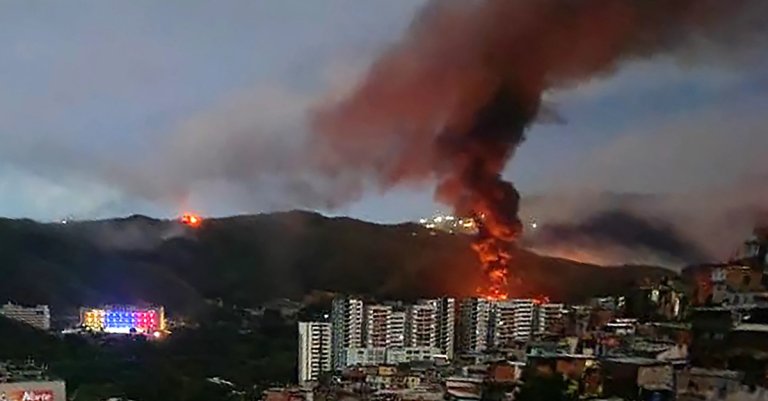
At 1 a.m. Eastern Time, explosions began to rock the Venezuelan capital. Maduro was captured and exfiltrated. By 3:30 a.m., it was all over. Trump revealed the operation to the world via social media less than an hour later. At 8:41 a.m., the anonymous gambler on Polymarket began cashing out some $410,000 on a $34,000 bet.
A new account making concentrated bets on a wildly unlikely outcome, with very little indication that it would ever happen, points directly to an insider with advance knowledge of the operation, analysts say.
“It’s more likely than not that this was an insider. That’s a lot of money to put in at that price, without a lot of news,” Tre Upshaw, founder of Polymarket analyst Polysights, which can specifically flag potential insider activity, told the Wall Street Journal.
The Wall Street Journal also reports that only a small group of advisors within the Trump Administration had advance knowledge of the upcoming operation. Some news outlets also knew about the raid, but held off reporting on it to avoid tipping off Maduro and putting American lives at risk.
Casualty estimates have varied. U.S. officials privately assessed that roughly 75 people were killed during the raid and related fighting, including Venezuelan and Cuban security forces and civilians caught in the violence. Venezuelan Interior Minister Diosdado Cabello later said 100 people died in the attack, per Reuters.
“One thing’s for sure,” Victor Tangermann wrote for Futurism, “while insiders profit, those without that privileged information lose out—and when the bets are on a deadly conflict, innocent people stand to suffer as well.”
Polymarket founder Shayne Coplan argues that insider trading faces a kind of self-regulation on the platform, but that hasn’t stopped traders from profiting from suspicious bets. One trader, dubbed “Google Insider,” made off with $1.2 million betting on Google’s Most Searched People list and another $100,000 on the date of its Gemini A3 release.
Traders on Polymarket are already wagering on who might be next, with Cuba, Iran, Colombia, and Greenland leading the pack.