7 killer songs that use Morse code - We Are The Mighty
MUSIC

7 killer songs that use Morse code

…_ _ _…

That’s Morse code for S.O.S.


Morse code was created by Samuel F. B. Morse in the 1840s to work with his invention of the telegraph. Both the Union and Confederate armies used it during the war between the States.

Wasn’t before long that it was used ingeniously by American POW Jeremiah Denton during the Vietnam war and in 2010 by the Columbian Army in their war with FARC guerrillas who had taken some hostages.

Also read: Why Johnny Cash was the first Westerner to learn Stalin was dead

The general of the Columbian Army reached out to an advertising executive who helped produce a pop song that contained a hidden Morse code message, which played on the radio, alerting the hostages to their upcoming rescue.

“What Hath God Wrought?” was the first message sent by Morse code in 1844 and some of these songs live up to it:

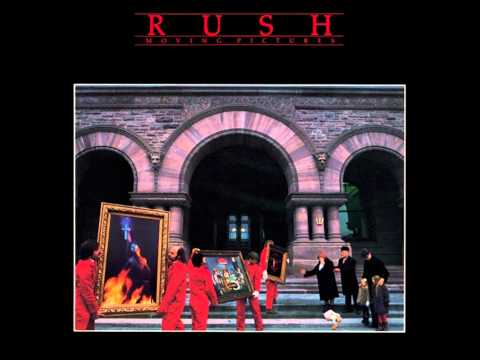
1. RUSH — “YYZ”

The opening riff is the Morse code for “YYZ”

InnerMusicLove | YouTube

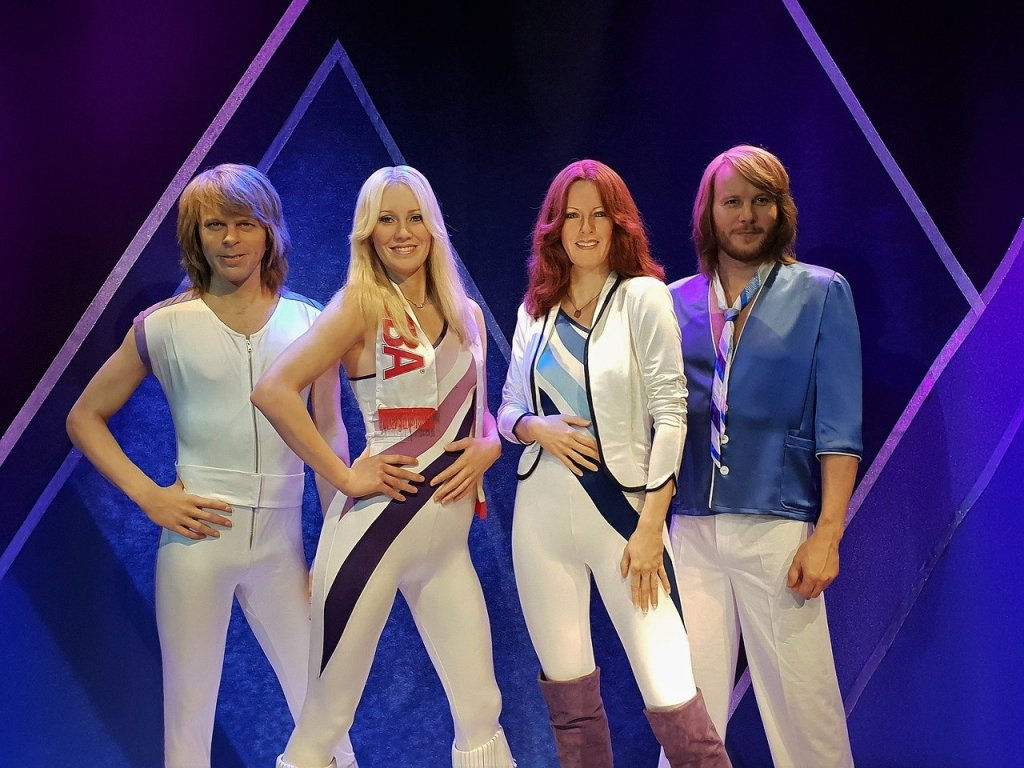
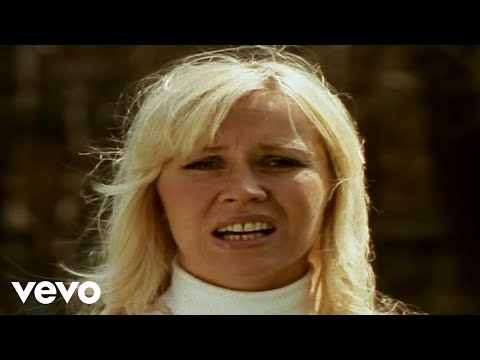
2. ABBA — “S.O.S”

ABBA is allowed to be as literal as they want.
AbbaVEVO | YouTube

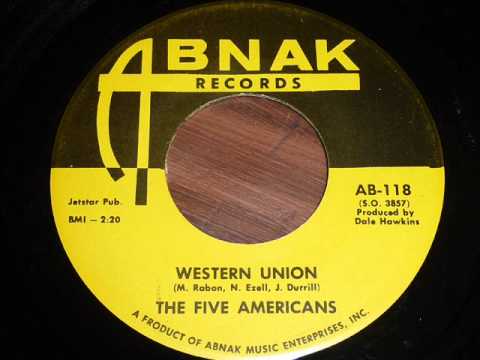
3. Five Americans — “Western Union”

Play this one on repeat.
zman291977 | YouTube

4. Cabaret Voltaire — “CODE”

Say what?

Eskild Trulsen | YouTube

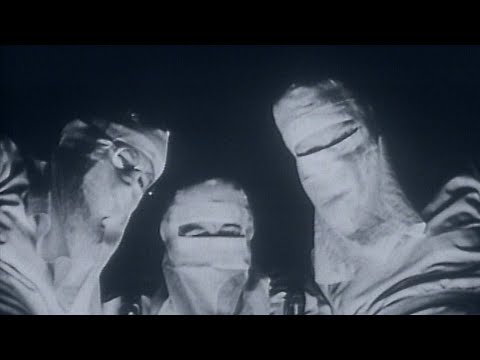
5. Metallica — “One”

The debate continues as to whether Metallica did in fact use code in the song, but the kid in the “Johnny Got his Gun”  scenes uses his body to transmit Morse code.
6.  The Clash — “London Calling”

Sampled Morse code at the end: V for victory during World War II.

theclashVEVO | YouTube

7. Alan Parsons Project — “Lucifer”

Not sure what the message is and don’t wanna know.

07constancia | YouTube

Morse code is actually still being used by the military. The last code classes were taught by the Army at Fort Huachuca in 2015. The Air Force is currently teaching this vital form of communication at Goodfellow AFB, Texas.

MUSIC

Why musicians can’t make videos aboard Navy ships

The USS Missouri has a long and storied history. She earned numerous battle stars for her service in three American wars. She was the site where Japan signed its formal surrender, ending World War II. The last battleship produced by the United States, she was decommissioned in 1955 and reactivated in 1984 to support the Gulf War. She even made appearances in the 1992 movie Under Siege and in 2012’s Battleship.

7 killer songs that use Morse code
Even when you put actors on a Navy ship, the first thing they learn to do is skate.

Its most infamous moment came in 1989, when Cher sang “If I Could Turn Back Time” in front of the ship’s crew wearing a one-piece bathing suit and stockings that didn’t leave much to the imagination.

7 killer songs that use Morse code
At least she was wearing a jacket.


Almost no one but the director (and, presumably, Cher) was happy with the video. According to the book “I Want My MTV: The Uncensored Story of the Music Video Revolution,” MTV pretty much banned the video outright because of the visibility of Cher’s butt cheeks. The network later rolled that back and would play it only after 9pm – though MTV still pushed the envelope as “Safe Harbor” programming for broadcasters in the U.S. began at 10pm.

See how safe the harbor is in the music video below.

The outfit, of course, completely surprised the U.S. Navy, who had given their blessing for the shoot. Once he saw the singer’s costume on the set of the video, the Navy’s entertainment liaison for the Missouri asked the director to choose something else for Cher to wear. The director, of course, declined.


7 killer songs that use Morse code
The crew seems fine with it.

After all the flak the Navy took for the video, it decreed that never again would musicians be allowed to film music videos on ships of the U.S. Navy. In an attempt to placate the Navy, Cher later filmed parts of the song in a less-revealing outfit and without the crew present, but the new video was too little, too late.

For Cher, the song completely revived her 20-plus year long career. It was her second consecutive number one hit on the Billboard charts and was a certified gold record.

MUSIC

‘In the Navy’ was almost an official Navy recruiting song

At some point in your life (especially if you’ve ever been in the Navy), you’ve heard Village People’s 1979 disco classic, “In The Navy.” Whatever you know about the group and this song, know these two things: First, their characters are supposed to be the ultimate, macho, American men. Second, the Navy asked the band to use this song as the Navy’s official recruiting song.


7 killer songs that use Morse code

Following up on the success of the band’s previous hit, “YMCA,” the United States Navy approached the band’s management to get permission to use it in a recruiting campaign. The song was written well before the Navy asked about it and, in the service’s defense, it seems like a pretty innocuous song, praising the life of a sailor.

“… Search the world for treasure ,
Learn science technology.
Where can you begin to make your dreams all come true ,
On the land or on the sea.
Where can you learn to fly…”

A deal was struck. The Navy could use the song for free in a commercial so as long as the Village People could film the music video for the song aboard a real U.S. Navy ship. The Village People performed the song aboard the frigate USS Reasoner at Naval Base San Diego. The song peaked at #3 on the US Billboard Hot 100 charts.

But seeing as the band was, for the most part, an openly gay band in the late 1970s, upon closer inspection, the lyrics seemed to be filled with double entendre. To the Navy, it began to be seen as an anthem for promoting homosexual intercourse while underway.

Everywhere the Navy looked in the song, there was some sort of implicit reference.

“… If you like adventure,
Don’t you wait to enter,
The recruiting office fast.
Don’t you hesitate,
There is no need to wait,
They’re signing up new seamen fast…”

According to the band, however, that’s not true at all. The principle writer of the songs, frontman (and faux-policeman) Victor Willis has said there are no intended homosexual references in any of the songs, not “In The Navy” or “YMCA.” The Navy (and general public) was applying those meanings on their own.

In fact, Victor Willis isn’t even a gay man. The lyrics are just a play intended to make people think there’s more to the background than there really is. In the end, it’s just supposed to be a fun pop song.

Still, the Navy decided to stick with its old “Anchors Aweigh” for recruiting purposes. In the long run, it was probably for the best. The Navy kept its tradition intact and both the Village People and the Navy benefited from the song’s enduring popularity, especially in terms of pop-culture homage.

MUSIC

That time James Blunt helped prevent World War III

It’s always going to be a tricky situation when the Russian Army and NATO allied armed forces are in the same fight. In the 1999 Kosovo War, such a situation could have sparked the all-out NATO-versus-Russia war the world had been hoping to avoid for 50-some years at that point. Good thing Grammy-nominated singer-songwriter James Blunt was there to stop all the madness from taking hold over everyone’s better judgement.

7 killer songs that use Morse code
Like Kendall Jenner with a Pepsi, except real and not stupid.


7 killer songs that use Morse code

No time for Stalin when you’re racing the Russians.

To be fair, he wasn’t yet Grammy-nominated singer-songwriter James Blunt quite yet. In 1999, he was still James Hillier Blount, a Royal Military Academy-trained British Army officer, and he was leading a reconnaissance troop ahead of the coming NATO peacekeeping operation in Kosovo to the airport at Pristina.

He led his armored troop all the way to capital city of Kosovo, only to find Russian troops already already captured the airport.

7 killer songs that use Morse code

No one told General Strangelove the Russians weren’t the enemy.

For Russia, the NATO intervention in Kosovo was a stark reminder of how far they had fallen since the end of the Soviet Union. The Balkans were firmly in Russia’s sphere of influence but there was little the Russians could do about the NATO meddling in their backyard — except maybe join them a little.

The Russians sent a small, token unit of peacekeepers to Kosovo and the first thing they did was a capture the airport. When Gen. Wesley Clark, then NATO’s Supreme Allied Commander, found out the Russians had beaten NATO to the punch, you might think his response would be mild, considering they essentially had the same mission and the Russians were no longer the Soviet Union.

He gave an order to retake the airport by force.

7 killer songs that use Morse code

General Michael Jackson politely implored General Clark to beat it.

Think, for a moment, what would happen if a NATO armored column completely annihilated a 250-man Russian peacekeeping contingent with 30 armored vehicles over an airport in Kosovo. British General Mike Jackson, the commander of NATO’s Kosovo Force, knew exactly what would happen.

He told General Clark, “I’m not going to start the Third World War for you.”

7 killer songs that use Morse code

“Oh look, here come our British Allies, Sergei.”

Instead, the British General flew in to Pristina and shared a flask of whiskey with the Russian general of the small force, even though Clark was also on his way into Pristina. Meanwhile, Russian airbases and paratroopers were getting ready for any escalation that might come next. Thousands of Russian troops were on standby to kick off World War III.

Jackson and Clark met at the NATO headquarters in the capital of neighboring Macedonia. He reminded the Supreme Allied Commander that the Russians helped broker the peace deal that ended the war and would be assisting the peacekeeping afterward.

The British, instead of murdering potential allies, simply used the armor to isolate the airfield but didn’t even block the runway. Blunt, the commanding officer of an armored troop, with a parachute regiment and some SAS in reserve, instead called for instructions and held the position while the generals decided what to do — and what not to do. After a few days without water or food, the Russians offered to share responsibility for the airport.

But even if Jackson wanted to carry out Clark’s orders, Blunt — from a military family with more than a thousand years of service — would rather have taken a court martial than carry them out, starting a world war.

In the end, no one carried out Clark’s orders to recapture the airfield from the Russians by force. In fact, Clark left his posting as NATO’s Supreme Allied Commander a little earlier than expected after the incident. Blunt served two more years in the British Army and recorded his first album just a few months later.

Articles

This music festival is hitting military bases and we’re amped

A new festival experience is coming to military bases this year and we’re pretty pumped up about it. Base*FEST Powered by USAA will launch at Camp Lejeune this 4th of July weekend and continue the party through Labor Day.


7 killer songs that use Morse code
Did we mention it’s free?

To celebrate, we’ve put together some playlists to get you amped (may I recommend “The Double Tap Ensemble”?) and we’re teaming up with some bad ass vets who will be sharing their own musical inspiration for things like, you know, fighting terrorism and defending the free world.

Also read: 8 epic deployment music videos you need to watch

We’re also powering up with USAA and To The Fallen Entertainment to bring you a music competition that will let veterans and their families bring down the house, so stick around.

Comment below and tell us which song we absolutely cannot leave out of our ultimate Battle Mix.

MUSIC

The surprising things you can’t build with iTunes

Every Apple user is inevitably faced with the terms of service. The vast majority of us will start to think about reading them, realize we’re looking at a 56-page magnum opus of legalese and tiny print, and then just accept the fact that we’re going to click “yes” anyway. For the most part, there’s nothing out of the ordinary in there and it won’t affect your daily life — unless you’re a dictator thinking about hedging your bets on preventing an American invasion.

Deep inside those terms of service is a clause forbidding the user from using the program for “the development, design, manufacture, or production of nuclear, missile, or chemical or biological weapons.”

As if Kim Jong Un cares that much about retribution from Apple.


7 killer songs that use Morse code

But remember, America, Apple will raid your damn house in the middle of the night if you mess with them.

The clause is most likely a way for Apple to cover its own ass, keeping it from being liable if a nuclear accident, attack, or exchange ever did occur.

7 killer songs that use Morse code

Steve Jobs thought of that one, too. No wonder he dressed like a super villain.

The End User License Agreement also cautions the user against exporting or re-exporting Apple software to “anyone on the U.S. Treasury Department’s Specially Designated Nationals List or the U.S. Department of Commerce Denied Persons List or Entity List.” There has never been a more comprehensive list of North Koreans, suspected terrorist group members, Libyans, or American prison inmates.

If anyone is asking how exactly one could use iTunes to create a nuclear weapon, that’s a very good question. If anyone actually answers that question with a plausible answer, the U.S. government should probably know that person’s whereabouts. And take away his or her Apple products.

If you’re really curious about the Apple EULA but don’t have a juris doctorate, you can listen to Richard Dreyfuss read parts of it on YouTube.

Intel

These soldiers recorded a catchy Beatles cover from a snowbank

// ![CDATA[ (function(d, s, id) { var js, fjs = d.getElementsByTagName(s)[0]; if (d.getElementById(id)) return; js = d.createElement(s); js.id = id; js.src = “//connect.facebook.net/en_US/sdk.js#xfbml=1version=v2.0”; fjs.parentNode.insertBefore(js, fjs); }(document, ‘script’, ‘facebook-jssdk’)); // ]]


The US Army Field Band made a splash this week when it released a cover of “Here Comes The Sun,” more famously performed by The Beatles, on its Facebook page.

Four soldiers from the band went into the snow of Massachusetts to perform the tune from within a snowbank, adding special significance to the line, “I see the ice is slowly melting.”

The video is pretty fun and the tune is very catchy, so check it out below.

That’s not all from the “Six String Soldiers.” The group also posted another video recently with some backup help from the University of Massachusetts Drum Line.


Articles

She loves her rifle…and this killer playlist

Editor’s note: Kayla Williams is an Army war vet and author of Love My Rifle More Than You: Young and Female in the US Army. This list originally appeared on her blog.


7 killer songs that use Morse code
The author (right) rockin’ her rifle while tooling around Iraq back in the day.

When I was speaking at a university a few years ago, a student who DJ’d at the local college radio station and had read my book asked me to come on as a guest. He had me put together a list of music I listened to in Iraq, and then interviewed me between songs. It was a really cool experience for me to revisit my deployment through music.

This isn’t limited to my time in Iraq, but is evocative of both my deployment and homecoming. Here it is:

1. Live, “Mental Jewelry”

7 killer songs that use Morse code

I started listening to Live in high school and have fond memories of seeing them play. For some reason, the lyrics came into my mind often in Iraq, always making me feel a little melancholy.

2. Bad Religion, “The Process of Belief”

7 killer songs that use Morse code

This album came out while I was at DLI, and I listened to it throughout the summer of 2002 while I was at AIT in Texas. Once we got to Iraq, this song in particular made me ache.

3. “Story of My Life,” Social Distortion, Social Distortion

7 killer songs that use Morse code

This is one of my favorite albums. Went to see them play in Dallas the summer of 2002 – and spent the whole time feeling a little alienated from civilians. As for this particular song, I left my hometown when I was 15, and every time I’ve gone back have felt that weird sensation of my old neighborhood not being the same. That got even stronger after I joined the Army. I like how this song captures a particular feeling of frustration.

4. “So What,” Ministry, The Mind is a Terrible Thing to Taste

7 killer songs that use Morse code

I was angry as a teenager, and spent a lot of time angry while I was in the Army, too. This is a great song to be really pissed off to. (Random aside: I saw the movie this song has samples from on Mystery Science Theater 3000 once, which was awesome. It’s totally absurd, you should check it out: The Violent Years.)

5. “Holiday in Cambodia,” Dead Kennedys

7 killer songs that use Morse code

So there isn’t a lot of DK on Spotify that I could find. The song I wanted to put was “Life Sentence” (the lyrics “you don’t do what you want to but you do the same thing every day” could describe half my time in the Army!), but this is a good one, too. Fits in with the theme of anger.

6. “Jaded,” Operation Ivy,” Operation Ivy

7 killer songs that use Morse code

As angry as I got, I never gave up those hopeful kernels, and still clung to that conviction that I could make the world a better place. “Sound System” is another good one off that album, about how music can bring you back up when you feel shitty.

7. “Cactus,” Pixies, Surfer Rosa

7 killer songs that use Morse code

I have no idea why this particular Pixies song is the one that I got totally fixated on in Iraq. The mention of the desert? Who knows.

8. “Then She Did,” Jane’s Addiction, Ritual De Lo Habitual

7 killer songs that use Morse code

When I was younger and, um, enjoyed experimenting with mind-altering substances, the song “Three Days” was what I loved the most – it took me on this whole mental odyssey. But in Iraq I fell in love with this one, a more reserved and introspective one.

9. “In the Arms of Sleep,” The Smashing Pumpkins, Mellon Collie and the Infinite Sadness

7 killer songs that use Morse code

I would listen to this one over and over and over in Iraq, longing to … be there, have those feelings.

10. “I Know, Huh?,” The Vandals, Hitler Bad, Vandals Good

7 killer songs that use Morse code

This reminds me of the giddy, heady, happy days of being just home from Iraq, before the bad parts of reintegration kicked in. I have memories of driving around with Zoe singing along with this, being goofy and ridiculous.

11. “8 Mile,” Eminem, 8 Mile

7 killer songs that use Morse code

When things started to get really shitty, I would listen to this song (oh, so cheesy! I know!) and tell myself I could push on for just a little longer and couldn’t give up.

Listen to the playlist:

MIGHTY TRENDING

Vote for MISSION: MUSIC Finalist Jericho Hill

UPDATE: THE VOTING IS NOW CLOSED AND THE WINNER WILL BE ANNOUNCED ON MONDAY, SEPT. 25, 2017 AT WE ARE THE MIGHTY!

Welcome to the finals for Mission: Music, where veterans from all five branches compete for a chance to perform onstage at Base*FEST powered by USAA. CLICK THE BUTTON BELOW TO VOTE every day to determine the winner!

Jericho Hill is a band created by Army veteran Steve Schneider and Navy corpsman McClain Potter. They began writing music together in 2012 while studying at Shoreline Community College just north of Seattle, bonding over their military experiences.


7 killer songs that use Morse code
From left to right: Steve Schneider (U.S. Army), McClain Potter (U.S. Navy).

In 2014, Steve and McClain invited friends to play with them, including singer Malcolm Williams, drummer Adam Birchman, and bassist Nick Skinnell, officially creating Jericho Hill, a reference from “The Dark Tower,” a book McClain read during deployment. The band is united by the military, whether they themselves wore the uniform or a family member.

They found that music was not only healing for them, but a way to share stories with others. The military was a strong influencer for their music, which has evolved to bring awareness to issues like suicide, trauma, and depression.

One of the traditions of Jericho Hill is to play an as-yet unrecorded song “Great Day to be Alive” during their shows as a tribute to the friends they have lost. They also work hard to connect with other veterans and musicians, demonstrating how music can help vets readjust to civilian life.

Return to the voting page and check out the other finalists!

For every vote, USAA will donate $1 (up to $10k) to Guitars for Vets, a non-profit organization that enhances lives of ailing and injured military veterans by providing them with guitars and a forum to learn how to play. Your votes help those who served rediscover their joy through the power of music!

7 killer songs that use Morse code
Articles

10 best opening sequences from the glory days of military TV shows

During the halcyon days of broadcast television – before streaming media and DVRs existed – there were a host of military-themed shows on the airwaves. As much as the quality of the episodes (in some cases even more so) these programs were known for their openings and the associated theme songs. Here are 10 of the most classic:


MCCALE’S NAVY (1962-1966)

Forget JFK’s story from his time in the Pacific. Everything America knew about the history of PT boats came from “McCale’s Navy.” The show also showed that skippers could be cool and that POWs should be treated well; in fact, the Japanese prisoner “Fuji” was one of the gang. They even trusted him enough to make him their cook.

COMBAT (1962-1967)

“Combat” lasted five seasons before American attitudes toward the purity of war were tainted by the realities of the Vietnam Conflict that came blasting into living rooms via the nightly news. “Combat” set a serious tone with this opening with epic orchestration and a narrator who’s basically screaming at the viewers.

GOMER PYLE, U.S.M.C. (1964-1969)

“Gomer Pyle U.S.M.C.” was actually a spin-off of “The Andy Griffith Show” and introduced the public to two concepts that remain true today: DIs are likeable guys underneath their gruff exteriors and (surprise!) the Marine Corps is populated by a goofball or two.

BRANDED (1965-1966)

The drama of the opening theme of “Branded” was by-far the best part of this show. Watching Chuck Connors weather the dishonor of having his rank ripped from his shoulders, his sword broken in two, and the front gate closed behind him after he was shoved through it was heavy stuff.

F TROOP (1965-1967)

Manifest Destiny made into a sitcom. “F Troop” was a comedic take on life in the U.S. Calvary across the western frontier where Indian arrows went through head gear and nothing else.

HOGAN’S HEROES (1965-1971)

Not unlike what “F Troop” did to the reputation of Native Americans, “Hogan’s Heroes” showed the country that the Nazis weren’t inhuman tyrants but rather lovable idiots or clueless buffoons.

THE RAT PATROL (1966-1968)

This opening segment was all about the visual of U.S. Army jeeps going airborne over sand dunes without the guys holding onto the .50 cals in the back flying out or breaking their backs. “The Rat Patrol” was the show that introduced the nation to special ops and the idea that two light vehicles could take on (if not defeat) a column of Panzers.

STAR TREK (1966-1969)

For all of its allegory and social commentary, at its heart “Star Trek” was a show about military life on deployment. The opening remains among TV’s best with Capt. Kirk’s monologue, the Enterprise fly-by, and the soaring (albeit wordless) vocals.

M.A.S.H. (1972-1983)

Set during the Korean War, “M*A*S*H” was derived from Robert Altman’s 1970 black comedy of the same name and the theme song was an instrumental version of “Suicide is Painless” from the movie. The show’s finale was the most watched broadcast of any show ever until Super Bowl XLIV.

https://www.youtube.com/watch?v=wNblF1PkSwo

THE A TEAM (1983-1987)

“Punished for a crime they did not commit.” Oh, the injustice of it all. “The A Team” was known for gunfights, explosions, and car crashes that netted ZERO casualties. It’s also the show that made Mr. T into a household name.

Articles

This is how the USS Arizona memorial made Elvis the King

In the early hours of Dec. 7, 1941, Pearl Harbor was attacked by the Imperial Japanese Navy Air Service, killing 2,403 service members and launching President Roosevelt’s decision to enter World War II.


Although the event was catastrophic, only two ships were beyond repair — USS Oklahoma and Arizona. The Oklahoma was eventually refloated to the surface, but the battle damage was too overwhelming to repair and return to service.

However, the USS Arizona took four devastating direct hits from 800kg bombs dropped from high altitude Japanese planes. One of the bombs ripped into the Arizona’s starboard deck and detonated. The explosion collapsed the ship’s forecastle decks, causing the conning tower to fall thirty feet into the hull.

Related: This American admiral planned the attack on Pearl Harbor in 1932

Talks of constructing a permanent memorial started as early as 1943, but it wasn’t until several years later that the effort would take shape. After the creation of Pacific War Memorial Commission, plans of how to commemorate the ship’s memory began rolling in.

Admiral Arthur Radford ordered a flag to be installed on the wreck site and have a colors ceremony conducted every day.

In 1950, requests for additional funds were denied by the government, as their top priority was to focus on the war efforts in Korea.

7 killer songs that use Morse code
USS Arizona after being struck by Japanese in Pearl Harbor.

In 1958, President Dwight D. Eisenhower inked Public Law 85-344 allowing the PWMC to raise $500,000 for the memorial construction. But after two years of fundraising, only $155,000 in total proceeds had been collected — they needed a lot of help.

Little did they know, they were about to get it.

Tom Parker read about the PWMC’s struggling endeavor and came up with a genius plan. Parker just happened to be Elvis Presley’s manager and was looking for ways to get his client back on top after being drafted by the Army in 1957 — Elvis was discharged from service in 1960.

Reportedly, Parker approached Elvis to perform at a benefit to help boost the memorial campaign — and his music and acting careers.

Elvis, who was not only patriotic but loved the idea of performing for a cause, agreed to help with the campaign. The PWMC agreed to Parker’s plan, and a performance date was set — March 25, 1961.

7 killer songs that use Morse code
The flyer for Elvis’ fundraising performance.

Also Read: 5 times the US was attacked at home during WWII (besides Pearl Harbor)

Although the performance brought in $60,000 in revenue, the campaign was still well short of its goal. But from the publicity of Elvis’ show, donations from outside sources rolled in, and the PWMC finally raise the $500,000 they needed.

On May 30, 1962, the USS Arizona Memorial officially opened thanks to Elvis and the PWMC.

MIGHTY MOVIES

Why the music collection at Guantanamo is a hipster’s dream

Everyone knows Cuba is a bastion of great music — but most people probably don’t consider Guantanamo Bay when they’re thinking of all that great Cuban sound. They definitely don’t think of the Navy base for having a good time rockin’ in Fidel’s backyard — which happens to be the slogan of the radio station on base.

The truth is, there’s an amazing collection of music in that remote corner of the island — and the Navy takes full advantage by playing all of the greatest hits by the original artists.

7 killer songs that use Morse code
Part of Radio GTMO’s collection.

Radio GTMO houses an amazing collection of some 22,000 pieces of music — some on reel-to-reel tape and many others on vinyl — including a reel-to-reel of the Beatles anthology. The collection is valued at over $2 million and is carefully cataloged in alphabetical order on a series of index cards.


“I believe this is one of the largest, if not the largest, collection in the Armed Services Network,” Kelly Wirfel, base spokeswoman, told Military Times.

Though the U.S. Navy base at Guantanamo has been in operation since 1903 (it’s the oldest overseas U.S. Navy installation), Radio GTMO has only been in operation since 1940. Unfortunately, Cubans outside of the base don’t get to hear the Classic Rock and Top 40 songs played by Radio Gitmo — the transmission signal stops at the base’s gate (Cubans get music and news from outside Cuba via another U.S. government entity — Radio Marti, run by the same folks who create Voice of America News).

7 killer songs that use Morse code
Radio GTMO personality, DJ Stacks, Petty Officer 3rd Class Heidi McCormick, pieces together her classic rock radio program, Jan. 10. McCormick is one of four DJs at the station who put together a total 21 local shows for the Guantanamo Bay community.
(U.S. Army Photo by Sgt. Benjamin Cossel)

The radio station will still broadcast even its oldest vinyl records, even though Adrian Cronauer (a former Air Force DJ played by Robin Williams in the film Good Morning, Vietnam) says they belong in a museum. So, how did such a stash end up in a remote corner of Cuba? The reason for it is that the station never sent its analog collection back to the Armed Forces Network when it was all recalled in the 1990s in an effort to go digital.

Among the station’s other rare offerings are live performances by Chuck Berry, The Grateful Dead, Led Zeppelin, Bob Marley, and John Coltrane — among many, many others. It’s the third largest collection of music on any military base and the pearls of its collection rivals even the Library of Congress.

Do Not Sell My Personal Information