Master Sgt. (ret.) Larry Vickers spent 20 years in Army Special Forces, 15 of which were in the elite 1st Special Forces Operational Detachment—Delta, also known as Delta Force. He saw combat in Panama during Operation Acid Gambit, as well as Desert Storm, Somalia, and Bosnia, and those are just the deployments the public is allowed to know about.
During his time in Delta, Vickers was a combat marksmanship instructor. After retiring from the Army, he served as a firearms industry consultant, notably working on the Heckler & Koch HK416, which has since become a favorite of the U.S. Special Operations Command.
So, when Vickers says that the Army has an ammo problem, it’s worth listening to his critique.
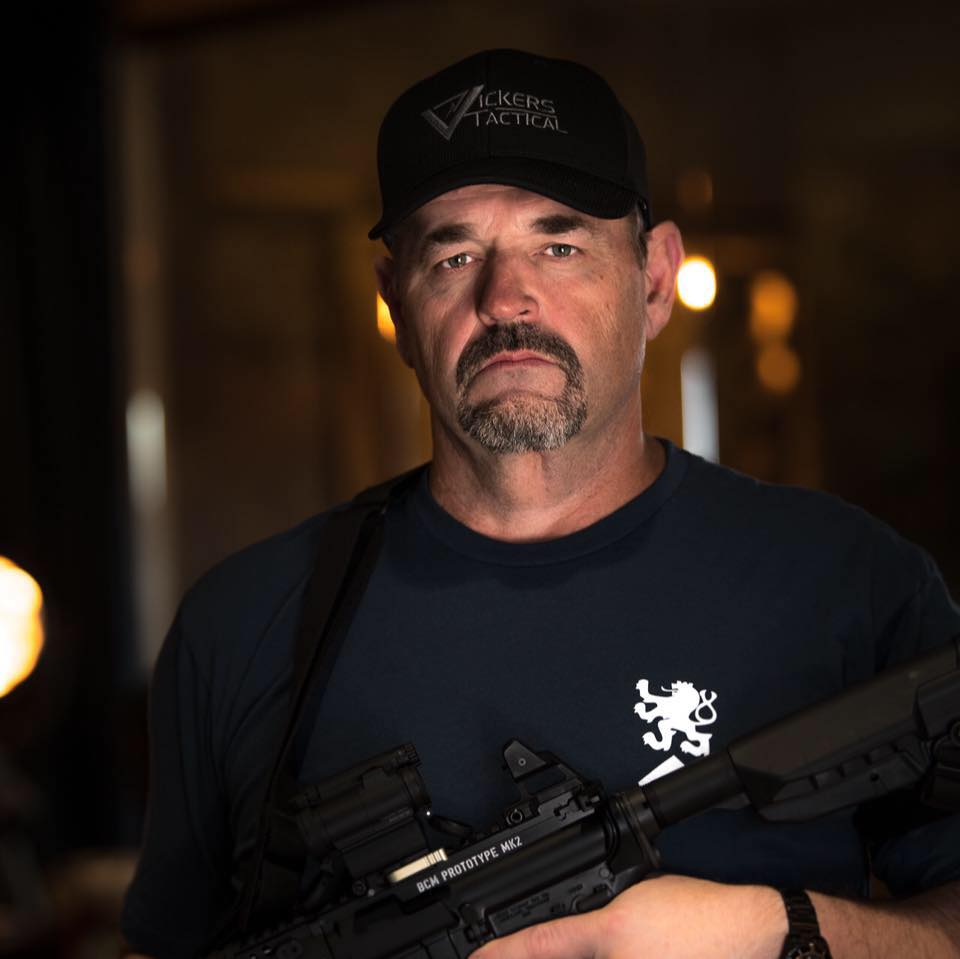
Published by Firearms Friday, Vickers authored an article titled, “The Caliber Cluster.” Drawing on military history and stressing the importance of logistical support in a war, he calls the Army’s small arms and ammo situation an “absolute train wreck.” Highlighting the importance of a supply chain in keeping warfighters operational, Vickers identifies potential issues the Army would face in a prolonged conflict.
First, the Army’s 5.56mm and 7.62mm NATO rounds. Although these cartridges are plentiful and standardized among allied militaries, Vickers notes that they are getting old and suffer from issues of stopping power and weight, respectively. On the flip side, he criticizes the “Army’s new darling,” the 6.8x51mm, for its lack of a supply chain and the Army’s bet on it to replace both 5.56mm and 7.62mm NATO.
“Good luck with that transition in a war zone,” Vickers writes.
Next, Vickers turns to the Army’s long-range calibers. He reports that Delta is employing 6mm ARC as a high-performance, long-range round with better ballistics than 5.56mm and less recoil than 7.62mm. But there are issues with the larger case diameter, not to mention that the niche cartridge is yet another layer of logistical complication.
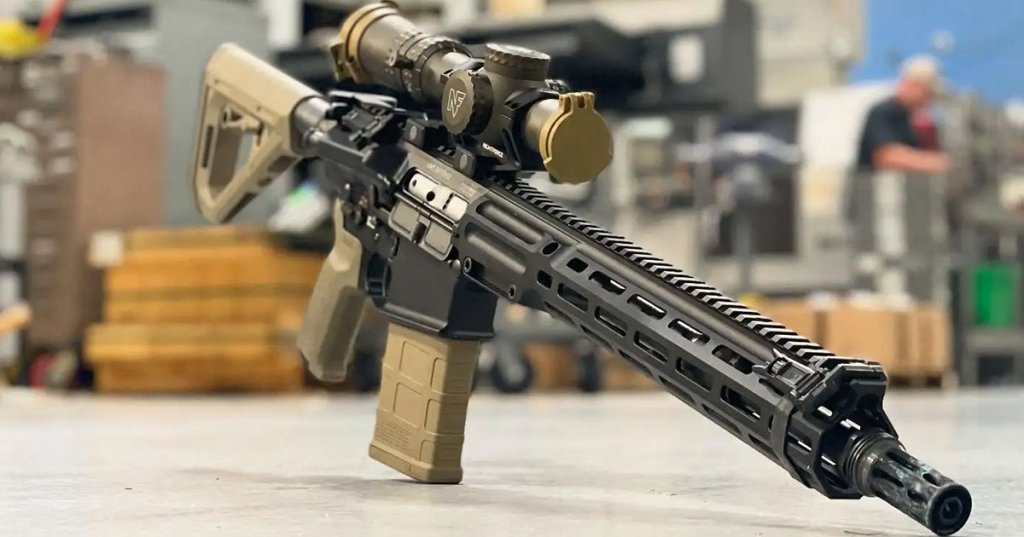
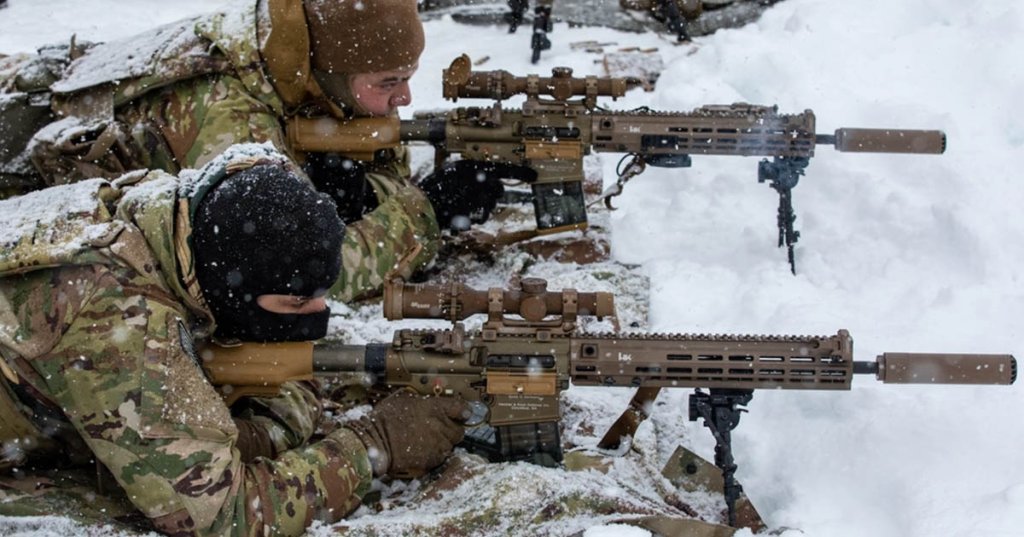
More mainstream is the 6.5mm Creedmoor cartridge recently adopted under the Mid-Range Gas Gun. Used in both the Sniper and Assault variants of the rifle, 6.5mm CM offers better ballistics than 7.62mm NATO and can also be used in a variant of the Mk 48 Mod 2 machine gun.
“But again, another caliber, another logistics headache,” Vickers notes.
We’re not done yet. The Army also has .300 Blackout for SOF’s Sig Sauer MCX Rattlers, .50 BMG for M2 machine guns and the Barrett M107, and 9mm for pistols and submachine guns. .338 Norma Magnum is also being explored to extend the range of the Army’s machine guns.
“Each of these adds a layer of complexity,” he says.
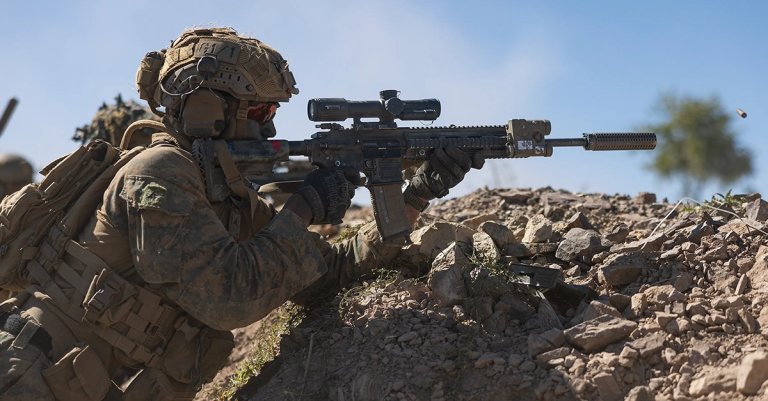
Further complicating the ammo issue is the wide array of weapons fielded by the Army and SOF. Beyond the standard M4, M249, and M240, Vickers argues that many of the weapons in the current inventory don’t offer much in the way of improvement and serve only to complicate weapons rooms. The 5.56mm rifles like the SCAR-L Mk16, HK416, and URG-I offer improvements over the M4, but still have the same limitations of the caliber.
Vickers notes that the Sig Sauer NGSW is “promising,” but reiterates the “logistical beast” of scaling the rifle, machine gun, and cartridge across the Army.

Beyond his own extensive experience, Vickers draws on military history to validate his critiques. During World War II, Germany employed a hodgepodge of weapons, both organic and captured, that required multiple different calibers. This hamstrung their logistics and limited its army’s maneuverability.
“We’re doing the same thing, voluntarily,” Vickers says.
In contrast, he points out that the United States used just four main calibers during the war: .45 ACP for pistols and submachine guns, .30 Carbine for the M1 Carbine, .30-06 for the M1 Garand, BAR, and Browning machine gun, and .50 BMG for the M2. Logistical simplicity allowed U.S. forces to rapidly move across continents while being supplied from across the ocean.
So, what’s the solution to the modern Army’s ammo mess?
“If I were king for a day, I’d tell the Pentagon to pick a lane. Standardize on two calibers max for rifles—say, 5.56mm for close-in work and 6.8mm for everything else—and phase out the rest over a decade. Push modularity like the SCAR but simplify the platforms,” Vickers writes. “One rifle, one machine gun, interchangeable parts, done. SOF can keep their niche toys like the .300 Blackout for covert ops, but the big Army needs to stop chasing shiny objects.”
Someone get SecWar Hegseth on the phone with Vickers and make life easier for the loggies.