
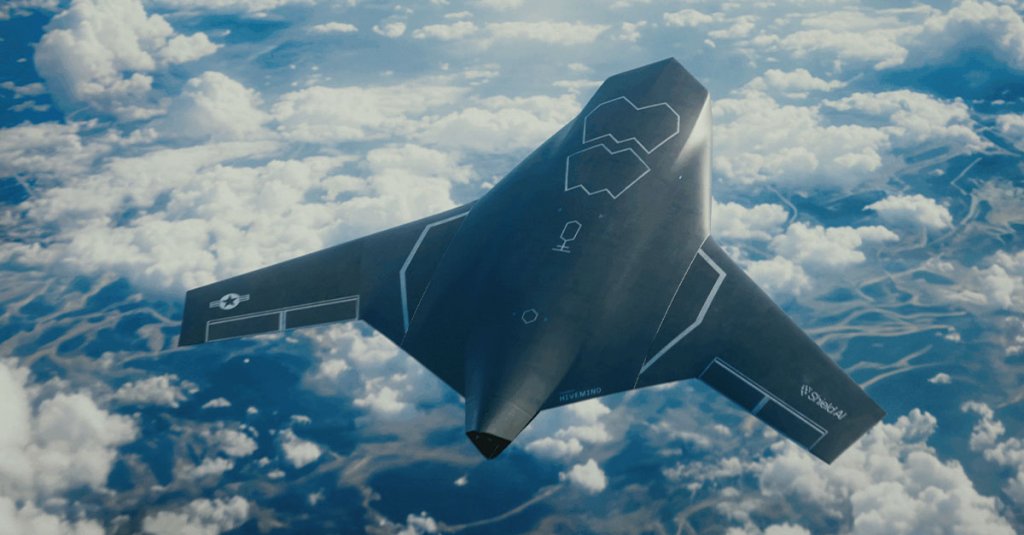
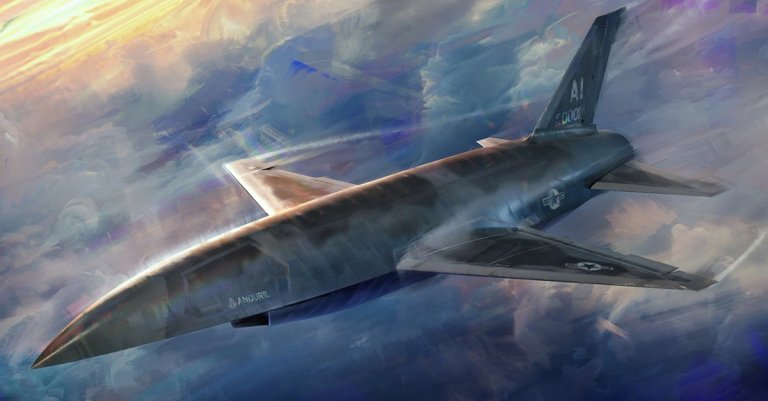
On October 21, 2025, Shield AI unveiled its X-BAT stealth fighter drone. As one would expect from a company specializing in artificial intelligence, the X-BAT is also an autonomous aircraft that the company plans to fly with its in-house autonomy software. As if that weren’t enough, Shield AI celebrated “Back to the Future” Day and said, “Roads? Where we’re going, we don’t need… roads.”
Or, apparently, runways.
Shield AI is a San Diego-based aerospace and defense tech startup. The company was established in 2015 by Andrew Reiter, Ryan Tseng, and former Navy SEAL Brandon Tseng. Since then, Shield AI has been contracted by the Air Force, U.S. Special Operations Command, and foreign militaries to provide autonomy and unmanned aerial systems.
Related: This unstoppable Cold War-era SLAM jet was designed to leave a path of destruction
Prior to X-BAT, Shield AI’s most notable product was the MQ-35 V-BAT. Contracted by the Navy in 2021, V-BAT is an unmanned, vertical takeoff and landing (VTOL) aerial reconnaissance vehicle. Using Shield AI’s Hivemind autonomy software, V-BAT can operate in GPS- and communications-denied environments and has achieved drone-swarming capabilities. The platform is being used in Ukraine, where Shield AI opened an office to support the country’s fleet of autonomous drones.
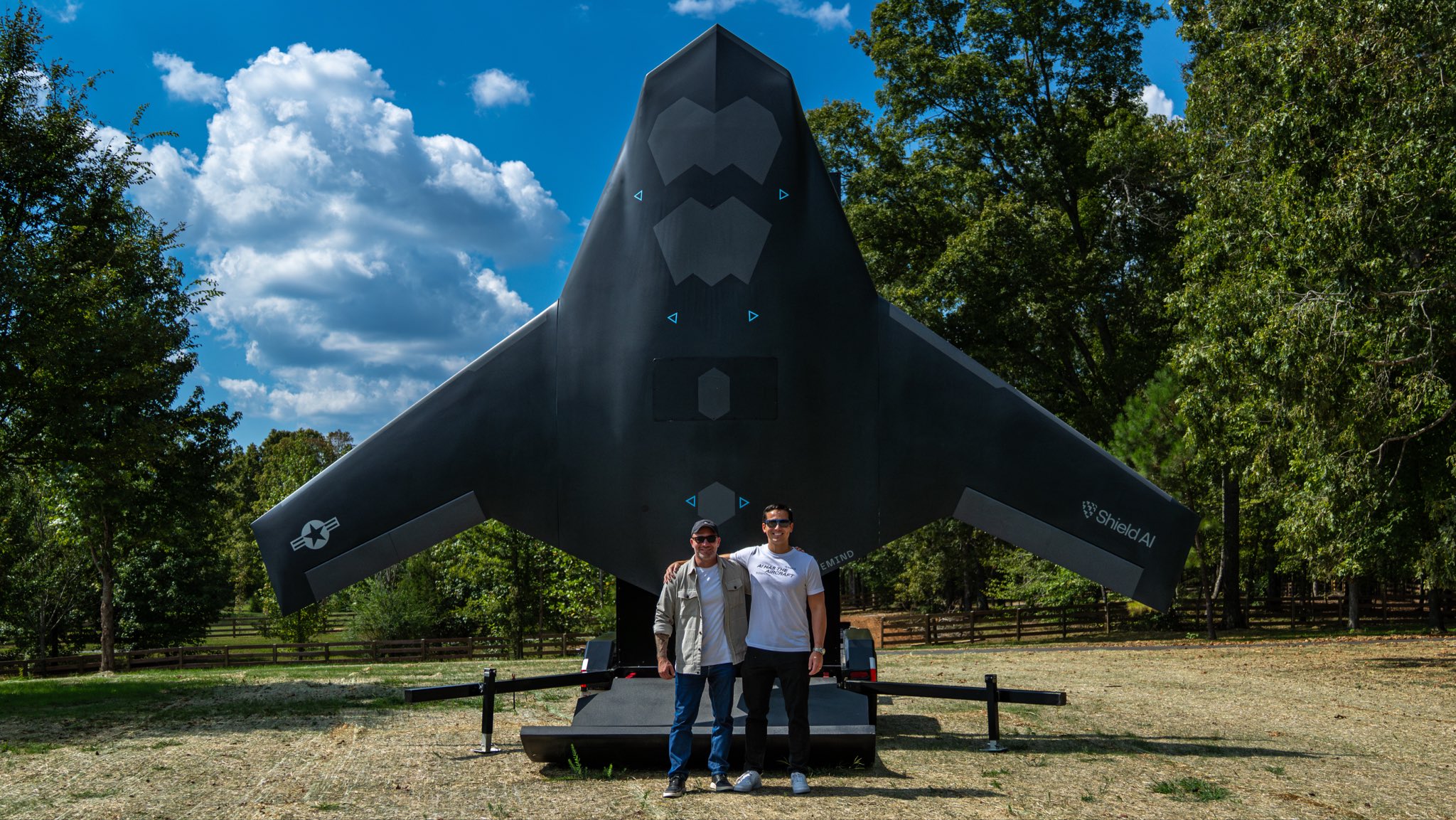
A scale model, not a production model, was unveiled by Shield AI. Still, the company noted that the aircraft will utilize a jet engine with an afterburner and thrust vectoring nozzle to achieve a maneuver load factor of over 4G. The X-BAT utilizes a blended wing and body design with a 39-foot wingspan.
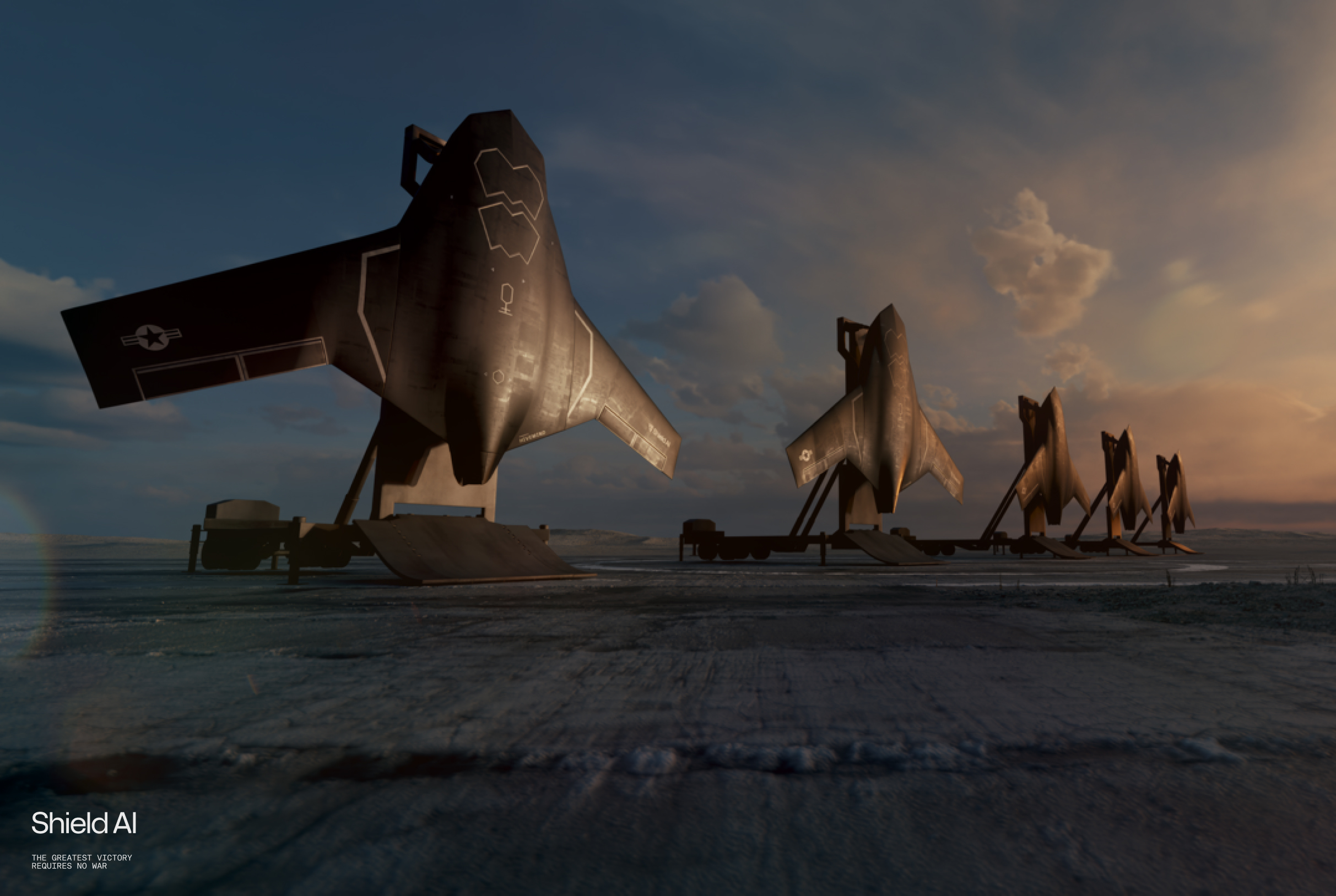
Shield AI claims that X-BAT will boast a range of over 2,000 nautical miles. An internal weapons bay for air-to-air and air-to-ground munitions will allow the drone to maintain its stealthy profile, though external hard points can be used to carry larger munitions and specialized equipment for surveillance and electronic warfare. X-BAT’s VTOL party piece will be achieved courtesy of a launch-and-recovery vehicle. Configured for transport, three X-BATs fit into the deck space of a single legacy fighter.
X-BAT is scheduled to perform initial vertical takeoffs and landings as early as Fall 2026; Shield AI plans to achieve full operational validation in 2028 and produce the next year. Industry partnerships aimed at achieving these goals, including full-scale production, were teased by Shield AI at the unveiling event. Pricing was not specified, though Shield AI referred to the multi-role capabilities of the globally popular F-16 as a selling point for X-BAT in the near future.
More from Miguel Ortiz
• Glock made a rifle. Here’s what we know about it.
• The Navy is spending $1.1 billion on the most successful air-to-air missile
• Irregular warfare researchers are testing a new round, rifle, and machine gun

Loading comments…
Comments couldn’t be loaded. Please refresh the page.