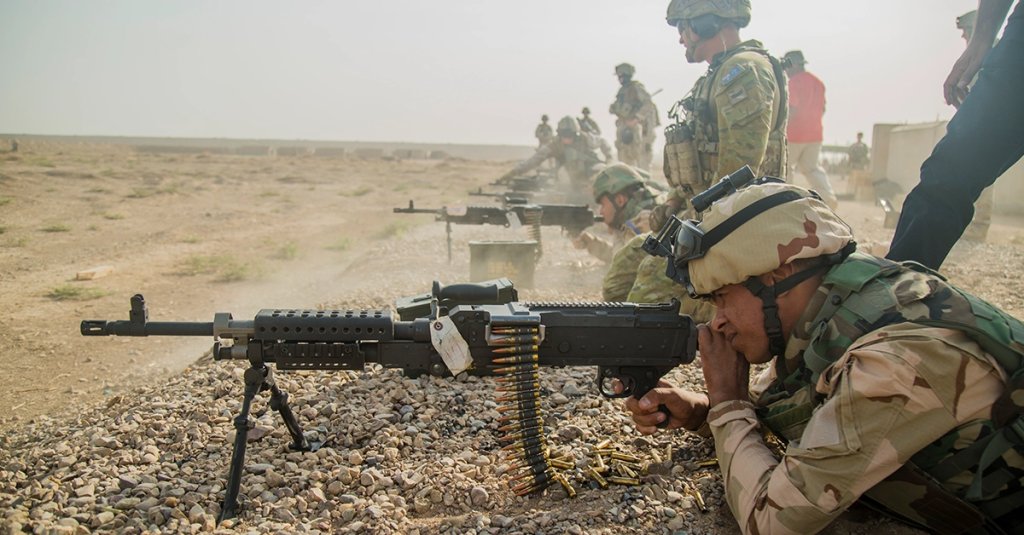
If the M249 SAW was a manic pixie annoyance that required constant reassurance, the M240B was the bipolar relationship you knew you would never leave. It was 27 pounds of dead weight that you carried up the side of a mountain because you knew, without a shadow of a doubt, that it was the only thing that would ensconce you and yours in serenity when you were up the creek without a paddle.
Related: These are 10 of the longest-serving weapons in the US combat arsenal
The Sound of Security
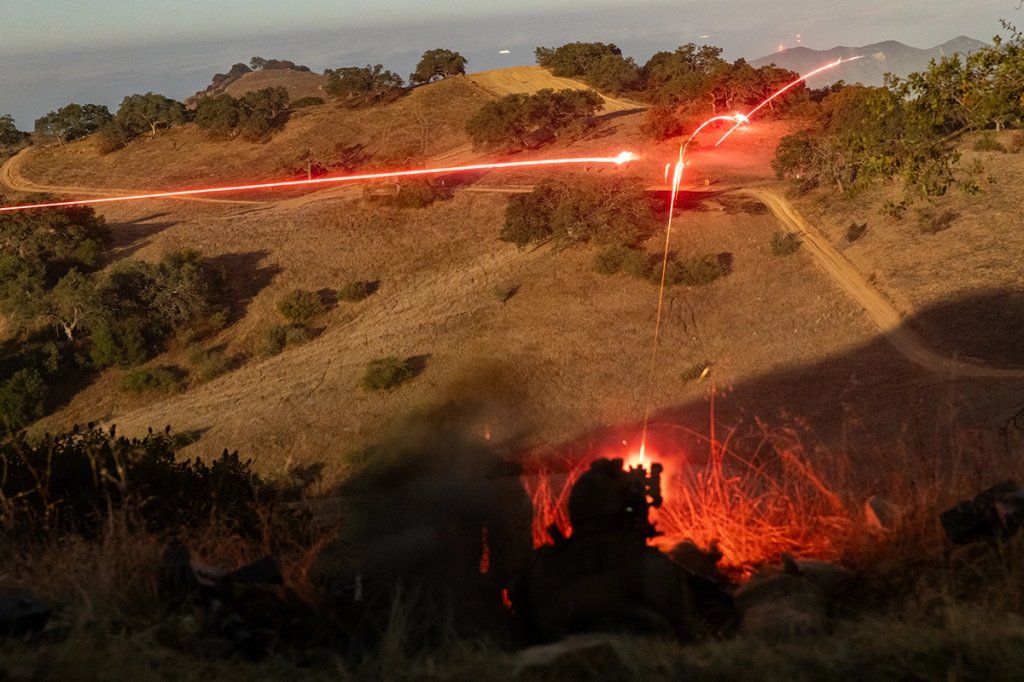
For a generation of soldiers who endure aches and pains today from hiking it in the valleys of Afghanistan and the streets of Iraq, the 240 wasn’t just a crew-served weapon. It was an insurance policy. The sound of it was distinct, a rhythmic, heavy thumping bass line that cut through the whip-crack of rifles and that desperate rattle of lighter machine guns.
When the “Bravo” opened up, the entire dynamic of a firefight shifted. It was the cyclic rate of fire that didn’t just suppress the enemy; it erased their cover, then their sanity, then their fortitude.
But that security came with a physical cost, a bill that almost always comes due.
Paying the Physical Tax
To love the 240 Bravo was to suffer for it. It demanded a tax in sweat and lower back pain that soldiers are still paying off in VA waiting rooms today.
While the riflemen complained about their ounces, the machine gunner was doing the math in pounds. Between the receiver, the spare barrel bag that banged against your thigh with every step, of every mile, not to forget the belts of 7.62mm draped over your shoulders like a literal albatross, you were a pack mule with a trigger finger. You cursed it every time you had to hurdle a wall. You hated it every time you had to clean the carbon out of the gas regulator.
Yet, the moment you took contact, that weight disappeared. The misery of the hike faded the second you got your position steady, slammed the feed tray cover down, and set your sight.
M240B vs. M249 SAW: The Diva vs. The Combine
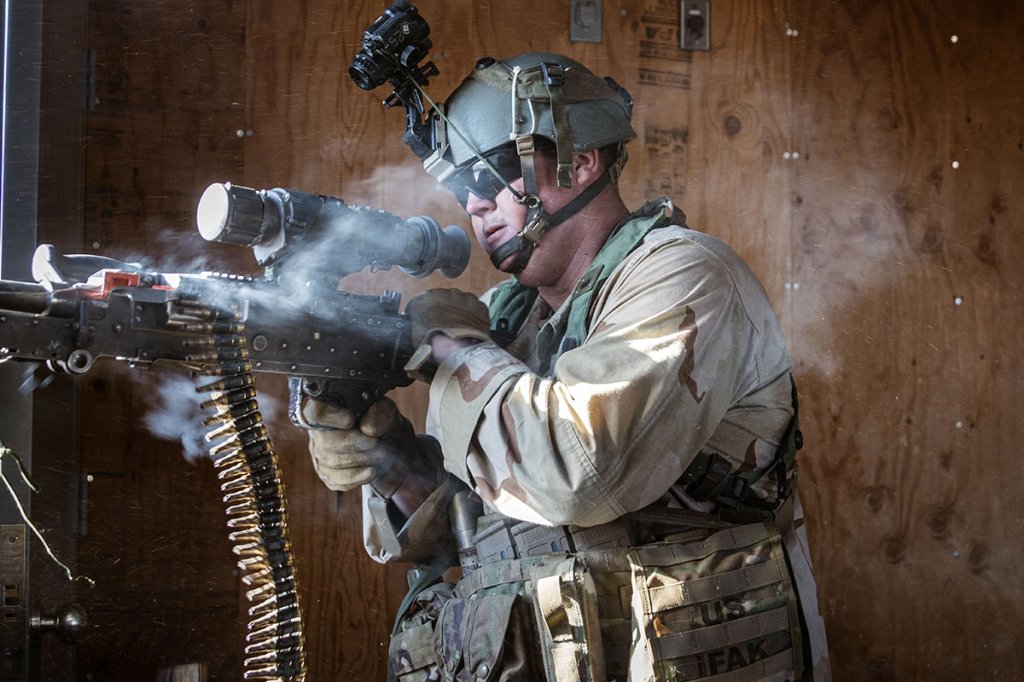
This absolute loyalty is why the machine gunners looked past the M249 SAW. If there were a choice, it would be the Bravo every single time, end of questions.
While the squad automatic rifleman was busy playing a high-stakes game of chance with a weapon that seemed to double feed by the mere presence of dust, the 240 operator was simply waiting for things to “pop off”. The SAW was a diva that required perfect conditions and a specific ritual of lubrication to perform; the Bravo was a piece of agricultural equipment designed to harvest souls.
This weapon simply did not care if it was dirty. It did not care whether you cursed it or wished its existence away. You just fed it a belt, pulled the charging handle, and it merrily ate. Reliability is what created a cult of personality around the weapon in the first place.
The Designated Problem Solver
In the Company hierarchy, the machine gunner was interesting: in one Platoon, it was given as a punishment; in others, it was a badge of honor. What they all ended up being was the designated problem solver.
When the patrol took fire from a distance that turned standard M4 carbines into spec’d-out paintball guns, the cry of “Gun up!” wasn’t a response for support; it was a notification that the unfair fight was about to begin.
The Bravo turned cover into concealment, punching through the mud-brick walls and thick vegetation that 5.56mm rounds simply bounced off. If the 249 was the sound that kept heads down, the 240 was the sound that made hearts pound.
Psychological Warfare
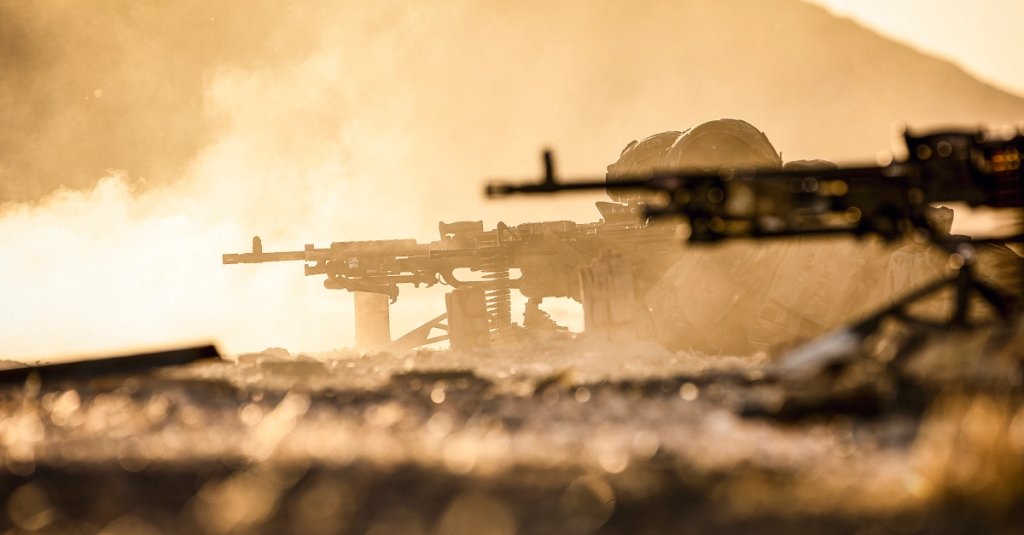
There is a psychological element to the weapon that goes beyond the ballistics. The enemy in Iraq and Afghanistan learned to distinguish the report of American weapons; different sounds would cause the fight or flight mechanisms to start cascading.
The pop of a rifle might keep their heads down, but the rhythmic, chugging thud of a 240B talking back and forth with a second gun on the line usually ended the engagement. Every soldier would get that weird feeling once their gunner got going. You just felt like everything would be alright.
This is why the weapon became an emotional security blanket. You could hate humping it around. It was ok to complain about the bruised hips and the way the sling dug into your trap muscles until your damn arm went numb. But when the sun went down and things got spicy, you hollered out for the 240 Gunner.
The Last Dance
The higher-ups say the new replacement options will save weight and increase lethality, and they may be right. The M240B is likely the last of its kind. Relics of an era where we solved problems by throwing the world at it. It defined the Global War on Terror not because it was high-tech, but because it was honest.
It promised you nothing but back and knee pain, maybe tinnitus, but in exchange, it gave you the power to control the battlefield and protect your mates.
So, you dragged the M240B around. You lugged it through the worst terrains on earth, and you did it with love in your heart, because you knew that when the time came, it would love you back.
Don’t Miss the Best of We Are The Mighty
• Myths and facts about the rifle that never quits: the AK-47
• Inside the 9,600-square-mile mission to guard America’s nuclear missiles
• Why the M249 SAW still echoes in every grunt’s heart