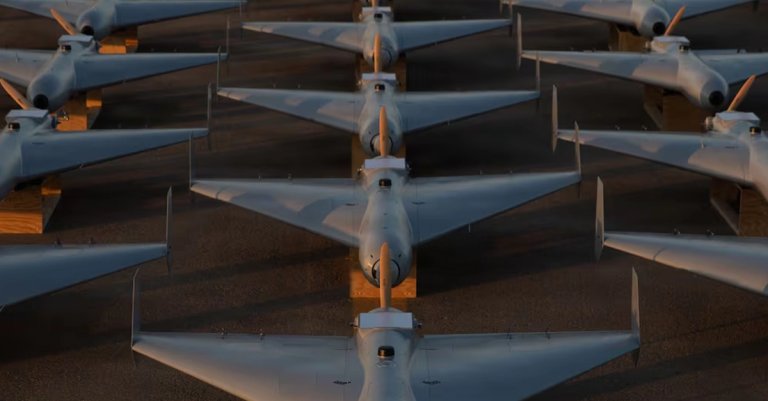
In the past few years, many a defense analyst has spent countless sleepless, sweaty nights worrying about the future of drone warfare. The era of exquisite air defense is passing gently into that good night. Counter-drone tech is still struggling to keep up.
For decades, the Pentagon and its allies operated under the wonderful delusion that air superiority was a birthright, bought with billion-dollar toys and protected by $4 million interceptors.
Also Read: Lessons Learned: How Iran was able to bruise the US Navy’s 5th Fleet
If you were to casually saunter into any modern command meeting today, you’ll see the same haunting realization on every face: we are currently trying to win duels by throwing bricks of gold at a swarm of hornets.
Air power used to be the exclusive domain of nations with aerospace industries that relied on light oversight and deep pockets. Now, it belongs to anyone with a soldering iron, a 3D printer, and a Costco card.
During recent clashes involving Iran and its regional proxies, we saw waves of “moped” drones, costing less than a used sedan, force the most advanced militaries on earth to burn through their interceptor stockpiles like a trust-fund kid on a Vegas bender.
Questioning whether or not we can shoot down drones is moot. Quickly, it’s become more about whether we can afford to keep doing it before we are out of stock and shooting blanks, or the budget collapses under the weight of asymmetric attrition.
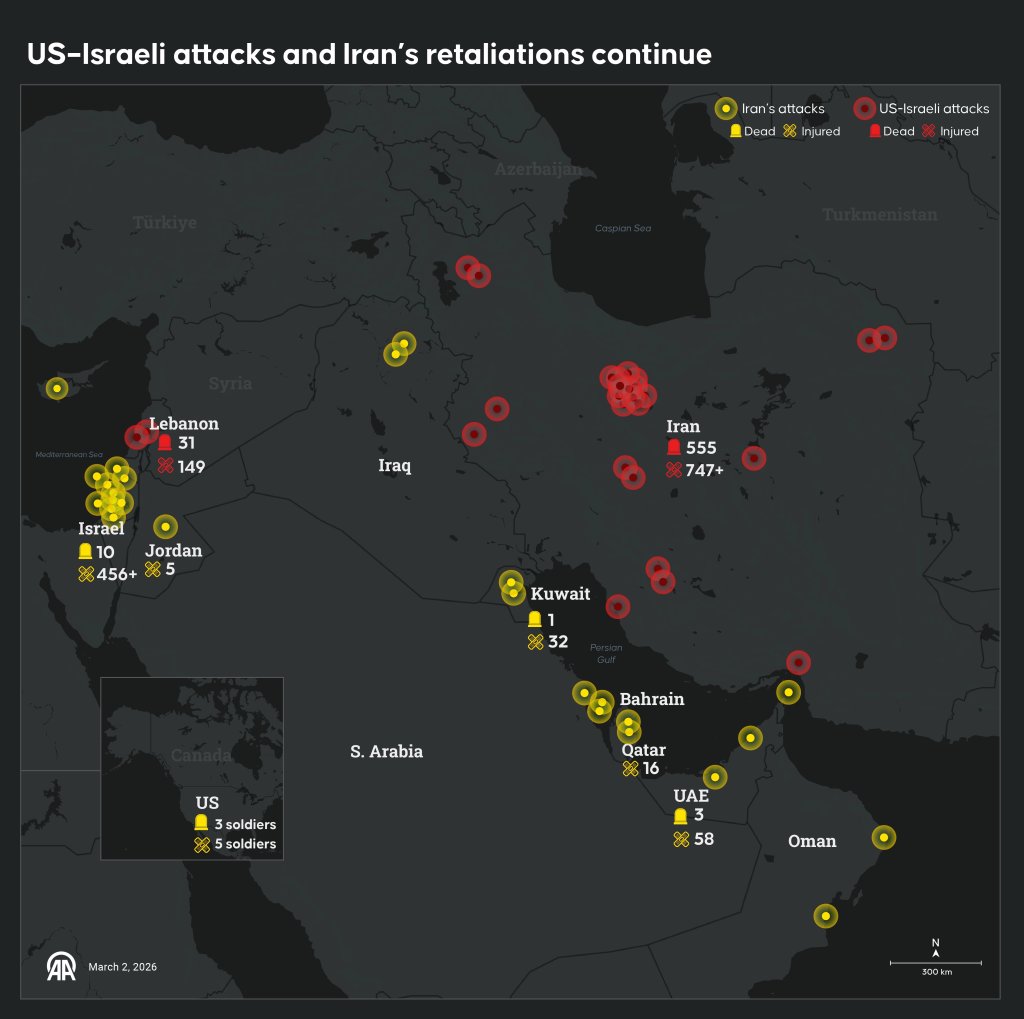
84mm of Focused Sunlight: The Iron Beam
The most closely watched autopsy of the old way of war is happening in Israel, which has been using its Iron Beam tech more frequently than it had possibly hoped.
For years, laser weapons were the novelty tool of the defense industry, always five years away and ten billion dollars over budget. Since late 2025, the dream is officially operational, baking threats in mid-air like dinner rolls.
The appeal is pure, unadulterated Einsteinian art. Instead of launching a sophisticated interceptor that requires a PhD to maintain, the Iron Beam focuses a 100kW high-energy laser onto a target until its structural integrity ceases to exist.
There is no explosion, no exhaust trail to track, and, magically, no reload time. As long as the generator has that sweet, sweet diesel, you have an infinite magazine.
The real “FAFO” factor here will be the price tag. A single laser shot costs around $2-5. To put that in perspective, a soldier spends more money buying Rip Its than they do countering an incoming suicide drone.
It effectively creates a “laser wall” that makes traditional saturation tactics financially impossible for the enemy… and Dr. Evil smile. If they send a thousand drones, we spend $3,000. That is how you win the future wars of attrition.
Microwave that Swarm
Throughout history, humans have looked to the Gods for assistance; today is no different. The U.S. Air Force’s THOR (Tactical High-Power Operational Responder) is the military’s answer to the “swarm” nightmare we wake up in sweats about.
Lasers are great, but they have to linger on a target, killing one drone at a time. In a saturation attack, you don’t have that luxury.
HPM systems like THOR or Epirus’ Leonidas don’t care about precision. They emit massive bursts of microwave energy that fry the delicate silicon brains of anything with a circuit board. It doesn’t matter if there are two drones or 50; if they are in the beam’s path, they turn into falling scrap metal instantly (Skynet might want to rethink their strategy of sending pairs of scary robot legs to finish off humanity).
There were trade-offs, of course, that were as heavy as the hardware itself. Breakthroughs have been made since, particularly regarding Epirus’ Leonidas.
While the early high-power microwave (HPM) systems required massive infrastructure, modern solid-state HPM systems like Leonidas are specifically designed to be highly mobile, with lower power and cooling demands, allowing them to support fast-moving maneuver units humping through a conflict.
The Reusable Kamikaze: Roadrunner
Perhaps the most interesting entry in this race is Anduril’s Roadrunner. Well, what is known about it is interesting. It solves what we call the “Patriot Problem”, a paralyzing hesitation of a commander who doesn’t want to fire a $4 million explosive pole at a $30,000 Shahed drone.
The Roadrunner is a twin-jet autonomous vehicle that looks like a retro spaceship and behaves like a flying guard dog. It launches vertically, hunts for a target at high subsonic speeds, and then makes a life-or-death decision.
If the threat is real, it becomes a warhead and dives toward the target. However, if the threat turns out to be a flock of birds or a false radar return, it doesn’t self-destruct. It flies back to base and lands on its tail to be refueled for the next sortie. It is the first time a “kamikaze” weapon has included “boomerang” functionality.
The Meat in the Seat
We can talk about lasers all day, but the biggest failure point in air defense isn’t the weapon; it’s the detection. Small drones are the ghosts of the modern SERP. They have minimal radar signatures, they fly low enough to hide in the clutter of buildings, and some don’t even emit radio signals for us to jam.
This is where the hyper-competent, tech-literate warfighter becomes the most critical piece of gear on the battlefield. We are increasingly relying on a hybrid sensor fusion approach, combining infrared, acoustic, and optical tracking with AI algorithms that can distinguish a suicide drone from a seagull in milliseconds.
Has the margin for error thinned to the point of evaporating into the ether? We are asking 19-year-olds to operate autonomous interceptor drones and directed-energy weapons while sleep-deprived and under fire. The tools have changed, but the job description is still the same: adapt and overcome.
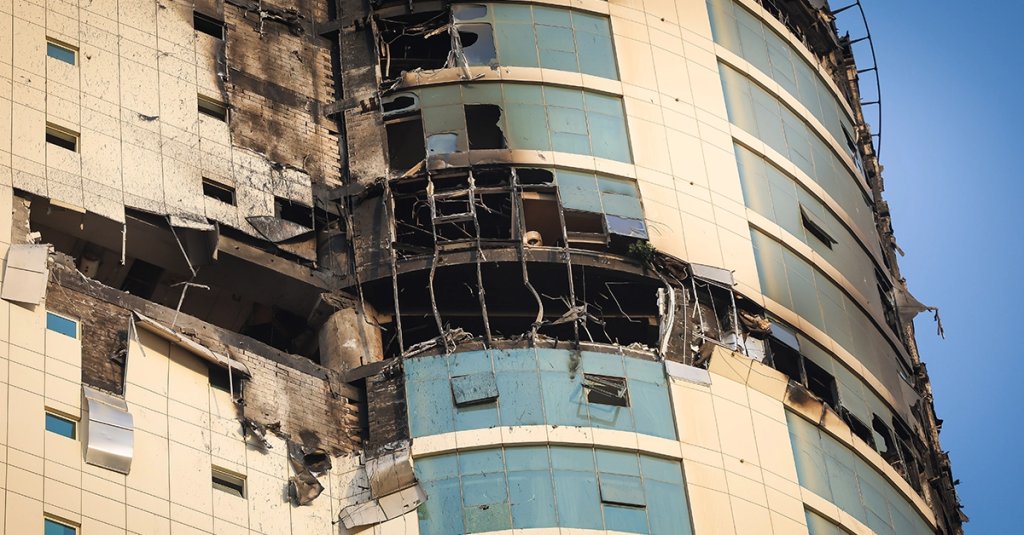
Since the proliferation of inexpensive, commercially created drones, the power gap between global superpowers and regional actors has shrunk. The workmanlike approach, combining simplicity and reliability, is being forced to merge with Star Trek-esque tech just to keep the fight on.
We are currently in a transition phase where the gear is smarter than many of the people using it. There is no silver bullet. Radio jamming is useless against autonomous flight paths, and lasers struggle in heavy fog or dust.
For now, the solution is a layered defense that combines smarter guns, directed energy, and kamikaze interceptors into a single, networked system.
Make no mistake, this is now the drone age. It didn’t arrive with a press release or great fanfare; it arrived with the sound of a lawnmower engine over a darkened base. Our tools are now officially entering the Terminator era; the outcomes of these conflicts, on the other hand, depend on a human making a decision that a computer simply cannot…yet. So, welcome to the future: It’s smokey, it’s anxiety-inducing, and it’s just getting started.
Don’t Miss the Best of We Are The Mighty
• The God-Switch: What Elon Musk’s Starlink can actually be used for
• How the US deleted Venezuela’s air defenses so quickly
• An autopsy of Venezuela’s $2 billion Russian S-300VM missile system