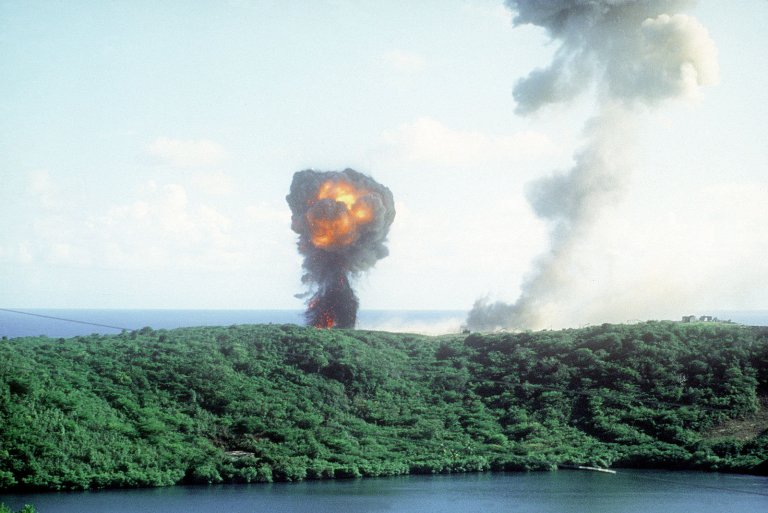
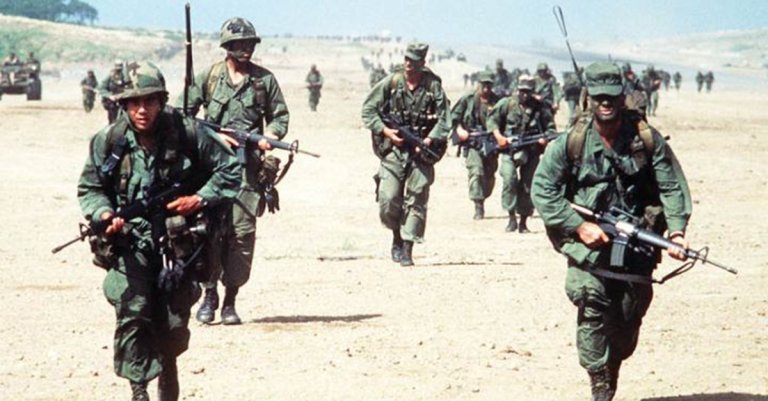
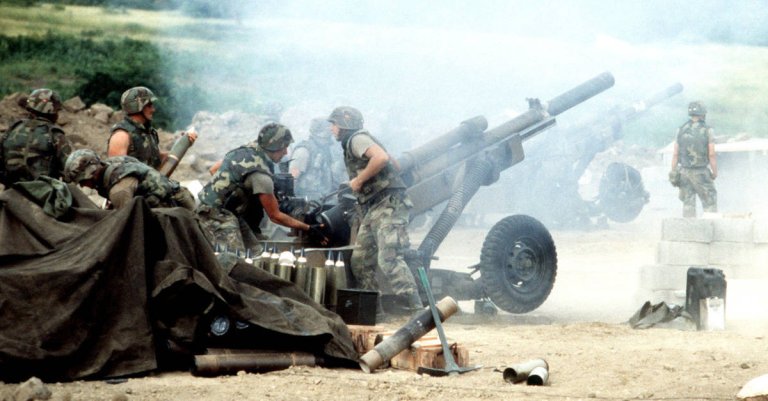
On October 25, 1983, the United States invaded the tiny island nation of Grenada. It was a “no-notice” invasion for the U.S. troops that deployed there. Here are eight facts about this small but potent combat operation.
1. Urgent Fury kind of avenged the death of Grenada’s Marxist Prime Minister.

On March 13, 1979, the Marxist-Leninist New Jewel Movement, led by Maurice Bishop, overthrew Grenada’s government, led by Eric Gairy, in a nearly bloodless coup. Gairy wasn’t even in the country at the time. The NJM suspended the constitution and established the People’s Revolutionary Government.
By 1983, the government had divided into two factions. Bernard Coard believed the NJM should take a harder line on communism and demanded that Bishop share power. Bishop, who was popular, wanted a closer relationship with the U.S. In October 1983, Coard overthrew Bishop and executed him.
2. The U.S. was invited to intervene.
The Governor-General of Grenada, Paul Scoon, was also arrested during the coup and held under house arrest. When Bishop was executed, Scoon understandably freaked out a little. As Britain’s Queen Elizabeth II’s appointed representative, he had little real authority, except for a constitutional provision that allowed him to appeal to other nations for help.
Although his communications were cut off, he was able to secretly send a message to the Caribbean Community (CARICOM) and, through them, to the UK and the U.S., outlining the dangerous situation. The United States and the Organization of Eastern Caribbean States (OECS) cited this request as a primary legal justification for the invasion. When the invasion began, Navy SEALs came to rescue him.
3. It was a coalition invasion force.
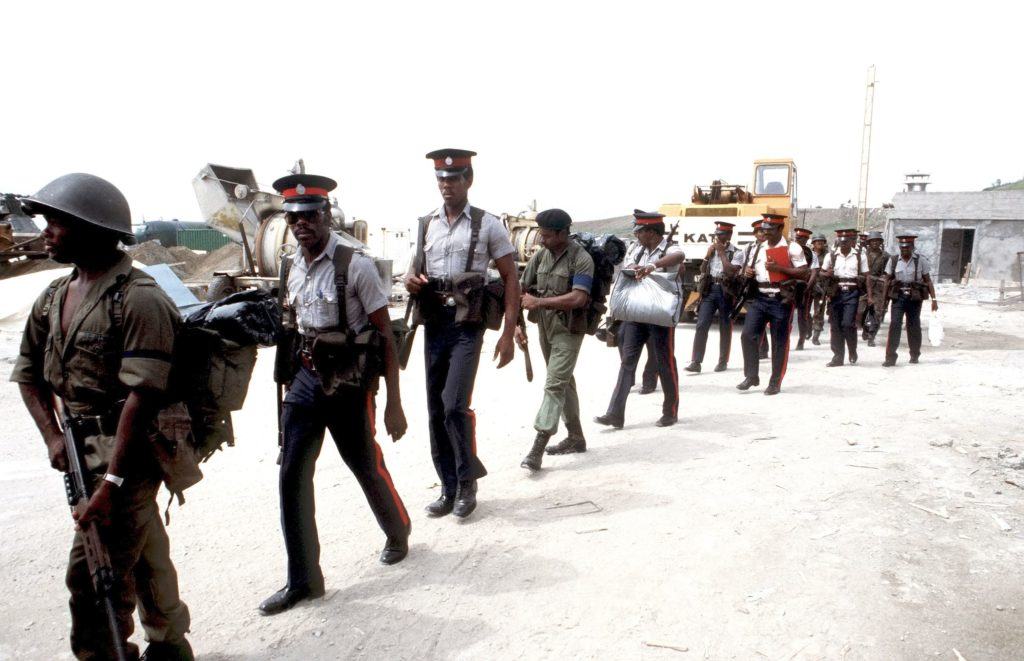
While the U.S. provided the vast majority of the troops, firepower, and logistical command for the invasion of Grenada, it was not a unilateral U.S. action. Other Eastern Caribbean countries were also in the invasion force. The Regional Security System was formed from the Organisation of Eastern Caribbean States, of which Grenada was once a member.
Antigua and Barbuda, Barbados, Dominica, Saint Kitts and Nevis, Saint Lucia, and Saint Vincent and the Grenadines all assisted in the takeover of Grenada’s government. The participating Caribbean nations provided police officers, soldiers, and, symbolically most importantly, political legitimacy.
4. Rangers led the way in Grenada.

The 1st and 2nd Ranger Battalions, along with special operations troops and Air Force Combat Controllers, captured Point Salines on Oct. 25, 1983, in a large-scale combat jump. The capture of the nearly complete Point Salines Airport was the first and most critical primary objective of the invasion.
Read: That time Rangers stole a bulldozer for an assault vehicle
Rangers from the 1st and 2nd Battalions conducted a low-level parachute assault directly onto the airfield from only 500 feet. This was a high-risk operation designed to achieve surprise and secure the airfield quickly, allowing reinforcements to be flown in directly. They encountered much stronger resistance from Cuban military engineers (who were building the airport) and Grenadian forces than intelligence had predicted. The transport planes faced anti-aircraft fire, and the Rangers had to fight to secure the runway.
U.S. Air Force Combat Control Teams (CCTs) jumped with the Rangers. Their job was to establish air traffic control on the captured airfield. This vital task allowed C-141 transports to begin landing with reinforcements from the 82nd Airborne Division later that same afternoon.
5. U.S. troops faced Cuban soldiers for the first time.
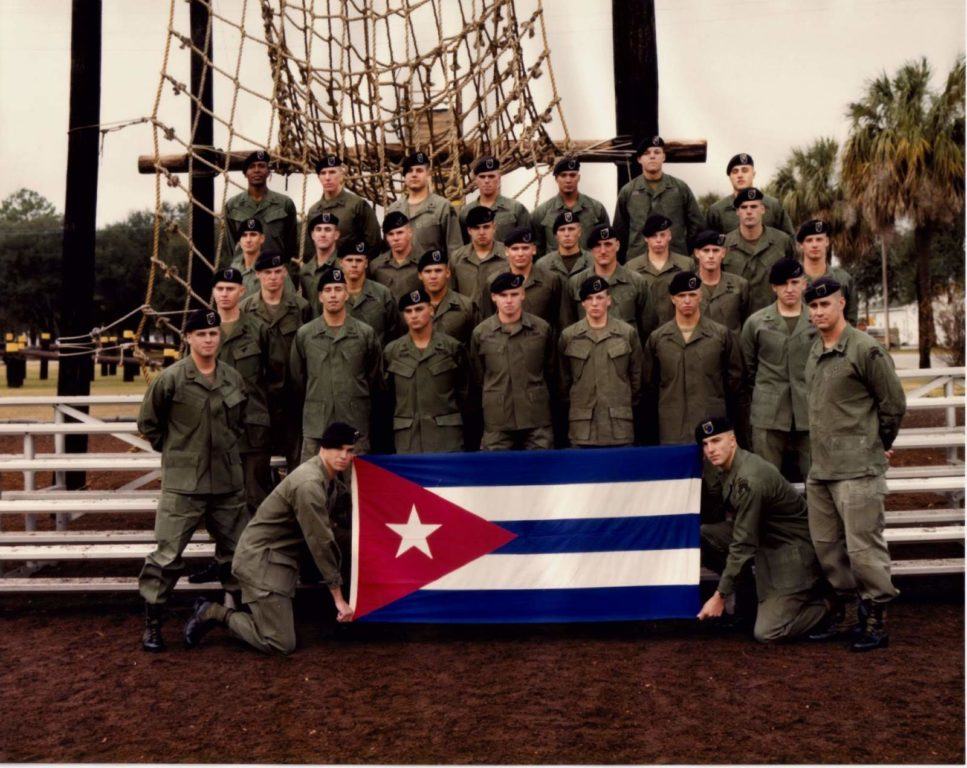
Cuban-American relations soured after Fidel Castro’s Communist takeover. Events like the 1962 Missile Crisis and Cuban support for Communist ventures abroad only exacerbated the relationship, but the two forces never engaged each other in direct combat – until Grenada.
Cubans on the island were not just civilian advisers or construction workers. While the majority were indeed construction personnel working on the new Point Salines airfield, a significant contingent of Cuban military personnel was also present. When the invasion of Grenada began, these soldiers were ordered to resist the U.S. advance, particularly at the Point Salines airfield construction site.
It was the first instance of uniformed U.S. Army soldiers fighting uniformed Cuban soldiers in sustained firefights. Of the 772 Cuban troops deployed there, Havana suffered 25 killed, 59 wounded, and 638 captured.
6. Only one military movie features Urgent Fury.
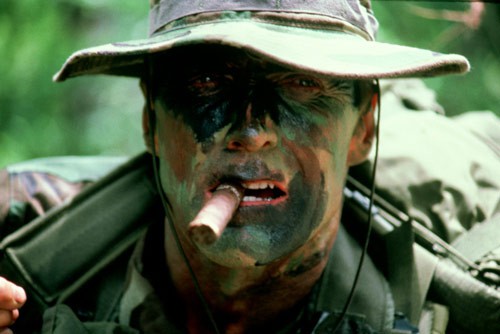
The only major Hollywood feature film to depict Operation Urgent Fury is 1986’s “Heartbreak Ridge,” directed by and starring Clint Eastwood. The story of the surrounded U.S. troops on the island who called back to the States for artillery support was not only true, but it was also retold on the silver screen.
The true story got somewhat muddled over time, however. In “Heartbreak Ridge,” it was Gunnery Sgt. Highway’s Marines who called back. The SEALs say it was one of theirs, while others believe it was an Army officer.
Read: That time a soldier used a payphone to call in artillery support during the invasion of Grenada
7. The UH-60 saw action for the first time.
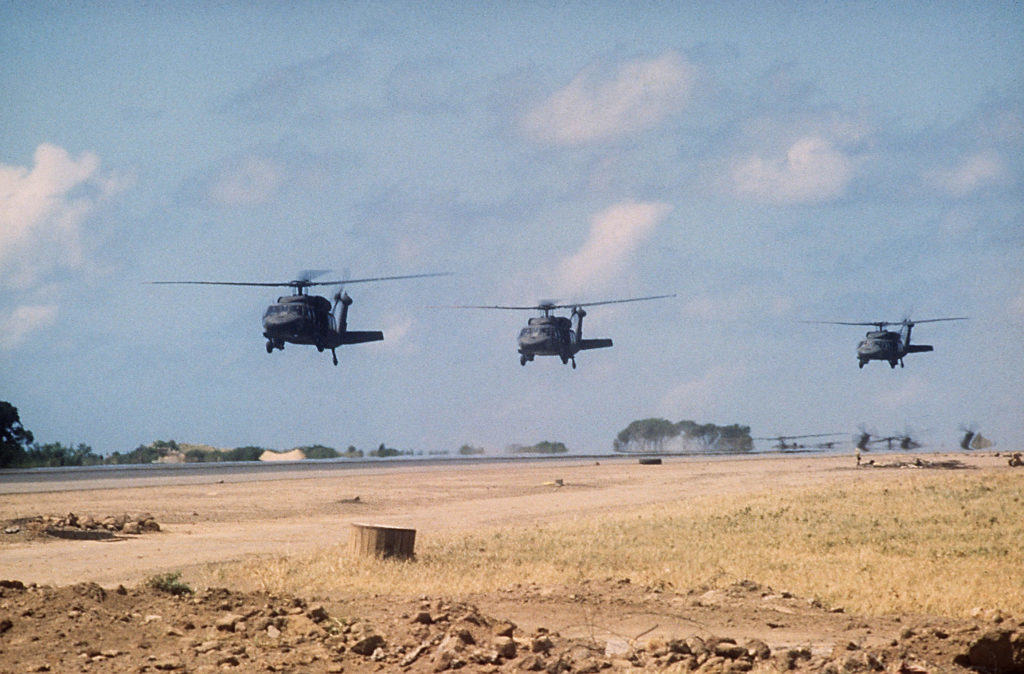
The invasion of Grenada was a trial by fire for the new UH-60 Black Hawk, as the now-iconic helicopter was first introduced by the Army in 1979, replacing the venerable UH-1 “Huey.” Grenada was the first major military operation large enough to require its deployment since its introduction and would be the first operational use of the aircraft against an enemy in combat.
This new aircraft was “faster and quieter” than previous transports and was found to be a “more reliable platform than the UH-1.” Black Hawks were used extensively during the operation for inserting and extracting troops, medevac, and other roles. Its performance, particularly its speed and survivability, was a significant upgrade from the older Hueys.
Operation Urgent Fury also marked the first combat losses of the UH-60. Several were damaged, and at least one was destroyed by enemy fire, providing early lessons on its vulnerabilities.
8. It was the first large-scale joint operation since the Vietnam War.

The U.S. invasion of Grenada is widely considered the first major large-scale joint military operation involving U.S. forces since the end of the Vietnam War. While there had been smaller-scale actions between Vietnam and Grenada (such as the Mayaguez incident in 1975 and various special operations missions), none were on the scale and complexity of Urgent Fury. It involved over 7,000 U.S. troops and required intricate planning and coordination between all four services.
As the story of a U.S. troop calling for air support with a payphone demonstrates, the “joint” aspect of the operation did not go well. The operation was a success despite the service interoperability failures. Failures in command and control highlighted the need for changes. The Goldwater-Nichols Act restructured the U.S. military based partly on the Grenada invasion’s “deficiencies in the planning and preparation for employment of U.S. military forces in times of crisis.”