It’s been nearly 25 years since five al-Qaeda militants hijacked American Airlines Flight 77 on Sept. 11, 2001. The plane was on its way from Dulles Airport outside of Washington, D.C., to Los Angeles, Calif., but only made it as far as eastern Kentucky before the terrorists took over the plane, redirected it, and slammed it into the Pentagon.
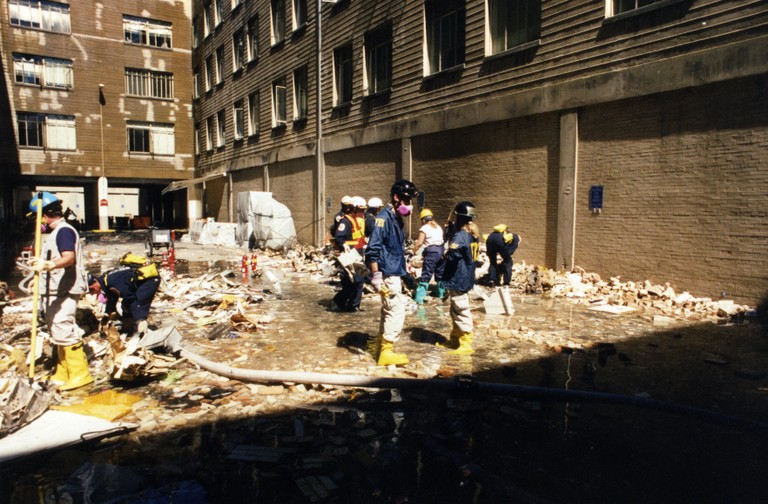
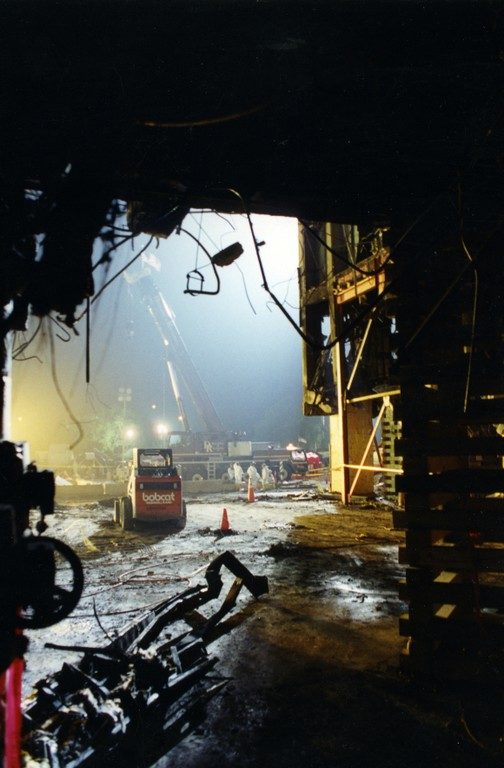
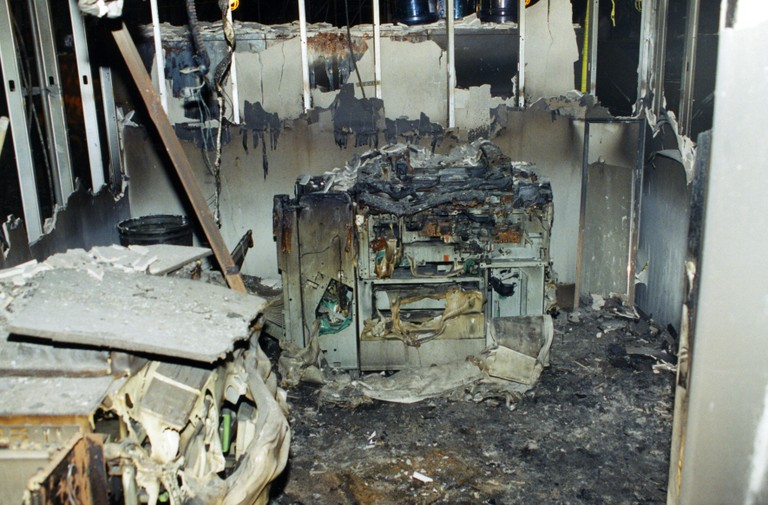
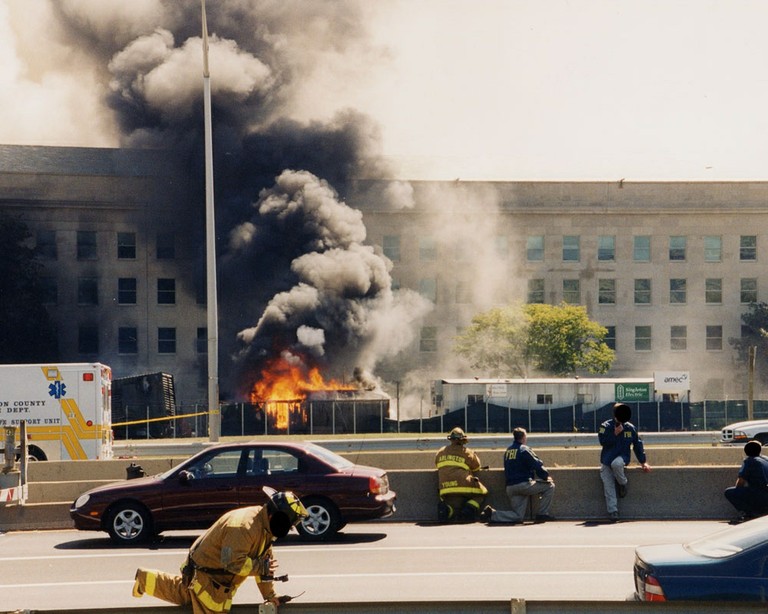
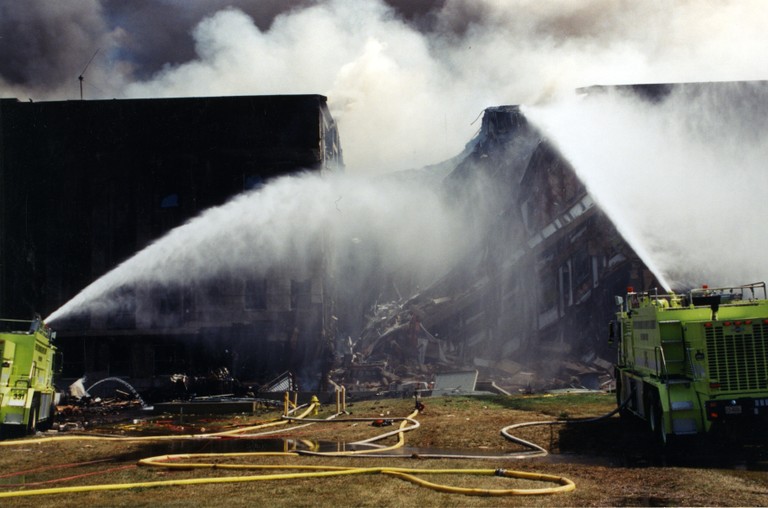
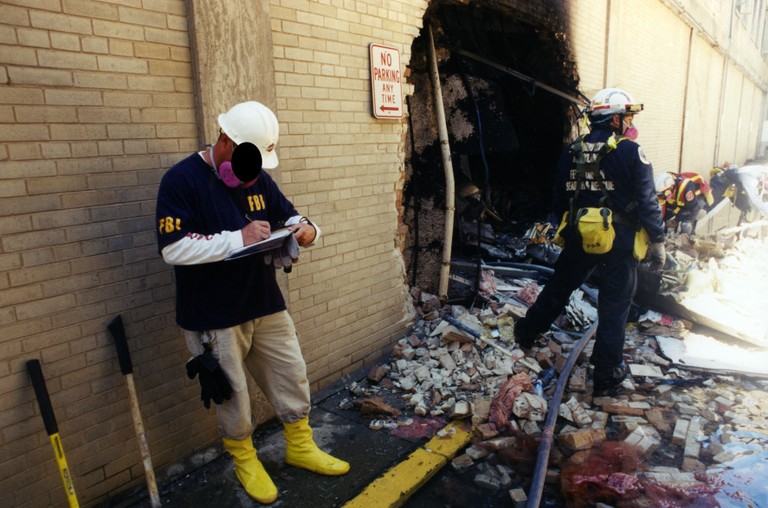
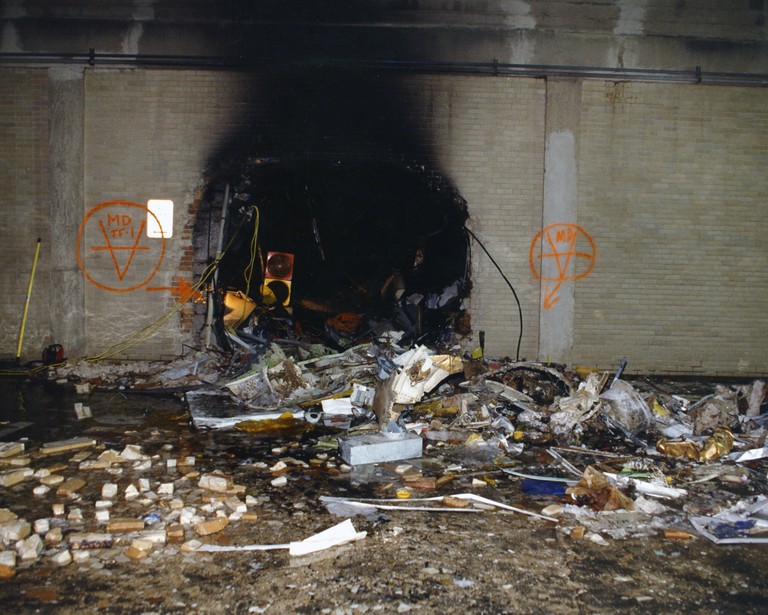
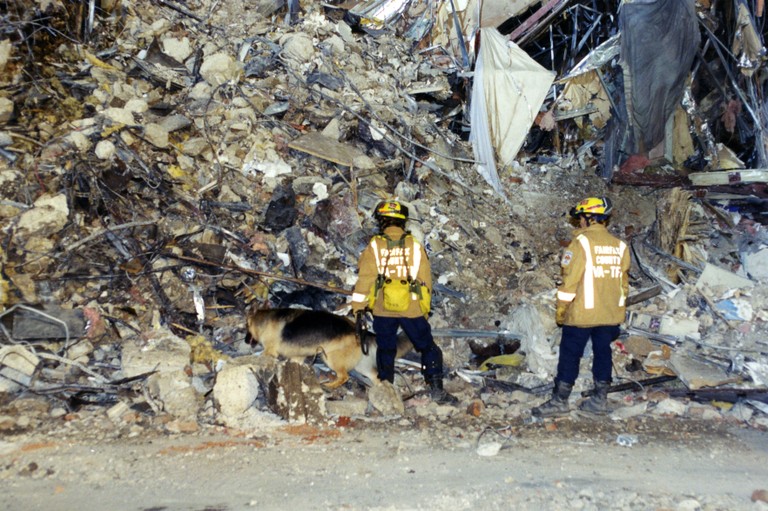
The FBI added 27 images that the agency took on the ground in Northern Virginia that day to their photo vault. They show how dedicated first responders raced to rescue the wounded and remove the dead from the shell of the nation’s symbol of military power.

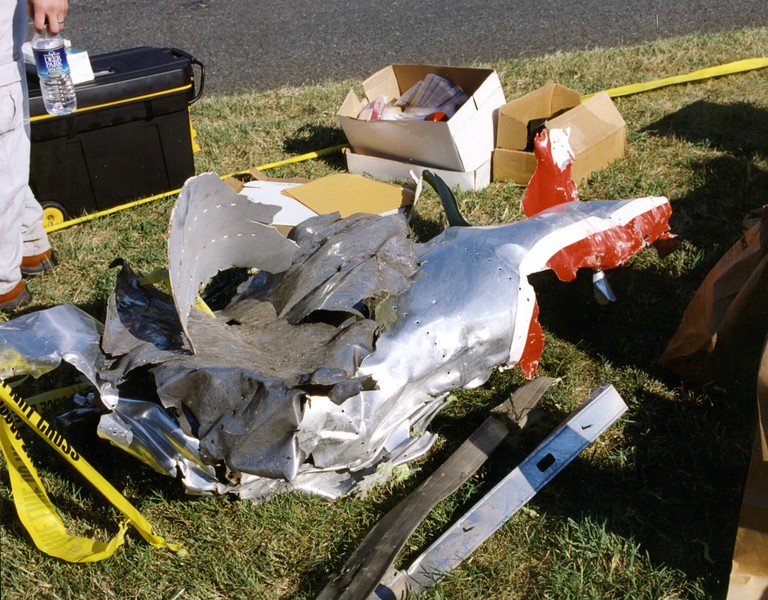
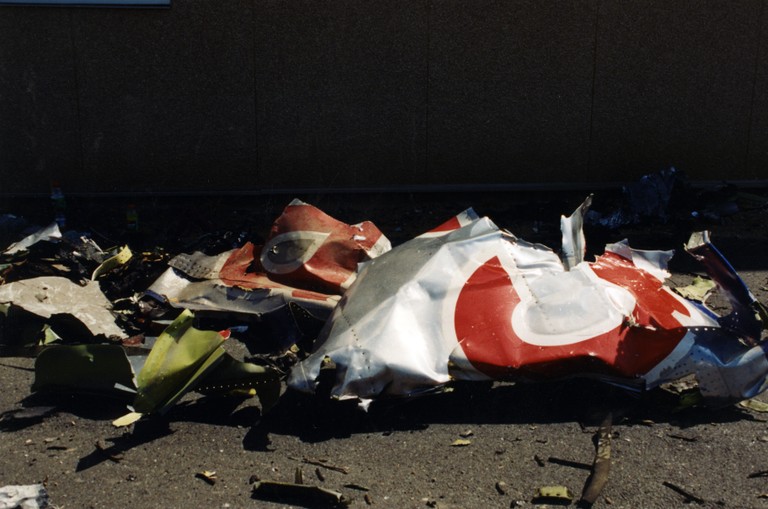
Debris from the plane and the building are highlighted. The attack killed 125 people in the Pentagon, as well as all aboard the flight: 53 passengers, six crew, and the five hijackers. The Boeing 757 actually took off from Dulles ten minutes early, at 8:20 am.
Some of the passengers were 5th and 6th-grade teachers as well as students on a National Geographic Society field trip, heading to the Channel Islands National Marine Sanctuary in Santa Barbara. One woman aboard had changed her flight at the last minute in order to get home in time for her husband’s birthday.
Authorities estimate the flight was taken over between 8:51 and 8:54 in the morning, as the last communication with the real pilots was at 8:50. At 8:54, the flight deviated from its flight plan.

The terrorists were led by a trained pilot, as the other four herded the passengers to the back of the plane to prevent them from re-taking the aircraft.
The hijacker pilot did not respond to any radio calls. According to the 9/11 Commission report, at 8:56, American 77 turned off its transponder and disappeared from Indianapolis radar. The controller searched for the aircraft and tried to establish radio contact. He then tried to make contact through the airline. At this point, the Indianapolis controller had no knowledge of the situation in New York. He believed American 77 had experienced serious electrical and/or mechanical failure and had possibly crashed.
With no transponder signal, the flight could only be found when it passed the path of ground-based radar.

According to the 9/11 Commission Report, at 9:25, the Command Center advised FAA headquarters that American 77 had been lost in Indianapolis Center’s airspace and that Indianapolis Center was searching for the aircraft.
While FAA radar equipment tracked the flight from the moment its transponder was turned off, this information was not available to controllers at Indianapolis Center for technical reasons. The result was that Indianapolis Center never saw Flight 77 turn around and head back toward Washington. The plane traveled undetected for 36 minutes.
At this point, the FAA’s Command Center and FAA headquarters knew the following: They knew two aircraft had crashed into the World Trade Center. They knew American 77 was lost. They knew that a hijacker on board American 11 had said, “We have some planes.” Concerns over the safety of other aircraft began to mount.
At 9:37:46 am, American Airlines Flight 77 crashed into the Pentagon. Military assistance had not been requested as the plane was literally not on their radar – interceptor aircraft were just 150 miles away.
You can listen to the actual radio traffic about the flight on NPR.

The attack killed 184 people at the Pentagon on 9/11. This number includes 59 passengers aboard American Airlines Flight 77 and 125 workers and civilians inside the Pentagon. Learn more about the Pentagon’s heroes at the Pentagon Memorial page.
USA Today detailed the victims of Flight 77.

The Pentagon Memorial website also has a lot of resources for service members and civilians – some of whom may not have been born or are too young to remember the attacks – to learn more about the timeline of that day, to hear real 9/11 experiences, or to submit questions about it.

“The Boeing 757 approached the west wall of the Pentagon from the southwest at approximately 780 ftls,” Said the Pentagon Building Performance Report, a study conducted by the American Society of Civil Engineers, which contains a detailed description of the attack on the Pentagon on 9/11. “As it approached the Pentagon site it was so low to the ground that it reportedly clipped an antenna on a vehicle on an adjacent road and severed light posts.”

“When it was approximately 320 ft from the west wall of the building (0.42 second before impact), it was flying nearly level, only a few feet above the ground,” the Pentagon report continued. “The aircraft flew over the grassy area next to the Pentagon until its right wing struck a piece of construction equipment that was approximately 100 to 110 ft from the face of the building (0.10 second before impact).”
“When it was approximately 320 ft from the west wall of the building (0.42 second before impact), it was flying nearly level, only a few feet above the ground… The aircraft flew over the grassy area next to the Pentagon until its right wing struck a piece of construction equipment that was approximately 100 to 110 ft from the face of the building (0.10 second before impact).”
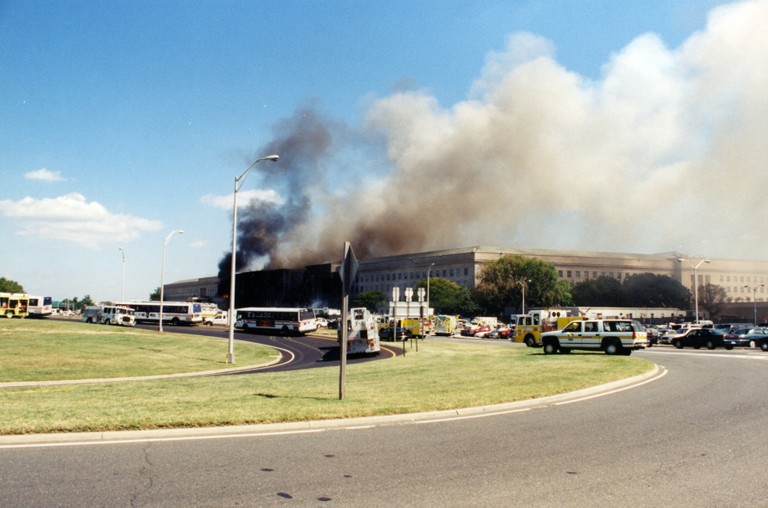
“The morning of September 11, 2001 remains one of the most pivotal points in American history—and for the FBI,” the bureau wrote about the Pentagon on 9/11 on its memorial website. “The ensuing investigation was the largest in the history of the Bureau. The attacks led to far-reaching changes in the organization as it elevated terrorism to the gravest threat against the U.S.”

There’s actually nothing new about these photos of the Pentagon on 9/11. The FBI originally released them in 2011, but a technical error on the website caused them to be lost in a glitch. Six years after they were first released, they were re-released.