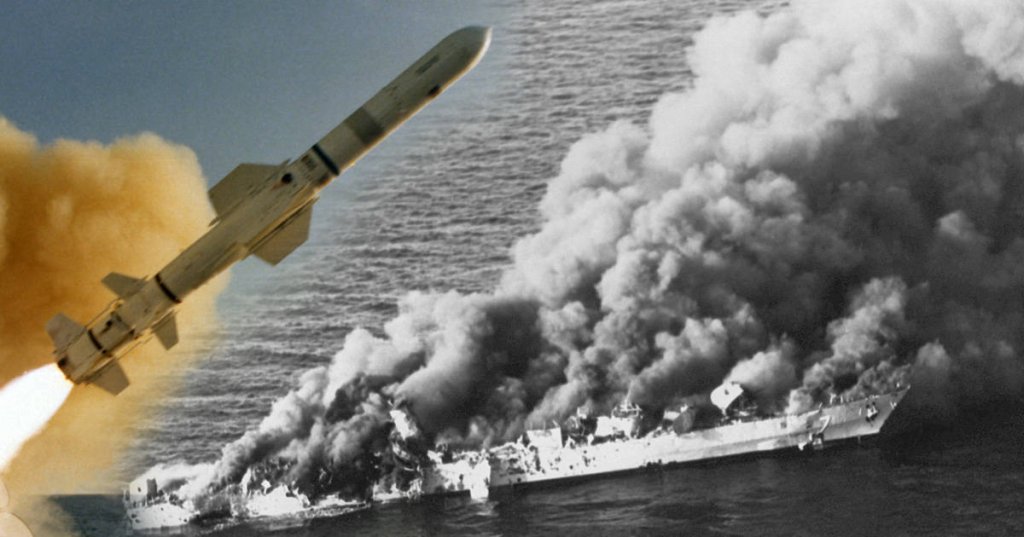
No love affair ever ended with more animosity than that of Iran and the United States. The two countries were constantly antagonizing each other long before the spat blew up into open conflict in 2026.
Also Read: A Marine Corps general led a fictional Iran against the US military—and won
Since the 1979 Iranian Revolution that led to Iran holding 52 American hostages for 444 days, nearly a dozen incidents had strained the relationship between the two countries. None was more violent than Operation Praying Mantis, the U.S. response to the USS Samuel B. Roberts striking an Iranian mine.
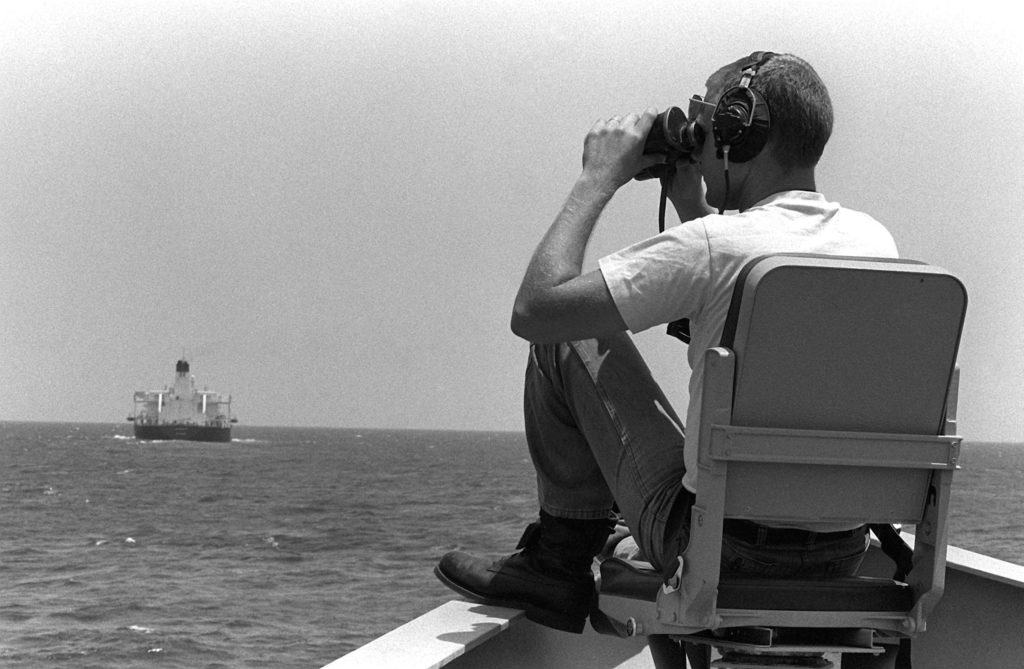
The Samuel B. Roberts deployed to the Persian Gulf as part of Operation Earnest Will, an operation ordered by President Ronald Reagan to protect freedom of movement and international shipping in the Gulf and the Strait of Hormuz. When the Roberts, a destroyer escort, hit the mine, it became the catalyst for Operation Praying Mantis, one of the largest American surface confrontations since World War II.
Read: The weapon that decided Operation Praying Mantis
At 105 kilometers east of Bahrain, it was close to Iran’s maritime boundary but still well outside of it. The mine blew a 15-foot hole in the ship’s hull, injuring ten sailors. Luckily, the crew saved the Samuel B. Roberts, and it was towed to Dubai two days later.
For four years leading up to this event, Iraqi dictator Saddam Hussein had planned to bring the U.S. into the ongoing Iran-Iraq War—on his side, of course. In 1984, Iraq started attacking Iranian oil tankers and platforms to provoke the Iranians into taking extreme measures to protect their interests.

The Iranians responded as Hussein hoped, attacking Kuwaiti-flagged oil tankers moving Iraqi oil. Kuwait, though officially Iraq’s ally, was also a non-combatant and a key U.S. ally in the region. The Iranians were also illegally mining the Gulf’s international shipping lanes. Laying mines was an extreme measure, Hussein hoped the Iranians would take, and a move the United States didn’t take lightly, given the U.S. Navy’s ongoing mission of ensuring freedom of movement through sea lanes.
In April 1988, Iran was caught mining international waters when U.S. Army Night Stalker MH-6 and AH-6 helicopters forced the crew of the minelayer Iran Ajr to abandon ship. Navy SEALs then captured the Iran Ajr, finding mines and a logbook on the ship’s mine placements. The Navy scuttled the ship the next day.

That’s when the Samuel B. Roberts hit a mine, and the U.S. response was overwhelming. Aircraft from the USS Enterprise, along with two Surface Action Groups (SAG), moved against the Iranians on April 18, 1988.
The first SAG attacked the Sassan oil platform with two destroyers, an amphibious transport, and multiple helicopter detachments. Cobra helicopters cleared all resistance before United States Marines captured the platform and destroyed it as they left.
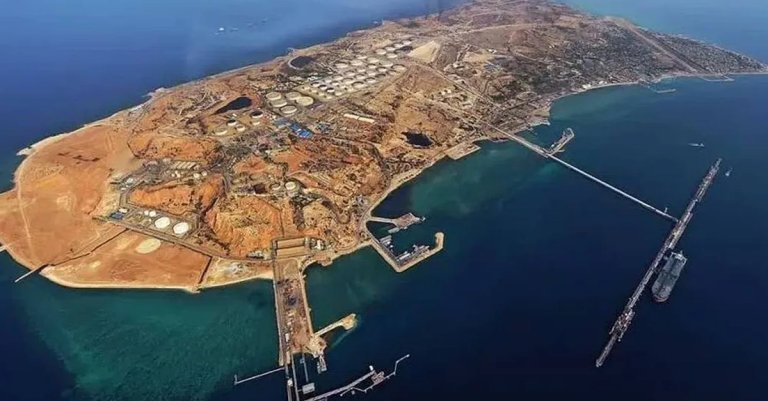
The other SAG, consisting of a guided missile cruiser and two frigates, attacked the Sirri oil platform. The plan called for SEALs to capture the platform, but the pre-attack naval bombardment was so intense that the SEAL mission wasn’t necessary.
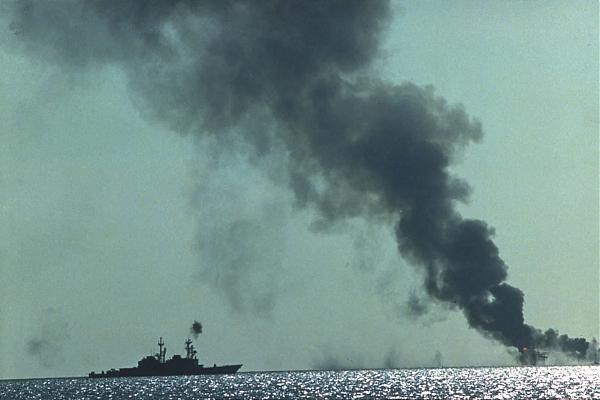
Iran responded by sending speedboats to attack shipping in the region. American A-6E Intruders sank one and chased the rest back into Iranian territory.
One Iranian fast-attack ship, Joshan, challenged the entire second SAG on its own. For its effort, Joshan got one harpoon missile off before the other ships, the USS Wainwright, the USS Bagley, and the USS Simpson, hit it with four Standard missiles, then finished it off with their guns. Chaff countermeasures diverted the Iranian Harpoon missile, and it inflicted no damage.
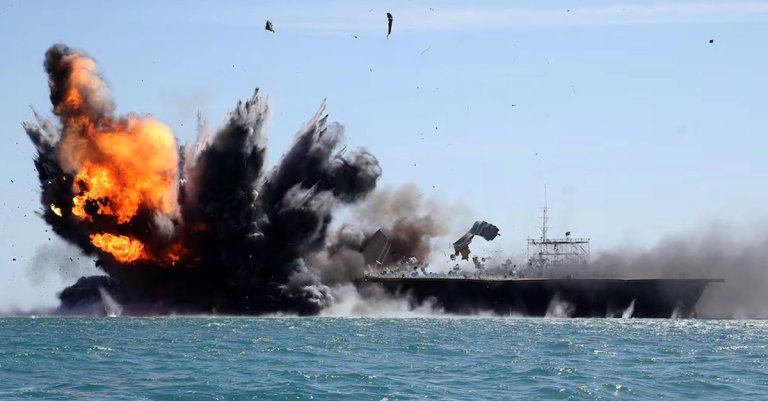
An Iranian frigate, Sahand, attacked the USS Joseph Strauss and its A-6E overwatch, which all returned fire with missiles of their own. The American missiles started a fire aboard the Sahand, which reached her munitions magazine. The frigate exploded and sank.
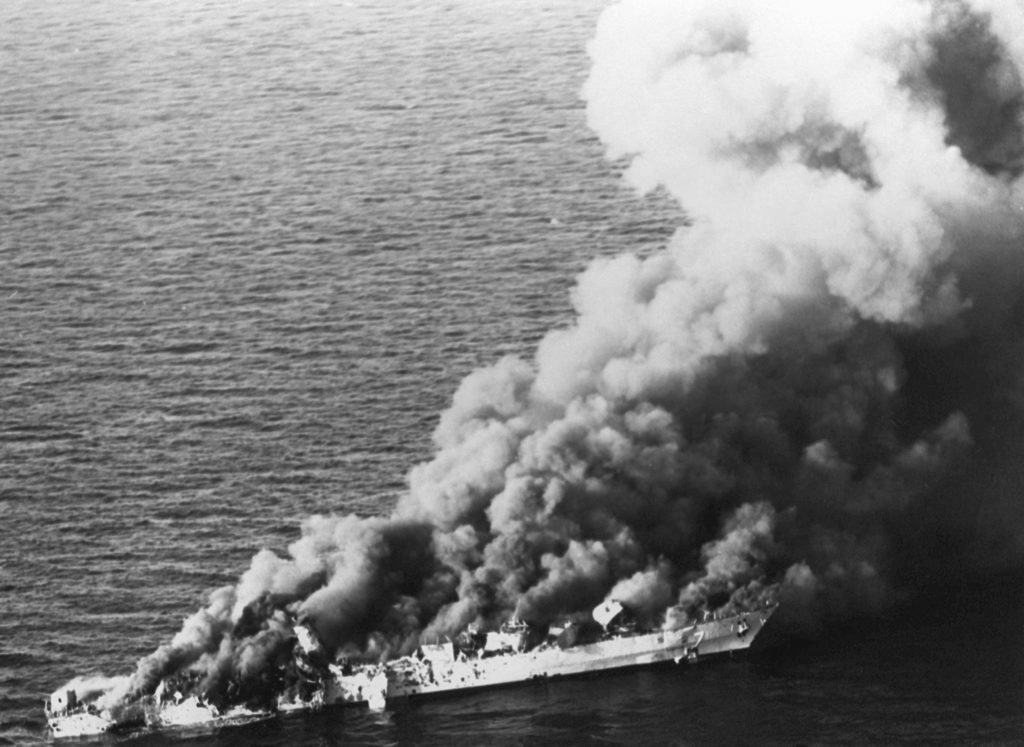
Another Iranian frigate, the Sabalan, moved to attack A-6Es from the Enterprise. One naval aviator dropped a Mark 82 laser-guided bomb on the Sabalan’s deck, crippling the frigate and leaving it burning. As the Sabalan was towed away, the A-6Es were ordered to abort the attack in an effort to prevent the situation from escalating. The U.S. cut off all attacks in the region and offered Iran a way out of the situation, which it promptly took.
The U.S. retaliation operation, called “Praying Mantis,” cost the lives of three service members, Marines whose AH-1T Sea Cobra helicopter gunship crashed in the dark during a recon mission.
Don’t Miss the Best of We Are The Mighty
• A US submarine sunk an enemy ship with a torpedo for the first time since WWII
• Aviation nerds are mourning Iran’s F-14 Tomcats
• How Eisenhower’s ‘Atoms for Peace’ program started Iran’s nuclear program