
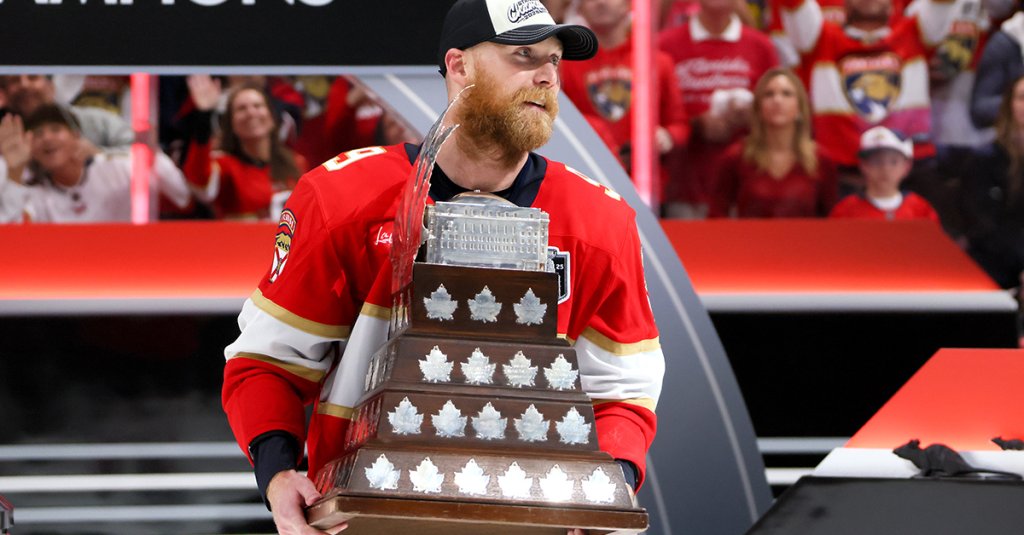
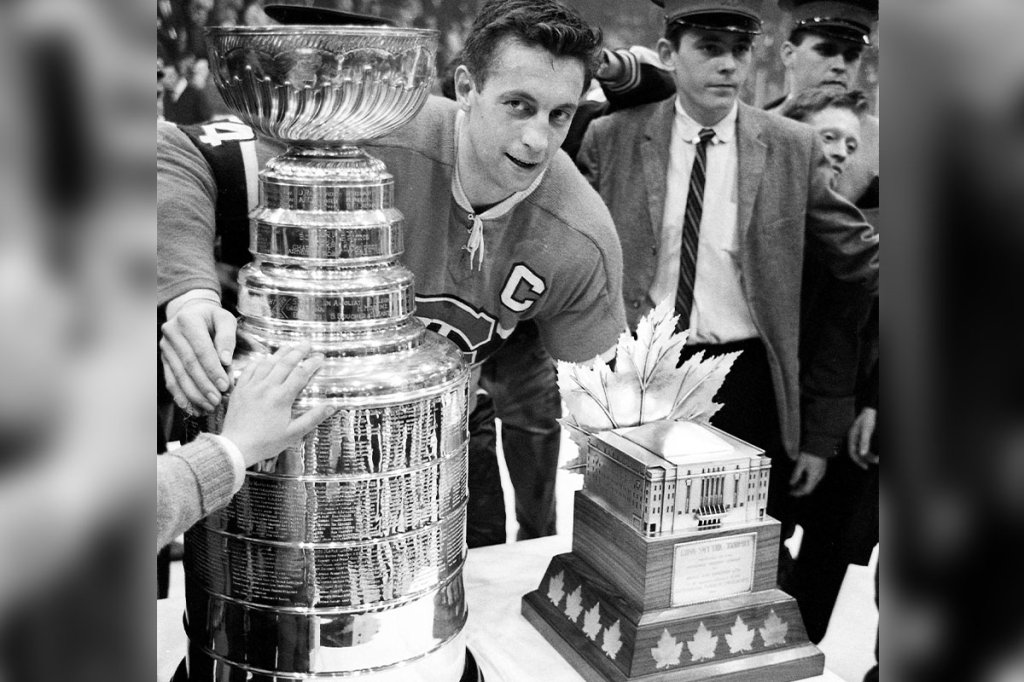
First presented in 1965 to Jean Beliveau of the Montreal Canadiens, the Conn Smythe Trophy is one of the National Hockey League’s (NHL) most prestigious awards. Presented annually to the most valuable player in the Stanley Cup Playoffs, past recipients include hockey greats such as Patrick Roy, Wayne Gretzky, Mario Lemieux, Steve Yzerman, Bobby Orr, Bernie Parent, Guy Lafleur, Duncan Keith, and Sidney Crosby.
Unlike other professional sports MVP awards, the Conn Smythe Trophy is based on a player’s performance during the entire postseason, not just the championship game or series. For this reason, the trophy has not always been awarded to a member of the championship-winning team.
More in Sports: The real-life Rocky Balboa was a United States Marine
Rich in history and lore, even the most diehard fans of the game may not recognize that the trophy’s namesake was one of the early 20th century’s most fascinating figures. Throughout his long life, Conn Smythe held numerous roles, including athlete, businessman, and sportsman, but his enduring fame stemmed from his ownership and leadership of the Toronto Maple Leafs, a tenure that spanned decades.
“Conn Smythe’s name was synonymous with hockey in Toronto for five decades,” the Hockey Hall of Fame notes.
Despite his countless successes on the ice and in business, the position he was arguably most proud of was that of a Canadian soldier during the First and Second World Wars.
Early Years
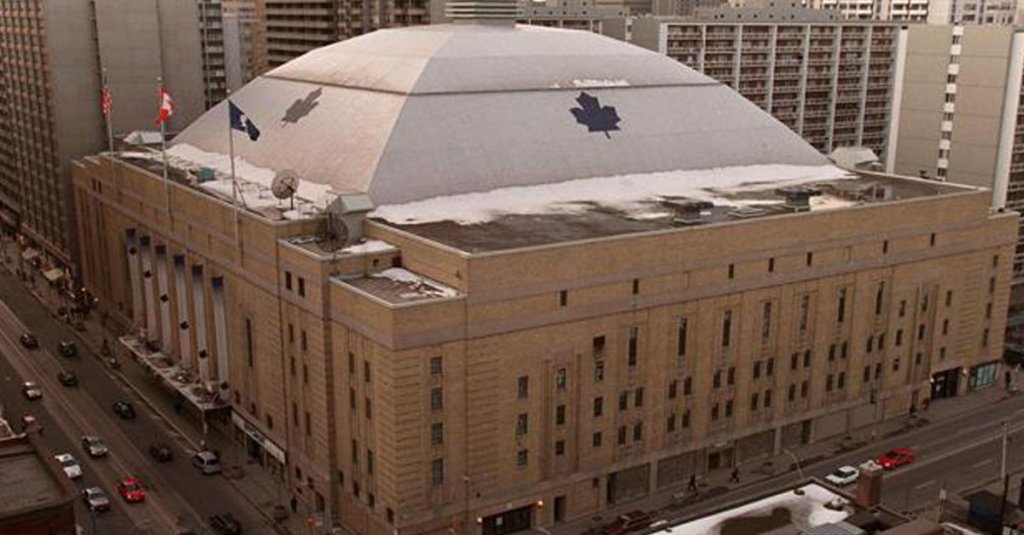
Constantine Falkland Cary Smythe, or Conn Smythe, was born on February 1, 1895, to an Irish immigrant father and an English mother. Smythe grew up in a poor family that frequently moved around his hometown of Toronto. His first home stood near the site where he would later build Maple Leaf Gardens, one of Canada’s great cathedrals of hockey.
As a teenager, Smythe showed considerable athleticism, playing on his high school’s hockey, football, rugby, and basketball teams. His success in basketball and hockey led him to appear in city championship games for the sports in 1912. Against the wishes of his father, Smythe tried his hand at homesteading in Clute Township instead of attending college. This experiment lasted one summer, as hardships, including a fire that destroyed his home, led the young man back to Toronto.
There, Smythe enrolled in the University of Toronto, one of Canada’s oldest and most prestigious academic institutions, to study engineering in the fall of 1912. He also returned to competitive hockey playing as a center and served as captain of the varsity team. Smythe led his team to the Ontario Hockey Association (OHA) junior championship in 1914 and 1915. Along with hockey, he played football for the university.
World War I
At the outbreak of World War I in 1914, Smythe tried to enlist but was turned away for his youthful appearance, even though he was 19 years old. A week after winning the 1915 OHA junior championship, he and several teammates joined the Canadian armed forces. Smythe enlisted in the 25th Battery, Canadian Field Artillery on March 15, 1916, as a gunner.
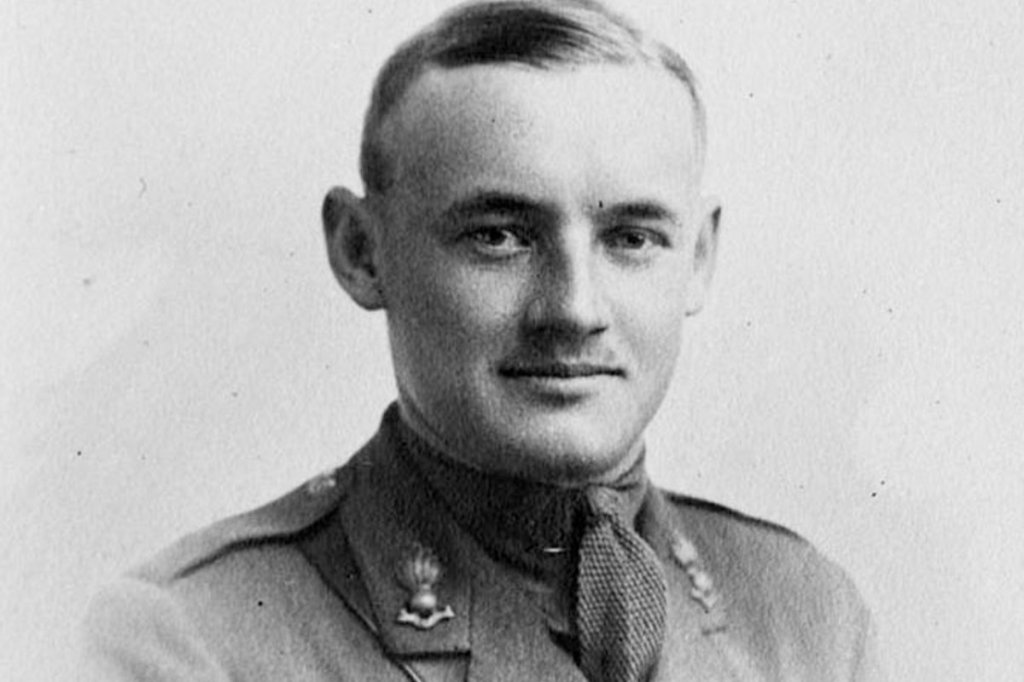
Later appointed with the provisional rank of lieutenant, Smythe attended the Royal School of Artillery in Kingston, Ontario, and by Sept. 13, 1915, just two months after training began, he was promoted to full lieutenant. Soon afterward, he was transferred to the 40th (Sportsmen’s) Battery of Hamilton, 8th Canadian Field Artillery Brigade, where he organized a hockey team to compete in the OHA’s senior league. Smythe served as the team’s manager and briefly took the ice at his old position of center before replacing himself with a stronger player. But his time playing sports in the army was interrupted by a deployment to Europe.
Part of the Canadian Expeditionary Force, Smythe’s unit went overseas in February 1916. That July, they disembarked from England for France, taking Allied gun positions in the Ypres Salient. During the war, Smythe and his men fought in a series of major engagements, including the Somme, Courcelette, Mont St. Éloi, and Arras. His leadership in the field quickly earned him the respect of both his men and his superiors.
It was during the Battle of Arras that Lt. Smythe received the Military Cross for bravery. The Military Cross was one of the British Empire’s highest decorations for gallantry, awarded to officers who displayed exceptional courage and leadership in battle. The young artillery officer “went over the top” of his trench alongside a group of Canadian soldiers who were engaged in fierce combat near Vimy Ridge. Smythe’s actions in “No Man’s Land” were detailed in a citation published on April 17, 1917, in both the London Gazette and Canada Gazette, the official newspapers of their respective governments:
“For conspicuous gallantry and devotion to duty,” the citation read. “He organized some men and led them forward with great dash, thereby dispersing an enemy party at a critical time. He himself accounted for three of the enemy with his revolver. He has previously done fine work.”
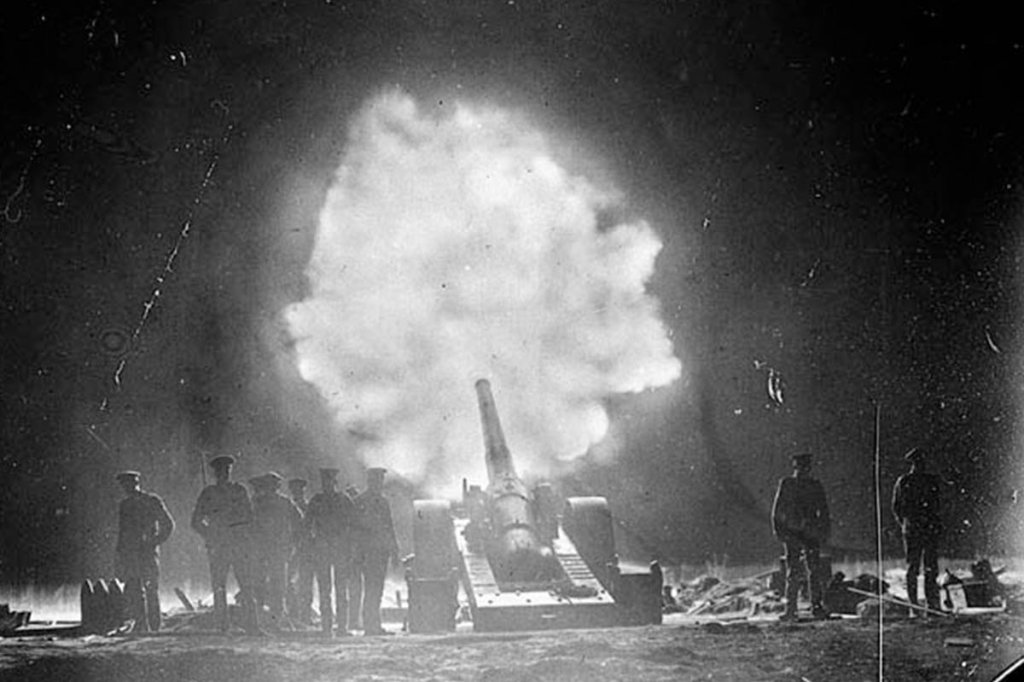
Several months later, Smythe transferred to the Royal Flying Corps, serving as an airborne observer responsible for directing artillery fire. He was appointed a flying officer on Sept. 11, 1917. On Oct. 14th, his aircraft was shot down by the Germans over Passchendaele. Captured and imprisoned, Smythe ended up a prisoner of war at Schweidnitz (now Świdnica) in Upper Silesia, Germany (now Poland).
Smythe later recounted that Canadian prisoners of war were often the ones leading escape plots. He made two failed escape attempts before being placed in solitary confinement by his captors. The first involved a narrow tunnel; two men successfully escaped, but the rest were stopped when one prisoner with “broad shoulders” became stuck, blocking those behind him. In the second attempt, Smythe and an accomplice managed to slip past a barbed wire fence and flee into the countryside. For several days, they evaded capture before being caught by German authorities on the outskirts of Berlin.
Smythe remained a prisoner until the end of the war. In December 1918, he was repatriated to the Canadian Expeditionary Force at Ripon, England. His wartime records described his conduct and escape efforts as acts of “valuable service” to his country and his fellow prisoners.
Return to Canada

Conn Smythe: War Hero Turned Hockey Legend
Following his service in Europe, Smythe returned home to Toronto in 1919. Leveraging his Army salary and other financial resources, he started a sand-and-gravel business. That company, C. Smythe Limited, provided material for construction projects across Ontario, laying the groundwork for his financial independence.
After completing his engineering degree at the University of Toronto in 1920, he married his longtime girlfriend, Irene Sands. Over time, Smythe’s business and family grew, as C. Smythe Limited grew into a successful company that he owned until 1961. His business success provided the financial foundation that would later fund his hockey ventures.
Smythe’s return to Toronto also marked a return to the game he loved. Smythe broke into the NHL through his part-time work as a varsity coach with the University of Toronto. Through various road trips to play Boston-area college teams, Smythe became acquainted with Boston Bruins owner Charles Adams. Adams, a pioneer in the early NHL, referred Smythe to Col. John S. Hammond, a U.S. Army veteran, who served as president of the New York Rangers. Hammond hired Smythe in May 1926 to serve as the franchise’s first general manager and coach, a role he held until October that year, when he was fired to clear the way for Lester Patrick to assume his duties.
This early setback in the NHL did not discourage Smythe. He stayed around the league through professional relationships and the pursuit of positions, all while coaching the University of Toronto to various accomplishments. His hockey acumen was realized when the Rangers captured the Stanley Cup in 1928 with a roster of players Smythe had recruited during his short tenure as general manager and head coach.
The year 1928 also marked a major milestone, as Smythe’s University of Toronto Varsity Grads team represented Canada at the Winter Olympics in St. Moritz, Switzerland, capturing the gold medal. Although Smythe did not accompany the team to Europe due to a dispute over player selection, their dominant performance further cemented his reputation as one of hockey’s finest coaches.
Toronto Maple Leafs
Smythe’s opportunity to break back into the NHL came when the owner of the struggling Toronto St. Pats approached him with an offer he couldn’t refuse. An initial offer to coach the team led Smythe to pursue a purchase of the franchise. With a group of investors, he raised the necessary funds to purchase the St. Pats on February 14, 1927, with the new ownership changing the team’s name to the Toronto Maple Leafs shortly after. Considered a display of patriotism, this name change was championed by the Canadian veteran.
Related: 20 NHL stars who served during World War II

Every Conn Smythe Trophy Winner in NHL History (1965–2025)
Between 1927 and 1961, Smythe held a variety of leadership roles with the Maple Leafs, including owner, governor, general manager, and coach. Under his direction, the team captured seven Stanley Cup championships, cementing the Maple Leafs’ reputation as one of the NHL’s most successful franchises. His tenure laid the foundation for the organization’s enduring legacy. Toronto has captured 13 Stanley Cup titles overall, ranking among the top three teams in league history.
Leading up to 1931, the Toronto St. Pats/Maple Leafs played their home games at the Mutual Street Arena (also known as Arena Gardens). As hockey’s popularity surged across North America, Conn Smythe established Maple Leaf Gardens Limited to secure the financing to build a new, modern home for the team. This company would also manage the business operations of the franchise.
Despite the economic hardships of the Great Depression, Maple Leaf Gardens was completed in less than six months, an extraordinary feat of organization and determination. Smythe saved costs by paying many workers partly in shares of his company, giving them a personal stake in the project’s success. The arena officially opened on November 12, 1931, with the Chicago Black Hawks defeating the Maple Leafs 2-1 in the inaugural game.
The addition of head coach Dick Irvin in 1931 paved the way for Toronto to capture its first Stanley Cup under the Maple Leafs name. Under Irvin, the team reached the Stanley Cup Final in every season except 1934 and 1937, though they were unable to secure another championship during his tenure.
Former Maple Leafs captain Hap Day replaced Irvin as head coach in 1940, ushering in a new era of success for the franchise. Under Day’s leadership, Toronto won five more Stanley Cup championships, including one in the 1941-42 season, achieved while Conn Smythe was preparing to serve in his second war.
World War II
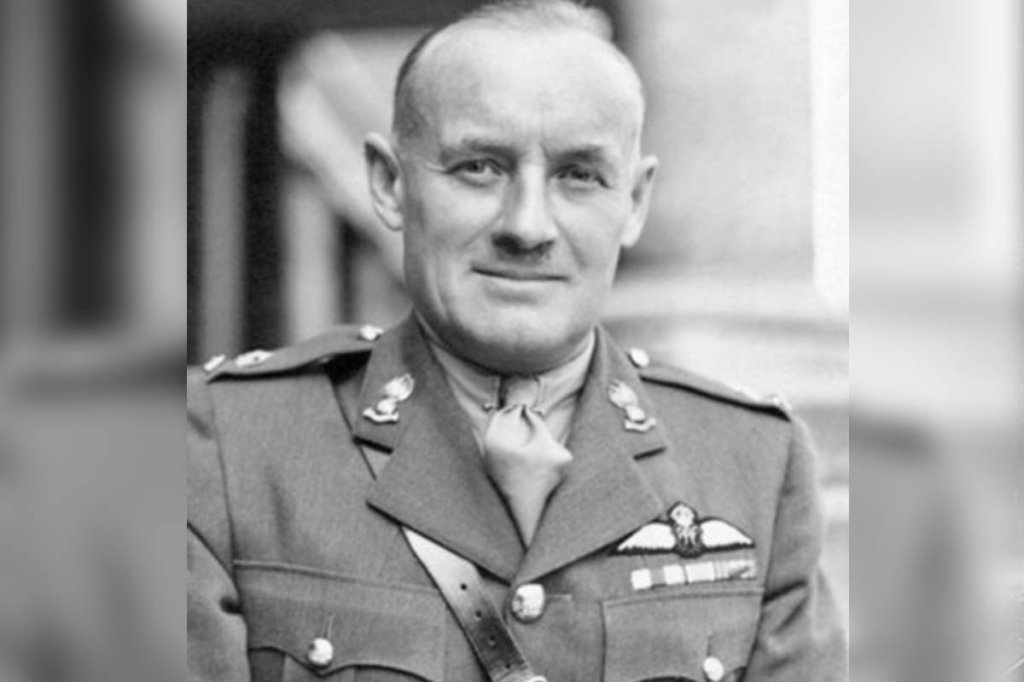
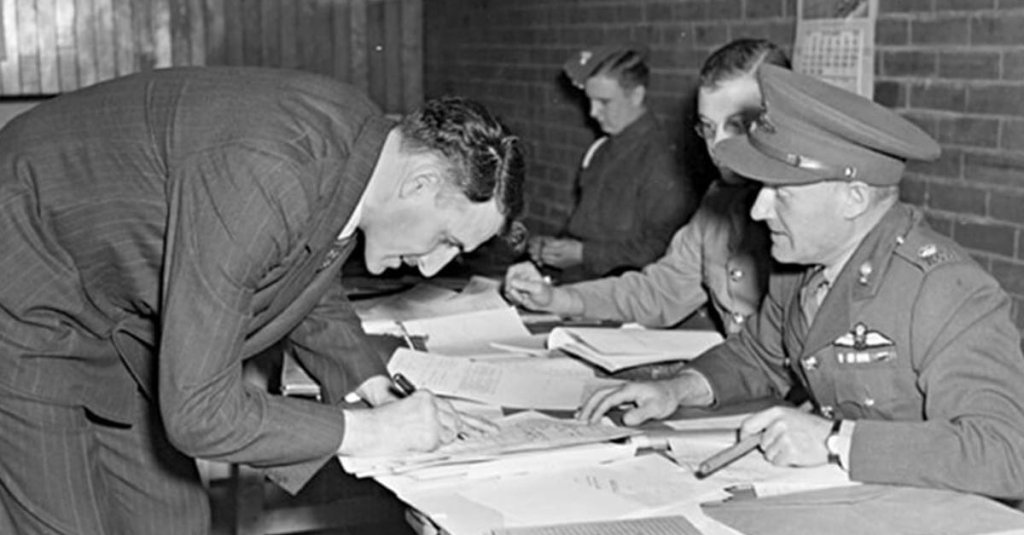
At the outbreak of the Second World War, Smythe once again placed duty to country above personal gain. Though well into his forties, the veteran soldier volunteered to serve in the conflict, beginning as a captain responsible for training officers at the University of Toronto.
In 1941, Smythe assumed command of the 30th Light Anti-Aircraft Battery, Royal Canadian Artillery, a sportsmen’s unit he personally helped to organize and train. Promoted to acting major, he declined several administrative positions, including an appointment as the army’s sports officer, preferring instead to lead his men in the field. His battery departed Canada for England in September 1942, and two years later, in July 1944, sailed for France. Remarkably, Smythe went into combat with four broken ribs, sustained during a spirited baseball game days before the deployment.
Within three weeks of arriving in France, Smythe was severely wounded in the back during a Luftwaffe air raid on an ammunition depot near Caen, where his unit was positioned in support of Allied operations. After several weeks of treatment in an English hospital, he was transported back to Canada aboard a hospital ship in September 1944 to recover. The injury effectively ended Smythe’s active military career, but it only strengthened his lifelong commitment to supporting veterans and their families, a cause that would define much of his postwar life.
Soon after his return home, Smythe became the subject of military and political controversy as an outspoken critic of his country’s problems with providing trained reinforcements to the front. While recovering in Toronto, Smythe spoke with numerous injured soldiers and reporters regarding what he deemed to be an urgent problem in Canada’s war effort, all while taking shots at Prime Minister Mackenzie King, Defence Minister James Ralston, and his successor, Defence Minister Andrew McNaughton. Both men supported a voluntary system over conscription, believing it would produce the necessary reinforcements for the army.
Smythe saw this system as a political move that was having a detrimental effect on the armed forces, leading to improperly trained troops, undermanned units, and unnecessary casualties overseas. This issue was so charged in Canadian society that it is credited with leading to Ralston’s resignation as defence minister. In the fall of 1944, Smythe provided the following statement to reporters:
“What worries me is that while we are trying to get reinforcements over, the men are shorthanded and many are dying every hour of the day because of lack of reinforcements,” Smythe said. “The point is not an argument on McNaughton or Ralston, but it is the question of enforcing total conscription and in that way getting trained reinforcements over to help our men.”
Although Smythe’s criticisms were well-founded, he was accused of raising his concerns for political purposes and was threatened with a court-martial. The punishment was never pursued, as Canadian officials likely sought to avoid drawing further public attention or political controversy involving such a prominent veteran and national sports figure. While still recovering from his injuries, Smythe found a welcome distraction in his Maple Leafs, who captured another Stanley Cup on April 22, 1945. This victory coincided with the closing days of the war in Europe and served as a personal and symbolic triumph for the wounded soldier.
Back with the Maple Leafs
Smythe was welcomed back to his old role as managing director of the Maple Leafs on January 24, 1945, while still recovering from his wartime injuries. Under his restored leadership, the team captured its first of three consecutive Stanley Cups during the 1946-47 season. That same year, Smythe ended a growing power struggle within Maple Leaf Gardens Limited by purchasing a controlling interest in the company. His consolidation of ownership was followed by his installation as president on November 19, 1947.

The World of Sports "Puck Chasers" 1945 Hockey Documentary Toronto Maple Leaf's Team
Smythe served as president of the Maple Leafs until 1961, when he sold his majority shares in Maple Leaf Gardens Limited to a partnership that included his son Stafford Smythe. Just over a decade earlier, he had witnessed his beloved Maple Leafs capture their final Stanley Cup under his presidency during the 1950-51 season, a fitting capstone to his remarkable tenure as one of hockey’s most influential builders.
Horseman
After selling his majority share of the Maple Leafs, Smythe devoted much of his time to his passion for horses. Since the 1920s, he had owned race horses but found little success in the sport during those early years. In anticipation of his service in World War II, Smythe sold off all of his horses.
Smythe returned to the business in 1951 when he purchased a thoroughbred breeding and racing farm. By 1954, he had begun breeding racehorses again, applying the same discipline and competitiveness that defined his hockey career. As with most of his ventures, Smythe flourished in this field, producing several champions that went on to win the prestigious Queen’s Plate (now known as the King’s Plate), Canada’s oldest and most celebrated horse race.
Charitable Causes
Smythe became one of Toronto’s most respected philanthropists, dedicating himself to causes that supported children, the deaf, and military veterans. His commitment to charity endured until his death.
One of Smythe’s earliest charitable ventures was his support for the Ontario Society for Crippled Children (OSCC). Founded in 1922 to improve the lives of children with physical disabilities through medical care, rehabilitation, and community support, the organization reflected Smythe’s early commitment to public service in the years following the First World War. The OSCC later evolved into Easter Seals Ontario, standing as a lasting example of Smythe’s compassion for disabled children and families in need.
Smythe used his resources and influence to help establish programs that aided injured veterans returning from the war. As a founding director of the Canadian Paraplegic Association (CPA), formed in 1945 by World War II veterans living with paralysis, Smythe helped build an organization that provides counseling, employment support, housing assistance, and advocacy for Canadians with spinal cord injuries. He was even known to store the CPA’s wheelchair shipments inside Maple Leaf Gardens.
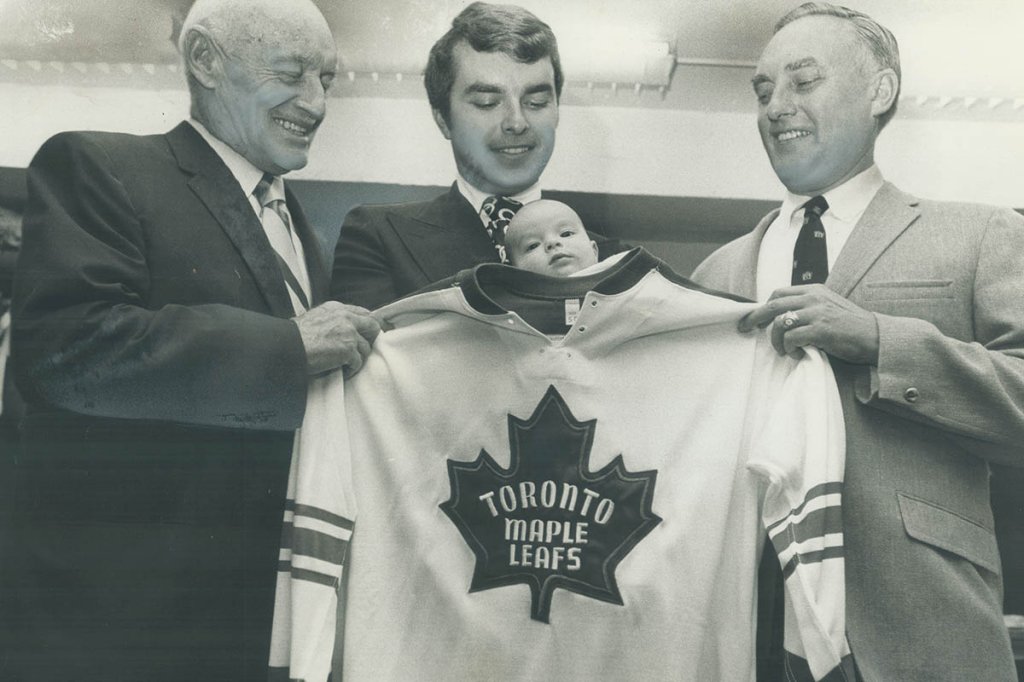
A public park in Toronto’s Rockcliffe-Smythe neighborhood now occupies land that once served as Conn Smythe’s sand and gravel business. Today, Smythe Park and Recreation Centre spans more than 37 acres, standing near a subdivision that Smythe developed as veteran housing following the Second World War. The neighborhood offered affordable homes to returning Canadian servicemembers in recognition of their sacrifices. Though Smythe took a financial loss on the project, his commitment to his fellow veterans outweighed monetary gain, reflecting the same sense of duty that defined his military and civic life.
Established in 1960, the Conn Smythe Foundation carries on his legacy by supporting charities that provide hope and resources to families and children in need. Over time, the foundation expanded its mission to fund educational scholarships, health care initiatives, and community programs across Ontario. More than six decades later, the Conn Smythe Foundation remains a lasting testament to his values of compassion, service, and civic responsibility.
Founded in 1943, the Hockey Hall of Fame was created to preserve and celebrate the rich history of the game. Conn Smythe was among the first major figures to publicly support the project, recognizing the need for an institution to honor hockey’s greatest contributors. A Toronto fixture from its earliest days, the Hall’s initial collections were housed inside Maple Leaf Gardens. In 1961, Smythe and his company, Maple Leaf Gardens Limited, officially provided space for the museum’s exhibits, an arrangement that endured until the Hall of Fame relocated to its new home at Brookfield Place in 1993.
A true testament to his lifelong support for charitable causes, Smythe also helped finance and promote the construction of the Ontario Community Centre for the Deaf (OCCD). Established in partnership with the Evangelical Church of the Deaf, a United Church of Canada congregation, the center provided education, training, worship, and community programs for the deaf and hard of hearing. Officially opened in 1979, the OCCD was one of Smythe’s final major projects. He was widely recognized as the driving force behind raising more than $7.5 million for the facility. The center’s completion, just a year before his death, symbolized the enduring compassion and civic spirit that defined his life.
Conn Smythe’s Legacy
Numerous halls of fame recognized Conn Smythe’s achievements across sport and public life. His first induction came in 1958, when he was inducted into the Hockey Hall of Fame in Toronto as a Builder. The Builder category honors individuals who have made outstanding contributions to the development and advancement of the game of hockey off the ice. Smythe was later inducted into Canada’s Sports Hall of Fame (1975), the Canadian Horse Racing Hall of Fame (1977), the Ontario Sports Hall of Fame (1998), and the Caledon Sports Hall of Fame (2024).
Conn Smythe died of a heart ailment on November 18, 1980, at the age of 85. More than 2,000 people attended his funeral at St. Paul’s Anglican Church in Toronto, including former Maple Leafs captains Ted Kennedy, Hap Day, Syl Apps, Jim Thompson, Sid Smith, and Darryl Sittler. Smythe was buried with military honors at Park Lawn Cemetery, leaving an estate estimated between $2 and $3 million, much of which went to the charitable causes he had championed throughout his life.
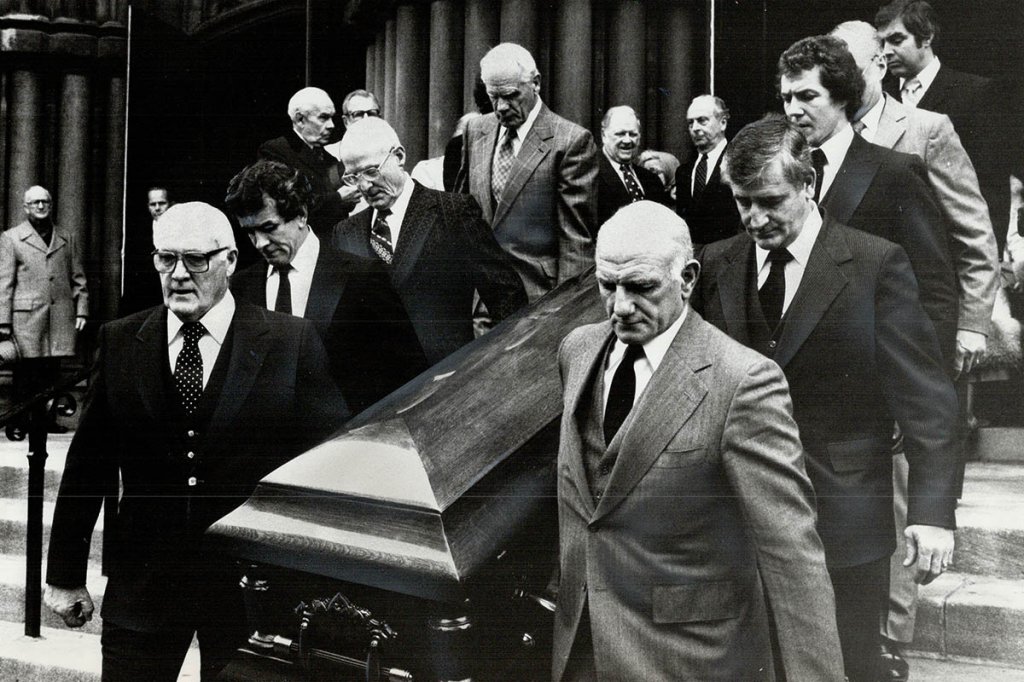
Newspaper tributes poured in across North America, including one from The Niagara Falls Review:
“The generation of grandfathers in Canada can’t forget how, in their youth, the name Conn Smythe was synonymous with hockey. The part he played in making hockey Canada’s national game is legendary.”
Smythe’s legend lives on in the trophy that bears his name and the bronze model of his beloved Maple Leaf Gardens that crowns it. Each year, the Conn Smythe Trophy presentation honors not only excellence on the ice but also the enduring legacy of a soldier, builder, and visionary who helped define North American hockey.
Don’t Miss the Best of We Are The Mighty
• How the Air Force-Navy rivalry is just as vicious as Army-Navy
• Leatherneck Football: The Marine Corps’ legacy on the gridiron
• The top 10 most patriotic moments in sports history

Loading comments…
Comments couldn’t be loaded. Please refresh the page.