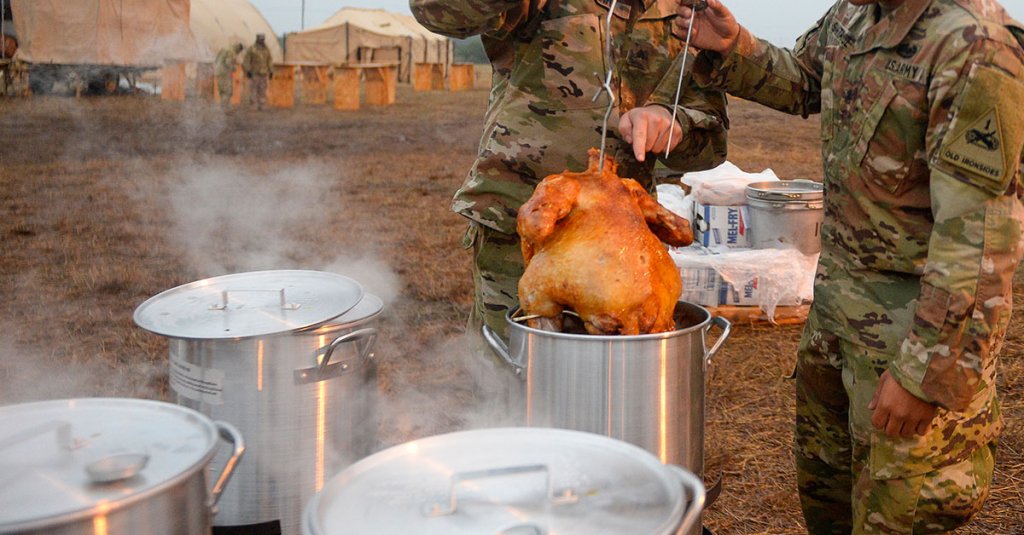
If you’ve decided to bypass a perfectly fine oven for a 10-gallon pot of boiling-hot humbling, congratulations. You’ve just volunteered for a high-risk operation, a controlled detonation with a potential poultry-based IED. Locals call it Thanksgiving, but anyone who’s ever seen a grease-fire plume knows it’s basically a nationwide science fair.
Related: This is how an Army mortar works (from an 11C)
That “World’s Best Chef” apron isn’t plot armor either. The suburban dad-energy you’re channeling won’t stop a 375-degree liquid fire from turning your deck into the tenth circle of hell. But this community has always got you covered. Here is the official Operational Risk Management for deep frying a turkey this Thanksgiving, because we both know you’re just one lapse in judgment away from explaining to your family why the dining room now has a blast radius.
Know Your Enemy(s)
Let’s start with the primary threat: the bird. You bought that 20-pounder and swear you left it in the fridge “for days.” Oh, the lies we tell ourselves. Its cavity is still a block of intestine-shaped ice, and the giblets are rattling around in there like the dead batteries in your workshop drawers.
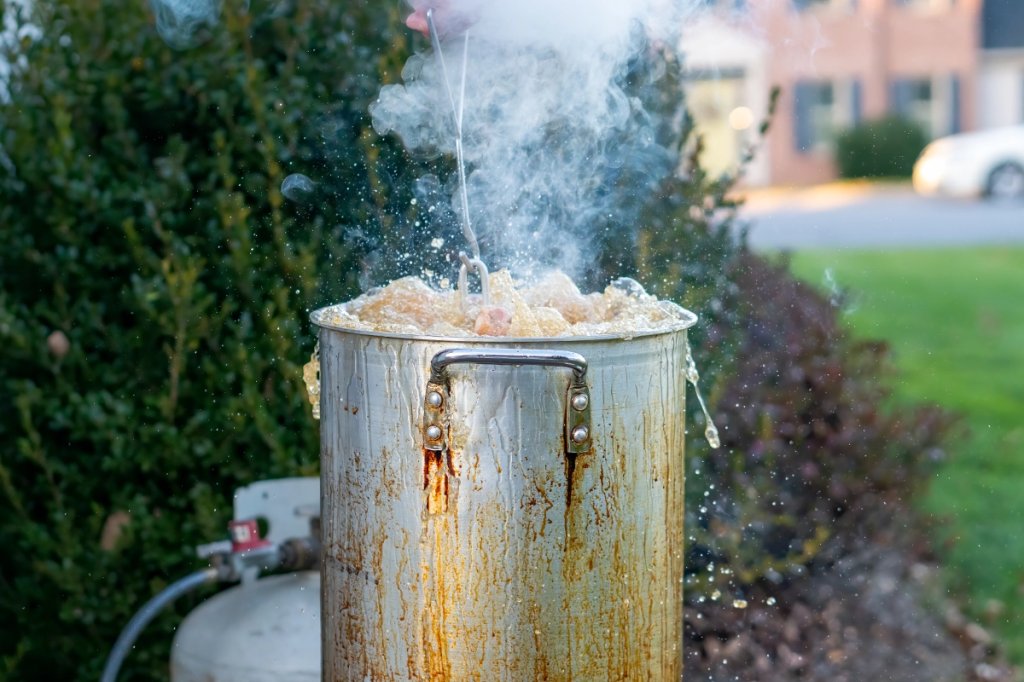
Do you know what happens when ice meets 375-degree oil? It’s not a sweet sizzle; it’s a steam-driven morale event that sends boiling oil airborne, as if it were requesting close air support. The control isn’t a meat thermometer either; it’s your bare hand. If you can’t reach inside and personally verify the non-existence of every last ice crystal, your operation is a NO-GO.
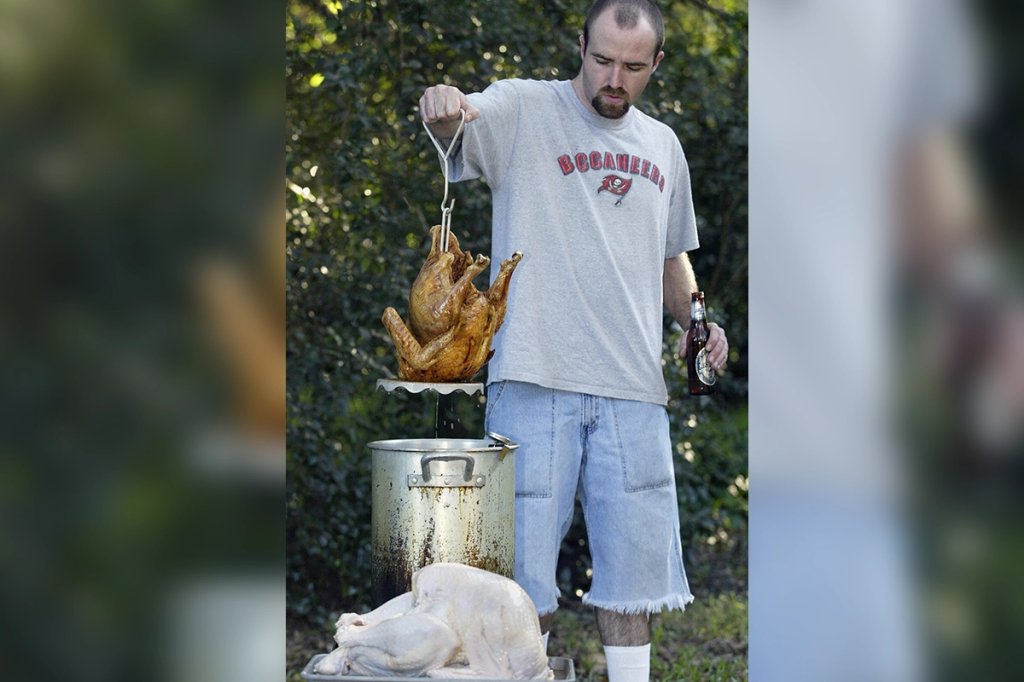
The secondary threat here is the operator. You. Twelve beers deep before 1100, wearing cargo shorts and flip-flops with socks, convinced you “got this.” You are a walking safety violation; a hazard to yourself and possibly to the country.
‘Extremely High Risk’ Operation
One situation where you may not “got this”? Well, you probably think the “Max Fill” line on that giant aluminum pot is a scientifically sound suggestion. It’s a trap. It doesn’t account for displacement, and it’s also the single fastest way to create fireballs that will have the local news chopper hovering around your neighborhood.
Before you do anything, put the (dry, thawed) bird in the empty pot. Fill it with water. Take the bird out. Mark that water line. That is your new fill line. Anything more, and you’re just pre-staging a grease fire that will move through your domicile like it’s clearing an enemy hideout. The probability of spill-over is “Frequent.” The severity is “Catastrophic.” That’s an “Extremely High Risk” on any RAM.
PPE, Proximity, and Why Your Deck is a Bad AO
To mitigate some risk, let’s establish the Area of Operations. Your extremely flammable, wooden deck is not the AO. Your garage, because it’s “too cold outside,” is a thought you need to field-strip from your brain. You should move this operation to the driveway.
Concrete (although be prepared for possible staining) or dirt. Level ground. A minimum of 30 feet from any structure. No overhangs. No awnings. This is your landing zone.
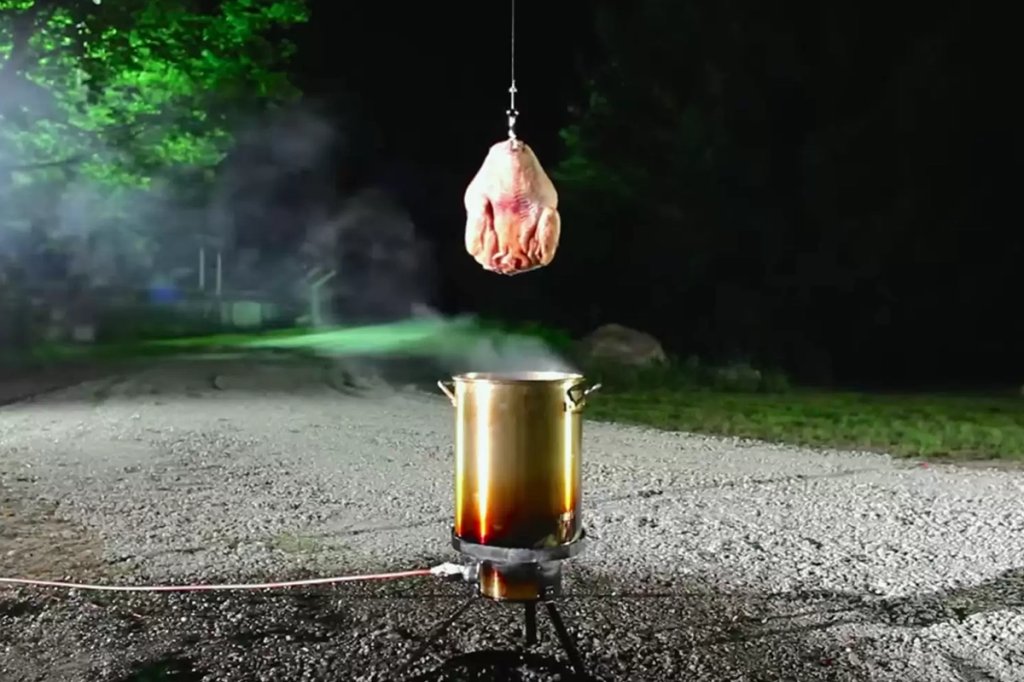
Now, for PPE. Wear real shoes. Wear long pants (jeans, not your ripped, inflammable sweatpants). Maybe wear heat-resistant gloves and, not to be too naggy, safety glasses. You’ll look like a high-speed welder preparing to cook poultry, but you will be a safe one, which is leagues better than a scarred-for-life bachelor trying to explain to the ER nurses how Freddy Krueger was actually a sex symbol.
Actions Taken when the Inevitable Happens
When that pot goes up in flames, and it will, your prehistoric panic-fueled brain will scream “WATER!” Bad choice. Throwing water on a grease fire is as helpful as putting it out with sticks of dynamite. You’re not extinguishing it; you’re weaponizing it against your community.

Why you shouldn't deep fry a wet turkey
A Class B fire extinguisher is your only QRF in this situation. A lid or a wet towel (not soaked) is your “suppressive fire.” Your primary action is to nullify the fuel source; turn off the propane. Do not try to move the pot. Do not spray it with that garden hose or Windex bottle filled with four-year-old water. You accept the failure and push it way down into your subconscious, then you focus on saving the house.
The After-Action Review
One does not simply “set it and forget it.” Never leave your post unless properly relieved. Try your darndest not to get distracted by YouTube videos. You are the NCOIC of that pot until the bird is out and the oil is cold.
The mission is never really over until you’ve conducted your After-Action Review: Did the house burn down? Did anyone require skin grafts? No? Congratulations, you’re a “GO” for next year. Now, and only now, can you wear your expert turkey badge with pride, and if you’re lucky, the food coma will knock you out until all the guests are halfway home.