
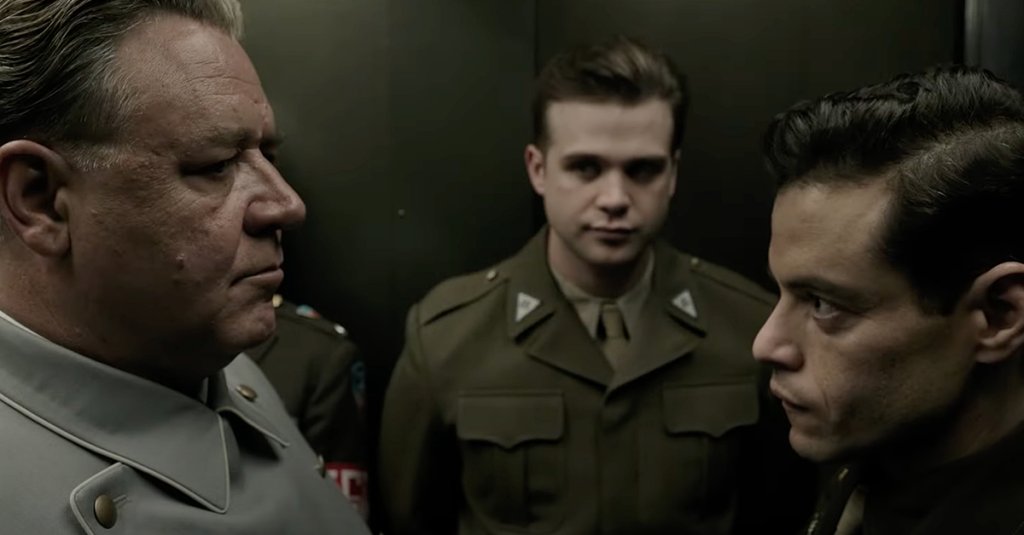
Hermann Göring, onetime commander of the German Luftwaffe, President of the Reichstag, and Hitler’s designated successor, was the highest-ranking Nazi official to stand trial for the regime’s crimes. The postwar International Military Tribunal in Nuremberg was not only a monumental legal undertaking, it was a historical first. The Allied nations decided to prosecute the architects of the Nazi regime in an international court that would offer the defendants the justice they destroyed in their own country.
Read Next: This World War II veteran played a song for the sniper trying to kill him
The tribunals have been the subject of movies and television in the past, most notably 1961’s “Judgment at Nuremberg.” Director James Vanderbilt’s (“Zodiac”) upcoming retelling of the story focuses on the psychological and personal interactions between Göring and the American officer trying to determine Göring’s fitness to stand trial.
“Nuremberg,” a cat-and-mouse legal and psychological thriller, hits theaters across America on Nov. 7, 2025, and is a remarkably timely retelling of the events leading up to the trials and the psychology of the 22 defendants, not to mention a somewhat timely reminder of the consequences established during the tribunals.
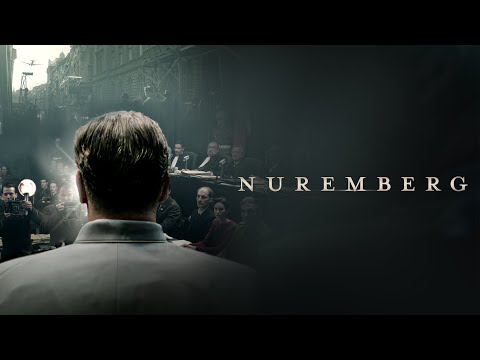
NUREMBERG | Official Trailer #1 (2025)
While Göring was being held for trial, one of the few people with access to him was the U.S. Army’s top psychologist, then-Maj. Douglas M. Kelley. It was Kelley’s job to analyze the former Reichsmarschall’s personality in order to (as Kelley later wrote) “draw the right conclusions about the forces that produced such chaos… learn the why of the Nazi success so we can take steps to prevent the recurrence of such evil.”
Kelley’s family kept the doctor’s personal papers and medical records but never made them publicly available until 2011, when author and medical historian Jack El-Hai wrote about Kelley’s encounters with Göring for an article in Scientific American. Two years later, El-Hai published an entire book on the subject, “The Nazi and the Psychiatrist,” in which Kelley determines Göring and the 21 other defendants are fit to stand trial. His personal interactions with Göring are now the subject of a new movie from Sony Pictures Classics, starring Russell Crowe as Göring and Rami Malek (“Mr. Robot”) as Kelley.
“That four great nations, flushed with victory and stung with injury, stay the hand of vengeance and voluntarily submit their captive enemies to the judgment of the law is one of the most significant tributes that Power has ever paid to Reason,” Supreme Court Justice and Chief U.S. Prosecutor Robert H. Jackson (portrayed in the film by Michael Shannon) said in his opening statement at the tribunal.
An essential element of submitting a defendant to the judgment of the law, however, is mental competency. In the United States, mental competency is part of due process, ensuring that the defendant can participate in their own defense and understand the proceedings against them. It was Kelley’s job to ensure that all 22 Nuremberg detainees were fit to stand trial, and this is the plot of the new movie. The story, however, centers around his interactions with Göring. Despite his wartime actions and behaviors, as well as his well-documented addictions to painkillers, Göring was not only completely sane, he was sometimes even likable.
“He was undoubtedly the most ruthless human being that I have ever experienced,” Kelley wrote.

“Let's Talk About Hitler” Scene – NUREMBERG (2025) Rami Malek, Russell Crowe
Throughout his interviews with Kelley, Göring not only admitted his guilt to several of the crimes for which he was charged, he explained them in terms of German politics, war strategy, and geopolitics. He even admitted that he wanted to be in command of the Third Reich and that he was willing (and did) kill to achieve that goal. Most importantly, he knew he would hang for all of it.
What’s most compelling about the conclusions the psychiatrist drew from interviewing the surviving Nazi leadership has to be that there was nothing inherently special about any of their personalities. They were all common people whose personalities could be found and duplicated anywhere in the world. World War II and the Holocaust, Kelley determined, were both concocted by mentally healthy minds with a lust and opportunity to seize power and abuse it for their own ends.
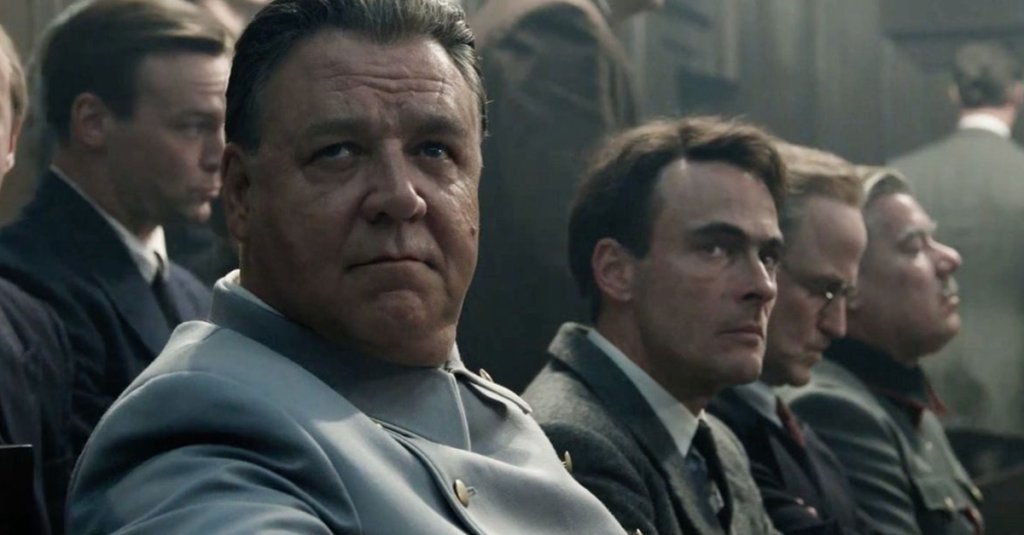
The Nuremberg Trials, as they came to be known, established several legal precedents in international law. They established crimes against peace, crimes against humanity, and war crimes, not to mention culpability in a conspiracy to commit any of these crimes. No longer were heads of state immune to prosecution for crimes they committed as leaders, and those who participated in any aspect of a genocide were held responsible as part of the system they helped create and execute.
“Nuremberg” might be an important reminder for the rank-and-file everywhere that “just following orders” is not a justifiable defense for crimes like forced deportations, raids on private property, planned attacks against civilian populations, or being part of the conspiracy to commit any of the above.
“Nuremberg” is in theaters across the United States on Nov. 7, 2025.
Don’t Miss the Best of We Are The Mighty
• Harrowing photos show one B-17 bombing another B-17 in combat
• ‘The Babyface Gunner’ took one of World War II’s most dangerous jobs at age 14
• World War II airman Alan Magee survived a 22,000-foot fall without a parachute





Loading comments…
Comments couldn’t be loaded. Please refresh the page.