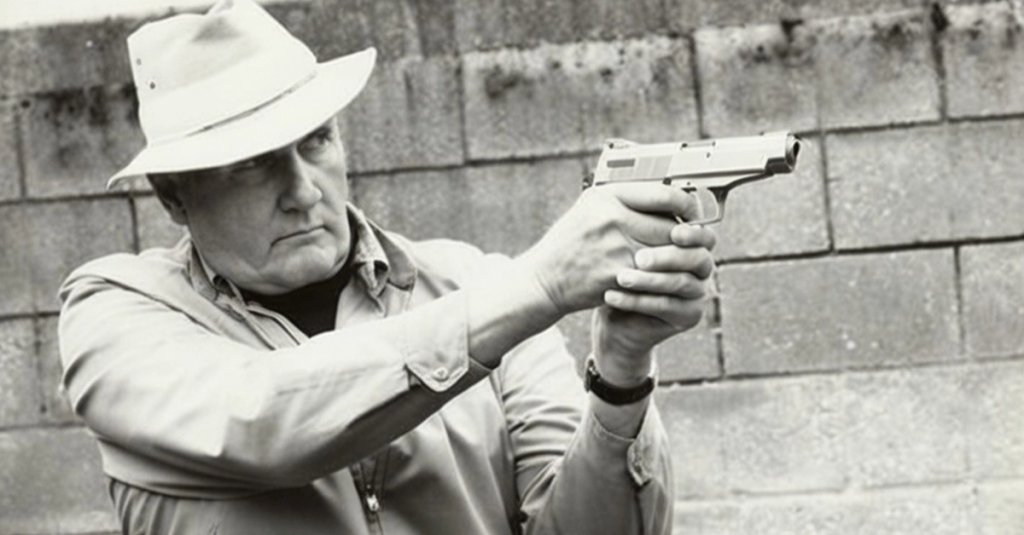
If you watch Sean Connery or George Lazenby’s portrayal of James Bond in movies, you’ll notice that they hold handguns one-handed, often firing from the hip or point shooting (shooting instinctively, without using the sights).
In comparison, Pierce Brosnan and Daniel Craig use two hands (though not always effectively) to shoot their pistols. This Bondian evolution on the silver screen is reflective of a change in the actual shooting world brought about by a Marine Corps veteran named Jeff Cooper.
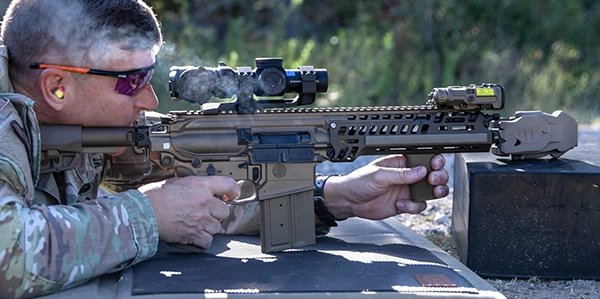
Also Read: This is the Special Operations Command’s new $92 million rifle
John “Jeff” Cooper was born in Los Angeles in 1920. He started shooting at the age of 11 and reportedly joined the Los Angeles High School Junior ROTC to get the free .22 ammunition provided to members. Cooper attended Stanford University, where he lettered in fencing and graduated with a degree in political science in 1941.
He immediately joined the Marine Corps to attend The Basic School and commissioned as a second lieutenant in September that same year.
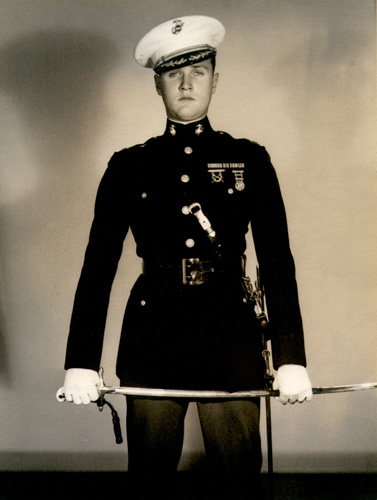
When the U.S. entered World War II, Cooper was assigned to the Pacific theater, where he served with the USS Pennsylvania’s Marine Detachment. By the end of the war, he’d attained the rank of major. He remained in the Marine Corps after World War II ended, but he eventually resigned his commission. Then, North Korea invaded South Korea in 1950. The U.S. was at war again, so he joined back up.
During the Korean War, Cooper served in Southeast Asia, where he conducted clandestine, sensitive operations. Whatever the details, his performance during the war was enough to earn a promotion to lieutenant colonel. After Korea, Cooper took off his uniform for good, but continued to pursue firearms education.
In the late 1950s, Cooper hosted practical pistol competitions in California, which included Leatherslap matches. In these 1v1 shootouts, competitors fired at 12 balloons 21 feet away. Shooting doctrine at the time was based on revolver shooting from the 19th century, stressing instinctive point shooting from a quick draw for close targets and careful alignment of small, precise sights for further targets.
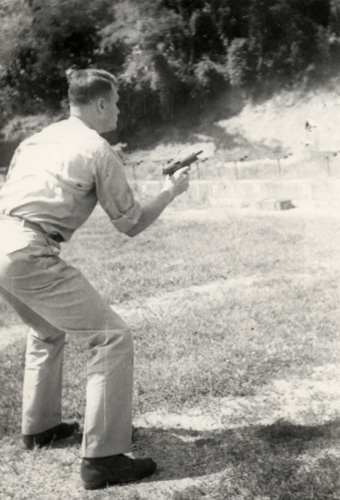
At Leatherslap, Los Angeles County Deputy Sheriff Jack Weaver began shooting with two hands and a quick sight picture. This served him well in competition, and Cooper dubbed the technique the “Weaver Stance.”
In addition to the use of both hands and the sights, the Weaver Stance puts the shooter’s feet in a boxing stance; non-shooting side foot ahead of the shooting side foot, forward knee slightly bent, and rear leg nearly straight. Incorporating the Weaver Stance with his own shooting theories, Cooper developed the modern technique of practical pistol shooting.
The five elements of the modern technique are a large caliber pistol (preferably semi-automatic), the Weaver Stance, the draw stroke, the flash sight picture, and the compressed surprise trigger break.
In addition to the modern technique, Cooper was one of the first firearm authorities to define and stress the four basic rules of firearm safety: treat all guns as if they are loaded, never let your muzzle cover anything you are not willing to destroy, keep your finger off the trigger until your sights are on the target, and identify your target and what is behind it.
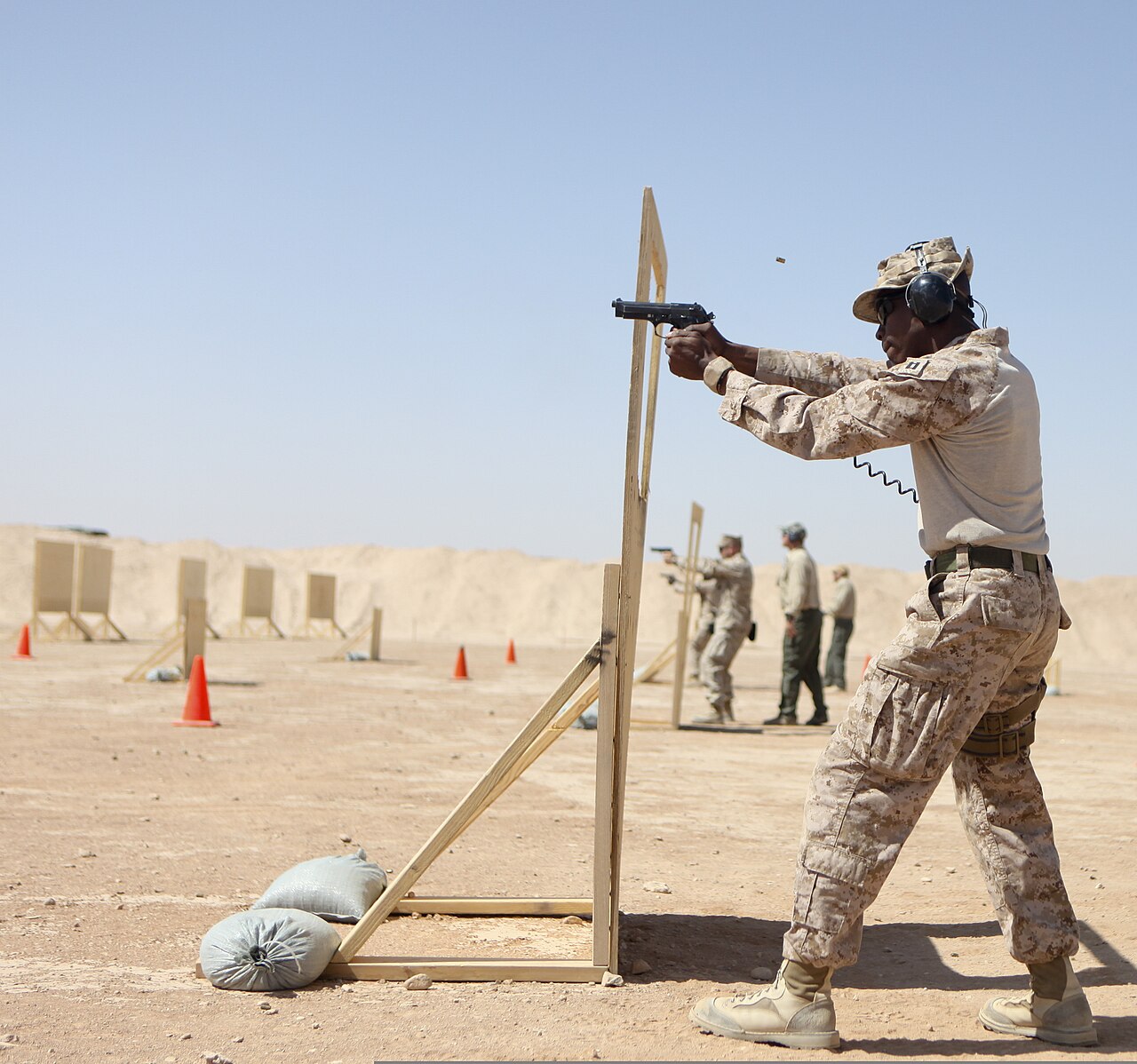
In 1976, Cooper and his wife, high school sweetheart Janelle, moved to Gunsite Ranch in Arizona. There, Cooper founded the American Pistol Institute, now called the Gunsite Academy. To this day, Gunsite provides small arms training to private citizens, law enforcement officers, and U.S. military service members.
Cooper passed away in 2006. Although the Isosceles Stance has also gained popularity in handgun shooting, the Weaver Stance and Cooper’s modern technique remain popular with shooters.
Don’t Miss the Best of We Are The Mighty
• Beretta’s top-tier 1301 is a combat shotgun for the drone age
• The legendary FN SCAR is back and (might be) better than before
• The Brits didn’t want this rifle, but you’ll be able to buy it soon