
The Cold War must have been an amazing time to be a weapons manufacturer for the U.S. government. Like some kind of early Tony Stark (I guess that would be Howard Stark), if you could dream it, you could build it, and chances were very good the CIA would fund it.
From funding LSD tests using prostitutes and their johns (called—no joke—Operation Midnight Climax) to a secret underground ice base in Greenland to trying to build an actual flying saucer, there was literally no end to what the CIA would try. What they ended up actually building and then using was much less fun and much more terrifying.
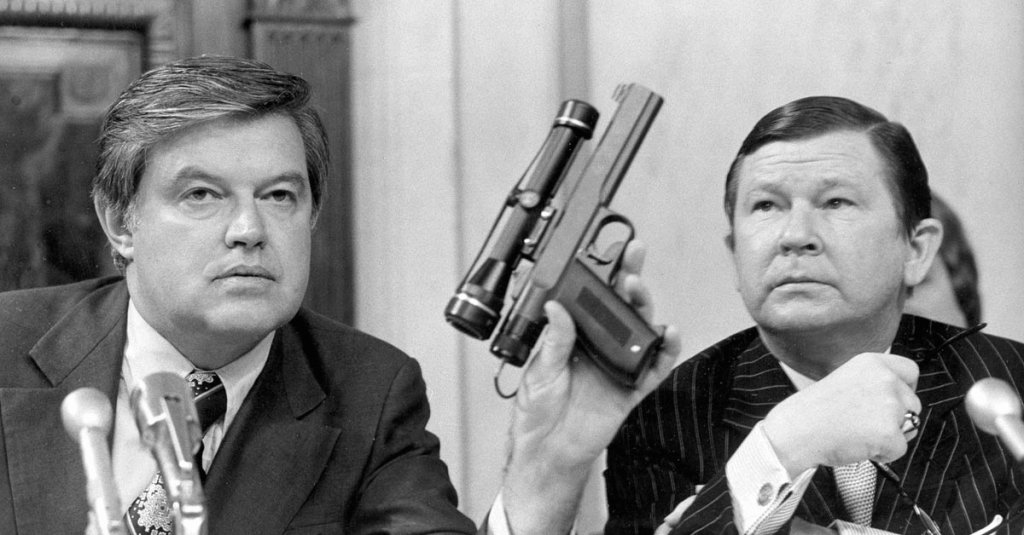
We only found out about it because Senator Frank Church decided to do a little investigating. Among many other wild things, he found a heart attack gun, a weapon that had been used against the U.S. political enemies and beyond.
Also Read: A secret Cold War unit was the basis for today’s special operations

Spurred by the publication of a December 1974 Seymour Hersh whistleblower article in The New York Times, the United States Congress decided to look into just what its internal and external intelligence agencies were doing in the name of the American people, using their tax dollars.
What they found was a trove of legal and illegal methods used by the CIA, NSA, FBI, and even the IRS. The Church Committee not only found that the government had been spying on Americans, but they’d been doing it for decades. That was just the start.
Among the abuses of power discovered by the Church Committee were the opening of domestic mail without a warrant and without the Postal Service’s knowledge, as well as widespread access to private information through domestic telecommunications, and the addition of Americans to watch lists. Even the Army was spying on American civilians.
It turns out that all Edward Snowden ever revealed was that the intelligence agencies never stopped spying on Americans. Their methods had improved over time.
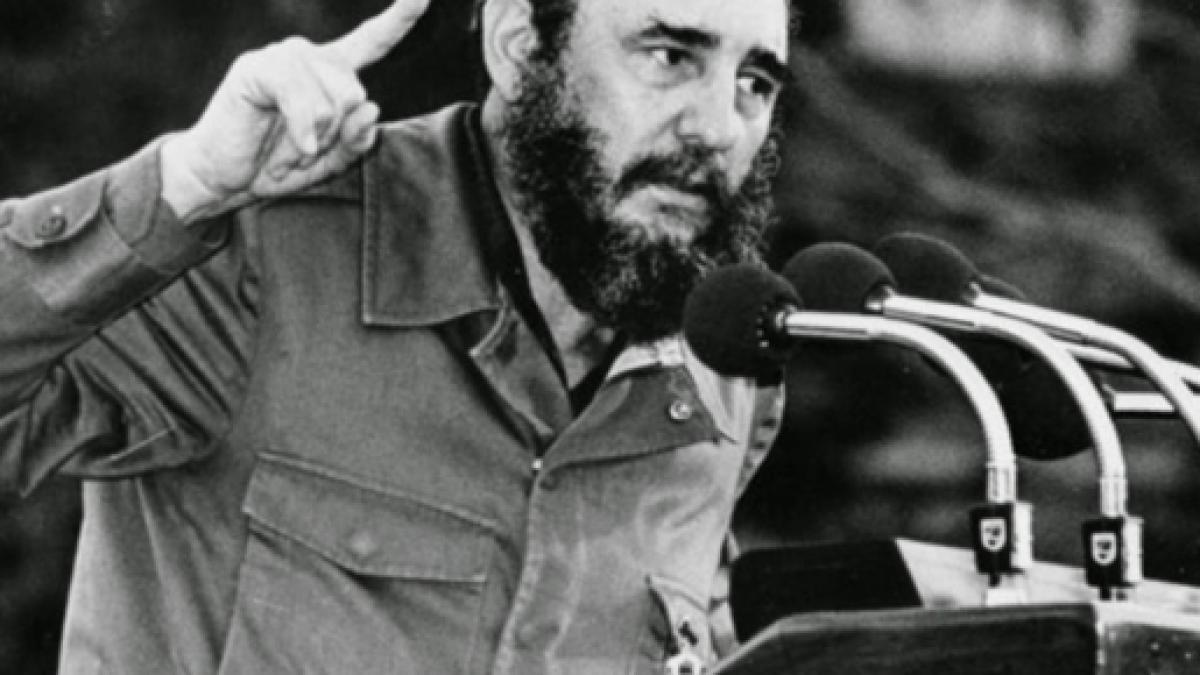
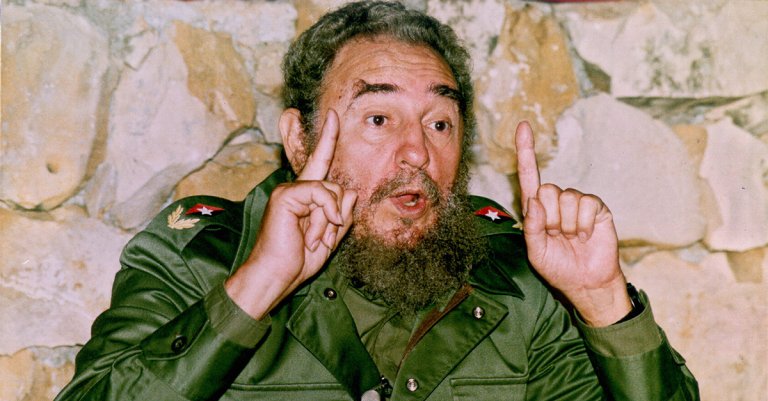
The most shocking of the Church Committee findings was the targeted assassination operations the CIA used against foreign leaders. Allegedly, Fidel Castro wasn’t the only name on the CIA hit list, he was just the most famous and consistent. Congo’s Patrice Lumumba, Rafael Trujillo of the Dominican Republic, Vietnam’s Ngo Dinh Diem, and Gen. René Schneider of Chile were all targets for CIA-sanctioned killings.
The clandestine service had its people researching all sorts of various ways to kill its targets. The CIA soon latched on to poisons, ones that were undetectable and appeared to mimic a heart attack. They found it in a specially-designed poison, engineered for the CIA. Only a skilled pathologist who knew what to look for would ever discover the victim’s heart attack wasn’t from natural causes. To deliver the poison, the injection was frozen and packed into a dart.
Darts from the new secret assassination heart attack gun would penetrate clothing but leave only a small red dot on the skin’s surface. Once inside the body, the dart disintegrated, and the frozen poison inside would begin to melt, entering the bloodstream and causing the cardiac episode. Shortly after, the deadly agent denatured quickly and became virtually undetectable.
When Church’s committee discovered the gun, they even brought it to show Congress in a 1975 hearing. It looked like a regular Colt 1911, but was fitted with a scope. The rounds were made of saxitoxin, which was derived from algae blooms, and could kill a human within minutes. The amount of poison required was no wider than a human hair.
The Church Committee and its findings caused a massive frenzy in the United States. People became hungry for more and began to get hysterical in the wake of any news about the CIA. In the aftermath of the Church Committee hearings, President Gerald Ford (and later, Ronald Reagan) had to issue executive orders banning the tactics of targeted assassinations by the CIA and other intelligence agencies. Those administrations would have to figure out how to topple foreign leaders without killing them directly.
What became of the poison dart gun is anyone’s guess.
Don’t Miss the Best of We Are The Mighty
• Official CIA documents reported that a UFO turned a Soviet infantry unit to stone
• Declassified CIA documents provide guidance for ‘UFO Photographers’
• 4 of the craziest assassination attempts in US history

Loading comments…
Comments couldn’t be loaded. Please refresh the page.