
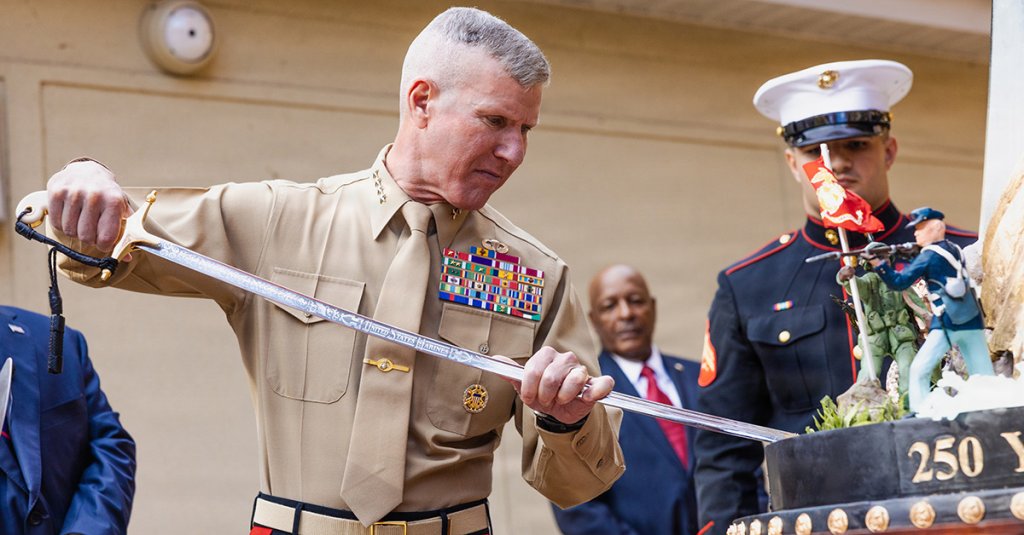
As the United States approaches the 250th anniversary of its independence, Americans are called not only to celebrate the founding of the nation, but to reflect on the institutions that have defended its ideals across generations.
Among those institutions, none has maintained a clearer sense of continuity, identity, and purpose than the United States Marine Corps. From its birth during the American Revolution to its modern role as a globally deployed expeditionary force, the Marine Corps has adapted to every era of warfare while remaining faithful to its original mission.
Related: ‘The Few. The Proud:’ The Moments that made the Marines the Marines
The Marine Corps was not created for ceremony or tradition. It was born out of necessity.
In 1775, the Continental Congress faced a stark reality. If the colonies were to challenge British power, they needed a force capable of fighting at sea, protecting naval vessels, and projecting combat power ashore. The result was the creation of a specialized service that combined the discipline of infantry with the mobility of naval forces.
The evolution of the Marine Corps is inseparable from the evolution of its leadership. From Capt. Samuel Nicholas, who organized Marines in a Philadelphia tavern, to today’s Commandant serving on the Joint Chiefs of Staff, Marine leadership reflects the growth of the U.S. itself.
As America marks 250 years, the story of the Marines offers a powerful lens through which to understand national endurance, adaptation, and service.
The Birth of the Marine Corps: November 10, 1775
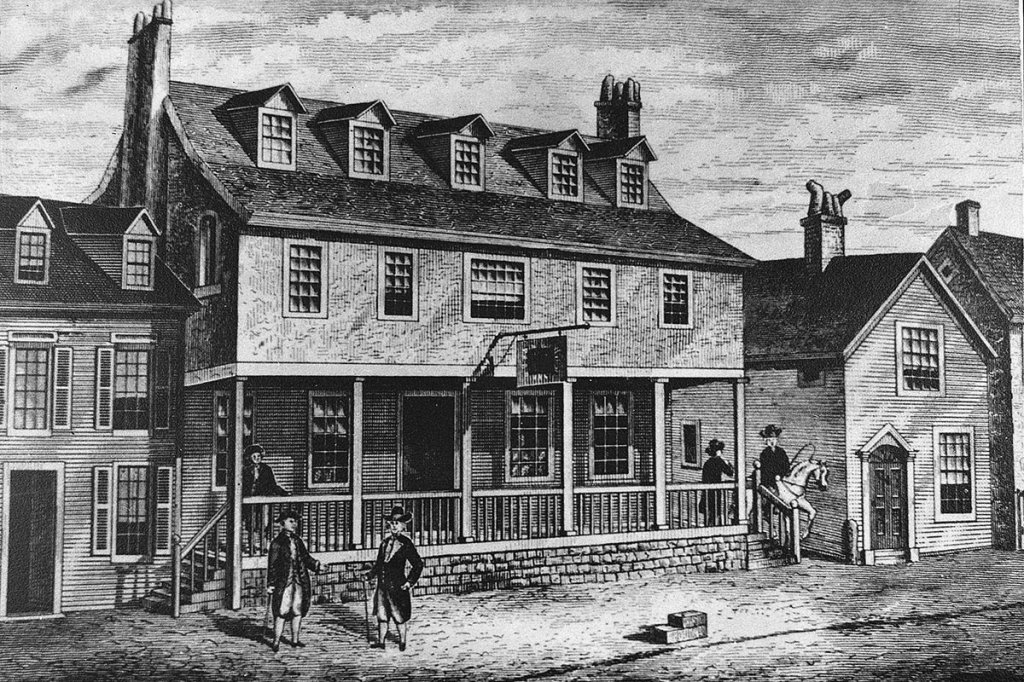
On November 10, 1775, the Continental Congress passed a resolution authorizing the creation of two battalions of Marines.
This decision came at a critical moment in the American Revolution. The war had already begun, but the colonies lacked a unified military structure capable of contesting British control of the seas.
The Continental Navy was in its infancy and faced overwhelming odds against the Royal Navy, the most powerful maritime force in the world. Congress recognized that sailors alone could not meet the demands of naval warfare. Ships needed disciplined troops trained to repel boarding parties, enforce order aboard ship, and conduct raids against enemy ports and supply depots.
Marines were designed to fill this gap. They would serve aboard naval vessels, fight ship to ship, and act as a landing force when operations moved ashore. This dual role distinguished them from traditional armies and established a concept that would define the Corps for the next 2½ centuries.
Recruitment efforts began immediately, centered in Philadelphia, the political and commercial heart of the colonies. Tun Tavern, a popular meeting place for sailors, merchants, and craftsmen, became the focal point for Marine enlistment.
Though modest in appearance, Tun Tavern entered history as the birthplace of the Marine Corps, symbolizing the Corps’ origins among ordinary citizens answering an extraordinary call.
Samuel Nicholas: The First Marine Leader
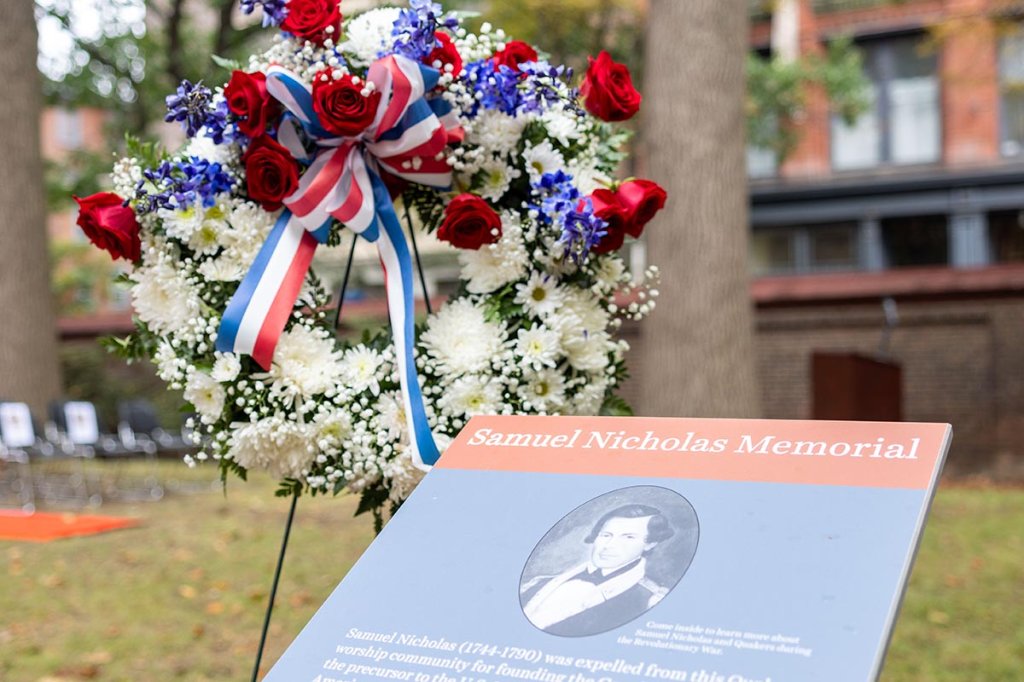
Samuel Nicholas emerged as the central figure in the Marine Corps’ earliest days.
Born into a prominent Philadelphia family, Nicholas possessed social influence, leadership ability, and organizational skill. These qualities made him an ideal choice to lead a new and untested military force.
On November 28, 1775, Nicholas received his commission as a captain of Marines. While the formal title of Commandant did not yet exist, Nicholas functioned as the senior Marine officer throughout the Revolutionary War. He oversaw recruiting, training, discipline, and deployment, effectively shaping the Corps from the ground up.
Nicholas established the first Marine recruiting headquarters at Tun Tavern, organizing men from diverse backgrounds into a cohesive force. He emphasized discipline, professionalism, and cooperation with naval commanders, understanding that Marines would often operate in close coordination with sailors and officers of the Continental Navy.
His leadership style reflected practicality and adaptability. Nicholas understood that the Marines’ survival depended on flexibility. They had to be ready to fight aboard ships, land on hostile shores, and integrate with Army forces when needed.
This mindset became a defining feature of Marine identity.
The First Amphibious Landing: New Providence, 1776
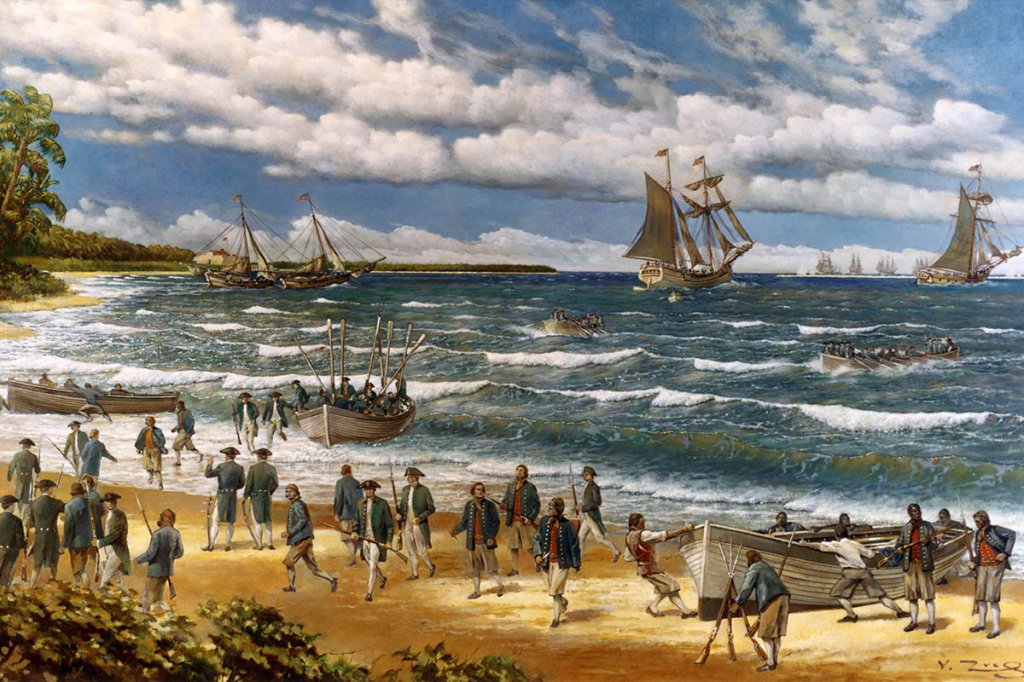
The defining moment of Nicholas’ command came in March 1776, when he led the first amphibious assault in Marine Corps history. Intelligence reports indicated that British forces had stockpiled valuable military supplies, including artillery and gunpowder, on the island of New Providence in the Bahamas.
At a time when the Continental Army desperately needed these resources, the mission offered both strategic value and an opportunity to test the Marines’ capabilities. Nicholas commanded approximately 230 Marines and sailors in a coordinated naval landing operation.
The Marines landed on the island, overwhelmed British defenses, and seized artillery and supplies. Though much of the gunpowder had been removed prior to the assault, the raid was a success and demonstrated the effectiveness of joint naval and ground operations.
This operation established a core Marine tradition: the ability to project power from the sea. Amphibious warfare, refined and expanded over centuries, became the Corps’ signature mission and a defining contribution to American military strategy.
Marines with Washington: Trenton and Princeton
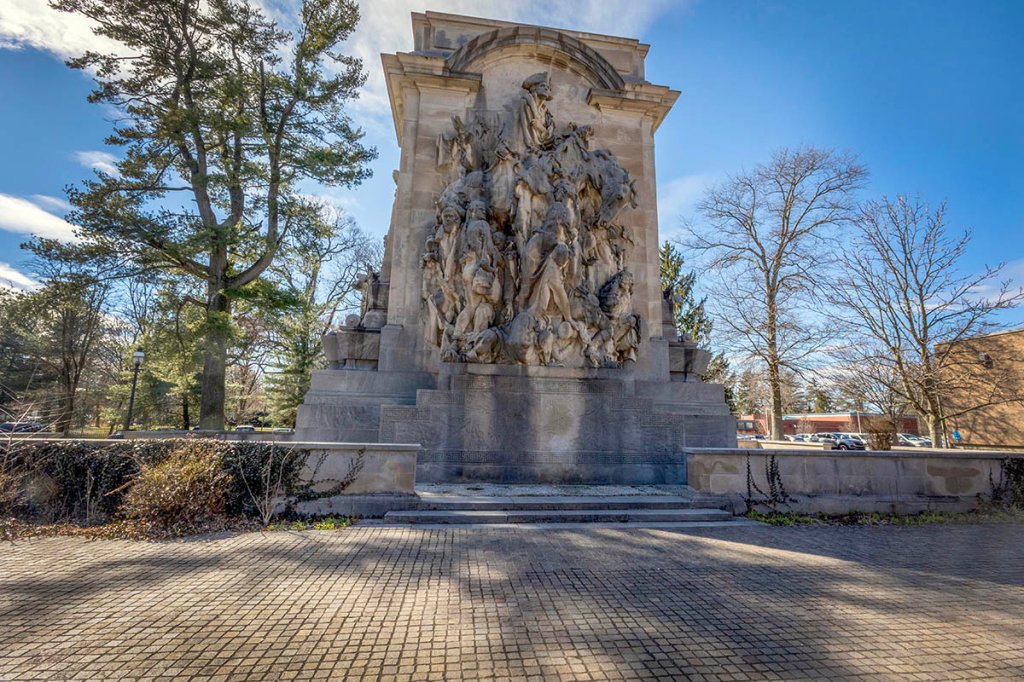
While Marines were originally intended to support naval operations, the demands of the Revolutionary War required flexibility. Marine detachments found themselves fighting alongside the Continental Army under Gen. George Washington.
Nicholas personally commanded Marines during the winter campaign of 1776 and 1777, including the pivotal battles of Trenton and Princeton. At Trenton, Marines crossed the icy Delaware River with Washington’s forces and participated in the surprise attack against Hessian troops on December 26, 1776.
The victory at Trenton revitalized American morale and proved that disciplined, well-led forces could defeat professional European soldiers. Marines continued to serve during the follow-on engagement at Princeton, reinforcing their reputation as reliable combat troops.
These battles demonstrated that Marines were not confined to ships or coastal operations. They could integrate seamlessly with Army units and perform effectively in conventional land combat, a flexibility that would define the Corps throughout its history.
Disbanding After the Revolution
With the conclusion of the American Revolution, the newly independent United States faced a defining question: How could a republic safeguard its liberty without endangering it through the presence of a standing military?
Deeply shaped by their experience under British rule, many Americans viewed permanent armed forces as instruments of tyranny rather than protection. This suspicion led Congress to reduce the nation’s military establishment dramatically once peace was secured.
In 1783, following the Treaty of Paris, both the Continental Army and the Continental Marines were formally disbanded. The young nation turned inward, focused on rebuilding its economy and governing itself under fragile political structures. Military power was deliberately minimized, with defense responsibilities largely deferred to state militias.
For the Marines, this meant the dissolution of the force that had served aboard ships, conducted amphibious raids, and fought alongside Washington’s army.
U.S. Merchant Ships Proved Vulnerable

What Happened Immediately After the American Revolution Ended
Nicholas, the senior Marine officer of the revolution and the man recognized as the Corps’ first Commandant in practice, returned to civilian life in Philadelphia.
Though he had helped shape one of America’s earliest military institutions, Nicholas lived to see its disappearance rather than its permanence. He died in 1790, never knowing that the service he organized would one day become a permanent and indispensable arm of national defense.
The absence of a standing naval force soon revealed its costs. American merchant ships operating in the Atlantic and Mediterranean became targets for piracy and harassment, particularly from the Barbary States of North Africa.
Without a credible navy or professional troops to protect commerce and enforce diplomacy, the United States found itself vulnerable on the world stage. International instability, unresolved tensions with European powers, and the realities of global trade exposed the limitations of relying solely on militias and ad hoc military solutions.
Reestablishing the Marine Corps
By the late 1790s, these pressures forced a reassessment.
Congress recognized that national sovereignty required more than ideals alone; it demanded the means to defend American interests abroad and enforce authority at sea. In 1798, as part of a broader effort to strengthen the nation’s defenses, Congress formally reestablished the U.S. Marine Corps as a permanent service.
Unlike its revolutionary predecessor, this reconstituted Marine Corps was designed to endure. It was integrated into a growing naval establishment, assigned clearly defined roles, and supported by federal authority. The Marines would once again serve aboard ships, protect American interests overseas, and provide a rapid response force capable of operating wherever the nation required.
This renewal marked a turning point.
The United States had learned that liberty and security were not opposing values, but complementary responsibilities. With the reestablishment of the Marine Corps, the nation acknowledged that professional military institutions, properly governed, were essential to preserving independence. From that moment forward, the Corps would remain a permanent fixture of American defense, evolving with the nation it served.
This time, the Marines were not a temporary solution. They were an enduring commitment.
The Evolution of the Commandant: From Senior Officer to Strategic Leader

As the Marine Corps transitioned from a revolutionary force into a permanent military institution, the role of its senior officer evolved alongside it.
In the Corps’ earliest years, there was no formal title of “Commandant” as it exists today. Instead, the senior Marine officer functioned as the principal organizer and leader of a small, highly specialized force. His primary responsibilities were practical and immediate: recruiting men, enforcing discipline, assigning detachments to naval vessels, and leading Marines in direct combat.
During the late 18th and early 19th centuries, Marine units were typically small and dispersed. Detachments served aboard warships, at naval yards, and at overseas stations where American interests required protection. Early Commandants operated with limited staffs and modest authority, focusing on maintaining readiness and ensuring that Marines could fulfill their shipboard and expeditionary duties. While significant within the Corps, their influence was largely administrative and tactical rather than strategic.
As the U.S. expanded territorially and economically, so, too, did the demands placed upon the Marine Corps.
The 19th century saw Marines deployed in conflicts ranging from frontier wars to overseas interventions, requiring greater coordination, standardized training, and professional leadership. In response, the Commandant’s responsibilities broadened. The position gradually assumed authority over doctrine development, training methods, and organizational structure, shaping how Marines prepared for war rather than merely how they fought it.
The Modern Commandant’s Responsibilities
The 20th century marked a decisive transformation.
Global conflicts, especially the two world wars, elevated the Marine Corps into a major combat force and placed unprecedented demands on its leadership. Commandants now oversaw large-scale force development, professional military education, and the integration of new technologies and combined arms doctrine. Amphibious warfare, aviation, logistics, and joint operations became central to Marine identity, all requiring centralized planning and long-term vision.
This evolution culminated in the modern role of the Commandant of the Marine Corps.
Today, the Commandant is a four-star general and a statutory member of the Joint Chiefs of Staff, reflecting the Corps’ strategic importance within the U.S. military. In this capacity, the Commandant serves as the principal military adviser on Marine Corps matters to the president, the secretary of defense, and the secretary of the Navy.
Beyond advisory responsibilities, the Commandant is charged with organizing, training, and equipping the entire Marine Corps. This includes shaping future force structure, guiding modernization efforts, and ensuring that Marines remain prepared to respond rapidly to crises around the world. The evolution of the Commandant’s role mirrors the broader growth of the U.S. from a fragile republic to a global power, and underscores the enduring importance of professional leadership in preserving both national security and institutional identity.
Archibald Henderson: The Commandant Who Saved the Marine Corps
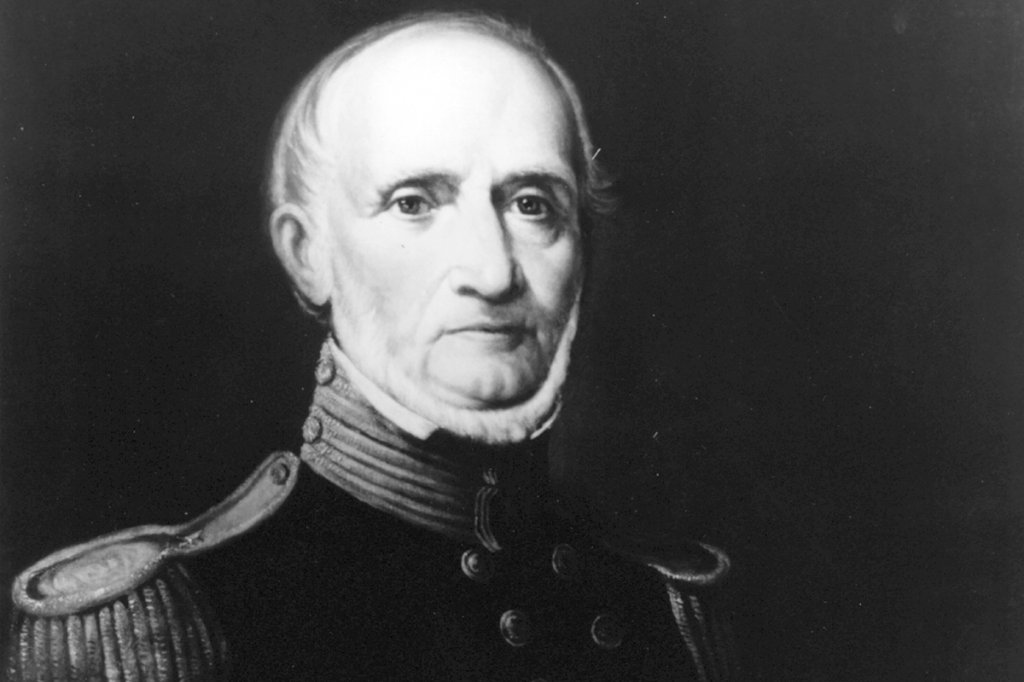
Few individuals have shaped the destiny of the U.S. Marine Corps as profoundly as Archibald Henderson.
Serving as Commandant from 1820 to 1859, Henderson led the Corps for an extraordinary 39 years, the longest tenure of any Commandant in history. His leadership spanned an era when the Marine Corps faced repeated political challenges, budgetary threats, and calls for its abolition.
Without Henderson’s persistence and vision, the Corps might not have survived the 19th century at all.
Henderson assumed command during a period of uncertainty. The Marine Corps was still a relatively small force, often misunderstood and undervalued by political leaders who questioned the need for a separate service. Many in Congress viewed the Marines as redundant, believing their functions could be absorbed by the Army or Navy. Henderson recognized that the Corps’ survival depended on demonstrating its unique value to national defense.
Pushing the Marines’ Case
Known as the “Grand Old Man of the Marine Corps,” Henderson became the Corps’ most effective advocate.
He tirelessly defended the Marines before Congress, arguing that their combination of naval integration, expeditionary capability, and disciplined infantry skills made them indispensable. At the same time, he worked to ensure that Marines consistently proved their worth in the field.
Under Henderson’s leadership, the Marine Corps expanded its role in expeditionary operations both at home and abroad. Marines were deployed to protect American interests, suppress piracy, and respond rapidly to crises, reinforcing the Corps’ reputation as a force that could be relied upon in uncertain situations. Henderson emphasized strict discipline, professional conduct, and high standards, believing that the Corps’ survival depended on its reputation for excellence.
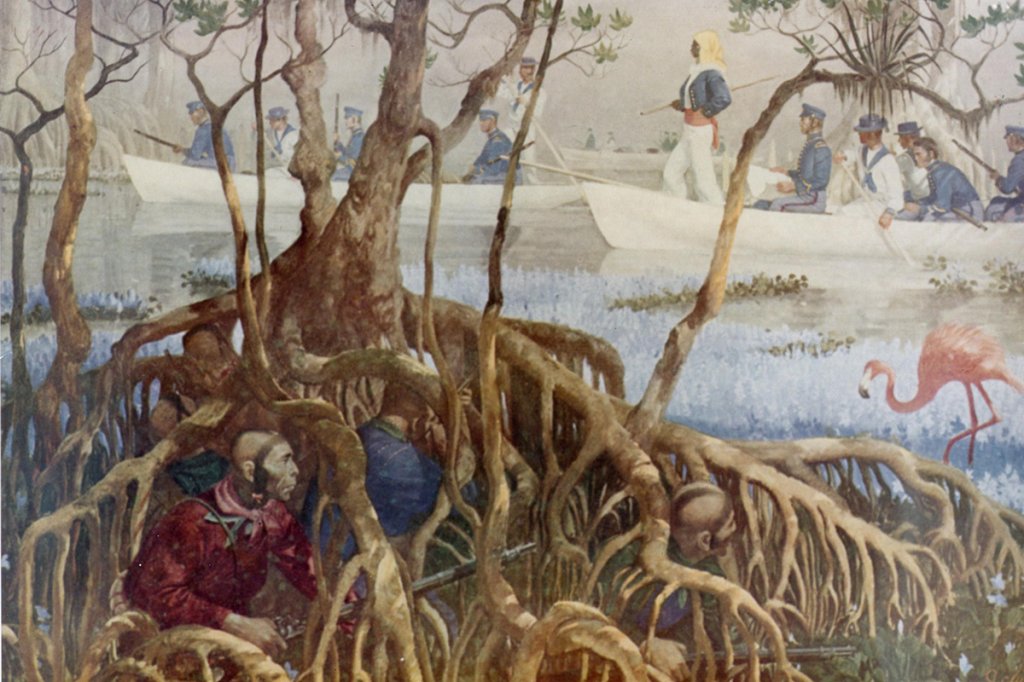
The Marines’ performance in major conflicts further strengthened Henderson’s case. During the Seminole Wars in Florida, Marines operated in harsh terrain against determined opponents, demonstrating endurance and adaptability. In the Mexican-American War, Marines played a key role in amphibious landings, including the assault on Veracruz, and fought in major engagements such as Chapultepec. Their actions highlighted the Corps’ unique ability to project power from sea to shore, a capability unmatched by other services.
Henderson’s leadership transformed the Marine Corps from a vulnerable institution into a permanent fixture of American military power. By the time of his death in 1859, the Corps had weathered decades of political pressure and emerged with a clearly defined mission and professional identity.
Henderson did more than command the Marines. He ensured their survival, earning his place as one of the most consequential leaders in Marine Corps history.
John A. Lejeune: Architect of the Modern Marine Corps
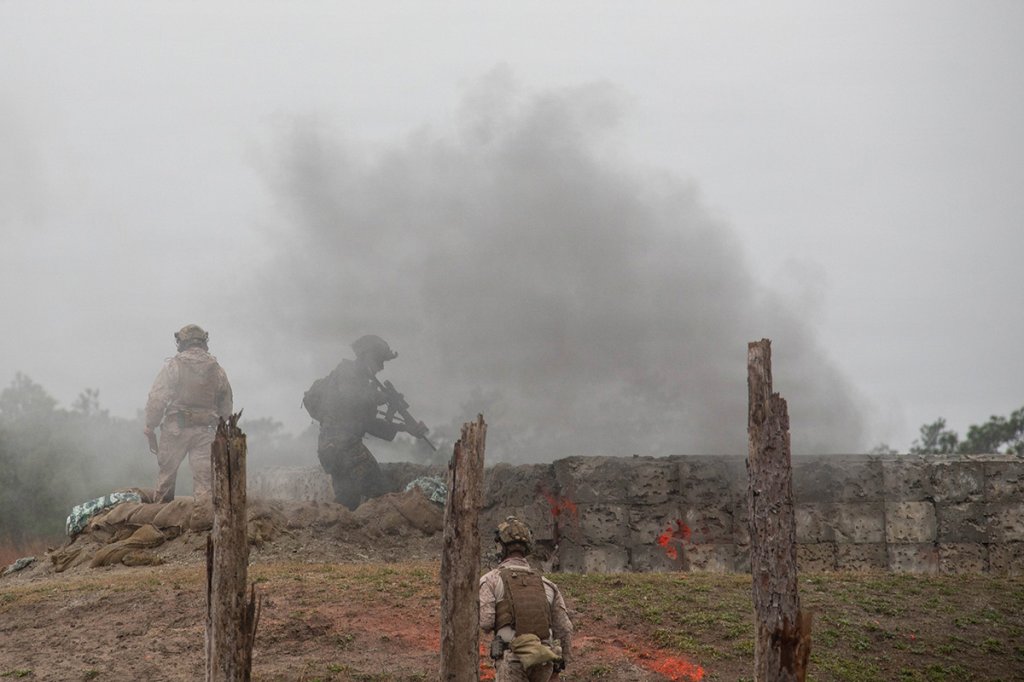
Maj. Gen. John A. Lejeune, the 13th Commandant of the Marine Corps, served from 1920 to 1929 and is widely regarded as the architect of the modern Marine Corps.
A highly decorated veteran of World War I, Lejeune understood that industrialized warfare and global conflict demanded new ways of thinking about military power. He believed that future wars would require rapid, amphibious operations supported by integrated ground, naval, and air forces.
During his tenure, Lejeune placed unprecedented emphasis on professional military education. He strengthened officer development programs, encouraged intellectual rigor, and promoted the study of history and strategy as essential components of leadership. Lejeune believed that Marines must be warriors and thinkers, capable of adapting to changing battlefield conditions rapidly.
Perhaps his most enduring contribution was the formal development of amphibious warfare doctrine. Lejeune recognized that the United States, as a maritime power, would likely fight future wars across oceans. His vision directly influenced the Marine Corps’ role in the Pacific during World War II, where amphibious assaults became the defining feature of American strategy against Japan.
Lejeune also worked to reinforce Marine identity and institutional pride. In 1921, he formalized the annual celebration of the Marine Corps birthday on November 10, explicitly linking modern Marines to the Corps’ founding in 1775.
Through this act, Lejeune strengthened the sense of continuity, tradition, and shared purpose that remains central to Marine culture today.
David M. Shoup: Warrior and Conscience
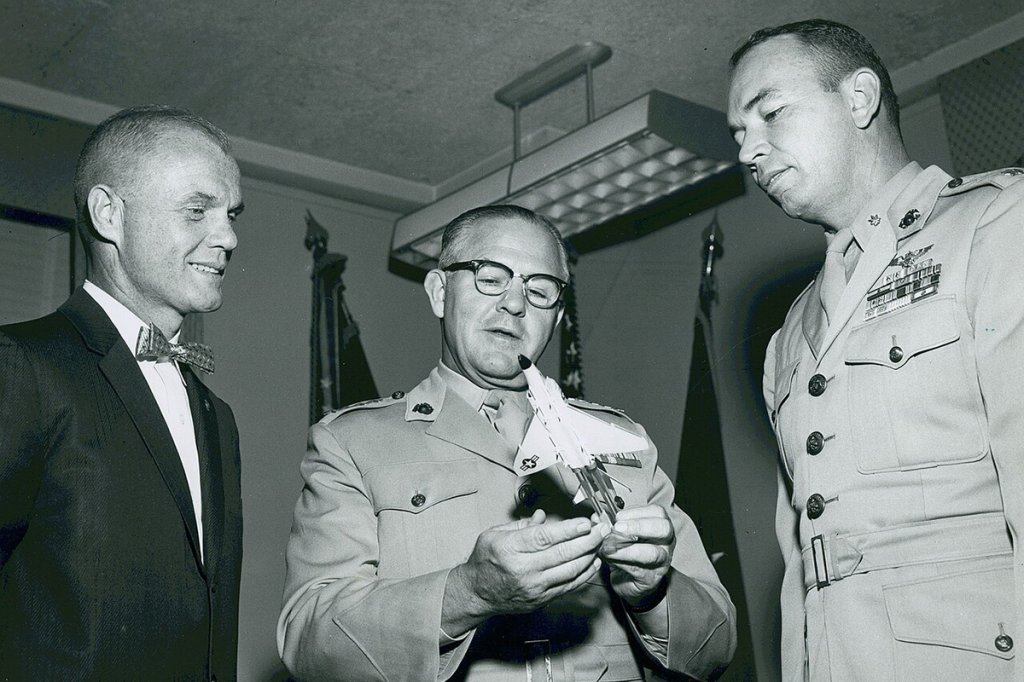
Gen. David M. Shoup, the 22nd Commandant of the Marine Corps, served from 1960 to 1963 and brought to the office a rare combination of combat heroism and moral courage.
A Medal of Honor recipient for his actions during the Battle of Tarawa in World War II, Shoup possessed unmatched battlefield credibility. He understood firsthand the costs of war and the responsibilities borne by those who send others into combat.
As commandant, Shoup was known for his intellectual independence and willingness to challenge conventional wisdom. He emphasized ethical leadership, honest assessments of military capability, and the obligation of senior officers to speak truthfully to civilian leaders—even when doing so was politically uncomfortable. Shoup believed that blind adherence to doctrine or optimism could lead to unnecessary loss of life.
His tenure occurred during the early stages of American involvement in Vietnam, and Shoup was deeply skeptical of large-scale military intervention without clear objectives and public support. While firmly committed to the Marine Corps’ readiness and professionalism, he demonstrated that true leadership required more than courage under fire. It demanded integrity, judgment, and restraint.
Shoup’s legacy endures as a reminder that Marine leadership is defined not only by tactical excellence, but by the moral responsibility to weigh the consequences of war. His example continues to influence discussions of civil-military relations and ethical decision-making within the Corps.
The Modern Commandant: Gen. Eric M. Smith
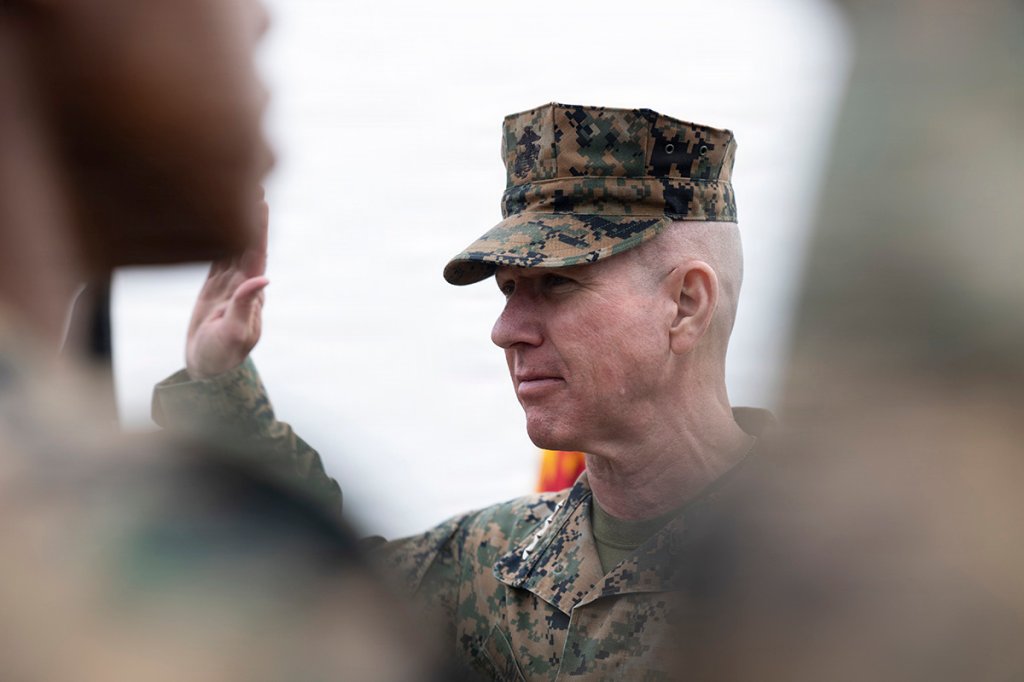
The Marine Corps today is led by Gen. Eric M. Smith, the 39th Commandant of the Marine Corps, whose tenure reflects both continuity with the Corps’ storied past and adaptation to the strategic demands of the 21st century. A seasoned combat veteran, Smith brings extensive experience in expeditionary warfare, joint operations, and multinational coordination.
Smith assumed command during a period of profound transformation for the Marine Corps. The character of warfare is rapidly evolving, driven by advances in technology, cyber capabilities, and the renewed focus on great power competition, particularly in the Indo-Pacific region. Recognizing these realities, Smith has continued the implementation of force modernization initiatives designed to make the Marine Corps more agile, lethal, and survivable in contested maritime spaces.
Central to his leadership is the concept of distributed maritime operations, which emphasizes smaller, highly mobile Marine units capable of operating across vast oceanic and littoral regions in close coordination with the U.S. Navy. This approach builds upon the Corps’ traditional expeditionary role while adapting it for an era in which large, concentrated forces may be vulnerable to advanced precision weapons.
Investments in unmanned systems, long-range fires, and advanced communications reflect Smith’s commitment to preparing Marines for future conflicts without sacrificing the adaptability that has long defined the Corps.
At the same time, Smith has emphasized the enduring importance of Marine culture, discipline, and readiness. He has reinforced the idea that modernization is not about abandoning tradition, but about ensuring that the values forged at places like Belleau Wood, Tarawa, and Fallujah remain relevant on tomorrow’s battlefields. His leadership underscores the Commandant’s dual responsibility as both a steward of Marine heritage and a visionary responsible for shaping the Corps’ future.
Smith exemplifies the modern Commandant—an officer tasked with balancing innovation and reform while preserving the expeditionary spirit that has defined the Marine Corps for nearly 2½ centuries. His tenure reflects the continuing evolution of the Commandant’s role, from administrative overseer to strategic leader guiding the Corps through an era of unprecedented change.
250 Years of Faithful Service
From Tun Tavern to global battlefields, the U.S. Marine Corps has remained true to its founding purpose. Its history is one of adaptation, sacrifice, and unwavering commitment to mission.
As America marks its 250th anniversary, the story of the Marine Corps reminds us that institutions endure through leadership, discipline, and shared values. The evolution of the Commandant reflects the growth of a nation that learned how to defend itself across centuries of change.
For 2½ centuries, Marines have answered the call. Their legacy is inseparable from the story of the United States itself.
Semper Fidelis.