On May 5, 1945, a quiet spring afternoon near Bly, Oregon, became a tragic moment in American history. Six innocent lives were lost when a Japanese balloon bomb (one of the mysterious Fu-Go weapons carried across the Pacific by the jet stream) detonated as a group of children and their minister’s wife approached it during a picnic.
Elsie Mitchell, along with children Edward Engen, Jay Gifford, Dick Patzke, Joan Patzke, and Sherman Shoemaker, were killed in the attack. They remain the only civilians on the U.S. mainland to die as a direct result of enemy action during World War II. Their memory stands at the heart of the story that follows, reminding us of the profound human cost of war and the extraordinary efforts taken to prevent further tragedy.
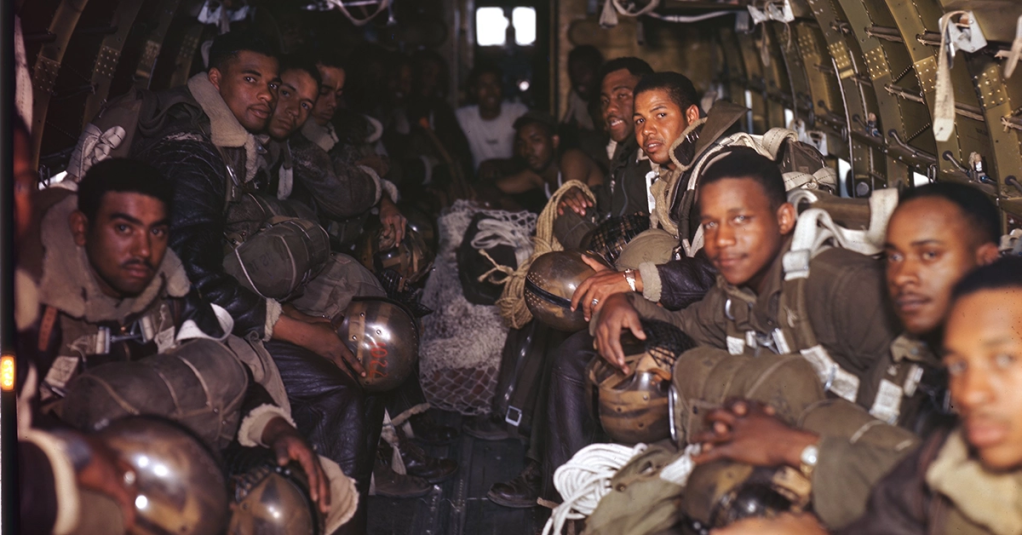
Sgt. Jordan “J.J.” Corbett, now 103 years old, whose life story embodies courage, humility, and service both in and out of uniform. He is among the last living members of the Triple Nickles. Born on Nov. 25, 1922, in Pierce, Florida, Jordan Corbett grew up in a segregated South where opportunities for Black Americans were sharply limited. He graduated from Union Academy High School in 1942 and entered Bethune-Cookman University on a football scholarship. His education was interrupted when he was drafted into the U.S. Army during World War II.
After joining the 555th Parachute Infantry Battalion, Corbett trained alongside some of the most capable paratroopers in the nation. With the Triple Nickles, he deployed to the Pacific Northwest during Operation Firefly, parachuting into forests choked with smoke and battling blazes fueled by balloon bombs. Like so many in his unit, Corbett served with unwavering loyalty despite knowing that systemic racism had prevented him from fighting overseas.
Japan’s Trans-Pacific Gamble
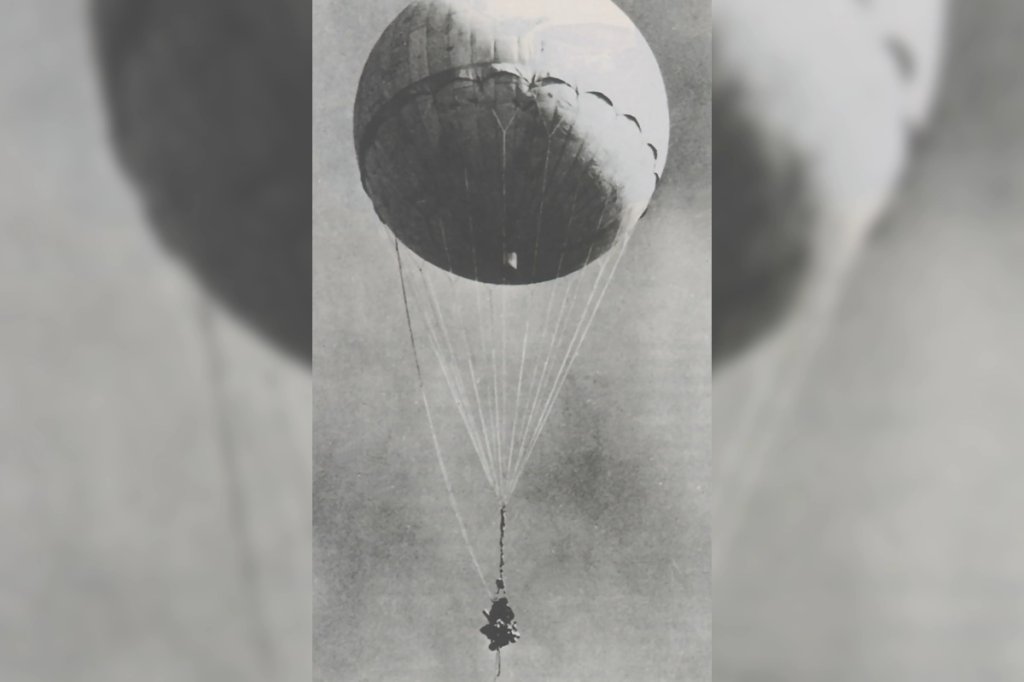
Between late 1944 and early 1945, Japan launched one of the most unusual aerial weapon campaigns in military history. Using meteorological research on the newly understood jet stream, Japanese scientists designed hydrogen-filled paper balloons capable of drifting over 6,000 miles to reach North America. These weapons (known as Fu-Go) were constructed from handmade washi paper, reinforced with potato paste, and equipped with incendiary bombs, anti-personnel charges, and an altimeter-controlled ballast system.
Japan launched approximately 9,300 of these sophisticated devices from Honshu, hoping to accomplish several objectives:
- ignite devastating wildfires in the vast forests of the Pacific Northwest,
- divert American manpower and resources away from the Pacific Theater,
- cause panic among the civilian population, and
- deliver a symbolic attack demonstrating that Japan could strike the U.S. mainland.
Riding the jet stream at speeds exceeding 100 mph, many balloons reached North America, with documented landings from California to Alaska and as far east as Michigan.
However, the campaign’s effectiveness was limited. Winter rains dampened forest floors, and most bombs caused little damage. Nonetheless, the devices remained highly dangerous, containing enough explosive power to kill or maim anyone who encountered them. Because U.S. officials feared that reports of balloon landings could help Japan adjust its aim, they issued a total media blackout.
The tragic deaths near Bly forced the military to reassess its strategy. Public warnings were issued for the first time, and specialized teams were deployed to respond to fires and locate unexploded devices. This growing danger set the stage for the mission that would bring one of America’s most remarkable military units to the forefront.
The Creation of the 555th Parachute Infantry Battalion
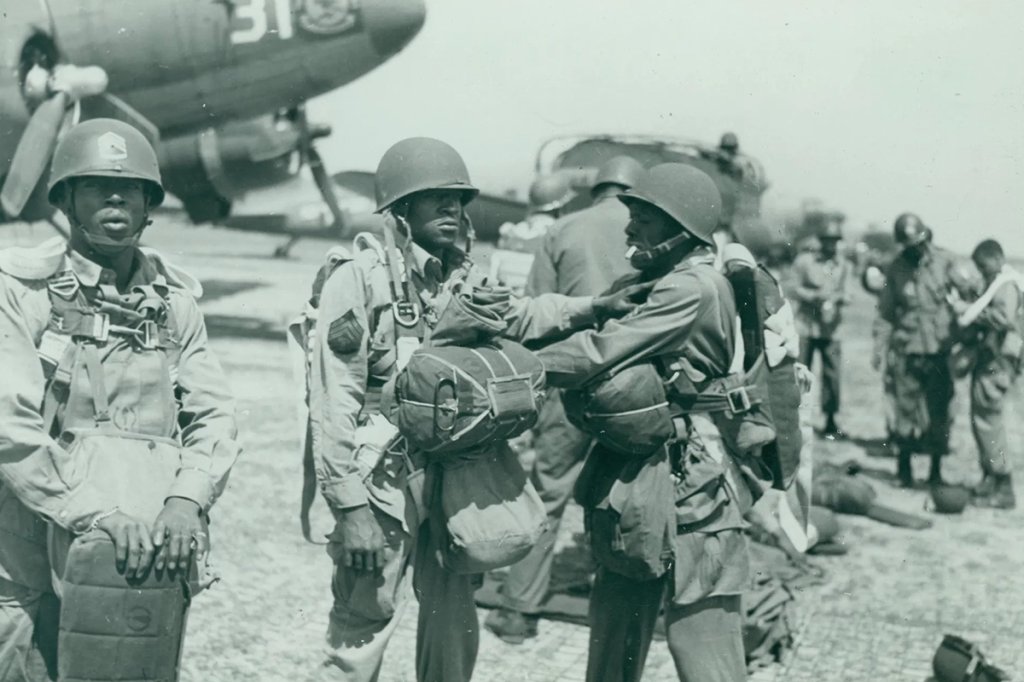
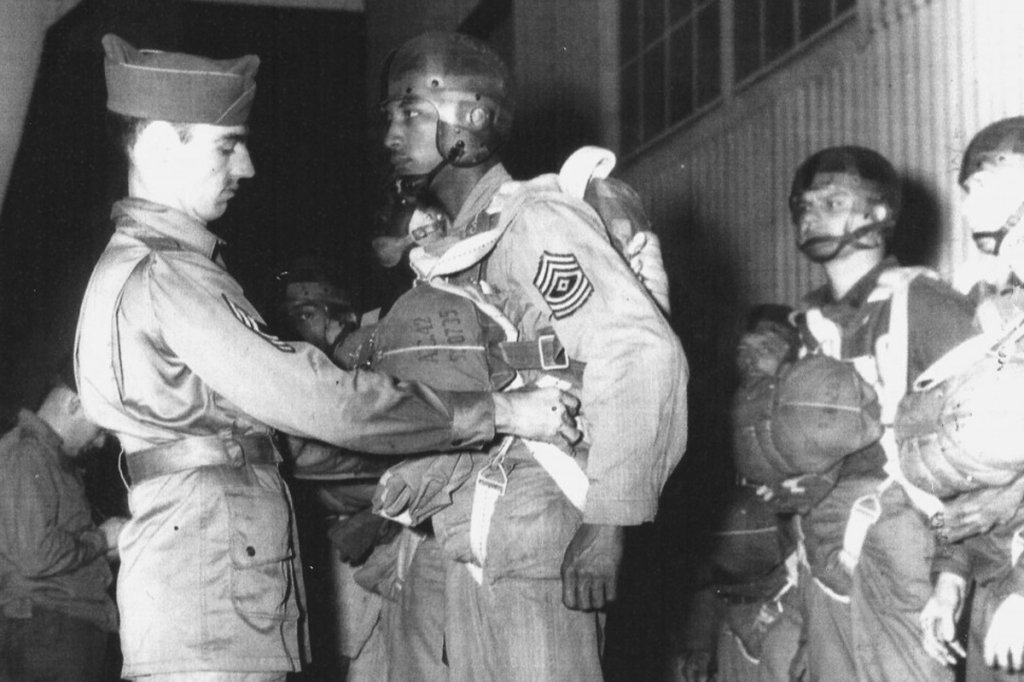
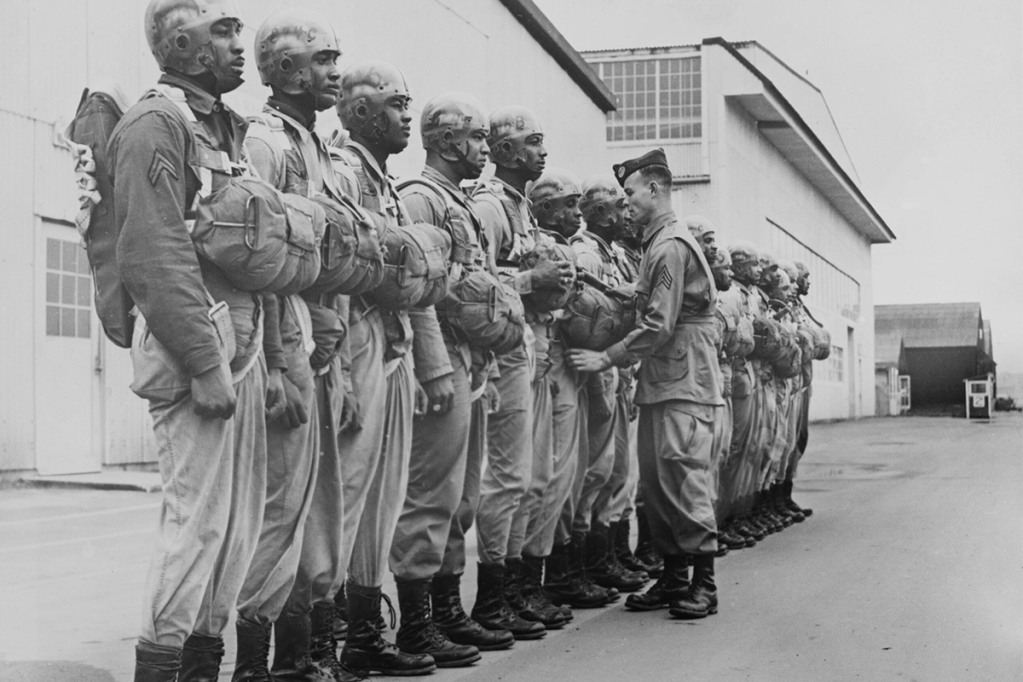
The story of the Triple Nickles began in 1943, at the height of World War II, when the U.S. Army authorized the formation of its first all-Black airborne unit. Despite the segregationist policies that shaped the military at the time, Black soldiers continually demonstrated exceptional skill, discipline, and loyalty: qualities that made airborne service both an opportunity and a battleground for equality.
The 555th Parachute Infantry Battalion was activated on Dec. 30, 1943, at Fort Benning, Georgia. Its soldiers endured the same rigorous physical requirements and airborne training as white paratroopers, completing grueling jump courses, close-quarters combat drills, and tactical exercises designed to forge elite airborne warriors.
Their nickname, “Triple Nickles,” was derived from the repeated digit “5” in their battalion number and represented unity, discipline, and excellence. Despite their qualifications, the battalion faced racial discrimination at every turn. They were excluded from many aspects of post-graduate airborne training, denied opportunities for combat deployment, and often treated as second-class soldiers by a segregated command structure.
Even so, their skill could not be ignored. Commanders searching for specialized troops to address the balloon bomb threat realized that the 555th possessed the agility, discipline, and mental toughness required for a dangerous new mission.
“Smoke Jumpers” of Operation Firefly
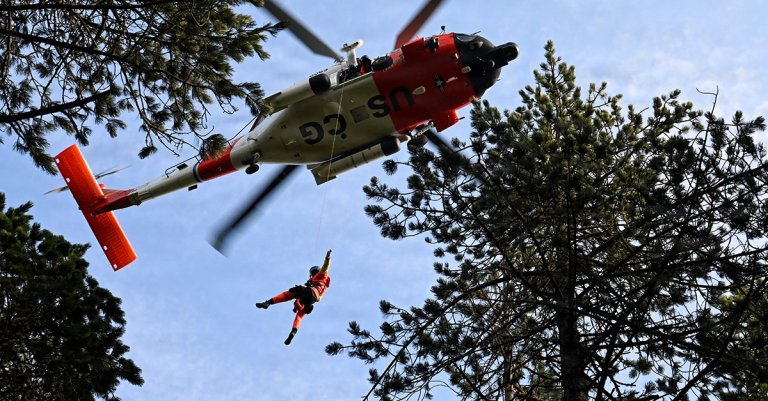
In 1945, the Triple Nickles were assigned to Operation Firefly, a top-secret mission carried out in coordination with the U.S. Forest Service. Instead of jumping into combat zones overseas, these elite paratroopers parachuted into burning forests across the Pacific Northwest, battling blazes that were often sparked deep in rugged and inaccessible terrain.
To prepare, the men trained in emergency tree landings, wildfire behavior, survival techniques, and ordnance disposal. They traded their combat equipment for firefighting tools, axes, and shovels. Yet the danger remained very real: a single misstep on landing could be fatal; tree limbs could impale; winds could whip flames unpredictably; and any unexploded Japanese bomb concealed within the smoke could detonate without warning.
From May to October 1945, the Triple Nickles executed approximately 1,200 jumps and responded to more than 30 fires across Oregon, Washington, California, and Montana. They became the first military smokejumpers in American history and laid the groundwork for the future of aerial wildfire response.
Their performance was extraordinary. Their dedication unmatched. And their success a major reason why Japan’s balloon bomb campaign failed to inflict the devastation its architects intended.
Integration
As the war ended, the U.S. military faced mounting pressure to reconsider segregation. Several developments converged to force a reckoning:
- Black units, including the Tuskegee Airmen, the 92nd Infantry Division, and the 761st Tank Battalion, proved their courage and professionalism beyond question.
- Civil rights organizations like the NAACP pushed aggressively for military equality, arguing that soldiers who fought fascism abroad should not return to discrimination at home.
- Black veterans themselves, including members of the 555th, shared firsthand accounts of their experiences. Many wrote letters, gave interviews, and advocated for change.
- International politics heightened scrutiny: As the Cold War emerged, racism in the U.S. military became a vulnerability in America’s effort to position itself as a global defender of freedom.
The Army began taking small steps, including integrating the 555th into the 82nd Airborne Division in 1947. This was a major development. The Triple Nickles became airborne pioneers twice over: first as the first all-Black parachute unit, and then as among the first Black paratroopers to serve in an integrated airborne force.
Their successful assimilation into the 82nd proved definitively that racial integration strengthened, rather than weakened, military effectiveness. Although they were denied the chance to fight on foreign battlefields, the 555th helped push the U.S. military toward change. Their discipline and professionalism were impossible to ignore. In 1947, their members were integrated into the 82nd Airborne Division, one of the earliest steps toward the complete desegregation of the Armed Forces, which President Harry S. Truman ordered the following year.
The influence of the Triple Nickles extended far beyond military restructuring. Their experience helped develop modern smokejumping techniques, and their perseverance in the face of discrimination inspired countless service members who followed.
Executive Order 9981 (1948)
By 1948, America stood at a crossroads. Black veterans demanded equal treatment, civil rights groups amplified their cause, and military leaders quietly acknowledged that segregation was inefficient, costly, and harmful to morale. On July 26, 1948, President Truman issued Executive Order 9981, which read, “There shall be equality of treatment and opportunity for all persons in the armed services without regard to race, color, religion, or national origin.”
This order marked the formal beginning of military desegregation. Among the evidence Truman reviewed were the records and testimonies of units like the 555th, which demonstrated unequivocally that Black service members excelled in elite, high-risk roles when given the opportunity.
The Triple Nickles did not just serve a mission; they helped shape the moral and organizational direction of the modern American military.

Truman's Executive Order 9981 | Black History Month
The Remarkable Life of Sgt. Jordan “J.J.” Corbett
When the war ended, Corbett resumed his education and graduated from North Carolina A&T College in 1950 with a bachelor’s degree in Education and a specialization in mathematics. He went on to become a towering figure in Florida education and athletics.
For 30 years, Corbett worked as a high school teacher, coach, and mentor. He transformed track and field programs, led multiple state championship teams, and inspired thousands of students (Black and white) during a time of dramatic social change. He played a key role in guiding Bartow’s schools through the transition from segregation to full integration, always choosing dignity and leadership over bitterness.
Corbett went on to serve his community through school board leadership, civic organizations, faith communities, and youth mentorship programs. His contributions earned him state and national recognition, including acknowledgment from the Florida House of Representatives and honors from military, educational, and civic institutions.
Through it all, he remained committed to sharing the story of the Triple Nickles. He has spoken at events across the country, teaching audiences about World War II, segregation in the military, and the resilience of the men who served. His voice—steady, humble, and unwavering—has become one of the most critical living testimonies to the African American experience in wartime America.
How the BLKOPS Foundation and House Bill 1329 Preserve This History Today
The story of Operation Firefly and the Triple Nickles might have largely remained forgotten if not for the work of dedicated organizations committed to preserving African American military history. The BLKOPS Foundation, through education, veteran engagement, and community outreach, has become one of the leading voices ensuring these stories are not lost.
With the support of Florida House Bill 1329, BLKOPS brings this history directly into classrooms, civic spaces, and public events. Students learn not only about the Fu-Go bombs and Operation Firefly but also about the broader struggles and triumphs of African American service members. Veterans hear their own experiences reflected and honored. Communities gain a deeper understanding of the sacrifices made by the 555th and other overlooked units whose courage helped shape the nation.
This commitment ensures that the legacy of heroes like Jordan Corbett and the memory of those killed at Bly continue to inspire new generations across Florida and beyond.
Operation Firefly is a story of bravery over prejudice, service over exclusion, and hope over hardship. The Triple Nickles protected the American homeland from an unusual enemy threat while fighting a historic battle for equality within their own country.
Today, thanks to educators, veterans, legislators, and organizations like the BLKOPS Foundation, the flame of the Triple Nickles legacy burns brighter than ever. Their story remains a powerful reminder that history is not only written on distant battlefields, it is also shaped by those who defend their nation at home, who stand against injustice, and who dedicate their lives to lifting others.
Don’t Miss the Best of We Are The Mighty
• ‘M*A*S*H’ made television history while keeping Korean War history alive
• When Patton met MacArthur in the mud of St. Mihiel
• The Indian Scouts that forged the legacy of American Special Forces