Every year on Dec. 7, we pause to commemorate the attack on Pearl Harbor. But here’s the thing: it’s more than a history lesson. For anyone wearing the uniform today, Pearl Harbor isn’t just about what happened more than 80 years ago. It’s about what could happen tomorrow morning if we’re not paying attention.
Related: Today in military history: Japan attacks Pearl Harbor
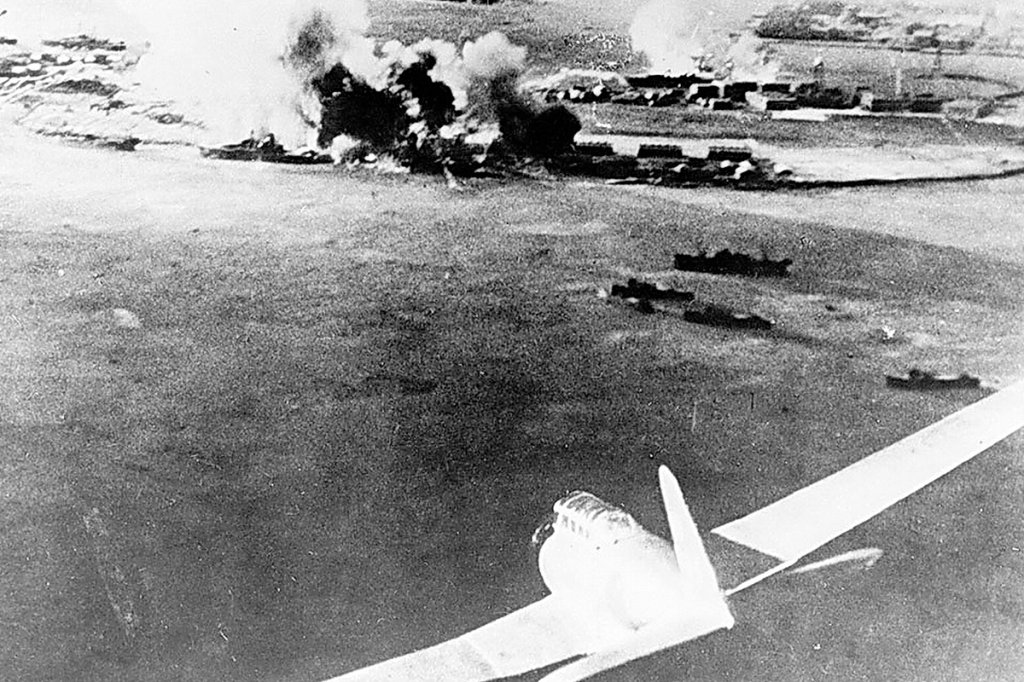
The numbers still hit hard. In just over an hour on that Sunday morning in 1941, Japanese forces killed 2,403 Americans and wounded another 1,178. They sank or damaged 19 ships and destroyed more than 180 aircraft. The USS Arizona alone took 1,177 sailors and Marines to the bottom, where more than 900 remain entombed today.
What should really keep military leaders up at night is that the warning signs were there, and we still got caught flat-footed.
The Intelligence Failure that Changed Everything
The attack didn’t come out of nowhere. Diplomatic tensions between the U.S. and Japan had been escalating for years. Intelligence reports suggested something was brewing. Hell, radar operators at Opana Station picked up the incoming Japanese aircraft formation that morning. They called it in.
The problem? Nobody connected the dots. The officer who received the radar report thought the blips were American B-17s scheduled to arrive that day. Because of course they were. What else could they be?
That’s complacency in action. The kind that gets people killed.
Admiral Husband Kimmel, commander of the Pacific Fleet, and Lt. Gen. Walter Short, who commanded Army forces in Hawaii, had received warnings that the Japanese troops might attack. Yet neither expanded reconnaissance nor brought forces to full alert. Short actually ordered most fighter planes concentrated at Wheeler Field to prevent sabotage, making them perfect targets for Japanese bombers.
The carriers, which would prove crucial in the Pacific War, were out at sea by pure luck. Some historians call it providence. Others call it the only thing that kept the Pacific Fleet from being completely annihilated.
What We Learned the Hard Way
Pearl Harbor fundamentally changed how America thinks about military readiness. The surprise attack exposed critical vulnerabilities: inadequate intelligence sharing between branches, insufficient defensive preparations despite warning signs, and a dangerous assumption that the enemy would act in a predictable manner.
President Franklin D. Roosevelt didn’t mince words. In his Dec. 8 address to Congress, he called it “a date which will live in infamy” and promised that Americans “will win through to absolute victory.” Within 24 hours, the U.S. had declared war on Japan. Within three months, 11 of the damaged ships were back in the fight.
The Japanese Admiral Isoroku Yamamoto, who orchestrated the attack, reportedly predicted he could “run wild considerably for the first six months or a year” but had “utterly no confidence for the second and third years.” He was right. By war’s end, all but three of the ships damaged at Pearl Harbor had been raised, repaired, and returned to service.
But the real victory was how Pearl Harbor transformed American military doctrine. The attack proved that surprise attacks happen, that vigilance can’t be seasonal, and that threats don’t always come from the expected direction. These aren’t just historical observations. They’re operational requirements.
Why It Matters Now
Fast forward to today, and the lessons from Pearl Harbor remain brutally relevant. The military operates in an environment where cyber attacks can cripple infrastructure, hypersonic weapons can strike with minimal warning, and adversaries study our vulnerabilities 24/7. Sound familiar?
The same complacency that allowed Pearl Harbor to succeed shows up in different forms today. Assuming the enemy won’t use certain tactics. Failing to share intelligence effectively across branches. Believing that because something hasn’t happened, it won’t happen.
As one NCO leadership analysis recently put it, wars often occur unexpectedly. Pearl Harbor sits alongside Korea, Kuwait, 9/11, and Ukraine as proof that threats emerge when least expected, from directions not anticipated, in forms not previously considered. The modern battlefield demands adaptability, vigilance, and unwavering readiness.
Secretary of the Navy Carlos del Toro asked the question that matters most: “If another Pearl Harbor arrives tomorrow, are we ready?”
That’s not a hypothetical. It’s the urgent question driving strategic leadership decisions every single day.
Survivors Remember
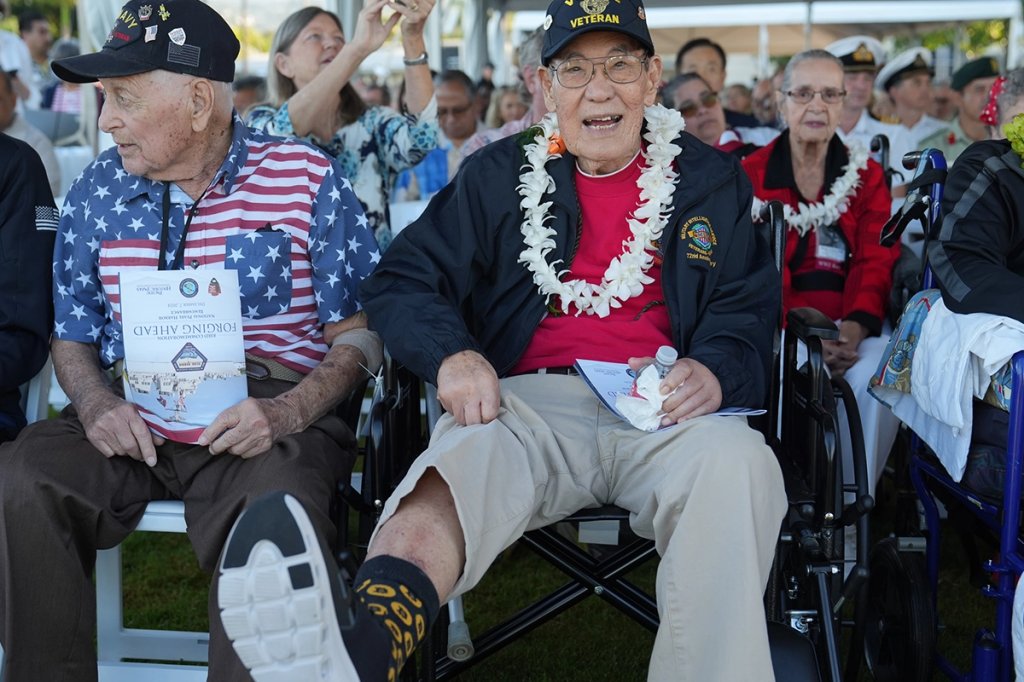
Fewer than 15 survivors of the Pearl Harbor attack remain alive today. At 102, 104, and beyond, they’ve spent decades sharing their stories with anyone who’ll listen. They don’t call themselves heroes. As 102-year-old survivor Bob Fernandez said in a December 2024 interview with The Associated Press, “I’m not a hero. I’m just nothing but an ammunition passer.”
But they understand something crucial: if we stop remembering, we stop learning. If we stop learning, we repeat history. And nobody wants to be the generation that gets caught sleeping again.
Ira “Ike” Schab, who’s 104, spent six weeks in physical therapy to build the strength to stand and salute at the 2024 commemoration ceremony. He initially didn’t want to return to Pearl Harbor because the memories were too painful. But years ago, after watching the number of survivors dwindle, he changed his mind.
According to his son Karl Schab, who spoke with Hawaii News Now last year, Ike said: “As long as I’m able to make the trip, I want to make the trip for the people that can’t make the trip.”
That’s the legacy. Not just honoring the fallen, but carrying forward the lessons they paid for with their lives.
Lasting Impact
Pearl Harbor ended American isolationism permanently. It pushed the U.S. into creating the United Nations and NATO, cementing America’s role as a global military power. It accelerated technological advancement in radar, aviation, and naval warfare. It proved that carriers, not battleships, would dominate future conflicts.
Most importantly, it established a standard: American forces must maintain constant readiness because threats don’t wait for convenient timing. That means investing in peacetime preparation, maintaining robust intelligence networks, fostering interagency cooperation, and never assuming we know exactly how or when the next attack will come.
The sailors and soldiers who died at Pearl Harbor didn’t get a chance to apply these lessons. But everyone serving today has that opportunity and that responsibility.
The attack that pulled America into World War II happened 84 years ago. The warning it represents never expires.
Don’t Miss the Best of We Are The Mighty
• ‘Japan’s Pearl Harbor’ was the original target for US nukes
• Pearl Harbor forced this civilian plane to fly around the world in five weeks
• This is what happened to the 9 battleships at Pearl Harbor

Sponsored Content