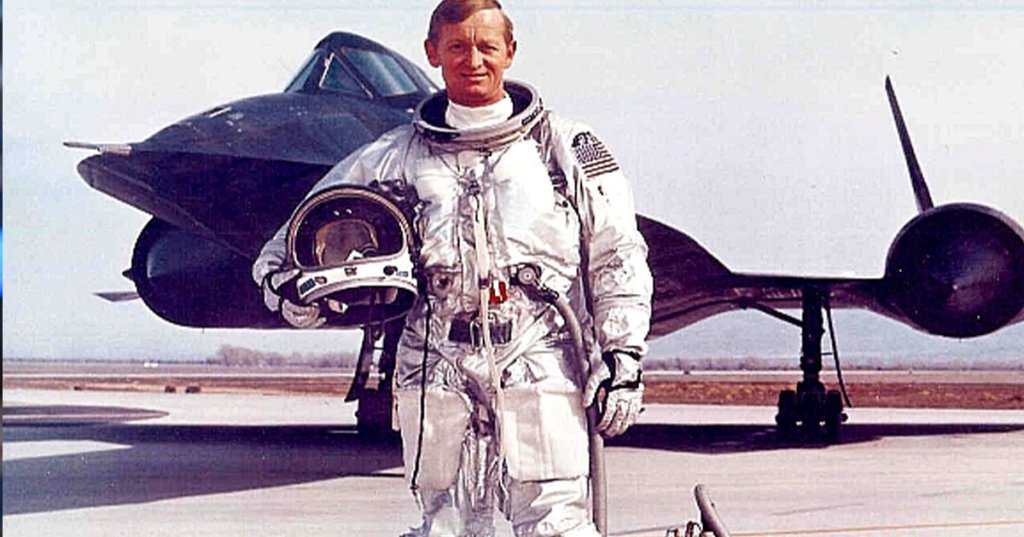
At Mach 3 – three times the speed of sound – an SR-71 pilot would be pushing close to the aircraft’s top speed, but the plane would normally have been able to fly at those speeds for more than an hour. But normal flying isn’t what test pilots do. On January 25, 1966, Lockheed test pilot Bill Weaver and his backseater Jim Zwayer took off from Beale Air Force Base in an SR-71 Blackbird to do some abnormal flying on a Blackbird dubbed #952.
Sadly, Zwayer wouldn’t return from the flight, an occupational hazard for many test pilots of that era. Weaver would return to base with the most incredible tale of high-altitude, high-velocity survival any pilot had ever heard: he would be the first pilot to eject from an SR-71 Blackbird.
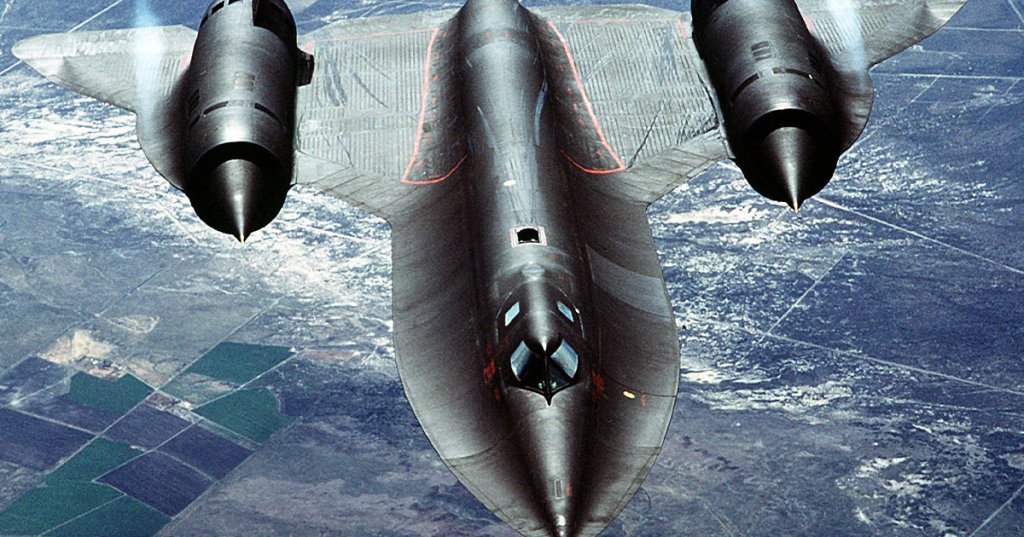
Bill Weaver was no stranger to notable firsts. He was a Korean War veteran and a Naval Academy graduate who joined the Air Force, flying the F-89 Scorpion, the first jet aircraft designed as an interceptor. He left the Air Force after the war and went to work for Lockheed’s Skunk Works in 1956, where he tested all models of the F-104, the A-12 Oxcart, and the YF-12. But it was aboard an SR-71 Blackbird that he would make horrific history.
After hitting an aerial refuel from a KC-135 tanker, Weaver and Zwayer hit their Mach 3.2 cruise speed and climbed to 78,000 feet. Their test mission was to investigate procedures to improve high Mach cruise speed by flying with the center of gravity further aft than usual, a perilous mission because the move reduced the plane’s longitudinal stability, Weaver later wrote.
Near the start of the flight, the right engine inlet automatic control system malfunctioned and was switched to manual operation as required by procedure. As the Blackbird began its test run, the right engine suffered an inlet unstart. This happens when a shock wave inside the engine is propelled forward. These shock waves are designed to slow the air down to subsonic speeds, allowing the engine to breathe.
When functioning normally, the shock waves stay inside the inlet. If something disrupts this process, the engines lose their smooth airflow. The result of this means the jet can kick like a mule – or one side of the plane could drop to subsonic speeds and turn to one direction or another.
Weaver’s inlet unstart caused the aircraft to begin rolling to the right and pitch up during a programmed 35-degree turn. Weaver attempted to tell Zwayer that he was decreasing speed and to stay with the aircraft until it reached a lower altitude, but the transmission was garbled, and it was too late anyway. With all the different forces acting on the aircraft, the stability augmentation system was unable to restore control, and a catastrophic failure occurred.
According to the flight data, the time between the inlet unstart and failure was approximately three seconds. The Blackbird completely disintegrated. Weaver blacked out.

This SR-71 Pilot Free Fell from the Edge of Space
Weaver remembers regaining consciousness, thinking he was dead. Surely, no one could survive what just happened. Weaver couldn’t remember initiating the ejection sequence either. That’s because he didn’t; the aircraft just disintegrated around him.
“My next recollection was a hazy thought that I was having a bad dream,” Weaver wrote. “Maybe I’ll wake up and get out of this mess, I mused. Gradually regaining consciousness, I realized this was no dream; it had really happened. That also was disturbing, because I could not have survived what had just happened. Therefore, I must be dead. Since I didn’t feel bad–just a detached sense of euphoria–I decided being dead wasn’t so bad after all.
AS FULL AWARENESS took hold, I realized I was not dead, but had somehow separated from the airplane. I had no idea how this could have happened; I hadn’t initiated an ejection. The sound of rushing air and what sounded like straps flapping in the wind confirmed I was falling, but I couldn’t see anything. My pressure suit’s face plate had frozen over and I was staring at a layer of ice.”
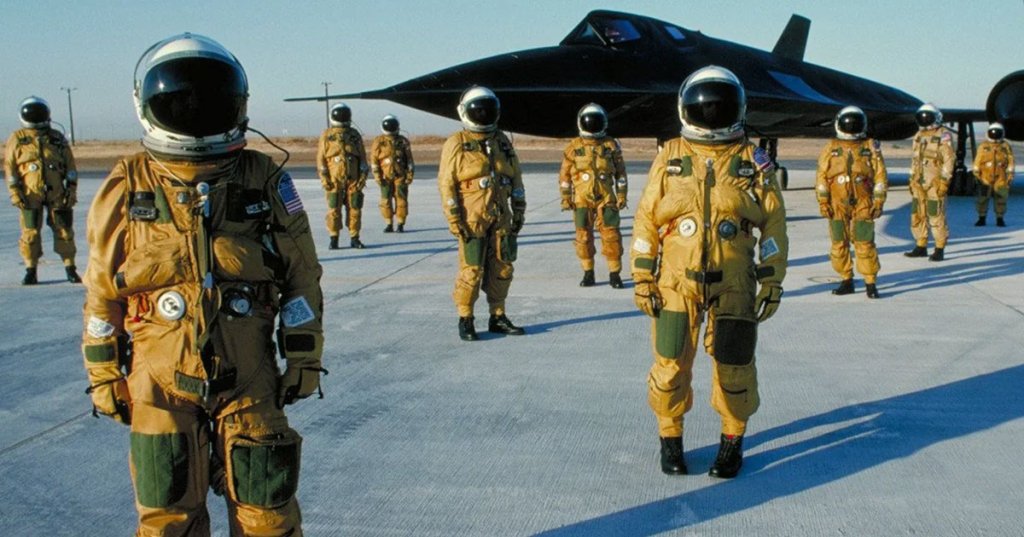
He remembered his main chute was scheduled to open at 15,000 feet, but wasn’t sure if it would work. He searched for his D-ring to activate the main chute manually, but couldn’t see it. It was then that the main chute opened. Weaver finally managed to get his frozen faceplate open and could see Jim’s parachute about a quarter mile away. When he looked down, the terrain was desolate, with patches of snow.
He landed without any further injuries and was trying to collapse his chute when he heard a voice say, “Can I Help You?”
Once again, Weaver was shocked. The man was Albert Mitchell, a cattleman who saw the crash and hopped into his private helicopter, just a couple of miles away, to help. Mitchell told Weaver that he saw his partner’s parachute and called the New Mexico Highway Patrol.
“My seat belt and shoulder harness were still draped around me, attached and latched,” wrote Weaver. “The lap belt had been shredded on each side of my hips, where the straps had fed through knurled adjustment rollers. The shoulder harness had shredded in a similar manner across my back. The ejection seat had never left the airplane; I had been ripped out of it by the extreme forces, seat belt and shoulder harness still fastened.”

After helping Weaver with his chute, the cattle rancher took off in the helicopter to check on Zwayer’s condition. He returned about ten minutes later with the bad news: Zwayer was dead. Apparently, his neck was broken from the Mach 3 ejection. One of Albert’s ranch foremen would watch over Zwayer’s remains until the authorities arrived. Weaver asked to see his partner’s body to make sure nothing else could be done. After taking him to check on Zwayer, Mitchell took Weaver to the hospital in Tucumcari, New Mexico, about 60 miles away.
During the helicopter flight, Weaver couldn’t help but notice that most of the gauges on the Hughes helicopter were in the red. He thought to himself, wouldn’t it be something if he survived a Mach 3 ejection only to be killed in a helicopter ride.
Weaver made it to the hospital and called Edwards Air Force Base, notifying them of what happened. The flight test team was shocked to learn that anyone survived, as they were monitoring the flight and couldn’t believe that he survived a Mach 3 ejection.
The Blackbird wreckage was strewn over an area 15 miles long and 10 miles wide. The front section of the aircraft snapped off just aft of the rear cockpit and was located about 10 miles from the main wreckage.
The next day, the flight data from the crash was entered into the SR-71 Flight Simulator, and the results were the same. A total disintegration of the aircraft. From that point on, testing of the center of gravity aft of the normal limits was halted, and modifications to the inlet control system made unstarts much less frequent.
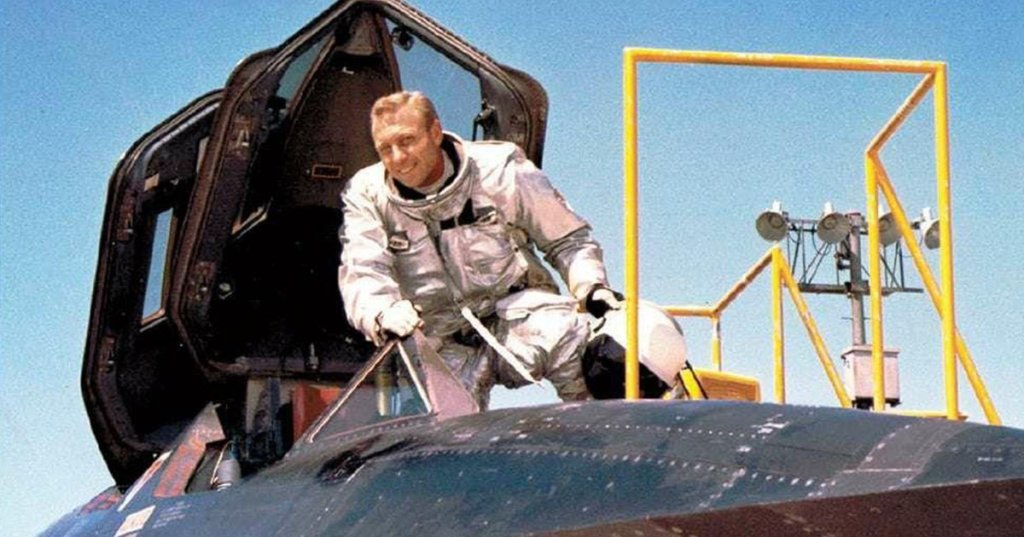
Only two weeks after the crash, Weaver was back in the cockpit for the first flight of a fresh assembly line Blackbird. As he rolled down the runway about to rotate, the backseater called out, “Bill, are you there?” Weaver answered Yes, George, what’s the matter? George answered, “Thank God I thought you might have left!”
The SR-71 rear cockpit has no forward visibility, and an ejection warning light came on. Perhaps George was wondering about Weaver’s state of mind after the crash.
Weaver continued his career with Lockheed, where he tested the L-1011 Tristar, a wide-body airliner, and later became the company’s chief test pilot.