The Liberty Bell is one of the most recognizable artifacts associated with the founding of the United States.
Today it stands silently in Philadelphia, its crack instantly identifiable and its message understood around the world. Yet during the era of the American Revolution, the bell was not originally intended to become a national symbol. It began as a civic instrument meant to call lawmakers and citizens to order. Over time, however, it became intertwined with the struggle for independence and the larger revolutionary ideals of liberty, self-government, and public participation.
Related: How America celebrated its centennial in 1876 and transformed its future
Its physical journey during the war and its symbolic transformation afterward reveal how a simple object can become a powerful representation of a nation’s founding.
Origins in Colonial Pennsylvania
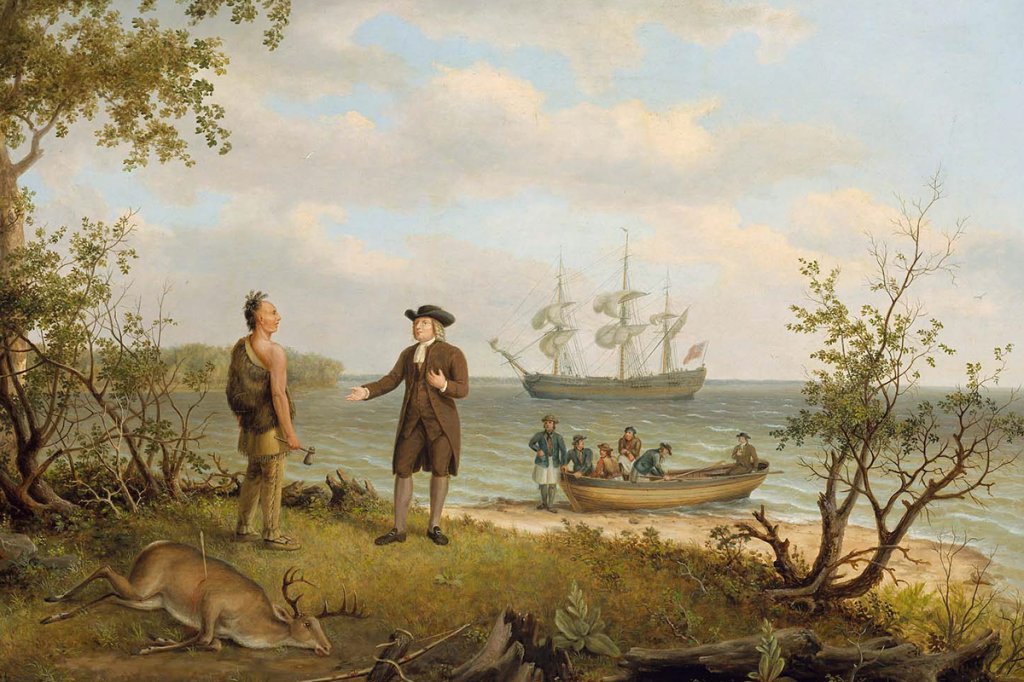
The Pennsylvania Assembly commissioned the Liberty Bell in 1751 for installation in the tower of the Pennsylvania State House, the building now known as Independence Hall. The order coincided with the 50th anniversary of William Penn’s 1701 Charter of Privileges. That charter granted Pennsylvania colonists significant religious freedom and political participation, making the colony one of the most tolerant and representative in British North America.
The bell’s original purpose, therefore, was to celebrate constitutional governance and civic unity within the British Empire rather than to promote rebellion.
In the mid-18th century, Philadelphia was a thriving colonial city and one of the largest in North America. It served as a center for commerce, printing, and political discussion. The State House was the seat of Pennsylvania’s colonial government and a gathering place for public life.
Bells played an essential role in this environment. In an era before telegraphs or mass media, the ringing of a bell signaled everything from legislative meetings and court sessions to public announcements and emergencies. Installing a large bell in the State House tower ensured that the sound could carry across the city and summon residents when important news or civic events required their attention.
Casting, Cracking, and Recasting
The Whitechapel Bell Foundry, one of the most prominent bell-making firms in England, cast the bell in London in 1752.
Weighing more than a ton, it was shipped across the Atlantic to Philadelphia. Upon arrival, however, it cracked during its first test ring. The disappointment was immediate. A bell intended to commemorate liberty and civic pride had failed before it could even be used.
Rather than discard it, local metalworkers John Pass and John Stow were commissioned to recast the bell in 1753. They melted down the damaged bell and added additional copper to strengthen the bronze alloy. Their names, along with the year of recasting, were inscribed on the bell.
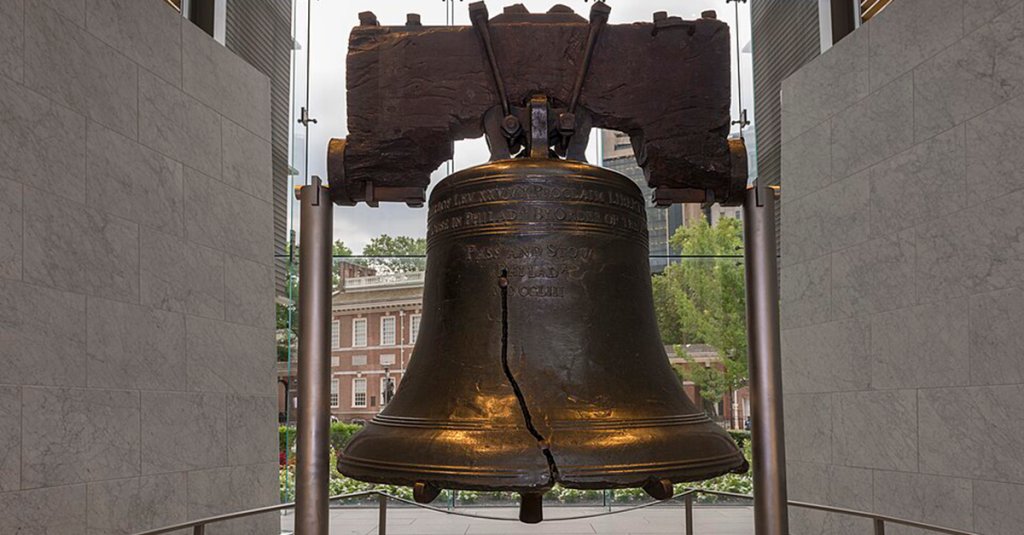
Although the recast version functioned, it was not perfect. Over time, repeated use caused the metal to weaken. Small cracks appeared and were repaired, but eventually the bell developed a large, visible fissure. Historians debate when the final irreparable crack occurred, with dates such as 1835 and 1846 often cited. By that time, however, the bell had already achieved symbolic significance.
The bell’s physical imperfections later enhanced its meaning. Its cracked surface became a reminder that liberty itself is often imperfect and hard won. During the revolutionary era, however, the bell still functioned well enough to fulfill its civic duties.
The Inscription and its Meaning
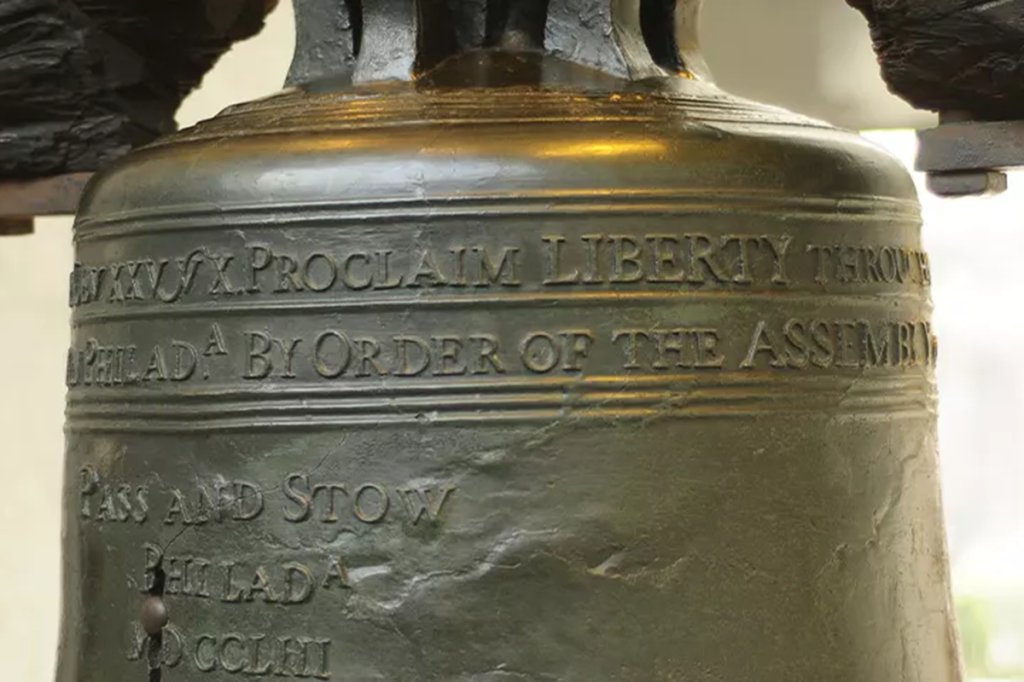
One of the bell’s most important features is its inscription: “Proclaim LIBERTY Throughout all the Land unto all the Inhabitants Thereof,” taken from the Bible, specifically Leviticus 25:10. The verse refers to the Jubilee year, when debts were forgiven and freedom restored. For Pennsylvania’s founders, many of whom were Quakers, the inscription reflected ideals of justice, fairness, and religious tolerance.
When the bell was installed, the inscription carried a moral message rather than an explicitly political one. Yet as tensions between the American colonies and Great Britain intensified in the 1760s and 1770s, the words took on new significance. Colonists increasingly argued that their rights as Englishmen were being violated by taxation without representation and by laws imposed from afar. The idea of proclaiming liberty resonated with those who believed they were defending traditional rights and, eventually, with those who sought independence.
Although the bell was not initially called the Liberty Bell, the inscription ensured that it would later be seen as embodying the ideals of the revolution. The phrase “Proclaim Liberty” seemed almost prophetic once the colonies declared independence.
Philadelphia and the Revolutionary Movement
By the time of the American Revolution, Philadelphia had become a central hub of resistance to British policies.
The First and Second Continental Congresses met in the Pennsylvania State House beginning in 1774. Delegates from across the colonies gathered to debate their response to British authority. Outside the building, crowds of citizens followed developments closely, eager for news and direction.
In this environment, bells served as a means of communication and mobilization. When important announcements were made or when citizens needed to assemble, bells rang across the city. The State House bell was among the most prominent. In April 1775, when news reached Philadelphia that fighting had broken out at Lexington and Concord in Massachusetts, bells rang throughout the city to spread the word. The sound signaled that the colonies were now at war with British forces.
Throughout the early years of the conflict, the bell continued to be used to mark significant moments. It called people together for public meetings, readings of important documents, and expressions of solidarity. Its role was practical, but the context of war gave each ringing added meaning.
The bell’s sound became associated with collective action and shared purpose.
July 8, 1776: The Public Reading of the Declaration
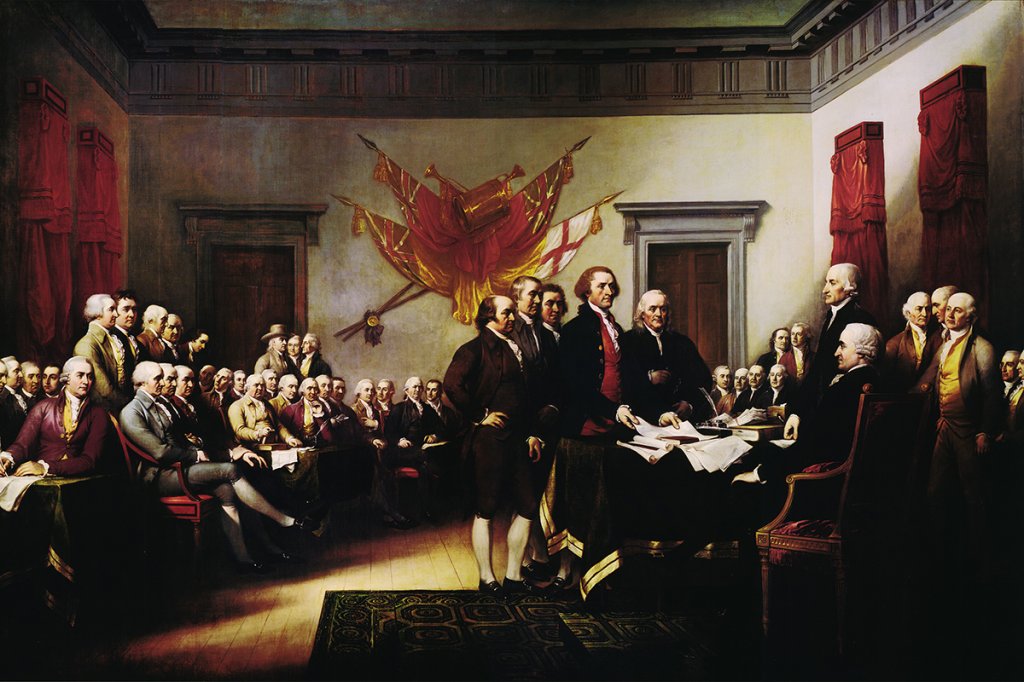
The most famous moment associated with the Liberty Bell occurred shortly after the Continental Congress approved the Declaration of Independence on July 4, 1776. While the document was adopted on that date, it was not immediately announced to the public. Leaders understood that the declaration needed to be presented in a formal and dramatic way.
On July 8, 1776, citizens gathered in the yard of the Pennsylvania State House for the first public reading of the Declaration of Independence. Col. John Nixon read the document aloud to a crowd that included soldiers, residents, and local officials. Tradition holds that the State House bell rang to summon people to hear the reading. Although historians debate whether it rang at that exact moment, it almost certainly rang that day as part of the public announcement.
The association between the bell and the proclamation of independence became deeply embedded in American memory. The idea that a bell inscribed with a call to proclaim liberty rang out to announce the birth of a new nation proved too powerful to ignore. From that point forward, the bell was linked to the revolutionary cause and to the ideals expressed in the Declaration of Independence.
Protecting the Bell During British Occupation
As the Revolutionary War continued, Philadelphia became a strategic target for British forces.
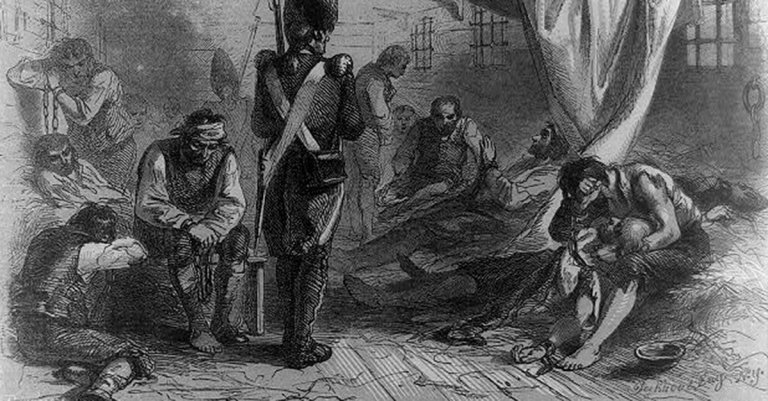
In September 1777, British troops occupied the city. American leaders feared that the British would seize large bells and melt them down to produce cannon and other military supplies. Bells were made of bronze, a valuable material in wartime.
To prevent this, the State House bell and other important bells in Philadelphia were removed and transported out of the city. The Liberty Bell was taken to Allentown, Pennsylvania, along with several others. There, it was hidden beneath the floorboards of Zion’s Reformed Church. The concealment protected it from being discovered and melted down.
Hiding the bell demonstrates how important it had become. Although it was still a functional object, it also carried symbolic value. Preserving it meant preserving a tangible connection to the revolutionary movement and to the ideals it represented.
When British forces left Philadelphia in 1778, the bell was returned to the State House.
After the War: A Growing Symbol

The Liberty Bell: A Tale of Freedom and America's History
After American victory in the revolution, the bell resumed its role in civic life. It rang for celebrations, commemorations, and major national events. It tolled to mark victories and to honor important figures. Although it was still referred to as the State House bell, its revolutionary associations were widely recognized.
In the early 19th century, the bell began to acquire national significance. Visitors came to see it as a relic of the revolution. It was rung for patriotic holidays and important announcements. Eventually, however, the growing crack made it impossible to use without risking further damage. The bell was retired from regular use but preserved as an artifact.
The Liberty Bell and the Abolitionist Movement
The name “Liberty Bell” came into common use in the 1830s, when abolitionists adopted the bell as a symbol of their campaign to end slavery. They pointed to the inscription’s call to proclaim liberty to all inhabitants of the land and argued that the nation had not fully lived up to its founding ideals. By highlighting the bell, abolitionists connected their cause to the principles of the American Revolution.
This reinterpretation expanded the bell’s meaning. It was no longer just a symbol of independence from Britain. It became a symbol of the ongoing struggle to define and extend liberty within the United States. The bell’s revolutionary origins gave moral weight to calls for reform and equality.
An Enduring Revolutionary Icon
Today, the Liberty Bell rests in the Liberty Bell Center in Philadelphia. Weighing 2,080 pounds, it no longer rings, but its message continues to resonate. Visitors from around the world come to see it as a symbol of freedom and democratic ideals.
During the American Revolution, the bell played practical and symbolic roles. It called citizens together, marked significant events, and survived the dangers of war. Its association with the public reading of the Declaration of Independence and its protection during British occupation ensured its place in the nation’s founding story.
Over time, the Liberty Bell became more than a historical artifact. It became a reminder that the ideals of the revolution, including liberty, participation, and self-government, require constant renewal. The bell that once rang in the tower of the Pennsylvania State House now stands silent, but its inscription continues to challenge each generation to proclaim liberty throughout the land.