The Seminole Wars, fought between 1816 and 1858, represent one of the longest and most determined struggles for freedom in American history. These conflicts were not just battles over territory—they were wars for identity, autonomy, and survival. The Seminoles, joined by the Black Seminoles, resisted the United States’ expansion into Florida and its attempts to re-enslave free Black communities. Over four decades, they waged a guerrilla war that shaped U.S. military strategy and laid the groundwork for what would later influence the doctrine of the U.S. Army Special Forces.
Related: How the Seminoles shaped the Green Berets and became America’s ‘unconquered people’
The First Seminole War (1816–1819): Freedom Under Fire
The First Seminole War began in the aftermath of the War of 1812, when the United States, under Gen. Andrew Jackson, sought to eliminate what it saw as a “refuge for runaway slaves and hostile Indians” in Spanish Florida. The territory had become a safe haven for enslaved Africans fleeing from Georgia and the Carolinas. These individuals joined the Seminoles, forming communities known as Black Seminoles, bound together by mutual defense and shared ideals of freedom.
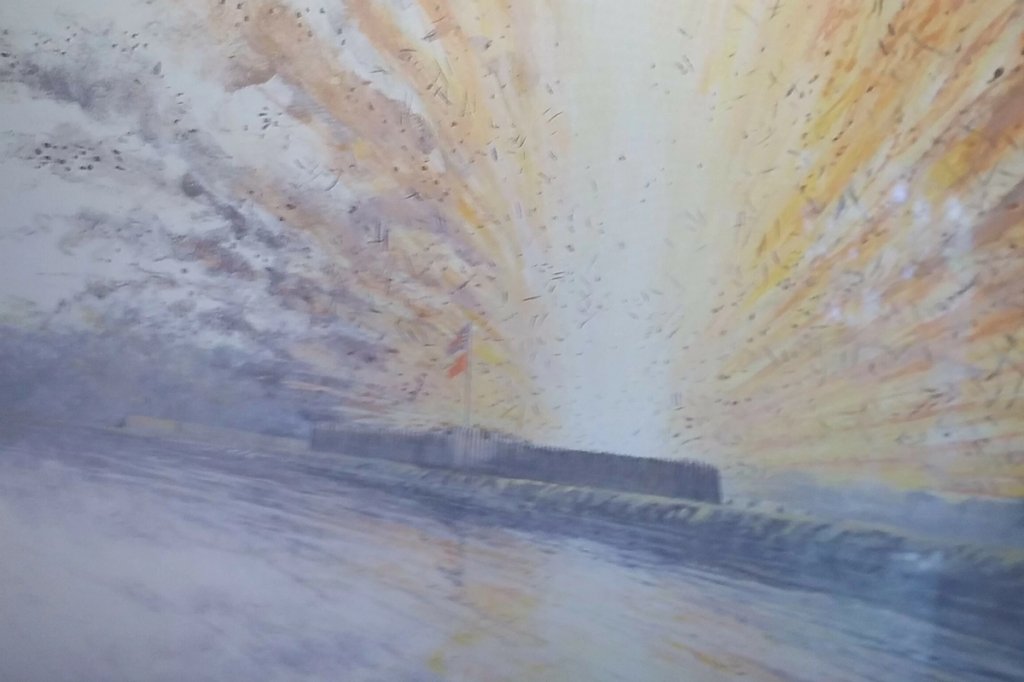
At the heart of this conflict was the “Negro Fort” on the Apalachicola River. Built by the British during the War of 1812 and later abandoned, it became a symbol of freedom, sheltering hundreds of Black Seminoles and their Native allies. In July 1816, U.S. gunboats, commanded by Lt. Col. Duncan Clinch, attacked the fort. A single cannonball ignited the fort’s powder magazine, killing nearly 300 men, women, and children in a single blast. The destruction of Negro Fort became a defining moment in the early history of the Seminole struggle, signaling to the United States that the Seminoles and their Black allies would not surrender without a fight.
Jackson’s invasion of Spanish Florida continued, culminating in the execution of two British subjects accused of aiding the Seminoles and the eventual cession of Florida to the United States through the Adams–Onís Treaty of 1819. Yet this victory came at a cost—the seeds of long-term resistance were planted, and the Seminoles’ resolve only grew stronger.
The Second Seminole War (1835–1842): The War for Freedom and Survival
The Second Seminole War was the longest and bloodiest of the three conflicts, costing the United States over $30 million and the lives of more than 1,500 soldiers. It stemmed from the U.S. government’s efforts to enforce the Treaty of Payne’s Landing (1832), which demanded that the Seminoles relocate to Indian Territory west of the Mississippi River. The Seminoles, led by charismatic and skilled leaders, rejected the treaty as fraudulent and vowed to remain in their homeland.
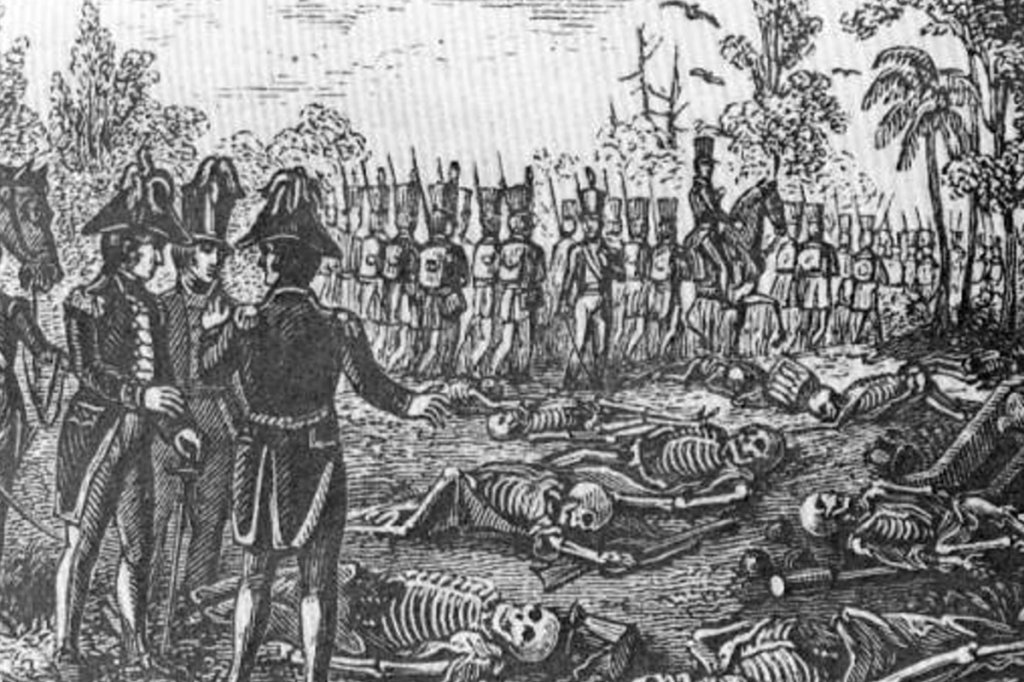
The war erupted on Dec. 28, 1835, with the Dade Massacre, when Seminole warriors near present-day Bushnell, Florida, ambushed Maj. Francis L. Dade and his column of 110 U.S. troops. Only three soldiers survived the attack. That same day, Osceola, one of the most prominent Seminole leaders, assassinated Indian agent Wiley Thompson near Fort King, striking a devastating blow against the U.S. command structure in Florida.
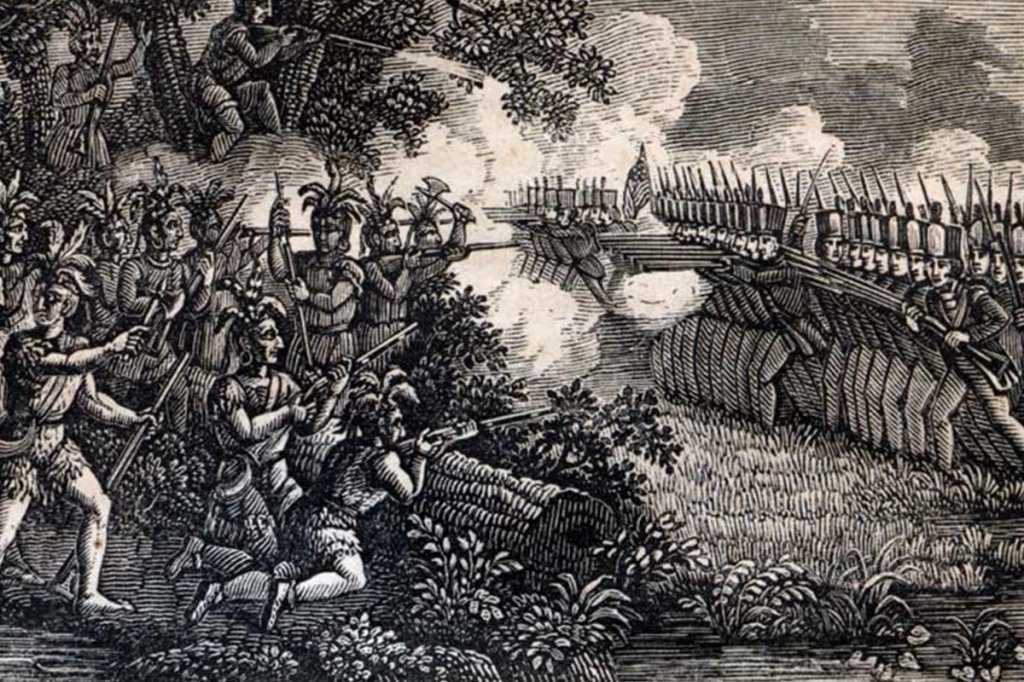
For the next seven years, the Seminoles and Black Seminoles waged an extraordinary campaign of resistance. They used the swamps, hammocks, and pine forests of central and southern Florida as natural fortresses, launching surprise attacks and vanishing into terrain that baffled U.S. troops. Their knowledge of the land, ability to move silently, and coordination in small, mobile units allowed them to fight the most powerful army in the world to a near standstill.
American commanders, including Gen. Winfield Scott and Gen. Zachary Taylor, struggled to adapt to this unconventional warfare. One of the most famous engagements occurred at the Battle of Lake Okeechobee on Dec. 25, 1837, where Taylor’s force of 1,000 men clashed with roughly 400 Seminoles. Though the Seminoles eventually retreated, Taylor’s casualties were severe, and the U.S. Army failed to destroy the Seminole resistance.
Osceola, captured under a false flag of truce in October 1837, became a martyr to his people. His imprisonment and death from malaria at Fort Moultrie in 1838 did not end the war; instead, it deepened the resolve of leaders like Micanopy, Alligator, and Coacoochee (Wild Cat), who continued the fight. The Black Seminoles remained key figures in these campaigns, acting as interpreters, scouts, and soldiers. Their knowledge of plantation life and southern military systems gave them a strategic edge against U.S. forces.
By 1842, the war ended not through military victory but exhaustion. Many Seminoles and Black Seminoles retreated deep into the Everglades, maintaining their independence and refusing removal.
The Third Seminole War (1855–1858): The Final Stand in the Everglades
The Third Seminole War began when the U.S. Army attempted to survey and claim the remaining Seminole lands in southern Florida. In December 1855, a detachment of U.S. soldiers destroyed Billy Bowlegs’ banana plantations near Big Cypress Swamp, sparking renewed hostilities.
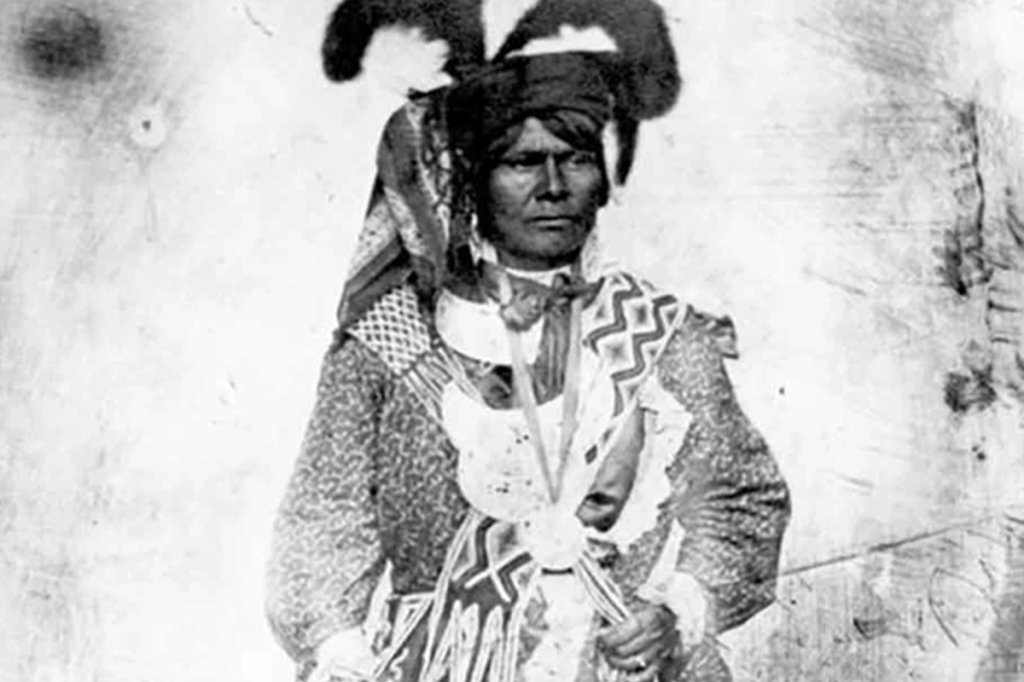
Bowlegs, a skilled leader and veteran of the previous war, led his people in a campaign of raids and ambushes across South Florida. Though vastly outnumbered, his fighters used hit-and-run tactics to frustrate the U.S. military. The conflict dragged on for three years, until Bowlegs and his band were offered financial incentives and safe passage to Indian Territory in 1858. Only about 200 Seminoles, led by warriors such as Sam Jones (Abiaka), refused to leave and continued to live in the Florida Everglades.
The Third Seminole War marked the end of large-scale resistance, but not the end of the Seminole spirit. Those who remained in Florida became the ancestors of the modern Seminole Tribe of Florida and the Miccosukee Tribe.
The Trail of Tears and the Black Seminoles’ Journey West
Following the brutal conflicts of the Seminole Wars, the U.S. government turned its attention to the removal of the remaining Seminoles from Florida. Under the Indian Removal Act of 1830, signed by President Andrew Jackson, Native nations throughout the Southeast were forced to cede their homelands and migrate west to Indian Territory, present-day Oklahoma. For the Seminoles, this was not a single journey but a series of forced migrations spanning decades, resulting in immense suffering and loss.
The Trail of Tears for the Seminoles began in the late 1830s after years of resistance led by figures such as Osceola, Abiaka (Sam Jones), and Wild Cat (Coacoochee). Unlike many other tribes, the Seminoles refused to surrender easily. They fought through swamps, dense hammocks, and the Everglades in one of the most difficult guerrilla campaigns in U.S. history. When the U.S. Army finally captured many Seminole leaders through deceit and attrition, several groups were rounded up and transported by ship and overland routes to Indian Territory.
The journey west was long and deadly. Disease spread rapidly aboard ships and along the overland routes. Harsh weather, starvation, and mistreatment by U.S. soldiers took a devastating toll. Of the several thousand Seminoles forced to relocate, hundreds died before ever reaching Oklahoma. The U.S. military often separated families, and the Black Seminoles, many of whom had fought alongside the Seminoles as allies and warriors, were treated with particular hostility.
Once in Indian Territory, the Seminoles faced new challenges. They were placed on land adjacent to the Creek Nation, and tensions arose almost immediately. The U.S. government forced the Seminoles into treaties that placed them under Creek political authority, a humiliating arrangement that caused resentment and division. The Black Seminoles, many of whom had lived as free allies in Florida, found themselves in even greater danger. Pro-slavery factions within both the Creek and Seminole Nations sought to re-enslave them, viewing them not as equals but as property.
In response, many Black Seminoles chose to flee once again, this time south into Mexico. Led by Wild Cat and the Black Seminole leader John Horse (Juan Caballo), groups of families crossed the Rio Grande in the 1850s and were granted asylum by the Mexican government in exchange for military service. They settled in Nacimiento, Coahuila, where they became known as the Mascogos. There, they built a new community, preserving their traditions and continuing their warrior heritage.
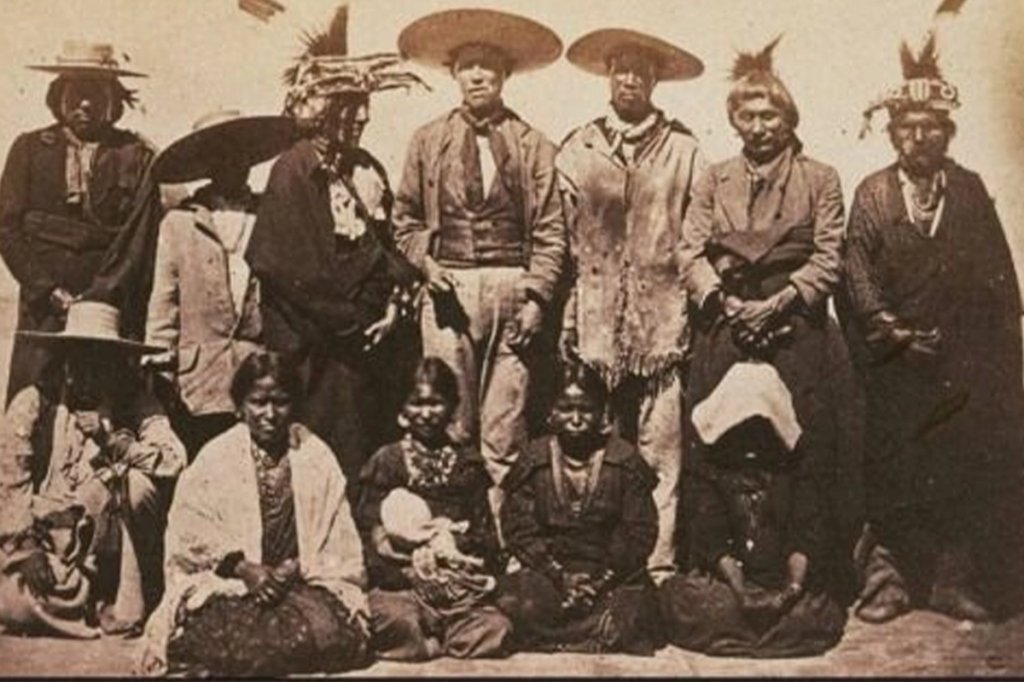
The Mascogos served as scouts for both the Mexican and U.S. Armies in the decades that followed. During the late 19th century, Black Seminole Scouts were formally recruited into the U.S. Army and stationed at Fort Clark in Brackettville, Texas. Their unmatched skills in tracking, stealth, and survival made them invaluable in defending the frontier against raiding parties along the U.S.–Mexico border. Several received the Medal of Honor for their bravery in battle.
This tradition of elite scouting, deep knowledge of terrain, and unwavering courage directly influenced the development of modern U.S. Special Forces. The warrior ethos of the Black Seminole Scouts, rooted in freedom, adaptability, and resilience, lives on in the Green Berets’ motto, “De Oppresso Liber,” meaning “To Free the Oppressed.” The story of the Seminoles and Black Seminoles, through war, exile, and perseverance, stands as a testament to the enduring fight for liberty and self-determination that continues to shape the American spirit.
Legacy: From Frontier Scouts to the U.S. Special Forces
In the late 19th century, Black Seminole descendants were enlisted by the U.S. Army as Indian Scouts, serving alongside the Buffalo Soldiers of the 9th and 10th Cavalry and the 24th and 25th Infantry. Stationed at Fort Clark, Texas, from 1870 to 1914, these scouts became legendary for their discipline, marksmanship, and tracking abilities. Four Black Seminole Scouts—Adam Payne, Pompey Factor, Isaac Payne, and John Ward—were awarded the Medal of Honor for heroism during the Texas border campaigns.
Their unit insignia featured crossed arrows, symbolizing the scout’s role in irregular and frontier warfare. This symbol would later become the branch insignia of the U.S. Army Special Forces, established in 1952. The Green Berets adopted the same crossed arrows as a tribute to the original American warriors who mastered unconventional warfare on the frontier.
The Special Forces motto, De Oppresso Liber—“To Free the Oppressed”—echoes the very struggle of the Seminoles and Black Seminoles, who fought to preserve freedom against tyranny and enslavement. Their guerrilla strategies, reliance on small, autonomous teams, and use of local alliances became the philosophical and tactical foundations of modern Special Forces operations.
Today, Florida State University proudly honors this legacy with its Seminole mascot, a symbol of courage, independence, and resilience. The Seminoles’ defiance and military innovation continue to inspire U.S. servicemembers, especially within the Green Beret community, which recognizes the Black Seminole Scouts as spiritual forerunners of America’s elite warriors.
A Legacy Preserved in Law and Memory
Thanks to Florida House Bill 1329, the state now mandates that students learn about veterans’ contributions, including those of the Seminoles and Black Seminoles, whose sacrifices shaped American military history.
The bill also strengthens support for veterans by:
• Designating Veterans Florida as the lead agency for transition assistance and outreach.
• Expanding Veterans Florida’s board to connect veterans with training, certification, and small business opportunities.
• Creating hunting and fishing license exemptions for disabled veterans.
• Expanding the Advisory Council on Brain and Spinal Cord Injuries to include veterans and their families.
• Requiring schools to teach the history and significance of Veterans Day and Memorial Day.
• Establishing the Major John Leroy Haynes Florida Veterans’ History Program to record and preserve veterans’ stories.
Teaching this history ensures that the bravery, innovation, and legacy of the Seminoles and Black Seminoles will never fade. Their story is not just one of resistance—it is the origin of America’s enduring pursuit of freedom and the spiritual foundation of the U.S. Army Special Forces.
Organizations like the BLK OPS Foundation are leading the charge to bring this history to classrooms across the country. Through veteran-led storytelling, mentorship, and interactive educational programs, BLK OPS links Special Operations heritage to youth empowerment and historical education. Their work is part of a growing movement to recover and teach hidden narratives—including that of the Black Seminoles—that reflect the real diversity and complexity of America’s past. To learn more about their efforts, visit www.blkopsfoundation.org.
Don’t Miss the Best of We Are The Mighty
• The 8 coolest war quotes ever spoken
• The 12 most badass Marine Corps nicknames of all time
• The original Green Berets: tracing the roots of US Special Forces