

One is the fastest jet ever produced, capable of outrunning anti-air missiles while capturing reconnaissance in some of the most hostile airspace on Earth. The other was a state-of-the-art warship… from the 17th to 19th century.
Also Read: The SR-71 Blackbird was almost the most versatile fighter plane ever
But, weirdly enough, the SR-71 and ships of the line have more in common than being featured in Hollywood blockbusters that fundamentally misunderstand the military and how it works: They both rely on (very different) materials staying swollen in order to function normally.
The SR-71 swells with heat and leaks until it does

The SR-71 Blackbird, the only SR-designated plane, is pretty famous for this, but it’s also super cool, so we’re going to talk about it anyway.
The Blackbird can fly at 80,000 feet. And yes, it’s extremely cold at that altitude. Temperatures up there sit more than 70 degrees below zero, but the air is also super thin. It’s so thin that the SR-71 can’t bleed off much of the heat from its massive engines, this is due to both the friction at that altitude and the fact that it’s the fastest crewed production aircraft in history.
Only experimental and uncrewed aircraft have flown faster (All of which makes it crazy that a pilot actually survived the plane breaking up at Mach 3).
Also, air heats when compressed and ot compresses fast when a plane suddenly slams into it. Jet engineers have to account for that heat in the engines of any plane that goes supersonic. When a Blackbird goes three times the speed of sound, the air going into its J58 Pratt & Whitney engines compresses quickly and violently, generating even more heat.
So the aircraft is dealing with heat from compression, heat from the combustion in the engine, and heat from friction, all while the air on the skin is too thin to leach off much heat. Its titanium skin becomes superheated, and since titanium expands when heated, that could result in bubbles. At those speeds, even minor imperfections would screw with the aerodynamics or even cause ruptures in the skin.
Engineers knew that was likely to happen, and so they designed the plane to accommodate the expanding metal. They left a little spacing in the seams of the metal, which expands and fills that seam as it flies. Designers made the plane to fit together perfectly only when it’s flying at its operational speed.
The rest of the time, it’s a bit leaky. The plane even drips fuel on the ground in colder temperatures. Airmen had to account for this and other problems with the plane while it was on the ground.
“Swabbing the decks” was, in part, to prevent leaks.
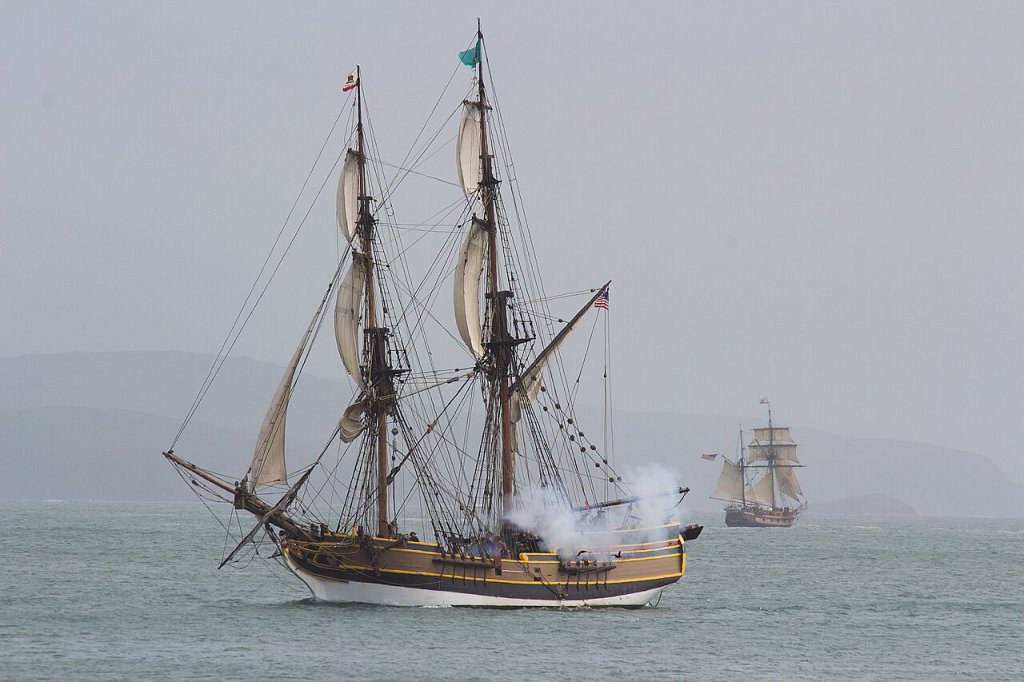
Obviously, the old ships of the line didn’t leak jet fuel. But wood naturally absorbs moisture and swells, even when it’s just sitting inside of homes and other buildings. When a bunch of wood is joined together and then floats in the water for months on end, it’s going to swell— and seawater causes more swelling than freshwater.
The wood in the hull stays consistent because of constant contact with the water. The internal decks and timbers retain moist in the relatively stagnant air. But the deck alternates between soakings in storms and drying out in clear weather. That creates gaps and, because of the larger swings in size, causes the wood’s fiber to break down more rapidly.
How do you build a deck that is watertight at the start of storms but that won’t bulge and break the rest of the time? And how do you prevent frequent cycling that will make the deck break down quickly?
Well, you leave small gaps in the seams when it’s dry, stuff the gaps with materials like oakum, then tar over that filling. To prevent the seams from expanding so far that it breaks apart the seal, sailors must keep the wood from drying too much. To do that, they swabbed it constantly with seawater.
This was more necessary with wood prone to large swings in size, like pine, but it was a best practice with all of them.
Over 400 years later, engineers are still dealing with the same problems.
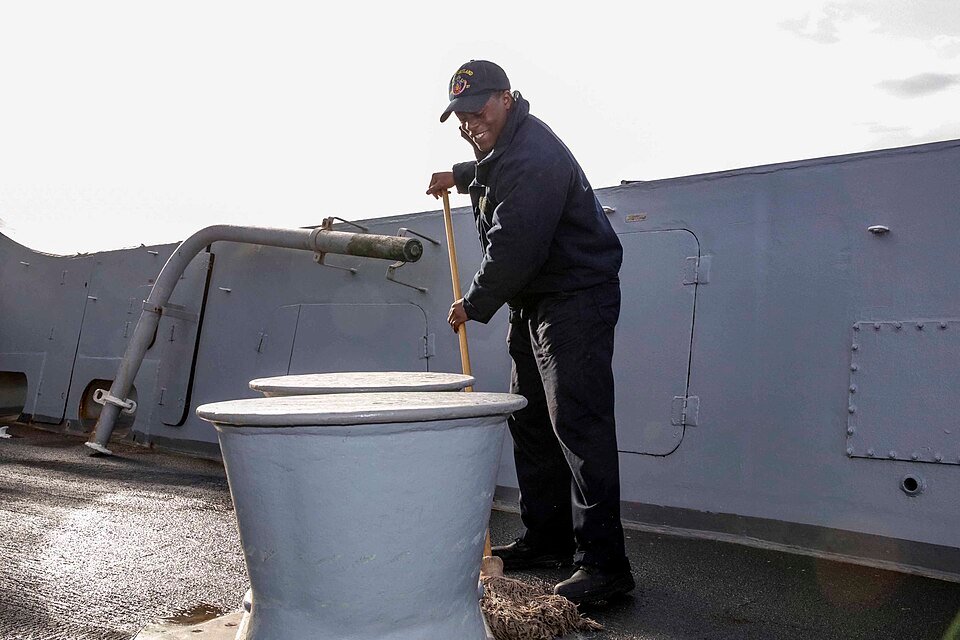
Like the modern SR-71, the ships of the line and similar craft were engineered to operate properly in their most demanding moments, and crews simply dealt with the problems that created the rest of the time.
Now, preventing shrinkage was not the only reason to swab the decks. As mentioned above, the larger swing in the size of the wood fibers when exposed to saltwater causes it to break down more quickly than when kept dry or exposed to freshwater. Swabbing the deck prevents these cycles and the accompanying breakdown.
Scrubbing the deck also kept it clean and clear of splinters, important since most sailors were barefoot. On warships, especially during battles or drills, swabbing the deck meant that any gunpowder that fell would be quickly rendered wet and safe.
There’s also the discipline of it; keeping everything spotless is just part of good order and discipline. Discipline and cleanliness serve as the main reasons today. Obviously, seawater doesn’t have the affect on steel that it does on pine. But for hundreds of years, swabbing with seawater kept the seams joined tightly.
Wood grows when wet, just like titanium swells when heated.
Don’t Miss the Best of We Are The Mighty
• A pilot survived a Mach 3 ejection from the edge of space by not ejecting at all
• How this Air Force spy plane traveled from coast to coast in record time
• Why the SR-71 Blackbird is the only aircraft with the SR designation



Loading comments…
Comments couldn’t be loaded. Please refresh the page.