
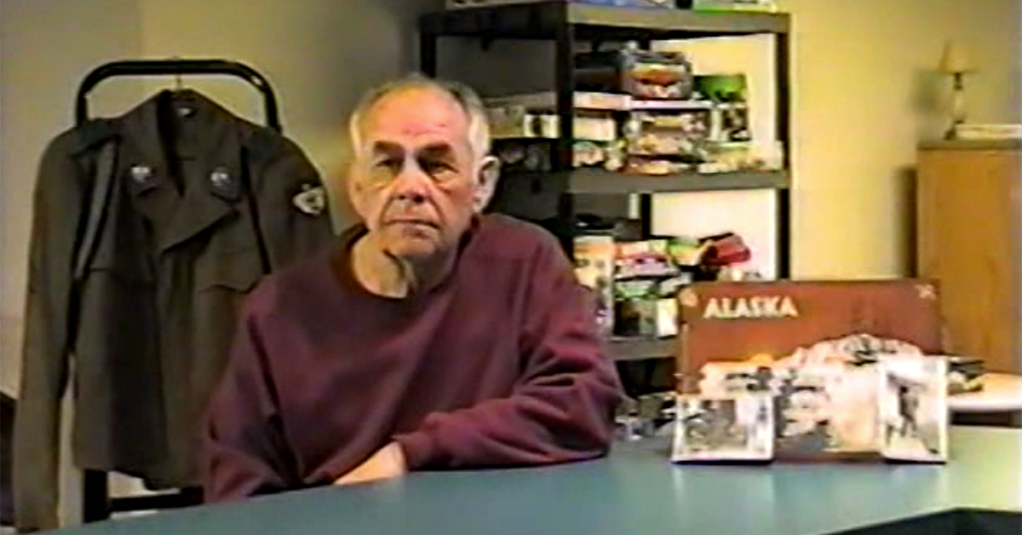
Born January 25, 1930, Thomas Joseph Abate Sr. served in the United States Army during the Korean War. Abate, who died December 9, 2014, at the age of 84, spoke to the Library of Congress for its Veterans History Project. As Veterans Day approaches on November 11, 2026, this is a transcript of that conversation. Edits were made for clarity.
“My opinion of the war was that it had to be fought because of what was going on at the time. Being 21 years old, I didn’t remember everything, but now as I get older, I know more about it. It was fought because if it wasn’t for the United States going into it at the time, the Russians and Chinese would have controlled the whole peninsula. That would have caused more conflict, more troubles [for] all those countries in that area, because it would have been dominated more by communism. They didn’t want that, so it was the right thing to do at the time.
“I served from November 1951 to December 1953, because I got out a month early due to the fact that I never got any leave time. Being in Alaska, where I was, it was pretty hard to go on leave from there. I could have joined [any military branch] if I would have enlisted, but being that I was drafted, they put you where they needed you or they put you where they wanted you to go. I was put in the Army…. When your time came and they called you, you went in.
Also Read: Kamikaze pilots couldn’t stop this Marine veteran, 104, during World War II
“My brother went in a little bit after I did. At the time, in our area, me and my brother were the only ones in at the same time. My brother was sent to Fort Knox, Kentucky, and he trained with tanks. At the time he was down there, he became a tank commander.
“When I went in, [there were Blacks and whites serving together]. But before I went in, there weren’t. After the Second World War, they started to integrate. When we got in there, they were all Black and white. That’s when they first started to put everybody together. But before that in the Second World War, the Blacks had their own divisions, and the whites had their divisions.
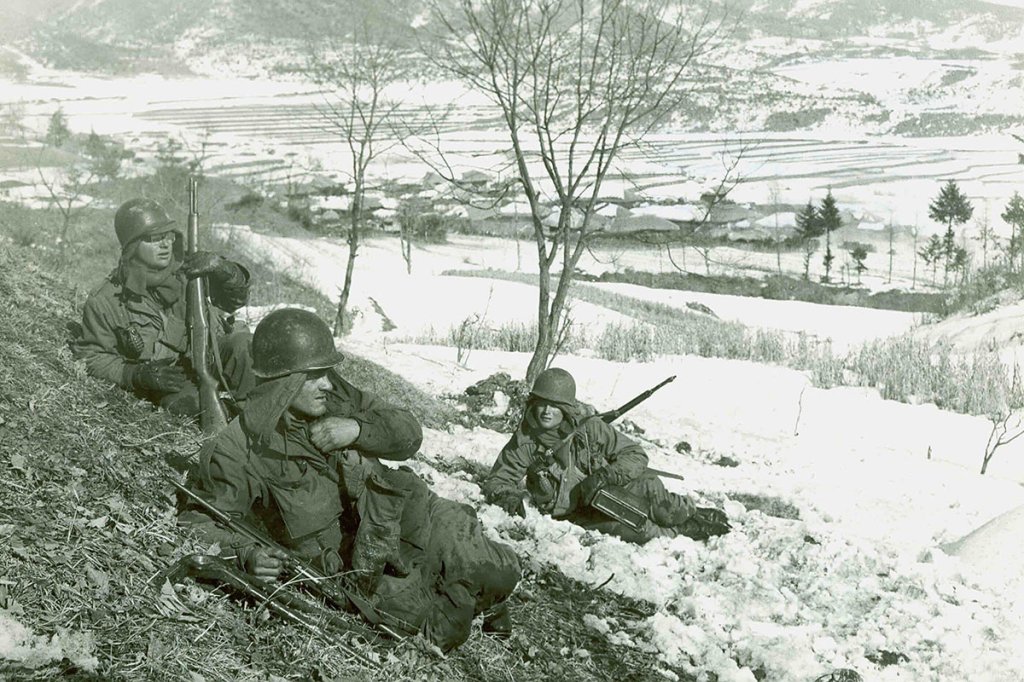
“You didn’t know what to expect. Going in there, you had to take orders, and I mean you couldn’t say no. If you did, you were in deeper trouble. You’d get used to it, [but] it was kind of tough. After a while, you got into the routine, and you started to follow their orders and do what they told you. It was all right.
“I was trained at [Fort] Indiantown Gap, Pennsylvania. We stayed there for four months, training in all kinds of arms and rifles and pistols and walking and digging foxholes, everything you could think of. It was mostly for cold-weather training. They trained us how to get along when it was cold—how to operate a rifle, how to make sure it didn’t freeze up, how to take it apart in cold weather, how to use different gloves they’d give you. Some had trigger fingers you’d use; some had mittens. It all depends.
“[Our training facility] was a big camp. You can imagine [the] hills. Some nights, we had to go on marches. We’d have to go walk up the side of the mountain in the dark and get up there and see how fast we could make it to the top. We’d get to the top and then have to go all the way back down again. Some days, we’d do training. Some days, we’d have to go out on forced marches. They’d be 20 miles. You’d walk so many miles, and then you’d rest. And then you’d walk so many more, and you’d rest. You’d go 10 [miles] that way, and then you’d have 10 coming back.
“After training, I was sent to Alaska. We were there for almost two years. At the time, we didn’t know [why we were sent there], but when we got there, we found out. At the time I was sent there, Alaska was a territory. [Alaska became the 49th state on January 3, 1959.] It wasn’t even a state. When they sent us there, they put us on an air base. We had infantry with the Air Force, and our job was to do all the training we could as far as infantry training, marching, and everything else. But our job mostly was to guard the air base, so that when these B-29 bombers came in, as soon as they landed, we circled the airfields and made sure nobody would ever come in.
“Outside of a few months in the summer, when it was warm, most of our equipment was for cold weather. We had snow boots. We had big mittens we used to wear. We’d hang them around our necks so we wouldn’t lose them. Inside the mittens, we had what they called trigger fingers… so we could shoot. I carried a Browning automatic rifle.… I carried a .45. Mostly a .45 was used when you were on guard duty. We trained in how to fire mortars, and we also trained in how to fire a bazooka at tanks. The most important one was the rifle. Wherever we were, it was always there. We had to make sure that we never lost sight of it.
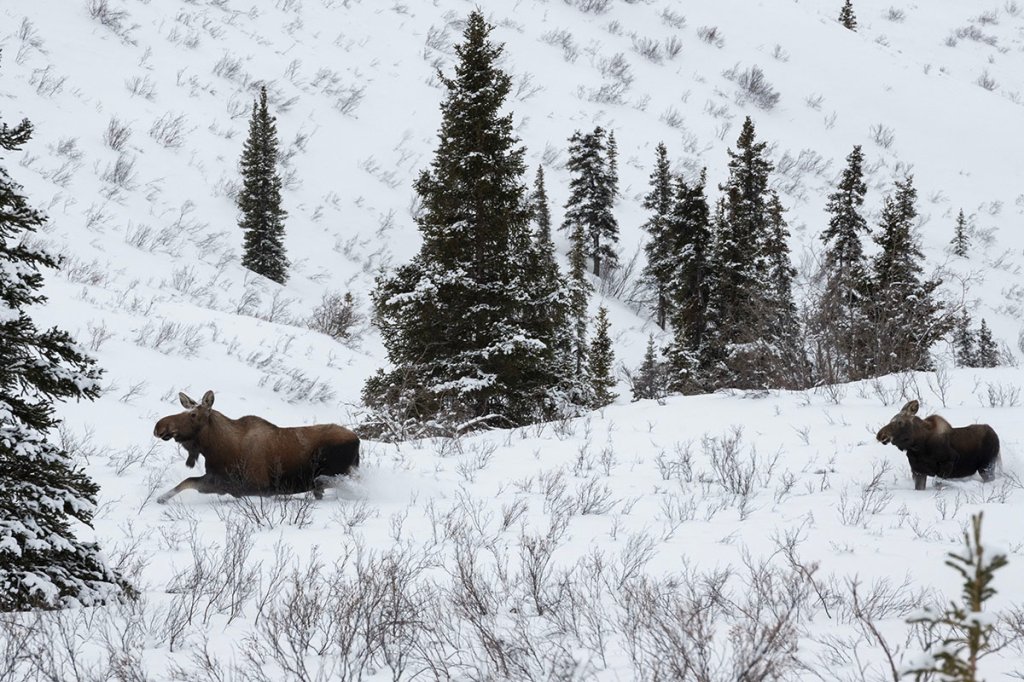
“When I got to Alaska, all I saw was open land, wilderness. There were moose and other animals, caribou. We saw a lot of them go by. There was nothing there. It was just barren land, a lot of tundra. Tundra is when you walk hard and you sink. It’s like you’re walking on a mattress. You know how you sink if you walk on a bed? That’s how it was. As soon as we got off the ship, they put us on this train, and we went for, I don’t know, how many miles from Whittier to Fairbanks, where I was.
“I had no specific job. We just did whatever they told us. Outside of training, if they told you you had to go to KP, you had to go to KP, and you worked in the kitchen. Sometimes, they’d put you on garbage duty, and you had to go pick up garbage. If you goofed up, sometimes you got worse than that. It all depends, but most of the time, there was no specific job while you were training.
“The most memorable moment was… when you got [to Alaska], there were six months of daylight and six months of darkness. At first, it was hard getting used to. Sometimes you went to sleep and it was daylight. So you had to darken things up around your bunk and stuff like that; that was the thing that comes to mind.
“The worst days were when you sat there and were thinking about home, your friends and your family and also around the holidays. When you knew it was Christmastime or Easter time and you knew back home what they were doing and here you were. They were eating well, and you were on guard duty and had to stand out there for too long. The good days were when you were done during your training. Sometimes, they’d give you a couple of hours’ pass, either into town or you’d go see your friends in other barracks.
“If you really got sick, you’d go to the dispensary. Sometimes they had a doctor. Sometimes they had a nurse. If they thought you weren’t too sick and they thought you were goofing off, they’d look you over and give you a couple of APC pills, which meant all-purpose capsules, like an aspirin. ‘Take two and go to bed.’ But if you were really sick, they’d put you in the hospital.
“[I stayed in touch with my family back home] by letters. By phone, it was mostly impossible. Fifty-eight years ago, there was no such thing like they have now. Some of the guys, I think, tried by phone. Sometimes they got through. Sometimes they didn’t. But the biggest part was by letters and pictures and whatever.
“Being away from home was the hardest thing about serving. After a while, when you go that far away, you know you’re not going back. You deal with it the best way you can. You try to do things to keep your mind off of worrying about what was going on at home.
“When I was about halfway through, some of my friends who were older than I were starting to come back. I’d get letters from them, telling me they were home and all that. When you got to halfway, we started calling each other ‘short-timers.’ We’d start marking ‘one more day,’ ‘two more days’; we’d mark them down, however more we had to stay.
“I started as a PFC, a private first class, after a few months I was up there. And then as you progressed and they think that you’re going pretty good, I made corporal. That was pretty good because it’s hard to make corporal in that short amount of time. I think if I would have stayed around a little longer, they would have had me almost up to sergeant. But being that I was only going to be there for two years, I made corporal. That was the highest rank.
“I had no [outside] pressure or stress. If anybody had any pressure or stress, they did it to themselves. If you didn’t obey orders or you were always fighting with somebody or you were trying to do things you weren’t supposed to do, then you had stress. But I did what I had to do, didn’t bother anybody, and that was it.
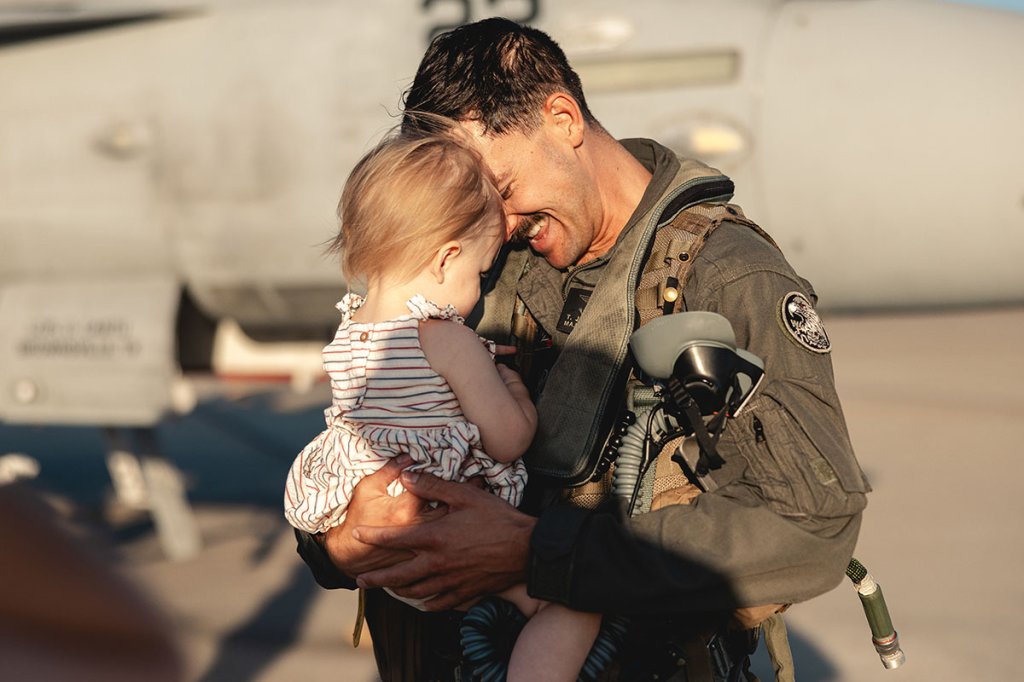
“[On the day my service ended,] I felt delighted. I felt good because I was going home. I was not going to have people anymore telling me what to do, what not to do, when to get up and when to go to bed, when to march and when not to march, when to eat and when not to eat. It was really a good time when the [Army] told me we were going to leave.
“The first thing I did [when I got home], I shed my Army uniform, packed it up in my closet, and put my civilian duds on. I went around and started meeting some of my friends who came back. We started to have a good time again. Some of my friends who went [to Korea] were killed. They didn’t come back.
“The most important lesson of war, I think, is not to have war. If you do have wars, go in there with all you’ve got. Don’t fool around and have it halfway. If you’re going to have a fight, have a fight and get it over with and not fool around, delay, and get people killed for nothing.
“[My military service] taught me how to get along by myself, that I could survive, that I could do different things. Manage myself and my clothes and how to iron. How to sew. In a way, it taught you a lot of things.”
Don’t Miss the Best of We Are The Mighty
• A former soldier with a TBI found his purpose in helping other veterans
• How a Holocaust survivor saved 40 POWs in Korea
• Ola Mize became ‘the Audie Murphy of the Korean War’ by fighting off a Chinese division

Loading comments…
Comments couldn’t be loaded. Please refresh the page.