As U.S. history educators, much of our professional training emphasizes structure, pacing guides, state standards, and carefully sequenced curriculum maps. We move deliberately through eras, anchor lessons in textbooks, and rely heavily on primary source documents to help students understand the past. This approach provides students with a shared historical framework and ensures exposure to key events, ideas, and debates that have shaped the United States.
Related: How the US deleted Venezuela’s air defenses so quickly
Yet there is a fundamental truth that cannot be ignored: History does not exist in isolation from the present. It is not frozen on a textbook page or confined to the past tense. History is dynamic, unfolding continuously, and at times erupting into the present in ways that demand our attention.
Our students sense this intuitively. They arrive in our classrooms aware that something important is happening in the world, often before they have the language or context to understand it. When major international events occur, students want answers. If we fail to address those moments because they fall outside the official pacing guide, we miss a powerful opportunity to make history meaningful and relevant.
This reality guided my decision to create a focused microlesson for my students, centered on the unfolding crisis in Venezuela in January 2026. The purpose of this lesson is not to abandon the curriculum but to reinforce it. By grounding current events in historical context, students can revisit earlier material, recognize patterns of continuity and change, and understand why the United States is involved in Latin America at all.
Understanding the Current Crisis
To grasp why Venezuela matters today, students must first develop a clear understanding of the present situation. As of January 2026, Venezuela is experiencing one of the most severe political, economic, and humanitarian crises in the modern Western Hemisphere. While the country’s struggles did not begin recently, they intensified dramatically after the July 2024 presidential election.
That election marked a breaking point. Nicolás Maduro, who had already governed Venezuela for more than a decade, claimed victory despite overwhelming evidence that the opposition candidate, Edmundo González Urrutia, had won by a wide margin. International observers and organizations, including the United Nations, the Organization of American States, the European Union, and the United States, rejected the legitimacy of the results.
Rather than allow a peaceful transition of power, the Maduro government responded with systematic repression. Opposition members, protestors, journalists, and human rights advocates were arrested in large numbers. González fled into exile in September 2024 after an arrest warrant was issued against him, while prominent opposition leader María Corina Machado was forced into hiding.
For students, this moment becomes an opportunity to revisit concepts they have encountered earlier in the year, such as authoritarianism, democratic legitimacy, and the erosion of political institutions. The Venezuelan case shows how elections can exist in form but not in substance, and how authoritarian regimes often rely on intimidation and control rather than consent.
A Crisis Years in the Making
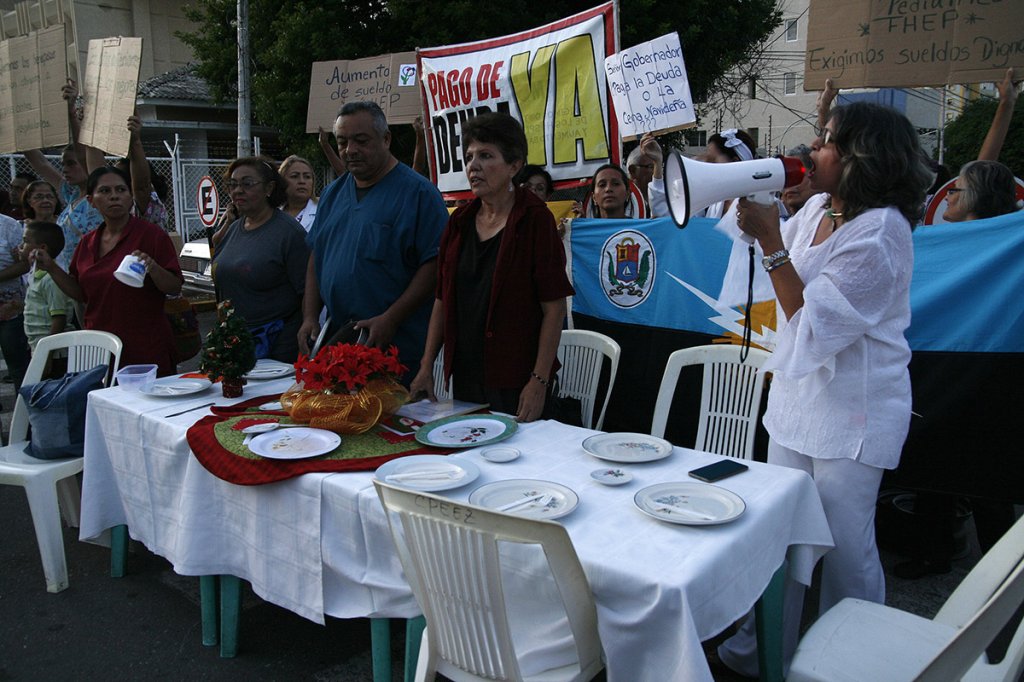
The political crisis is inseparable from Venezuela’s humanitarian catastrophe. Years of economic mismanagement, corruption, international sanctions, and declining oil production have devastated the country’s economy. Although there have been limited signs of growth, Venezuela’s economy remains less than half its 2013 size. Millions struggle to access basic necessities such as food, clean water, reliable electricity, and medical care. Estimates suggest that between 7 million and 14 million Venezuelans require humanitarian assistance.
This reality allows students to draw direct connections to previous units on economic collapse and recovery. They recognize parallels with the Great Depression, postwar Europe, and other moments when political instability and economic hardship reinforced one another. History becomes less abstract when students see how economic policy decisions translate into real human suffering.
The humanitarian crisis has also fueled one of the largest displacement events in modern history. Since 2014, approximately 8 million Venezuelans have fled the country. Families have crossed borders throughout South America and beyond in search of safety and opportunity. Students often immediately connect this to prior lessons on refugee movements during World War II, Cold War conflicts, and late-20th-century Central American migration. They begin to understand that mass migration is rarely accidental and almost always driven by structural forces beyond individual control.
U.S. Military Becomes Involved
By late 2025 and into early 2026, the crisis in Venezuela escalated dramatically with direct U.S. military involvement. American officials announced an intensified campaign aimed at disrupting transnational drug trafficking networks operating in the Caribbean, many of which U.S. intelligence agencies have long alleged were protected or facilitated by senior figures within the Venezuelan government. These operations included maritime interdictions and targeted strikes against vessels identified as part of large-scale narcotics smuggling routes moving cocaine from South America toward Central America and the United States.
In January 2026, the situation reached a historic turning point. According to statements released by U.S. government officials, a highly classified overnight operation resulted in the capture of Venezuelan President Nicolás Maduro. While many operational details remain undisclosed, multiple reports indicate that the mission involved elite U.S. special operations forces operating under U.S. Special Operations Command, with strong indications of the 1st Special Forces Operational Detachment Delta, commonly known as Delta Force.
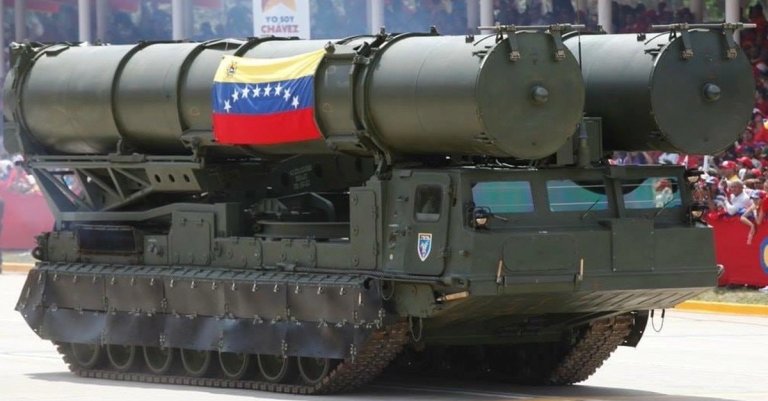
Related: An autopsy of Venezuela’s $2 billion Russian S-300VM missile system
U.S. officials confirmed that Maduro was taken into custody alive and transferred to U.S. control to face federal indictments related to narcotics trafficking, corruption, and conspiracy with foreign drug cartels. These charges were not new. As early as 2020, the U.S. Justice Department had formally accused Maduro and senior members of his inner circle of participating in what prosecutors described as a narco state apparatus, alleging coordination with Colombian guerrilla groups and international trafficking organizations.
Policy Changes in Venezuela

The real reason Venezuela matters
Following the operation, the U.S. government announced a series of sweeping policy measures regarding Venezuela’s energy sector. American officials stated their intent to secure and manage Venezuela’s vast oil reserves during a transitional period, citing the need to prevent further corruption, stabilize global energy markets, and fund humanitarian relief efforts. Plans were outlined to allow U.S.-based energy companies to operate Venezuelan oil infrastructure under international oversight, a move that immediately drew global attention and debate.
For students of U.S. history, this moment is striking not only for its immediacy but for its familiarity. The removal of a foreign leader on drug trafficking charges, the involvement of elite U.S. forces, and the assertion of control over strategic natural resources echo earlier interventions in Panama, Haiti, and throughout Latin America during the 20th century. The participation of a unit like Delta Force underscores how modern U.S. intervention has shifted away from large-scale troop deployments toward highly specialized, precision-driven operations, even as the underlying strategic goals often resemble those of earlier eras.
At this point, students inevitably ask a critical question: Has the United States done this before?
U.S. Involvement in Latin America
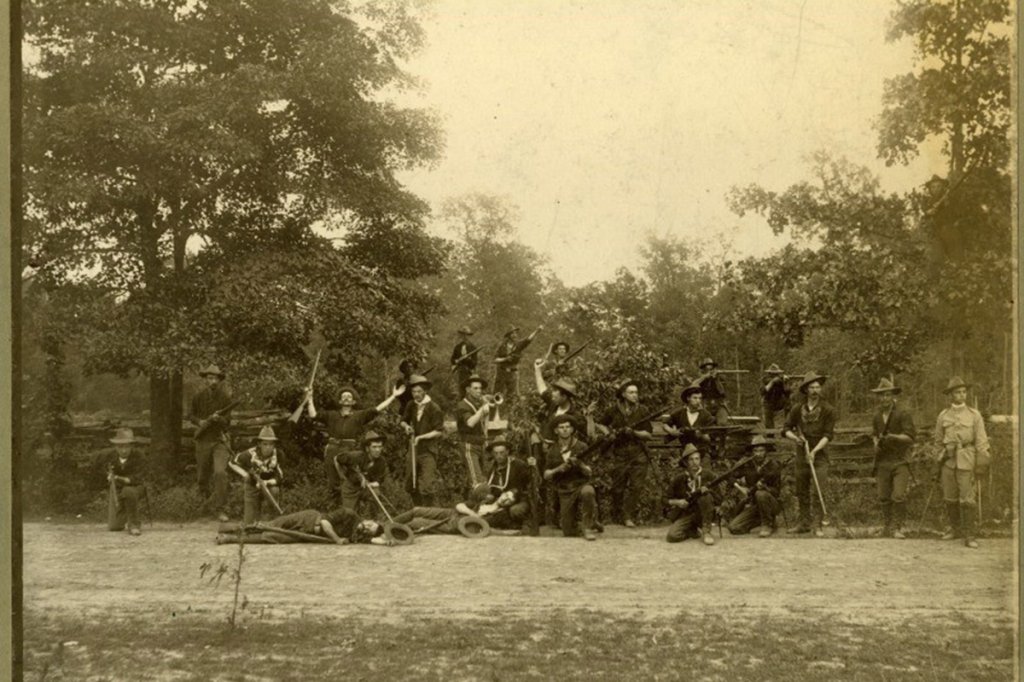
The answer requires stepping back more than a century. American involvement in Central and South America did not begin with Venezuela, nor is it unique. It has deep historical roots tied to economic interests, strategic concerns, and ideological goals.
In 1898, the Spanish-American War marked a turning point in U.S. history. The United States intervened in Cuba’s war for independence from Spain, framing its involvement as a humanitarian effort. The result, however, was the United States emerging as an imperial power. Puerto Rico, Guam, and the Philippines became U.S. possessions, while Cuba fell under American influence through the Platt Amendment. This moment introduced a pattern in which the United States justified intervention as liberation while retaining significant control.
Only a few years later, the U.S. facilitated Panama’s independence from Colombia to secure the right to build and control the Panama Canal. The canal became one of the most important strategic assets in the world, allowing the U.S. Navy and commercial shipping to move quickly between oceans. This reinforced the idea that U.S. involvement in the region was closely tied to economic and military strategy.
Throughout the early 20th century, the United States repeatedly intervened in the Caribbean and Central America. Military occupations in Haiti, the Dominican Republic, and Nicaragua were carried out to protect American investments and maintain political stability favorable to U.S. interests. These interventions, often referred to collectively as the Banana Wars, were justified under the Monroe Doctrine and the Roosevelt Corollary, which asserted the United States’ right to intervene in the Western Hemisphere.
Students begin to recognize that these actions were not isolated decisions but part of a broader worldview in which the U.S. saw Latin America as its sphere of influence.
Cold War Interventions and Consequences

Dictators and Civil Wars: The Cold War in Latin America | Retro Report
During the Cold War, U.S. involvement in Latin America intensified under the banner of anti-communism. Fear of Soviet influence shaped policy decisions, leading the United States to support authoritarian regimes it believed would maintain regional stability.
In Guatemala in 1954, the CIA supported a coup that overthrew democratically elected President Jacobo Árbenz after he nationalized land owned by the U.S.-based United Fruit Company. The result was decades of authoritarian rule and civil war. This case study illustrates how economic interests and ideological fears often outweighed democratic principles.
Read Next: Everything you need to know about the Bay of Pigs
Cuba provides another powerful example. Supported by the U.S., the failed Bay of Pigs invasion in 1961 aimed to overthrow Fidel Castro’s government. Its failure strengthened Castro’s position and pushed Cuba closer to the Soviet Union, reshaping Cold War geopolitics.
In the 1970s, U.S. support for Operation Condor linked right-wing military dictatorships across South America in a coordinated campaign against leftist political movements. The human cost was immense, with widespread disappearances, torture, and repression. These actions left lasting scars on the region and shaped how many Latin American nations view U.S. involvement today.
While large-scale interventions became less frequent after the Cold War, they did not disappear. During the 1980s, the United States provided extensive military aid to El Salvador during its civil war. In 1989, U.S. forces invaded Panama to remove Manuel Noriega on drug trafficking charges. In Haiti, U.S. troops were deployed in the 1990s to restore President Jean-Bertrand Aristide, and again in 2004 following his removal from office.
Each of these cases offers students a framework for analyzing Venezuela. The patterns of justification, intervention, and long-term consequences reappear repeatedly.
Why Teaching the Present Matters
Teaching Venezuela as a micro lesson is not about abandoning historical objectivity or promoting a political position. It is about equipping students with the tools to think critically about the present by using historical knowledge. When students hear about U.S. troops capturing a foreign leader or taking control of oil reserves, they should immediately recognize echoes of the past.
By linking current events to established curriculum topics such as imperialism, Cold War policy, and economic intervention, we help students understand that history is not a series of disconnected events. It is a continuous process shaped by human decisions and power structures.
History is happening now. When we acknowledge that reality in our classrooms, we transform history from a static subject into a living discipline. In doing so, we prepare students not only to understand the past but to engage thoughtfully with the world they are inheriting.