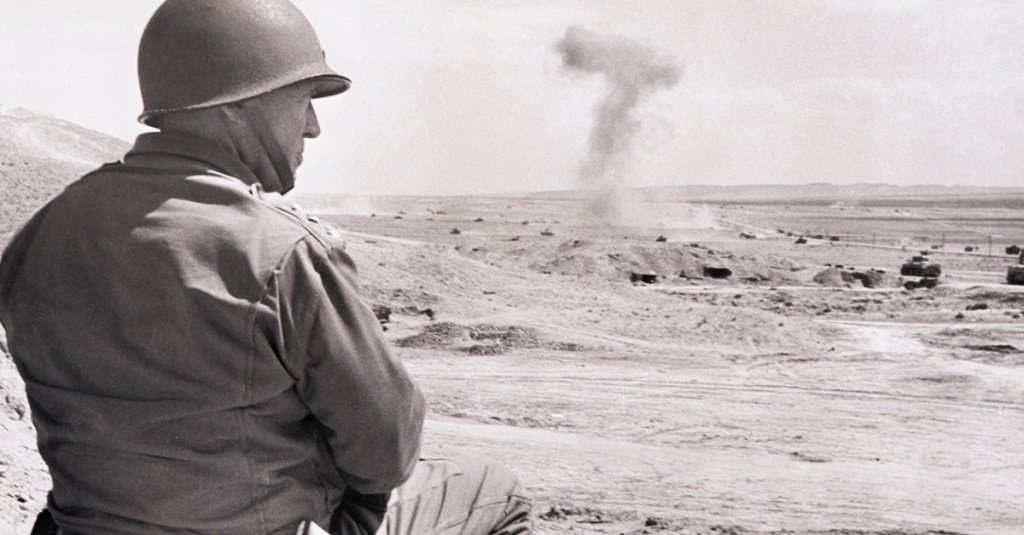
One of World War II’s legendary figures, Gen. George S. Patton, loomed large in the war’s narrative for many reasons.
While no one would accuse the great general of being humble or unassuming, his ego and pride are well-deserved, to the betterment of mankind and the Allied cause. Patton, with his ivory-handled revolvers and propensity to quote the Hindu scripture of “The Bhagavad Gita,” was as eccentric in life as he was effective in combat. No example of this was more telling than his belief in reincarnation and his own numerous past lives.
As a child, Patton believed he fought Turkish armies. As he grew into an adult, he still had visions of his death in past lives, from Viking funerals to the Battle of Tyre. In 1991, Karl F. Hollenbach compiled Patton’s account of his past lives in a book called “Patton: Many Lives, Many Battles.” Though the man himself never fully expressed the entirety of his beliefs in reincarnation, he did describe numerous events in detail.
Maybe there was something to the idea: Patton’s prowess on the battlefields made him the most feared Allied general among the Nazi leadership, according to the German POW Oberstleutnant Horst Freiherr von Wangenheim. General Patton’s own intelligence officer remarked that his sixth sense was often far ahead of the intelligence coming in. Perhaps his really was a skill set acquired over lifetimes of military experience.
1. With Alexander the Great at the Siege of Tyre
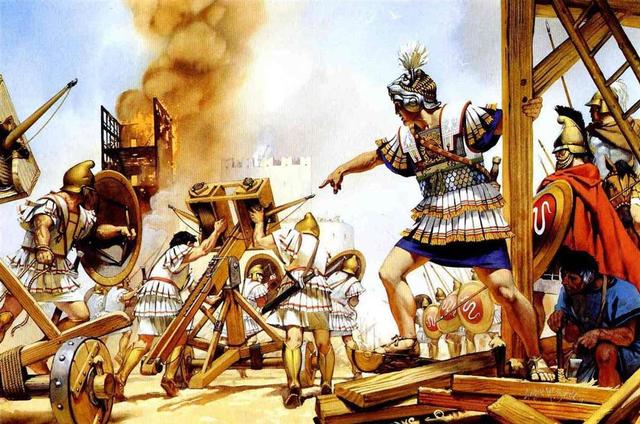
In a poem called “Through a Glass, Darkly,” which Patton wrote while commanding the Third Army in Europe, he described being a Greek Hoplite fighting the Persians under Darius. He helped smash the Persian navy and then laid siege to Tyre. The walls fell after five months as Patton and his fellow Hoplites stormed the city.
2. Fighting Parthians for Rome
In the same poem, Patton also talked about slaying Parthians with his Gladius, a sword approximately 25-32 inches long. Since the battle was said to have taken place in the first century B.C., Patton would have been fighting for what was then still the Roman Republic in the Middle East under any number of legendary Roman names: Crassus, Cassius, and Marc Antony, to name a few.
In his vision, Patton was wounded and then killed by several arrows in his neck.
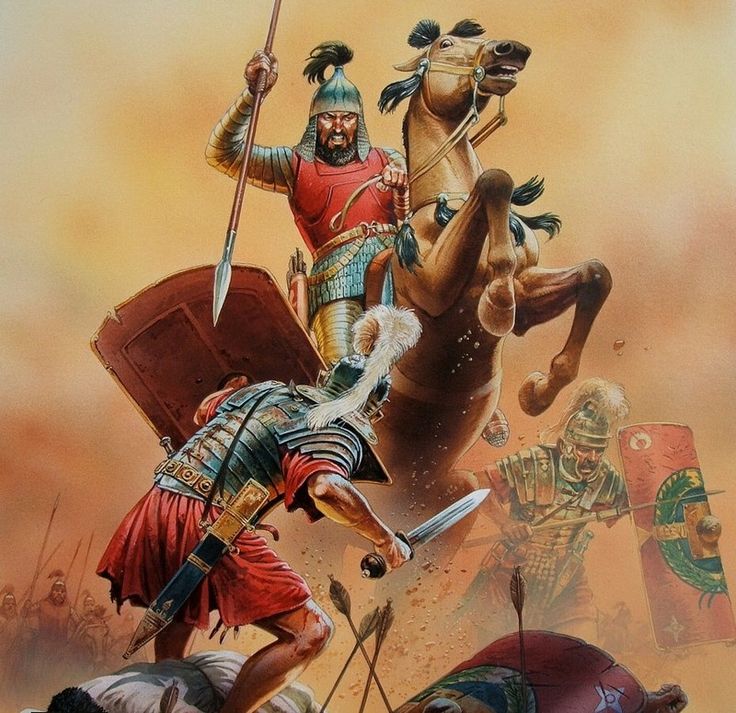
The general also remembered being stationed in Langres, France, as a Roman legionnaire in the X Legion under Julius Caesar, which he mentions in his poem.
3. A Viking on his way to Valhalla
When Patton was a young adult, he was kicked by a horse, which broke his leg in three places. Close to death from his wounds, Patton had a vision of his death as a Viking raider, where a vision appeared to him on the battlefield, offering to take him to the Viking afterlife.
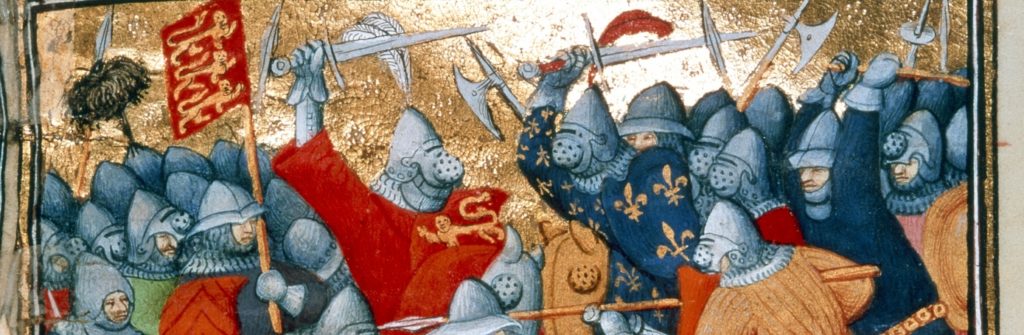
As a child, Patton claimed to have fought alongside John the Blind of Bohemia, who also met his death at Crecy.
4. A Carthaginian Soldier, Possibly Hannibal Himself.
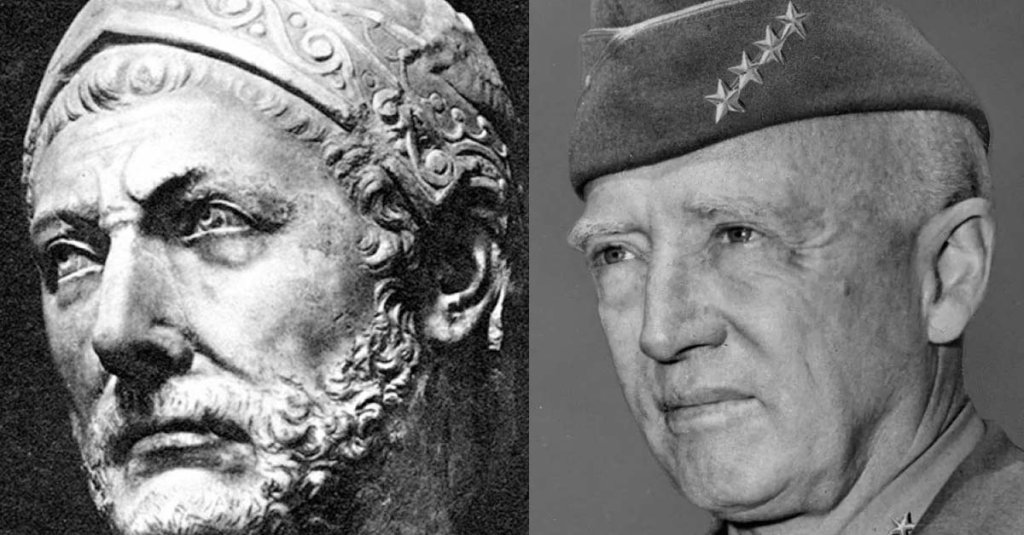
There aren’t many who can claim they fought for both Carthage and Rome, and live to tell the tale. Patton was no different. Those were both different lives, and he believed he died a soldier’s death in each of them. His experience as a former Carthaginian would have come in handy when he was leading troops in North Africa in 1943.
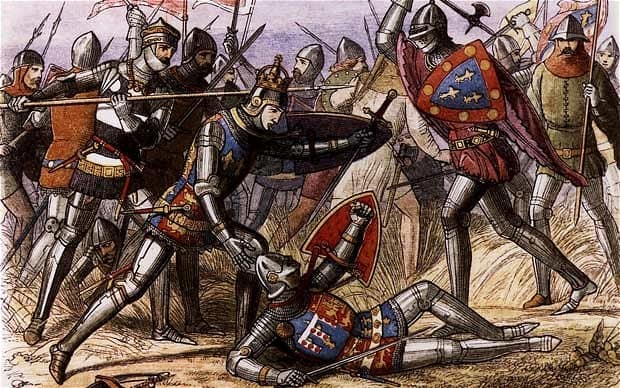
5. An Englishman at Agincourt
The afterlife knows no loyalty in the wars of men, apparently. Less than a century later, Patton was back in the Hundred Years’ War, this time on the side of the English. Patton claimed to have fought with King Henry V at Agincourt.
6. A raiding sailor
Three of Patton’s stanzas describe fighting on ships as he freed captured slaves or prisoners of war, fired into the enemy at point-blank range during a storm, or even was hanged as a pirate or privateer, describing feeling a rope around his neck as the red deck (presumably blood-stained) was set aflame.
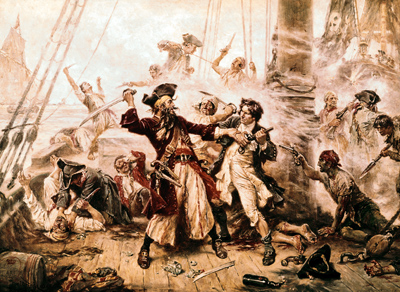
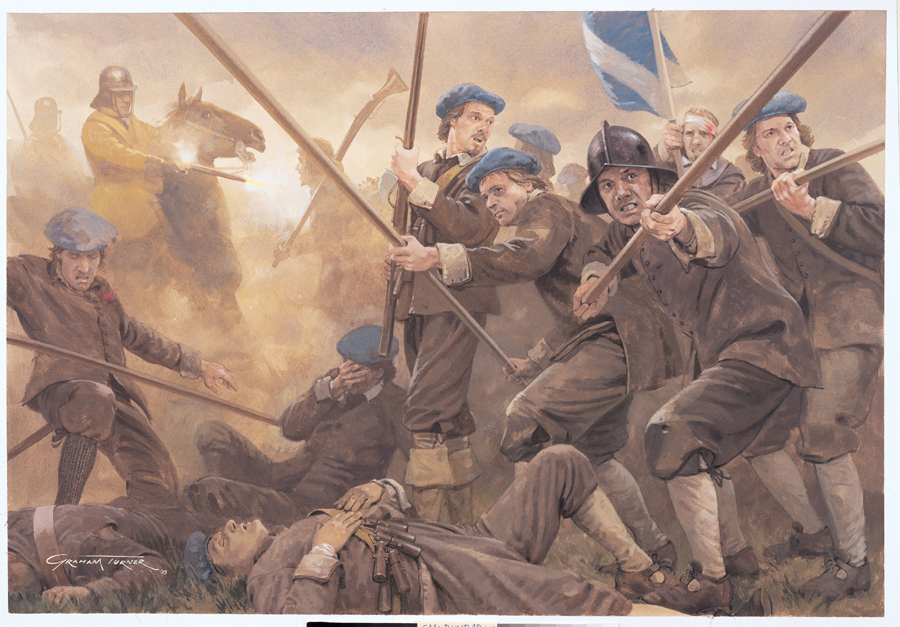
7. Fighting for the House of Stuart
Again pitted against the English, though this time his loyalties were less to a nation than to the House of Stuart. Patton was a Scottish Highlander during the third English Civil War, supporting the Stuarts after the death of Charles I.
8. An aide to a Napoleonic Marshal
Patton describes “riding with Murat” in the poem. Joachim Murat was one of Napoleon’s marshals and among the most capable cavalry officers and leaders in service to the French Emperor. He doesn’t specify his role with Murat, but the marshal was pivotal in battles like Jena and the 1812 invasion of Russia. In his poem, the line “The sunken road of Ohein” is borrowed from Victor Hugo, but refers to the Battle of Waterloo.
When the Allies left North Africa to invade Sicily, British General Sir Harold Alexander told Patton that if he had been alive in the 19th Century, Napoleon would have made him a marshal—to which Patton replied: “But I did.”
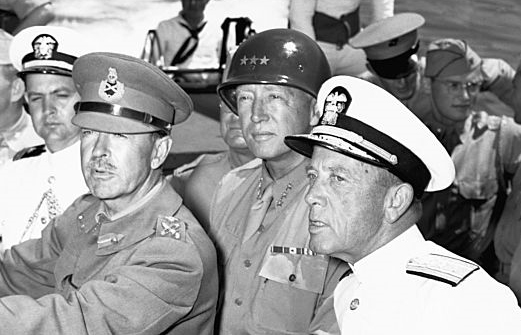
At the end of his epic poem, Patton wrote that he would “battle as of yore, dying to be a fighter, but to die again, once more.”