
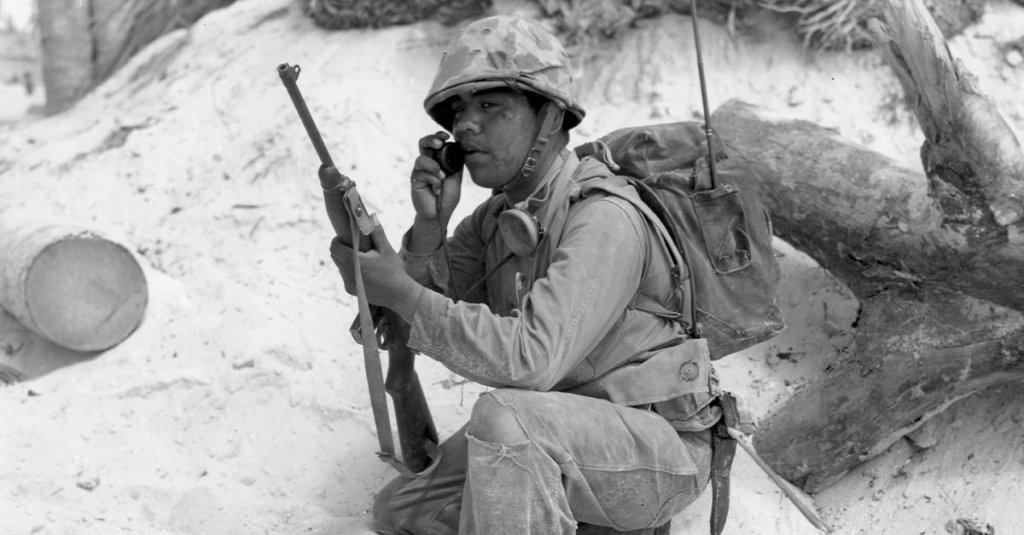
Of all the major factors that led to Allied victory in World War II, quite possibly the least appreciated is the advantage of Allied communications breakthroughs.
Yup, today we’re talking about the vital advantage of a good radio. But the military used this radio in coordinating invasions, armored assaults, and artillery bombardments. It’s exciting. We promise.
The SCR-300 enabled maneuver in a previously impossible way, and it popularized the “walkie-talkie” while doing so.
The terrible nature of pre-war radios
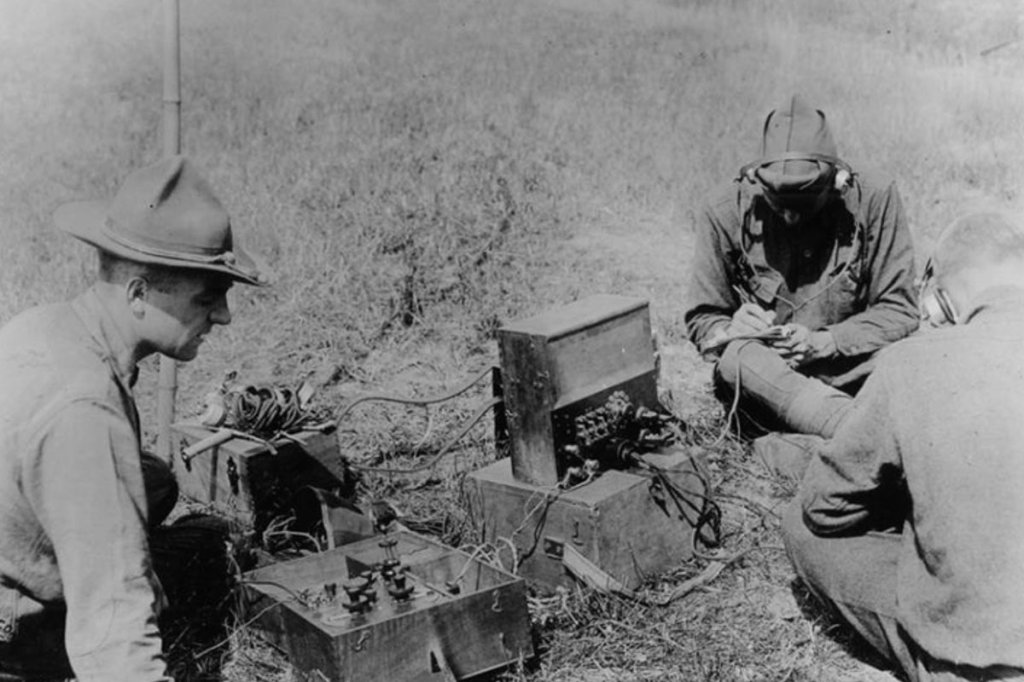
In early World War II, America used AM radios like nearly everyone else at the time. AM radio was the standard, with FM being a newer technology. Without getting too into the weeds, AM radios transmit data by changing the amplitude of the signal to represent different sounds and signals. FM radios transmit data by changing the frequency of the signal to represent different sounds and signals.
Related: The hilarious story behind the first-ever in-flight radio transmission
But AM radio is susceptible to a few problems, most importantly that it receives all sorts of natural and man-made interference. Like from the weather. Or from engines. Explosions. Electrical lines. Or from nearby radios.
Hope those things won’t be an issue in combat.
The only good way to get past the interference in AM is to overpower it, which obviously requires a lot of energy and creates even more interference for other devices. So signal officers heading into World War II had only bad choices. They could either field a lot of underpowered radios that could transmit less than a mile, often less than a quarter of a mile, or get a few high-powered radios that required massive amounts of electricity.
One bonus drawback: AM radios accept all natural interference. In the modern day, computers sort out the noise most interference creates, but pre-World War II radio operators had to pick out often weak signals from a constant stream of noise in their ears, a mentally draining task. Vehicle engines made the interference worse.
Meet the super nerd: Edwin Howard Armstrong
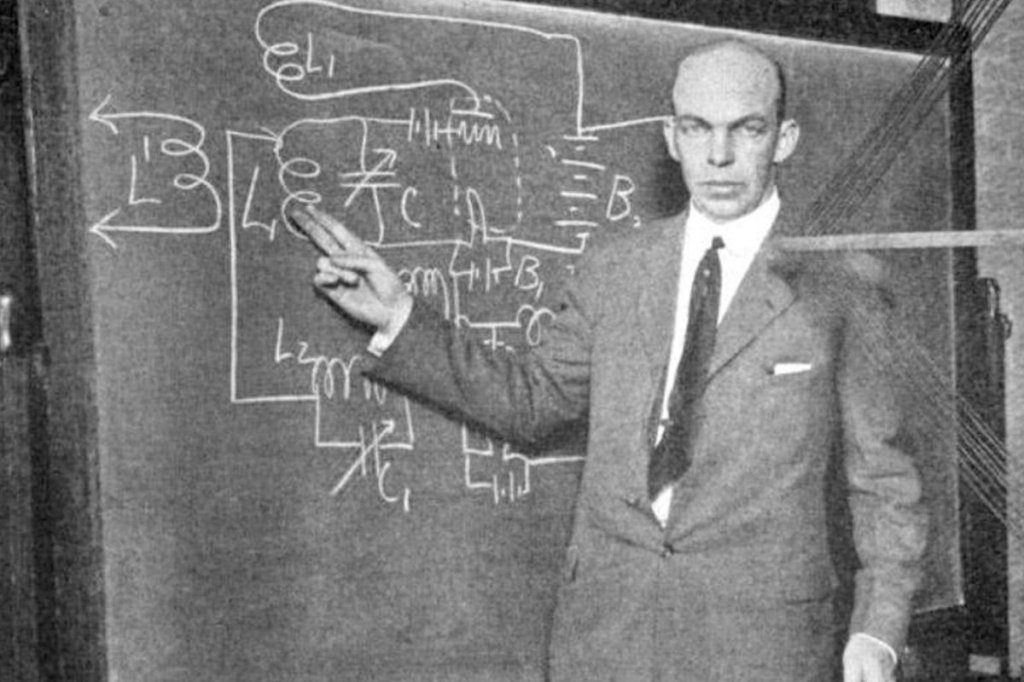
America had a secret weapon, though. Edwin Howard Armstrong was interested in engineering, especially electrical and mechanical, from when he was a kid, and his parents let him conduct experiments in the house growing up. He went from childhood experiments to Columbia University to Europe for World War I.
He served in World War I as a captain in the Signal Corps and earned promotion to major as well as the French Legion of Honor. He was also a pioneer of AM radio, having invented regenerative circuits and superheterodyne (don’t ask) circuits. Both innovations made the tools much more useful, including in military service.
But then Armstrong started experimenting with a potential new method of transmitting signals: keeping the amplitude constant and altering the frequency, instead. That reduced the theoretical range and made the radios require line of sight connection, but it allowed the system to reject most interference. So shorter theoretical range, but crystal clear signal as long as you could connect.
His first successful prototype came in 1931, and another super nerd, Daniel Noble, picked up the torch.
Daniel Noble and Motorola make a “walkie-talkie”
In 1938, Daniel Noble embraced FM technology while working on a contract for the Connecticut State Police, allowing their patrol cars to stay connected to their dispatchers from anywhere in the state, the first such network. So when the Army Signal Corps came knocking on the door of Motorola’s parent company, Galvin Manufacturing Company, for a longer-range AM radio for use by frontline troops, Noble knew he had to convince them to try FM.
Noble was the director of research at the time, and his pitch was simple: AM radio would never give the Army the range and portability it needed. The Army wanted a portable system that could transmit three miles, while the existing portable systems that matched the engineering specs could transmit about a quarter of a mile with any reliability.
The Army accepted the change, but it tacked on a challenging set of requirements. It said the total system must be battery-powered, weigh less than 35 pounds, have tight channel bands to enable concurrent communications networks, and be operable by existing radio operators with minimal new training and expertise.
Oh, and the Army said it was of “life-or-death” importance.
The SCR-300
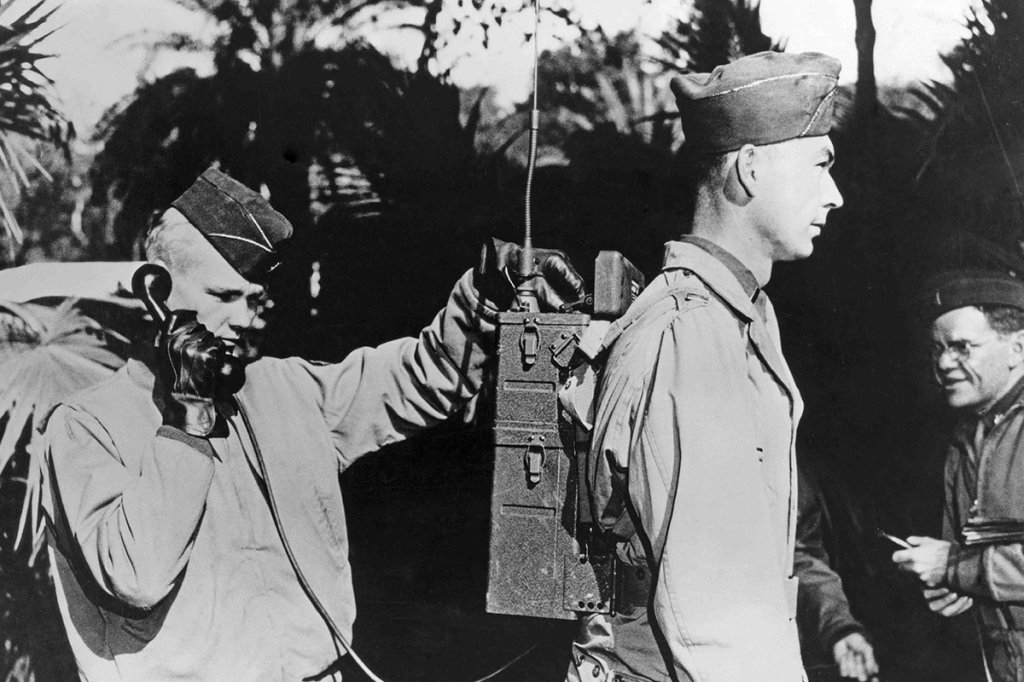
We’ll spare you the nitty-gritty, but Motorola showed up to field trials with two prototype units. That meant a failure of either would stop the trials immediately (can’t transmit back and forth with just one radio.) They brought top engineers and inspected and repaired the systems every night.
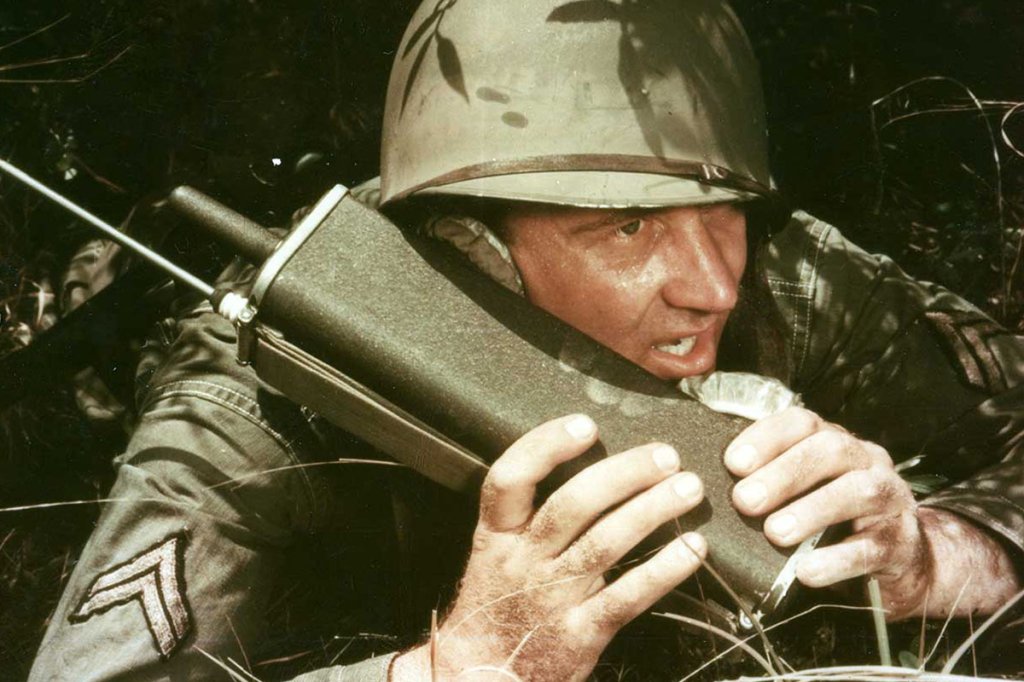
But the system shined, impressing even infantrymen sent to observe the tests, and it fit every program requirement except that it was a bit heavy at almost 40 pounds. Since it could transmit eight miles, almost three times the required distance, with a crystal clear signal, the Army decided to let the weight slide (don’t tell Hegseth). The Army adopted it as Signal Corps Radio-300.
The radio, while not the first backpack set, was the first to be widely called a “walkie-talkie.” The term even shows up in official correspondence of senior leaders during the war and the radio’s technical manual.
The Army didn’t just move forward with the radio; it wholeheartedly embraced it. It was coming off of battles in North Africa where, though ultimately successful, the Army had paid for many communications shortcomings in blood. Crucially, artillery observers and other frontline troops had repeatedly spotted Axis assaults but been unable to get the word to air assets or gun lines in time to blunt the enemy attacks. Slow comms make for fast-flowing blood.
The Army put such a priority on getting the new systems into the field that it dedicated airlift capability to the radios. As Galvin Manufacturing rolled them off the line, the Army immediately packed them onto planes and sent them across the Atlantic.
The SCR-300 “walkie-talkie” in combat
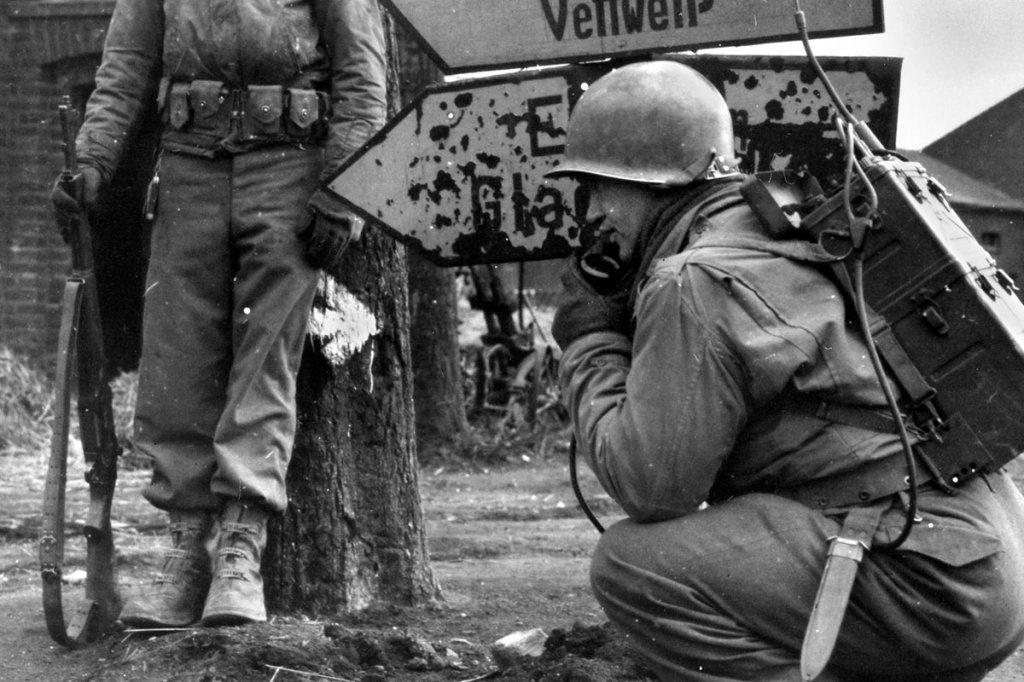
The Army’s eagerness proved correct. The air delivery of the radios allowed them to be ready for the invasion of Sicily in 1943. Suddenly, forward observers could reliably talk to the fire direction center from any hilltop. Infantry officers could coordinate from the division level down to platoons with just a few radio calls across a couple of highly reliable networks.
And best of all, armor commanders who used to rely on hand signals, since their engines typically scrambled attempts at AM radio communications, could suddenly coordinate across entire spearheads without any tank commanders needing to leave their hatches.
And we’re sure that the literally hundreds of messengers running back and forth across any given battlefield appreciated that they no longer had to break cover, sprint hundreds of meters, and risk life and limb to shift a single platoon’s deployment all the time.
As a then-Col. Francis L. Ankenbrandt, the signal officer for U.S. Army Forces in the South Pacific, wrote to Gen. George Meade in January 1944, “The SCR-300 sets have now been in action in the Torokina area, Bougainville, in the hands of the 37th and Americal Divisions and I have a preliminary report on them indicating that they are exactly what is needed for front line communication in this theater.”
By the time that America’s invading forces shifted to England for Operation Overlord and the D-Day invasion, the SCR-300 was a dream tool for infantry and other combat arms soldiers. Motorola continually improved the protection against weather and saltwater, helping it serve across the world. Approximately 50,000 of the radios served in Europe, the island-hopping campaign of the Pacific, and on ships across all the world’s oceans.
More from Logan Nye on We Are The Mighty
• How a volcano in Indonesia helped Napoleon get wrecked at Waterloo
• ‘Psspsspss:’ American sailors enlisted a cat aboard a battleship during World War II
• The inside joke names soldiers have for different unit patches
Loading comments…
Comments couldn’t be loaded. Please refresh the page.