
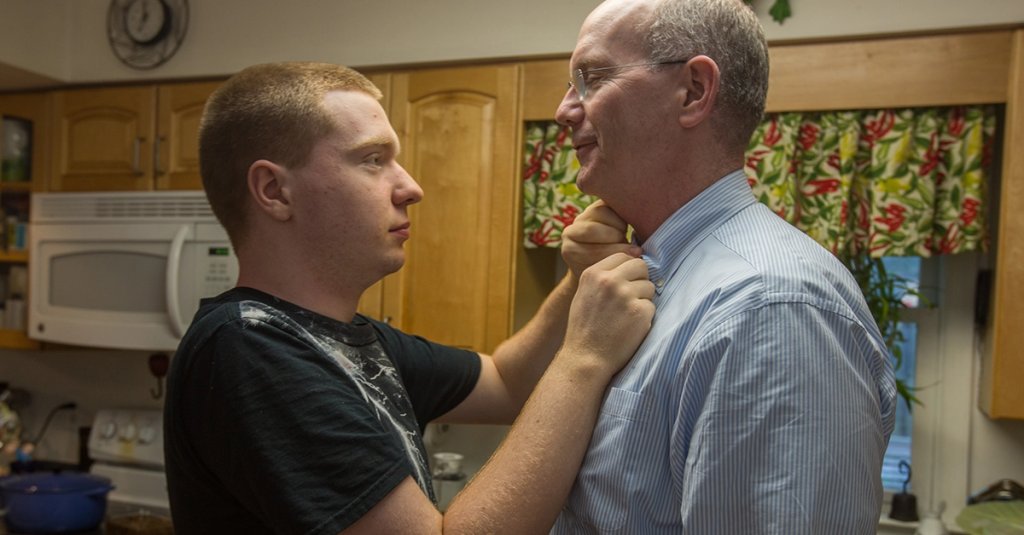
Somewhere in a Facebook group for parents of autistic young men, a mother posts a screenshot of a news headline about automatic Selective Service registration and typed three words underneath it: “Should I panic?”
The replies came fast, and so many of them were wrong.
Also Read: Eligible American males will soon be automatically registered for the draft
Automatic Selective Service registration is a real thing. An actual draft is not. Those are two entirely separate things, and that distinction is where most of the fear currently resides.
With militaries around the world recruiting from the autistic community and granting them service waivers, an anxiety started to fill the air. People were asking, what if the current administration, now engaged in an active conflict with Iran, would start mass-waivering neurodivergent men into uniform, or that the automatic registration meant automatic deployment.
Neither of those things is likely to happen, but here is what is actually going on.
Draft Registration
On Dec. 18, 2025, President Trump signed the Fiscal Year 2026 National Defense Authorization Act (NDAA) into law. Tucked inside it was a provision proposing that the Selective Service System automatically register eligible men for the draft pool rather than relying on individual self-registration. The SSS is required to implement this by December 2026, using existing federal data sources, including Social Security and DMV records, to do it.
That is the change. That is the whole change as of now.
Registration has been legally required for nearly all male U.S. citizens and male immigrants aged 18 to 26 since President Jimmy Carter reinstated the requirement in 1980. What the new law does is automate a process that already existed, shifting the administrative burden from the individual to the government.
Read Next: Here’s what happens when the US starts a military draft
As Democratic Rep. Chrissy Houlahan, who sponsored the provision, told CNN, the point was to stop young men from being unknowingly penalized for failing to register, and to save taxpayer money in the process. In a rare effort, the bill passed with bipartisan support in both chambers.
The Selective Service System itself states that a man who is registered will not be automatically inducted into the military. In the event of a draft, men would be called in sequence determined by a random lottery of birthdays and birth years.
Those selected would then report to a Military Entrance Processing Station (MEPS) , where they would undergo a physical, mental, and moral evaluation before any induction order could be issued. Congress would still have to amend the Military Selective Service Act to authorize the president to induct anyone at all, since the president cannot restart the draft by executive order.
Iran War Anxiety
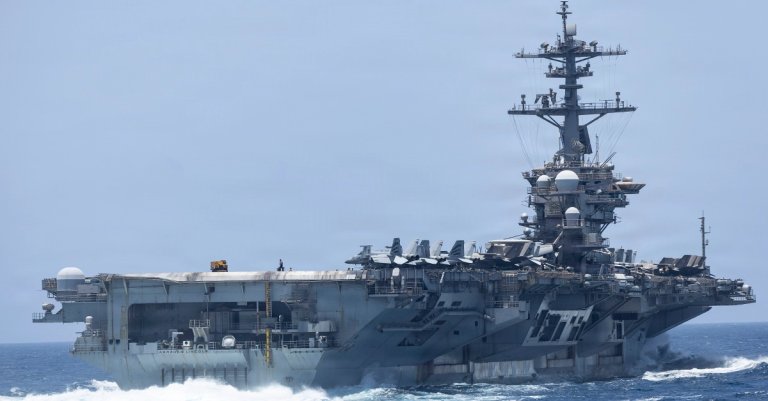
This anxiety is not entirely unwarranted, to be fair. Since Feb. 28, 2026, U.S. and Israeli forces have been engaged in an active military conflict with Iran, currently holding at a fragile ceasefire as of late April. So far, Operation Epic Fury has been primarily an air and naval operation, but the Trump administration has declined to rule out the possibility of ground troops.
When Fox News host Maria Bartiromo asked White House Press Secretary Karoline Leavitt in March whether a draft was on the table, Leavitt said Trump “wisely keeps his options on the table,” while clarifying that ground troops were “not part of the current plan.”
That non-answer generated a predictable response.
Any return to conscription would still require an act of Congress, a lottery, orders to report, and a MEPS evaluation for every single registrant called. According to current Department of Defense requirements, the SSS would need to deliver the first inductees to the military within 193 days of a draft being authorized.
There is no shortcut in that sequence, not even under wartime pressure. Roughly three-quarters of Americans oppose reinstating the draft, according to Pew Research Center data. The automatic registration provision was written months before the conflict with Iran began, passed with votes from both sides of the aisle, and has no operational connection to the current military campaign.
Registration is Not Induction
The families posting comments on social media were looking for this part: All males, autistic or not, aged between 18 and 25 are still legally required to register with the Selective Service, diagnosis notwithstanding.
The only exemptions from registration are extraordinarily narrow: a man must have been continuously institutionalized in a hospital, nursing home, or similar facility from before his 18th birthday through his 26th birthday, with no breaks in that institutionalization exceeding 30 days; or he must have been confined to a home and physically unable to leave without medical assistance, such as by ambulance or with a nurse, for that same continuous period.
The vast majority of the neurodivergent community does not meet either threshold. Registration, however, is not the same as eligibility for service. Autism Spectrum Disorder remains a formally disqualifying condition for military accession under DoD Instruction 6130.03, Volume 1, the document that governs medical standards for appointment, enlistment, or induction into the U.S. Armed Forces.
The instruction applies equally to volunteers and draftees. The medical standards do not loosen because men are being conscripted rather than enlisting.
If a draft were authorized and an autistic man were called in a lottery, he would report to MEPS, undergo evaluation, and would in (probably) all cases receive a 4-F classification, meaning not currently qualified for military service, and be sent home with no service obligation.
Once notified of those results, a registrant has 10 days to file a claim for exemption. A disability is a valid exemption reason.
The practical advice for families who want to be prepared, in the unlikely event this ever becomes relevant, is to always document everything, and do it now. You’ll want copies of any diagnosis from a licensed professional, every IEP or 504 plan, all records of accommodations, and a list of any medications, if taken.
Do keep in mind, you’re not doing this because a draft is imminent, only because a detailed paper trail makes the exemption process faster and easier if a draft happens to occur.
The Waiver Wire
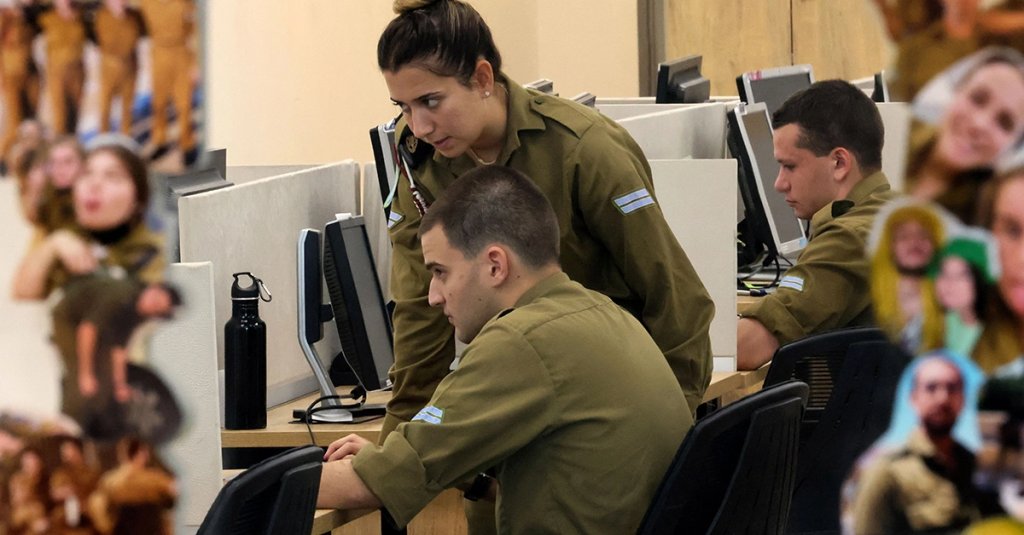
The comments on the socials also raised a specific fear: that the military would start broadly waivering the community into service, particularly given how other countries are actively recruiting neurodivergent people for intelligence and cyber roles.
Waivers for autism absolutely do exist. Albeit they are rare, case-by-case, branch-dependent, and not guaranteed. Of approximately 1,800 applicants with an autism diagnosis who have gone through the waiver process in recent years, roughly 500, about 28%, were approved, according to data from Autism Speaks.
What the current administration has actually done is move in the opposite direction of loosening waivers. In July 2025, Defense Secretary Pete Hegseth signed a memo tightening the medical waiver framework across the board.
This guidance established conditions that are now permanently ineligible for any waiver at all, including congestive heart failure, current treatment for schizophrenia, a history of paraphilic disorders, multiple sclerosis, a history of cystic fibrosis, past organ transplants, and a suicide attempt within the preceding 12 months. A second tier of conditions now requires service secretary approval before a waiver can be accepted.
Autism does not appear on either list as of April 2026.
“America’s warfighters must be physically and mentally capable of performing their duties in the harshest of conditions,” Hegseth wrote. “Severe underlying medical conditions introduce significant risks on the battlefield and threaten not only mission priorities, but also the health and safety of the affected individual and their fellow service members.”
That is not the posture of an institution preparing to lower the bar.
Nothing Has Changed
The U.S. military formally bars autistic individuals from service while simultaneously benefiting from neurodivergent minds already working across its intelligence, cyber, and technical functions. Some were diagnosed after entry, while many never disclosed this information.
Our current system gleefully excludes while quietly relying on those who navigate around the exclusion. Nothing has changed here. What the automatic registration mandate did was make that tension greater without resolving any of it. The question that many were really asking, underneath the panic about the draft, is whether the current U.S. administration would ever simply conscript its way out of a mess.
The honest answer, even if there’s little confidence in what is said these days, is that there shouldn’t be any draft concerns. Autistic men are not being waivered into service in any systematic way, and the communities most worried about this outcome are watching a group of policymakers who have not decided what it is they actually want from neurodivergent Americans, except to keep their options on the table.
That phrase again.
Until the next drop, stand easy.
Don’t Miss the Best of We Are The Mighty
• 6 reasons why you won’t be drafted, even if we bring back the draft
• The 7 best enlisted military jobs to get after being drafted for World War III
• How the machete made its transition from weed whacker to war weapon
Loading comments…
Comments couldn’t be loaded. Please refresh the page.