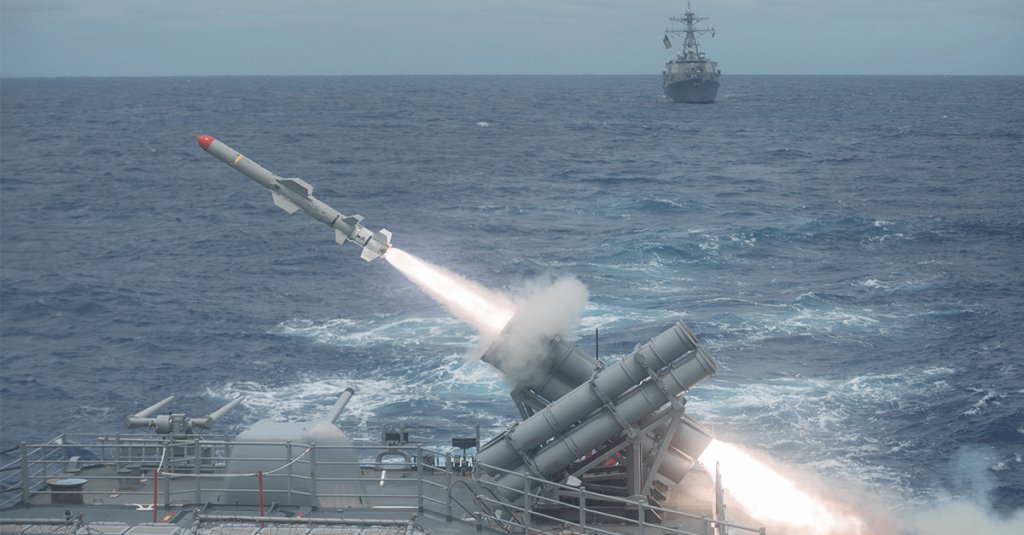
Boeing’s Harpoon Missile System is an all-weather, over-the-horizon, anti-ship weapon that is extremely versatile. The U.S. started developing the Harpoon in 1965 to target surfaced submarines up to 24 miles away, hence its name “Harpoon,” a weapon to kill “whales,” a naval slang term used to describe submarines.
Related: The U.S. Navy tested a “game-changing” missile
It was a slow-moving project at first until the Six-Day War of 1967 between Israel and Egypt. During the war, Egypt sank the Israeli destroyer INS Eilat from 14 miles away with Soviet-made Styx anti-ship missiles launched from a tiny patrol boat. It was the first ship in history to be sunk by anti-ship missiles.
The surface-to-surface destruction shocked senior U.S. Navy officers; after all, it was the height of the Cold War, and the weapon indirectly alerted the U.S. to Soviet capabilities at sea. In 1970, Admiral Elmo Zumwalt—then Chief of Naval Operations—accelerated the Harpoon project, strategically adapting it for deployment from air and sea. Seven years later, the first Harpoon was successfully deployed.
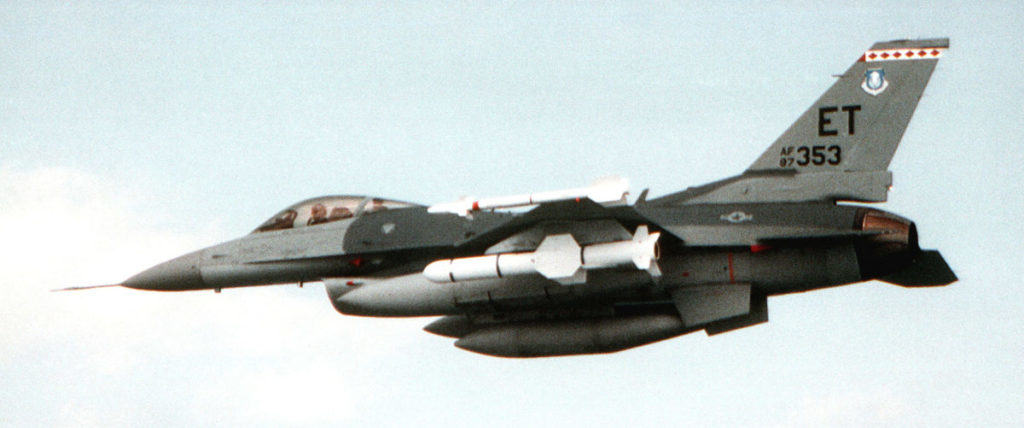
Today, the U.S. and its allies, comprising more than 30 countries worldwide, are the primary users of the weapon. 2017 marks its 50th anniversary, and it’s only getting better with age. Over the decades, the missile has been updated to incorporate navigation technology, including GPS and an Inertial Navigation System (INS), as well as other electronics, making it more accurate and versatile against ships and a range of land-based targets.
This Boeing video describes the incredible history behind the Harpoon Missile System and its evolution throughout the years.
Watch:

Harpoon missile meets 40-year milestone
Don’t Miss the Best of We Are The Mighty
• China is fielding its new anti-ship missile and it’s not just for show
• How the US deleted Venezuela’s air defenses so quickly
• The Navy is spending $1.1 billion on the most successful air-to-air missile in the world