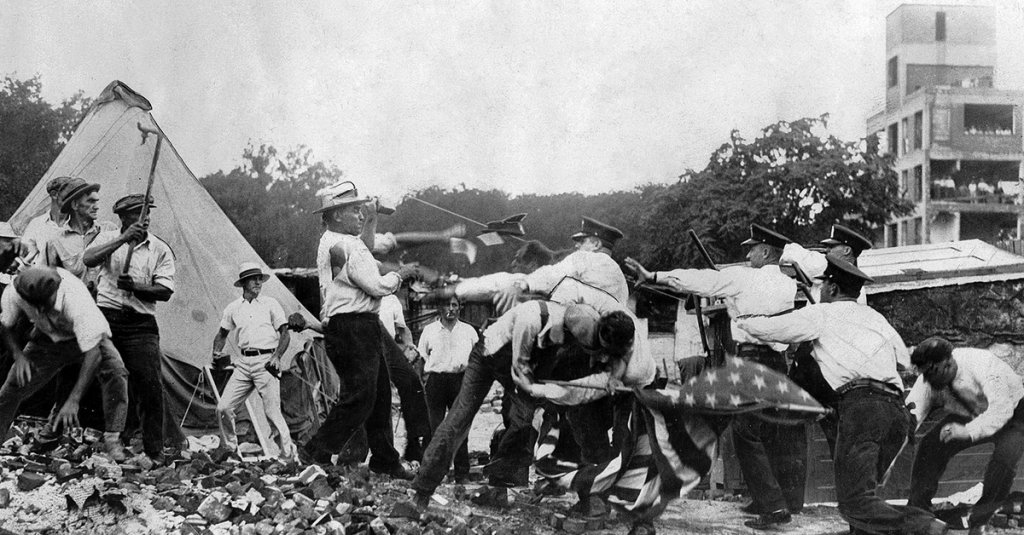
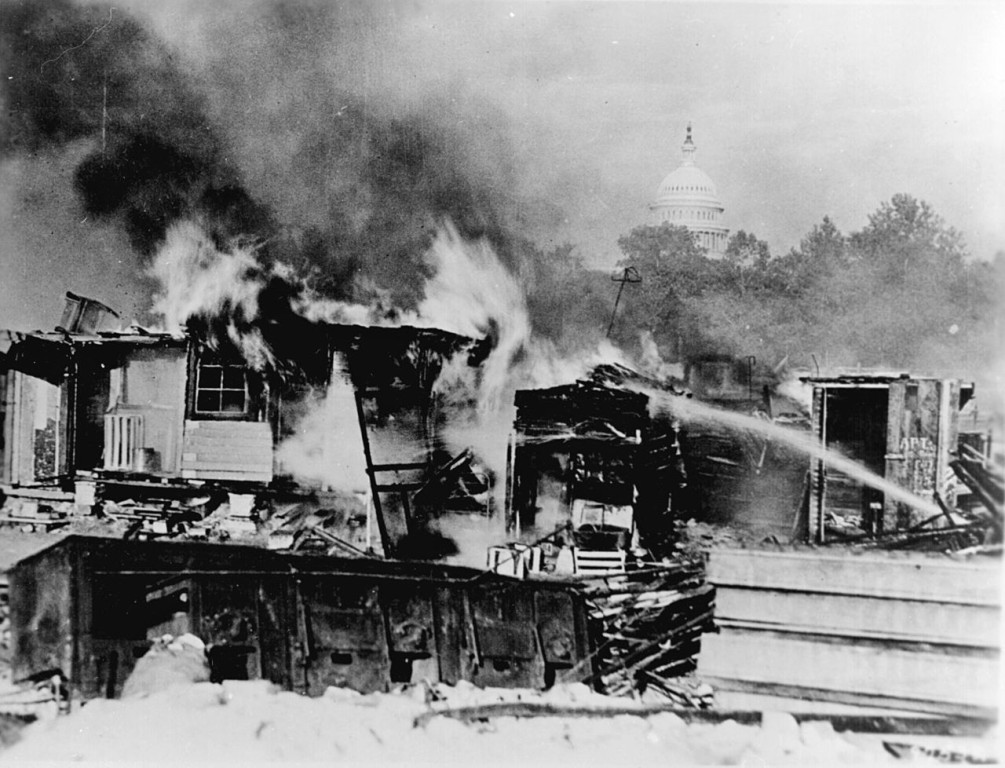
In the summer of 1932, some 17,000 World War I veterans, along with many of their families, made camp on the shore of the Anacostia River south of Capitol Hill in Washington. They were all unemployed, and many of them had been so since the start of the Great Depression in 1929. Later known as “The Bonus Army,” They wanted the money the U.S. government had promised them for their service in World War I, and they needed it immediately.
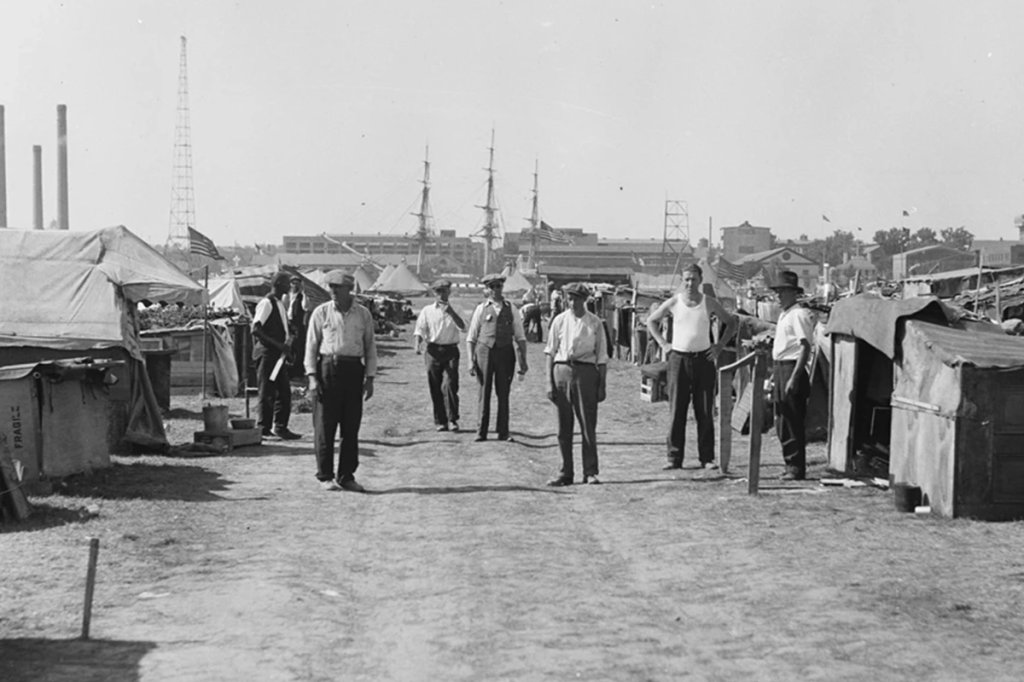
But the benefit they were due was a little more complicated than that. In 1924, Congress overrode a veto by President Calvin Coolidge and passed the World War Adjusted Compensation Act. According to the legislation, each veteran of World War I was to receive a dollar for each day of domestic service, up to a maximum of $500 (more than $11,000 adjusted for inflation), and $1.25 for each day of overseas service, up to a maximum of $625 (about $15,000). Amounts of $50 or less were immediately paid. All other amounts were issued as Certificates of Service maturing in 20 years.
Exactly 3,662,374 military service certificates were issued, with a face value of $3,638,000,000 (more than $86 billion today). Congress established a trust fund to receive 20 annual payments of $112 million, which, with interest, would finance the 1945 disbursement of the $3.638 billion due to veterans. Meanwhile, veterans could borrow up to 22.5 percent of the certificate’s face value from the fund.
But in 1931, due to the Great Depression, Congress increased the maximum loan amount to 50% of the certificate’s face value.
Although there was congressional support for the immediate redemption of the military service certificates, President Hoover and Republican congressmen opposed such action on the grounds that the government would have to increase taxes to cover the payout costs, which would slow any potential recovery.
On June 15, 1932, the House of Representatives passed the Wright Patman Bonus Bill, which would have moved forward the date for World War I veterans to receive their cash bonus, but two days later, the Senate defeated the bill by a vote of 62-18.

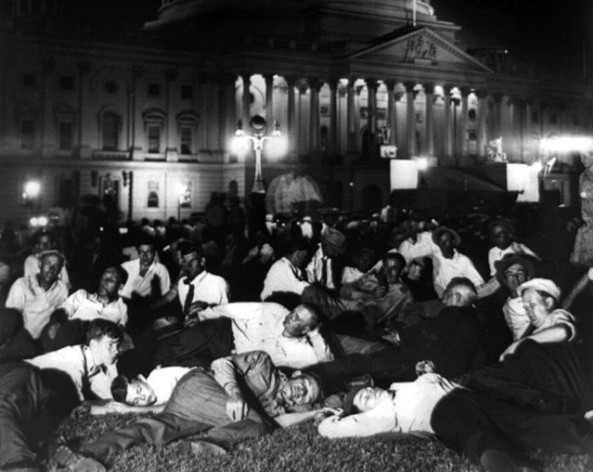
The Bonus Army, as the veteran squatters were known, decided to protest the Senate vote by marching from Anacostia to Capitol Hill. Once the march was over a number of vets decided not to return to Anacostia and instead they set up camp on Capitol Hill. They lived there for over a month waiting for lawmakers or President Hoover to do something on their behalf.
On July 28, 1932, Attorney General William D. Mitchell ordered the police to remove the Bonus Army veterans from their camp on Capitol Hill, and during that effort, the vets rushed two policemen trapped on the second floor of a building. The cornered police drew their revolvers and shot at the veterans, two of whom, William Hushka and Eric Carlson, later died.
When President Hoover heard about the incident, he ordered the U.S. Army to evict the Bonus Army from Washington, DC. The task fell to the 12th Infantry Regiment, commanded by one Gen. Douglas MacArthur, who was supported by six tanks, under the charge of one Maj. George S. Patton, who was attached to the 3rd Cavalry Regiment.
When the vets saw the Army force, they cheered, thinking they were there to support their cause. But MacArthur quickly showed them that wasn’t the case. The Army waded into the vets with tear gas and fixed bayonets. The vets retreated back to Anacostia, and President Hoover ordered the Army to stop the eviction. However, MacArthur, in a move that foretold his infamous showdown with President Truman years later during the Korean War, ignored Hoover’s order and continued his assault on the Bonus Army.
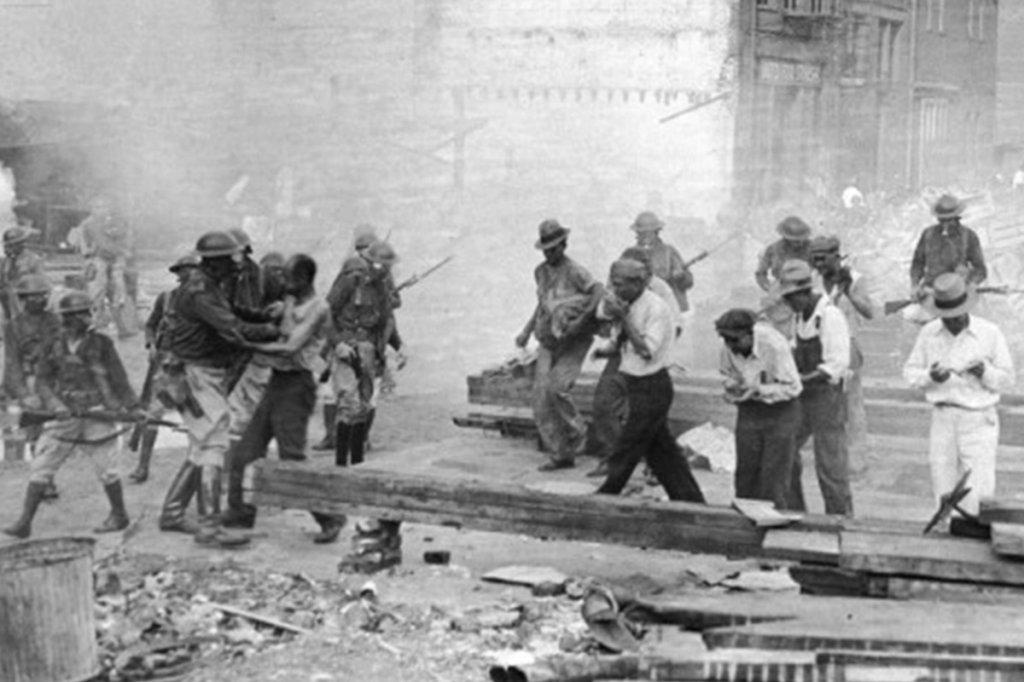
An estimated 55 veterans were injured, and 135 were arrested; a veteran’s wife miscarried, and a 12-week-old boy died in the hospital after being caught in the tear gas attack. The veteran shantytown was burned to the ground.
MacArthur later explained his actions by saying that he thought the Bonus March was an attempt to overthrow the U.S. government.
Though the Bonus Army incident did not derail the careers of the military officers involved, it proved politically disastrous for Hoover. He lost the 1932 election to Franklin D. Roosevelt in a landslide.
Film studio MGM released the movie “Gabriel Over the White House” in March 1933, the month Roosevelt was sworn in as president. Produced by William Randolph Hearst’s Cosmopolitan Pictures, it depicted a fictitious President Hammond who, in the film’s opening scenes, refuses to deploy the military against a march of the unemployed and instead creates an “Army of Construction” to work on public works projects until the economy recovers.
First Lady Eleanor Roosevelt quipped that the movie’s treatment of veterans was superior to Hoover’s.