In 1994, the remains of 1st Lt. Michael Joseph Blassie, an airman killed in the Vietnam War, were identified and confirmed by DNA testing in 1998. He was exhumed and reburied closer to his family. It was welcome news for his family, as Blassie had been missing in action since 1971.
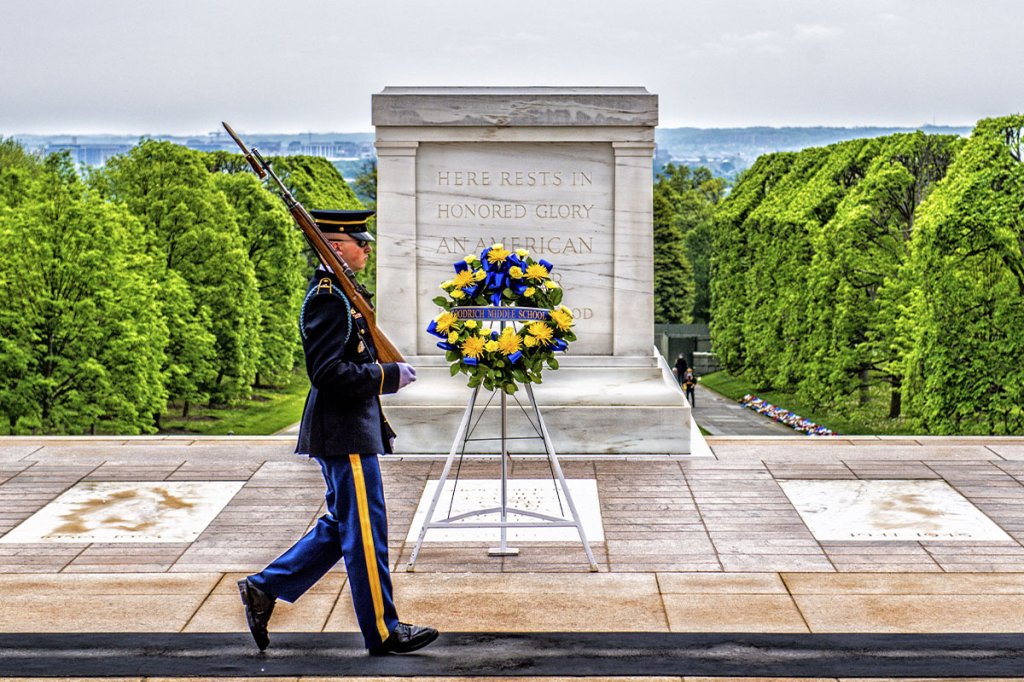
It was national news in the United States because, before his remains were identified, Blassie was interred in the Tomb of the Unknown Soldier at Arlington National Cemetery.
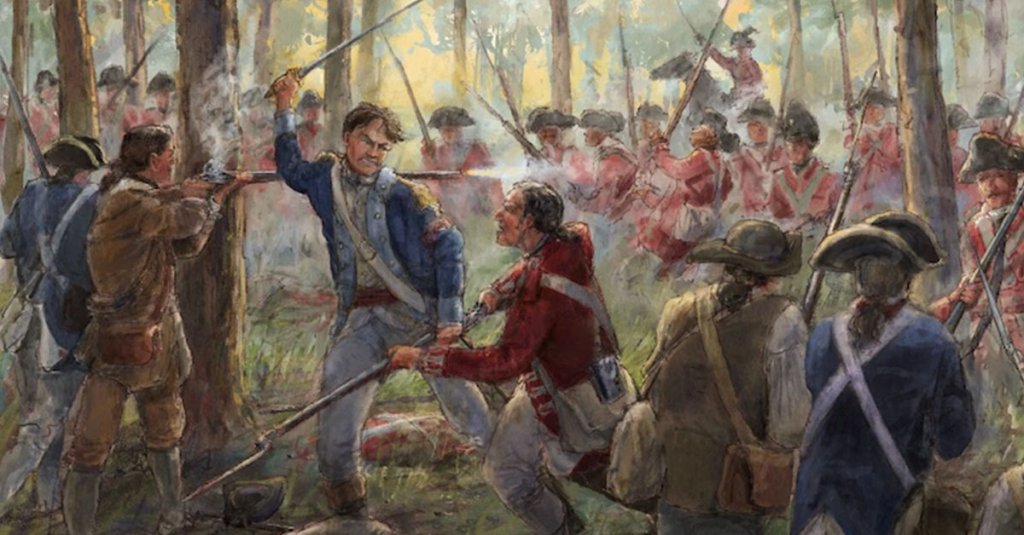
Now, a team of researchers is trying to do the same thing, except the war dead they are trying to identify are from our nation’s first conflict: The American Revolution. The Historic Camden Foundation and FHD Forensics have partnered up to try to identify the names of the Camden Fourteen, 14 Americans who died at the Battle of Camden in 1780.
Related: How the British ‘southern strategy’ ultimately cost them the Revolutionary War
“Here rests in honored glory an American soldier known but to God.” This is the inscription on the Tomb of the Unknown Soldier, serving as a stark reminder that there are those who have fallen in defense of this country and were never identified. Their families never knew their fate and hoped against hope that they would come home one day.
Blassie was reinterred near his family in St. Louis, Missouri, and the Unknown Soldier of the Vietnam War remains empty as an honor to all of the POW/MIA from that conflict. But the tombs of the unknown from World War I, World War II, and the Korean War remain guarded, their identification forever unlikely due to recordkeeping and the passage of time.
Advanced DNA science and public DNA databases offer a new way of potentially identifying unknown remains, on or off the battlefields. A new effort from the Rev War Forensic Institute is dedicated to starting at the very beginning: with America’s Revolutionary War unknowns.
In 2023, researchers from Astrea Forensics were able to extract DNA from 14 unknown remains unearthed from the 1781 Battle of Camden, in South Carolina. The battle was a major victory for the British when Lt. Gen. Charles, Lord Cornwallis, soundly defeated Maj. Gen. Horatio Gates, despite being outnumbered 2-to-1. The victory allowed the British to temporarily strengthen their hold on the South.
After the battle, the dead and wounded were collected and buried or treated. However, in 2020, a grave was found that contained 14 remains of soldiers from the battle. The DNA samples extracted from the “Camden 14” were loaded into public databases, and from that, researchers were able to create a family tree that stretched back two centuries.
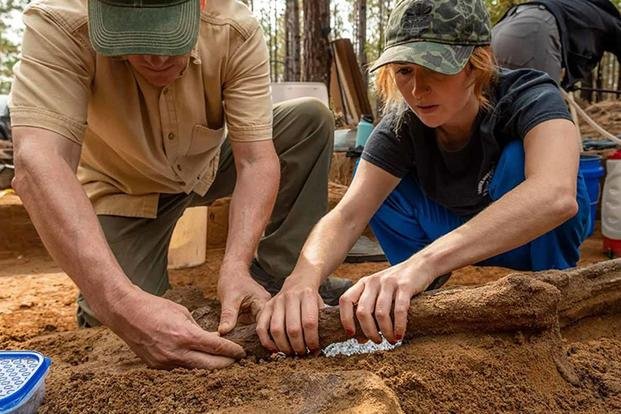
“Our team is piecing together seven- to nine-generation family trees for each match, tracing generations containing between 64 and 256 ancestors each,” noted Peacock. “We believe that the genetic distance between these men and their living descendants has never been attempted before in a John Doe investigation.
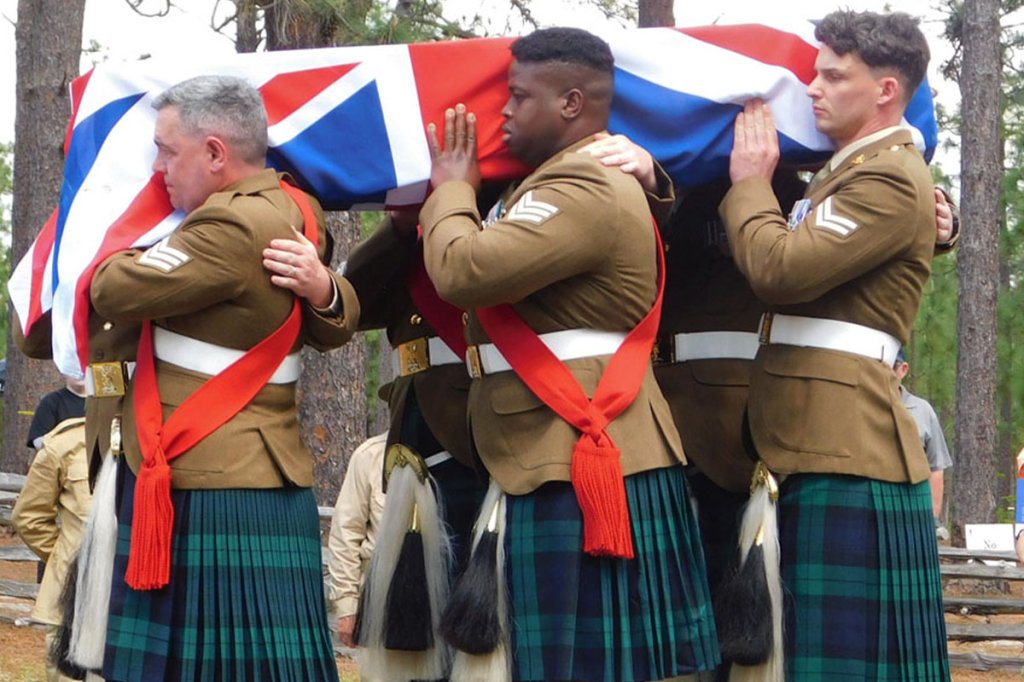
One of the men was identified as a British soldier who served with the British 71st Regiment of Foot, Fraser’s Highlanders, a Scottish regiment formed for the Revolutionary War. In a ceremony where these men were buried in a proper cemetery with military honors, the British Army sent an honor guard to help inter their fallen soldier.
The rest of the Americans might have belonged to the 1st or 2nd Maryland Brigades. But who were they? Where were they from exactly? Can we know what families they came from? What did they do for work before they joined the Revolution?
“The 2022/2023 efforts to recover and re-inter these individuals was just the beginning of honoring their sacrifices for a young nation,” commented Southwick “Cary” Briggs, executive director, Historic Camden Foundation. “The ultimate honor is the ability to thank the unknowns by name and fill in the missing pieces of a modern-day family tree, which is what the institute will work to do.”
“Nowhere in the world has a group come together to research, document, and name America’s oldest fallen,” FHD Forensics president Allison Peacock said in a statement. “We are not only announcing our formal establishment as an organization, but we’re also sharing what we’ve learned to date about two of the fourteen Revolutionary War combatants from the Battle of Camden. It’s a mystery 244 years in the making.”
The scientists are making progress, and we already know a little about two of the fallen. Camden Subject 9B is a 14- to 18-year-old boy from Annapolis, Maryland. His closest relatives have the surnames Beall, Browne, Cheney, Davidge, Griffith, Pumphrey, Ridgley, Stewart, Wade, Warfield, Welsh, and Westall—all prominent founding families from Anne Arundel County, Maryland.
Camden Subject 11A is believed to be of early Jamestown Colony descent, with one ancestor from an early 18th-century Ulster Scot or Irish immigrant family. Ancestral surnames in common with his genetic matches are Alexander, Beam, Birchfield, Boone, Bray, Cannady/Kennedy, Coleman, Embry, Hitchcock, Kash, McComb, Nickell, Owen, Poage, Scott, Soward/Seward, Taulbee/Tolbey, Waters, and Wilson.
Hopefully, we will learn the identities of all these men and, if possible, learn about who they were and who their descendants are. It would be an amazing thing to know that your ancestor gave his life for a very young country. And it would be proper to honor them by name instead of being remembered as a soldier only “known but to God.”
To learn more, visit the Rev War Forensic Institute website.