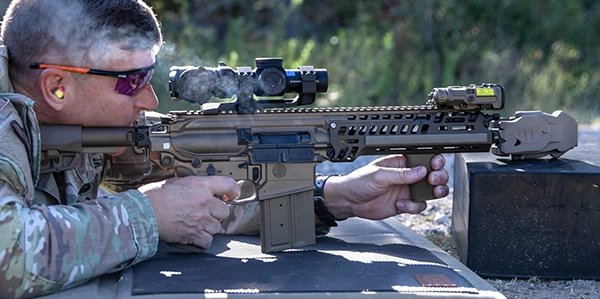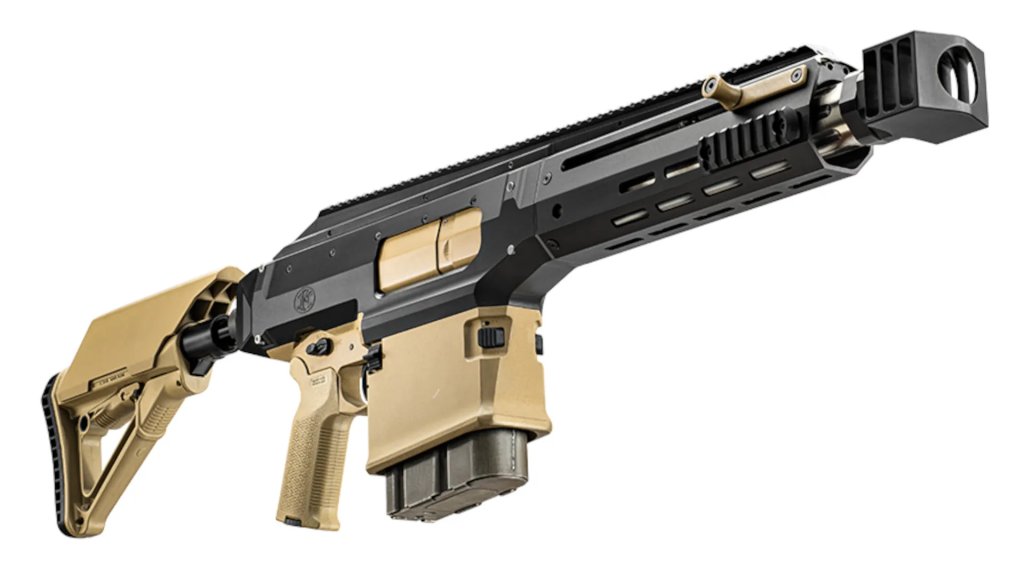
To increase lethality at the small unit level, the U.S. Army is pursuing the Precision Grenadier System (PGS) to give soldiers a flexible weapon that can engage enemy troops behind cover, lightly armored vehicles, and even airborne drones. In May 2025, the Army awarded a $2 million contract to Barrett and MARS to continue work on their PGS submission, the 30mm Support Rifle System (SRS). FN America has since won its own contract to further develop its entry.
On October 1, 2025, FN announced that it had been awarded a $2 million Prototype Project Opportunity Notice contract for its Multi-purpose Tactical Launcher 30mm (MTL-30). FN submitted the PGS-001 to compete against the Barrett/MARS SRS; though not explicitly stated in FN’s announcement, the MTL-30 is visually similar to the PGS-001.
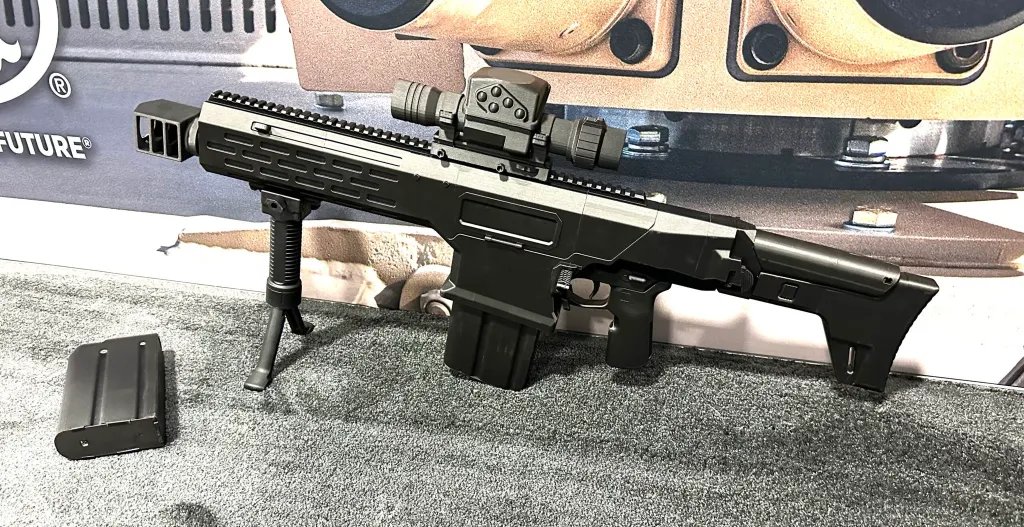
“This program is a U.S. Government priority with the shift in modern warfare and engagements, and FN is honored to be selected to develop this new, innovative solution,” said FN America President and CEO Mark Cherpes in a press release. “Once developed and implemented, this weapon system could radically change future battlefield strategies. It will offer new capabilities at the squad level and upgraded tactical options, giving the warfighter a more effective system.”
The MTL-30 feeds from 3- or 5-round box magazines, measures 35 inches in length, and weighs just over 10 pounds. This is a significant improvement over the failed XM25 grenade launcher’s 14 pounds. Moreover, the features and ambidextrous controls of the MTL-30 mimic those of the M4 carbine in service with the U.S. military. FN is the current contractor for the M4 as well as the M249 SAW and M240 machine gun. The company also produced the Mk19 40mm belt-fed grenade launcher and the 40mm grenade launcher for the SCAR family of rifles.

“The technologies we have incorporated have allowed FN to create a system that is much lighter, more compact, and more maneuverable than previous soldier-operated grenade launchers,” said Jim Williams, Vice President, Military Programs for FN America, in a press release. “This will improve soldier capabilities on the battlefield, offering a robust solution for close combat, engaging targets beyond 500m, or to potentially combat other threats such as unmanned aerial systems.”
FN notes that the MTL-30 is the first in this family of launchers and ammunition. While that sounds exciting from the warfighter perspective, it’s also a logistical nightmare. The adoption of the PGS, be it the FN or Barrett/MARS submission, will have many of the same problems as the NGSW M7 rifle, M250 machine gun, and 6.8x51mm ammunition. NATO does not have a standard for 30mm grenade ammunition; therefore, supply chains will need to be established for spare parts and ammunition, and new supporting equipment will have to be distributed across the Army.
This is another addition to the ammunition “train wreck” that Larry Vickers wrote about.

The Army has to evolve. The M16 and 5.56mm cartridge had their own operational problems and logistical challenges, but they improved significantly on the M14 and its 7.62mm ammo. In adopting new technologies, a massive government organization like the Army needs to balance multiple factors like cost, lethality, and feasibility to ensure the effectiveness of the force while still being good stewards of taxpayer dollars. Just don’t cut testing short like with the M17/M18 pistols, or we’ll tweet @DOGE.