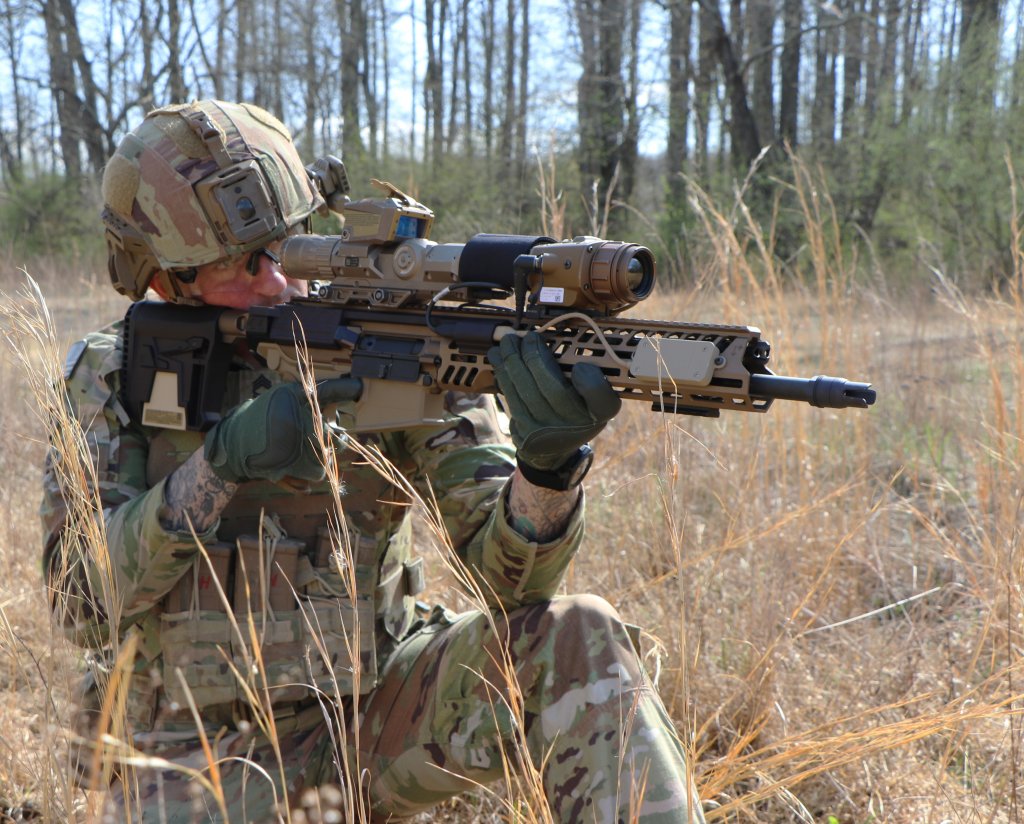
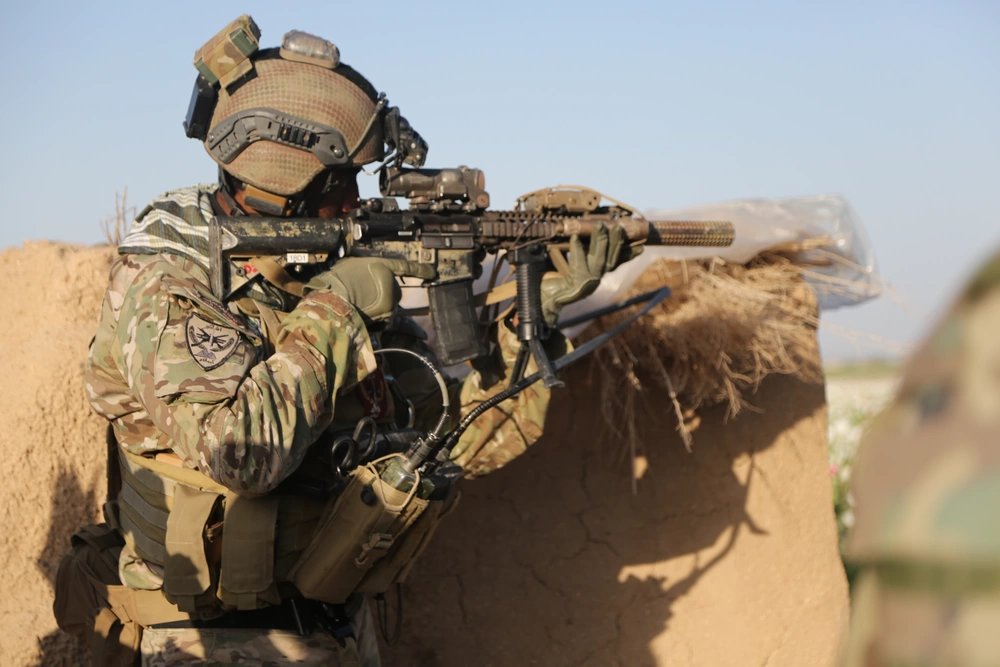
The Global War on Terror saw an electronic revolution in military equipment. Soldiers were issued radios, red dots, GPS systems, infrared lasers, night vision, and other pieces of gear – all of which needed batteries.
While the CR123A lithium battery has established itself as a go-to power source for many of these enablers, the Army aims to simplify its battery logistics further with a single power solution.
In development by the Army’s Command, Control, Communications, Computers, Cyber, Intelligence, Surveillance and Reconnaissance (C5ISR) Center, the Small Tactical Universal Battery (STUB) aims to power all soldier-worn and carried devices. On August 18, 2025, the Army announced that STUB prototypes are moving toward full-scale industrial production.
Remember when portable electronics used proprietary charging cables? You needed different chargers for your cell phone, iPod, digital camera, and Gameboy. Today, even Apple has hopped on the USB-C bandwagon. Combined with wireless charging pads, keeping your smartphone, smartwatch, earbuds, and other electronic devices charged is simple.
That’s what STUB aims to do for soldiers.
“When the pace of Army modernization increases, we see the number of applications for rechargeable batteries going up significantly,” said C5ISR engineer Dr. Nathan Sharpes in a press release. “As the new equipment is fielded, we want to work as early in its development as possible to make sure it will operate with our newest standard batteries.”
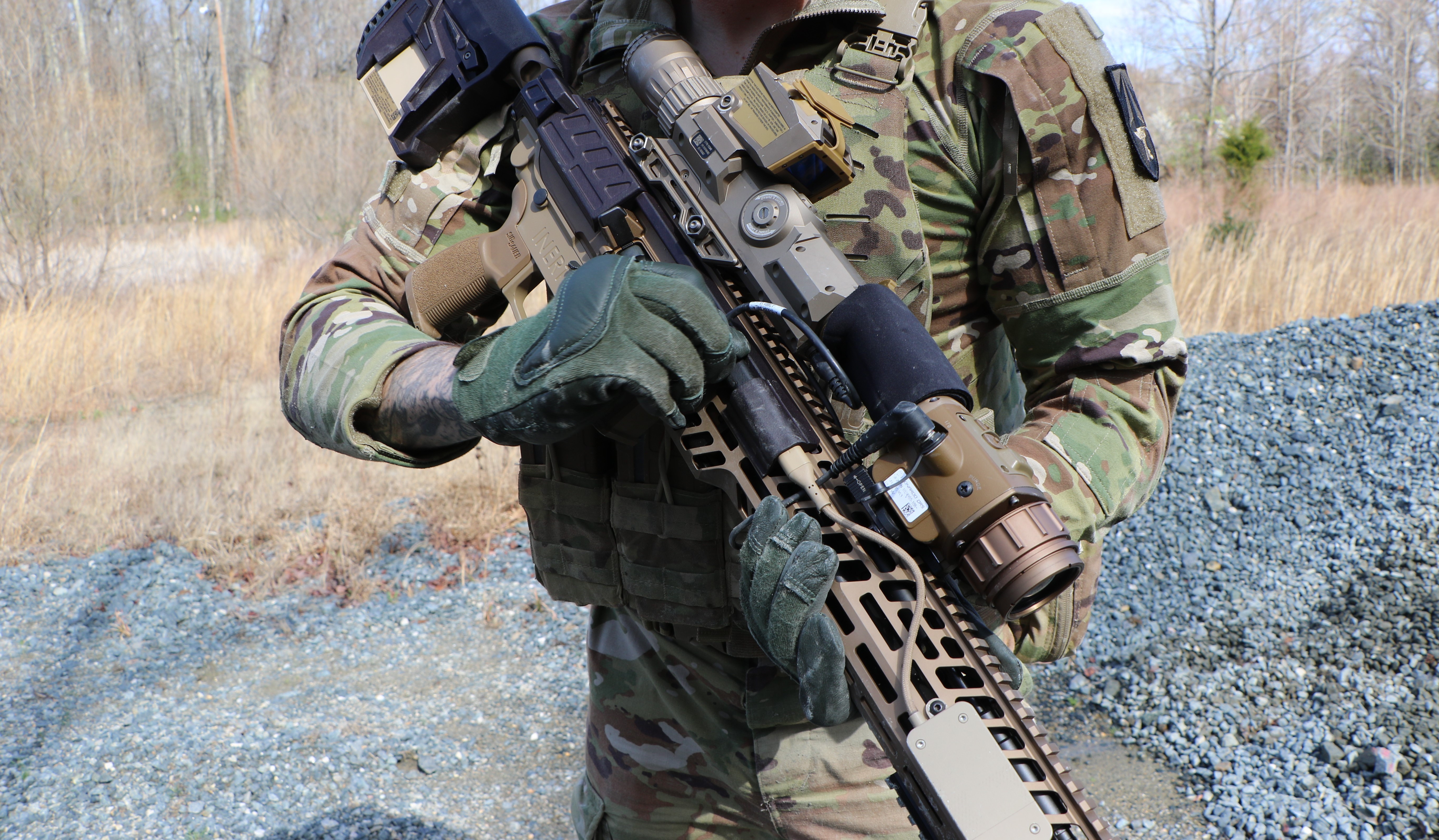
With new threats and new equipment to address them, the Army has a lot of tech to power. The recently adopted M7 rifle and M250 machine gun utilize the XM157 Next Generation Weapons System – Fire Control to increase accuracy and lethality.
More than just a scope, the XM157 incorporates a laser rangefinder, ballistic calculator, atmospheric sensor suite, and other electronic features to improve the probability of a first-round impact. All of this tech requires a lot of power, and the STUB could ensure that troops aren’t left powerless in battle.
Another emerging capability that is critical on the modern battlefield is counter-UAS. With the proliferation of surveillance and weaponized drones, the Army aims to equip small units with C-UAS systems. Sharpes noted that such systems will also need the type of power that STUB provides for their operation.
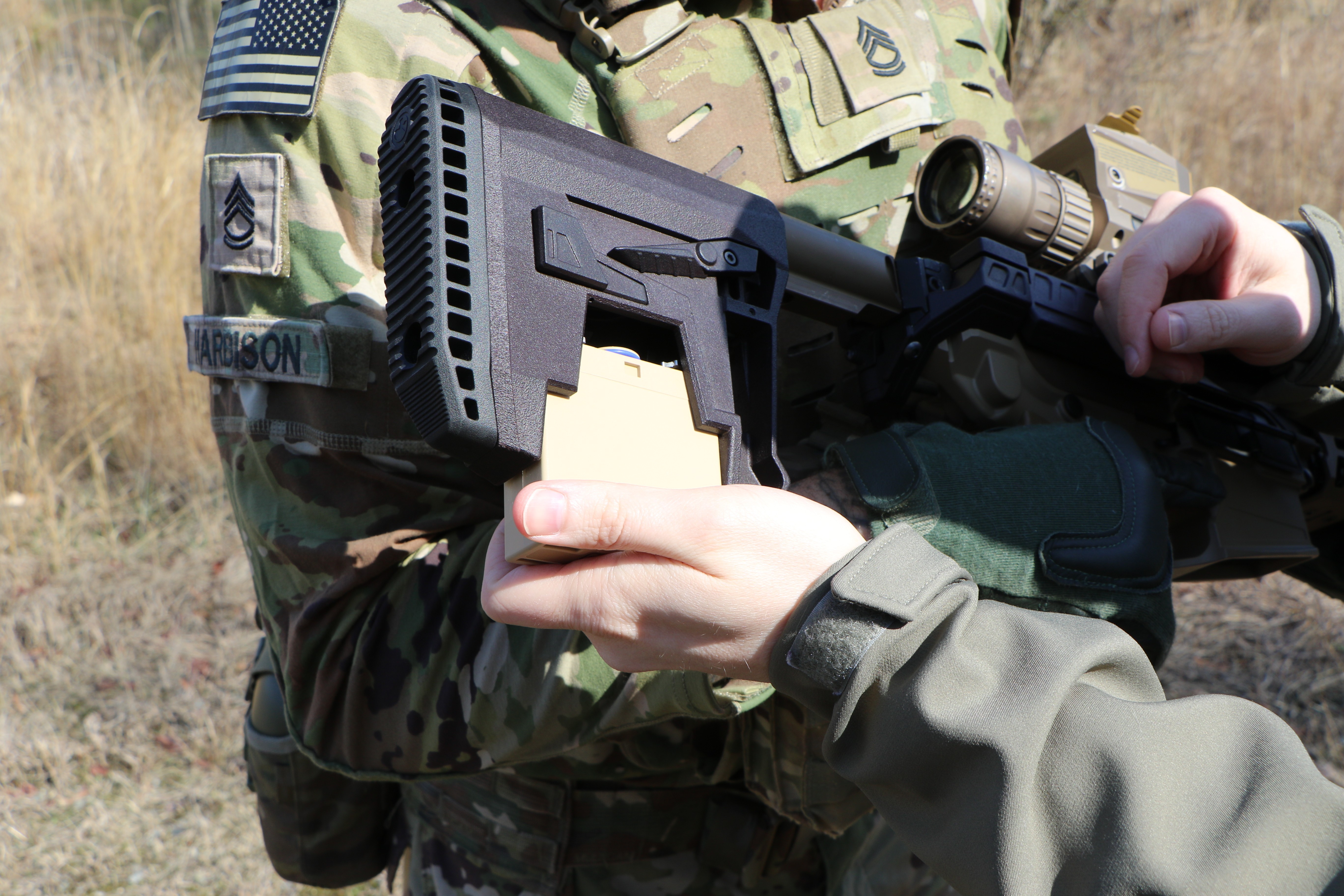
STUB comes in eight battery sizes, all of which use a standard mechanical and electrical interface. This enables the system’s interoperability, allowing soldiers to select the appropriate battery size based on the power requirements of their device and the mission’s specific parameters.
As STUB moves into the manufacturing phase, the Army is sharing the technology with acquisition partners to integrate the batteries into their systems. Moreover, C5ISR notes that the Army is delivering standardized batteries in GPS devices and radios. Research is currently focused on powering helmets and small arm-mounted devices.
When STUB hits the supply rooms, you can bet that XOs and NCOs will be thanking the logistics gods for simplifying batteries… as long as troops don’t go losing them. Hopefully, C5ISR adds an attachment point for a dummy cord.