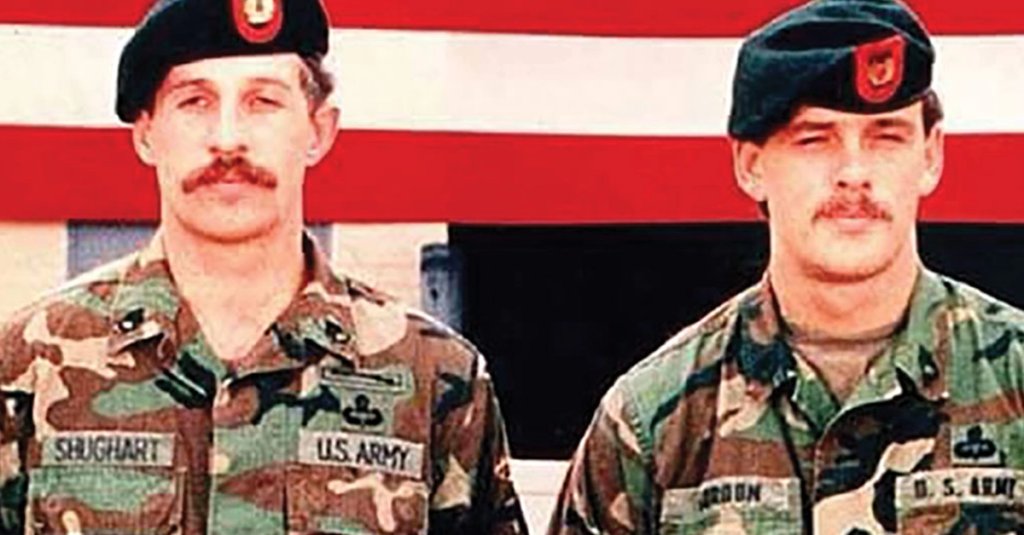
In August of 1993, the “Black Hawk Down Incident” was unfolding on the streets of Mogadishu, where a pair of U.S. Army MH-60 Black Hawks were shot down by Somali militia toting rocket-propelled grenades. Of the many incredible stories of bravery and brotherhood that emerged from the day, one in particular stood out so much that two of the soldiers involved would posthumously receive the Medal of Honor for their heroism and sacrifice.
Related: The third Delta Force sniper you didn’t see in ‘Black Hawk Down’
A task force consisting of members of America’s elite special operations units was deployed to Somalia after a deadly IED attack on American military personnel who were, at the time, in country conducting a humanitarian mission. Known as Task Force Ranger, the deployment package consisted of Rangers from the Army’s 75th Ranger Regiment, Night Stalkers from the 160th Special Operations Aviation Regiment, and operators from Delta Force, among many others.
Attached to the Delta contingent were a pair of sharpshooters, Master Sgt. Gary Gordon and Sgt. 1st Class Randy Shughart. Both Gordon and Shughart were old hands in the special operations community, the former having served with 10th Special Forces Group before being selected for Delta Force, and the latter having also served with the 75th Ranger Regiment.
On Oct. 3, 1993, an operation was launched with Task Force Ranger running the show. It would be known as Operation Gothic Serpent, though in later years it would be more commonly known as the “Black Hawk Down Incident,” after author Mark Bowden’s famous book and the 2001 Ridley Scott film. The events of the Gothic Serpent were documented in Army pilot Mike Durant’s book, “In the Company of Heroes.”
The mission’s primary intent was to capture a pair of high-ranking officials of the Habr Gedir clan, led by warlord Mohamed Farrah Aidid.

Delta operators and Rangers would be inserted from the air by Night Stalkers in MH-60 Black Hawk helicopters near the target building. The Rangers would secure a perimeter around the site as the Delta soldiers captured the high-value targets. A convoy of Humvees and trucks would roll in immediately after to pick up the assault team and the prisoners and return them to Mogadishu International Airport, where Task Force Ranger maintained its headquarters and garrison.
Things immediately went awry during the mission, however, and Somali irregulars and militia began amassing in considerable numbers, putting up an unexpectedly ferocious fight. Things went south entirely when Super Six One, one of the Black Hawks attached to the assault element, was shot down, killing both pilots and seriously injuring its crew chiefs and two Delta operators in the main cabin during the crash.
Though the momentum of battle was still on Task Force Ranger’s side, it was firmly lost when a second Black Hawk—Super Six Four—was shot down just 20 minutes after Super Six One. A nearby Black Hawk, callsign Super Six Two, circled near the crash site to provide covering fire. Gordon, Shughart, and Sgt. 1st Class Brad Hallings, another Delta sniper, were aboard Super Six Two, picking off targets one by one.

The three Delta Force snipers realized that it was highly likely that one, if not all, of the crew in Super Six Four had survived the crash, at least initially. They quickly resolved to request an insertion near the crash site to set up a defensive perimeter to ward off an angry lynch mob of Somali civilians and militia starting to stream towards the site. Should the militia get their hands on the survivors, a horrible fate worse than death would potentially await them.
When Gordon radioed in the request, it was denied. Twice. Commanders back at the airport figured that the three operators would be of more use in the air to Super Six Four than on the ground. Repeating his request a third time, Gordon and Shughart were given the go-ahead to insert at the crash site.
Knowing that a supporting ground element wasn’t anywhere nearby, both snipers were fully aware that this would essentially be a suicide mission. Their objective was to buy the crew of Super Six Four a little more time until help arrived, even if it meant giving up their lives in the process.
Super Six Two swooped in low near the crash site, as Gordon and Shughart jumped out, with Hallings staying behind to man a minigun in place of an injured crew chief. Super Six Two took to the skies again, covering the two operators on the ground as they fought their way to the fallen Black Hawk. Super Six Two would soon have to return to base after being hit by an RPG. Thankfully, they made it.
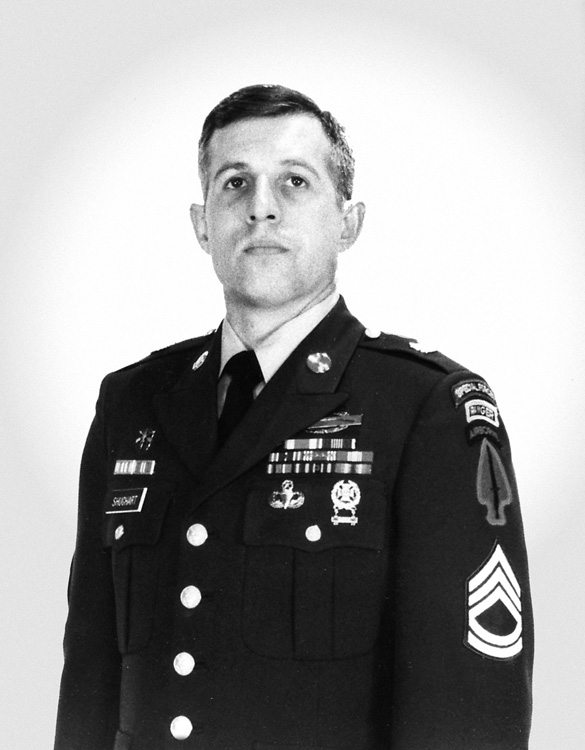
Arriving at the crash, the two snipers were proven right when they discovered pilot Chief Warrant Officer Mike Durant alive and conscious, and the other members of the crew—Ray Frank, Tommie Field, and Bill Cleveland—still clinging to life, though barely so. They worked quickly to extricate the Night Stalkers from the carcass of the Black Hawk, giving Durant a weapon to use defensively while they engaged the oncoming mob.
Dropping incoming Somali fighters with all the efficiency and effectiveness Delta operators are known for, Shughart and Gordon inflicted heavy casualties on the mob. Gordon was the first to fall, having succumbed to numerous wounds sustained in the fight. Shughart was killed soon after, having depleted most of his ammunition. Durant was taken alive as a prisoner of war, while the rest of Super Six Four’s crew tragically died, either due to their injuries from the crash or torture inflicted by the mob.
Gordon and Shughart’s sacrifice was not in vain; Durant would survive his ordeal in captivity and would later return to fly with the 160th SOAR before retiring. The two operators were posthumously awarded the Medal of Honor the following year, 1994, as a token of remembrance for their incredible valor and sacrifice in the midst of battle that fateful October day.