In 1462, the prince of a small area in Eastern Europe called Wallachia went to war with arguably the most powerful military force on the planet at the time, led by one of the greatest military minds of the time. The one thing that the prince knew for certain was that he would need an extraordinary plan to stay alive and keep his principality from being conquered.
That prince was Vlad III, also known as Vlad Drăculea (later “Dracula”). Some even called him “the Impaler” (though probably not to his face). He was pitting his army against Sultan Mehmed II of the Ottoman Empire, fresh from his resounding victory over the Byzantines, which relegated the formerly great Roman Empire to the history books, once and for all.
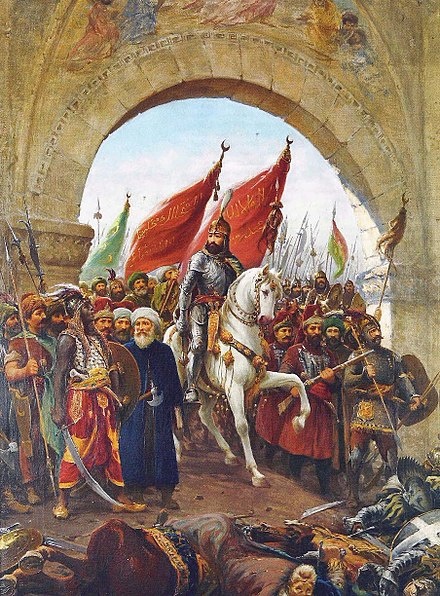
In just 53 days, Mehmed II earned the title Fatih—or “Conqueror”—by doing what no Ottoman Sultan before him could: bringing down the vaunted walls of Constantinople and bringing an end to the Byzantine Empire. With Constantinople in Muslim hands, all of Europe was open to the Ottoman Turks. Serbians, Bosnians, Anatolians, and more fell to the Turkish onslaught. But one of the closest principalities to Mehmed’s Ottoman Empire was Romania, with its small provincial fiefdoms.
One in particular, Wallachia, would be a literal and figurative pain in the ass.
After dominating an area, the Turks exerted their influence by first charging the un-Islamic a jizya, the tax for not being a follower of Mohammed. As for Vlad III and Wallachia, the sultan ordered the prince to pay him an annual tribute. After three years of Prince Vlad refusing to pay, Mehmed hatched a scheme to teach the prince a lesson. If he couldn’t be taught, then he would be conquered like everyone else.
But Vlad Tepes wasn’t about to sit around and wait for the Ottoman Sultan’s tens of thousands of men to come and lay waste to his lands.
After a long cat-and-mouse game, the sultan decided to send an envoy, the Greek Thomas Katabolinos, to convince Vlad to see the sultan in Constantinople. But the envoy was merely bait for an ambush. If Vlad obeyed, Mehmed II ordered the Bey of Nicopolis to capture Vlad as soon as the prince crossed the Danube.
Vlad got wind of the plot and ambushed the ambush in one of the first instances of European handgun use. He executed both the Bey and Thomas Katabolinos, took Turkish uniforms, disguised himself, and moved to the Turkish fortress at Giurgiu. There, using fluent Turkish, Vlad simply ordered the fortress to open the gates. When they did, the Wallachians slaughtered the defenders and destroyed the fortress.
Then he went on a rampage.
Vlad invaded the Ottoman Empire and neighboring Bulgaria, splitting his army up to cover more ground. They systematically rounded up Turkish sympathizers and captured troops in a 500-mile area and slaughtered them over the course of two weeks. Vlad killed more than 23,000 people, not counting those he burned in their own homes.
He then routed an Ottoman invasion force 18,000 strong under Mehmed’s Grand Vizier. When only 8,000 Turks walked away from the battle, Ottoman citizens began to fear Vlad more than they did the sultan. Mehmed got understandably pissed and decided to go take care of Vlad personally.
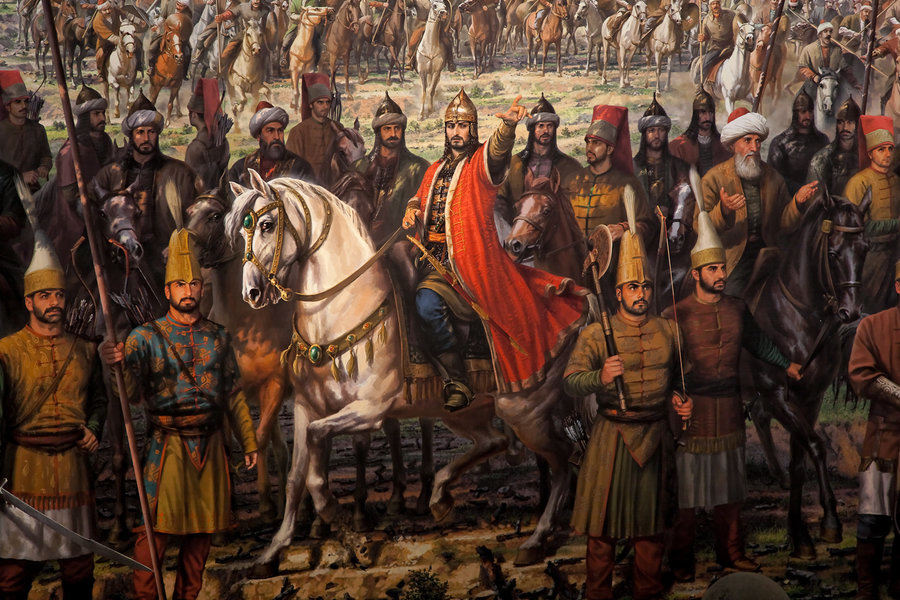
The sultan assembled an army so large that historians repeatedly lost count trying to keep track of it all. Mehmed requested an army of at least 150,000 men, but what he received was anywhere between 300,000 and 400,000, along with a naval force to accompany them up the Danube.
With this force arrayed against him, Vlad freaked out. He asked his nominal ally, the King of Hungary, for help, and when none came, he conscripted women and children to fight for him. In the end, Vlad amassed an army about one-tenth the size of the Ottoman invaders. What he really needed was some way to level the playing field and scare the sultan back to Constantinople. When the Ottoman Army closed in on him, he got his chance.
The Impaler began with a scorched-earth retreat. He diverted rivers, poisoned wells, and destroyed anything of use that Mehmed might capture. He also sent men infected with the plague and other diseases into the Ottoman ranks to infect as many as possible. But the enemy forces still made their way to Târgoviște, and this is where their first night in camp turned out to be an unforgettable one.
Vlad and his men infiltrated the camp and wreaked havoc on its sleeping men. As the Wallachians slaughtered the now-confused Turks, Vlad attempted to assassinate the sultan in his tent, missing and hitting the tents of his viziers instead. But that’s not what drove the sultan out of Wallachia.
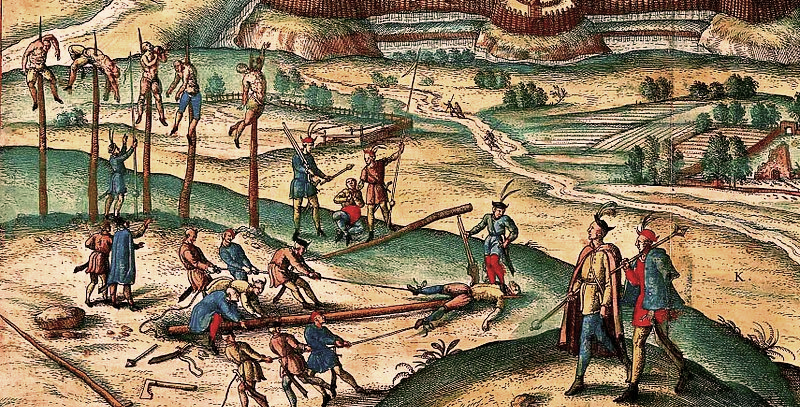
Sultan Mehmed’s elite Janissaries pursued the Wallachians and managed to inflict heavy casualties, numbering in the thousands. The rest of the army pressed on the Wallachian capital, prepared to lay siege to the city and destroy it. But instead of a fortified citadel, the Turks found the gates of the city wide open.
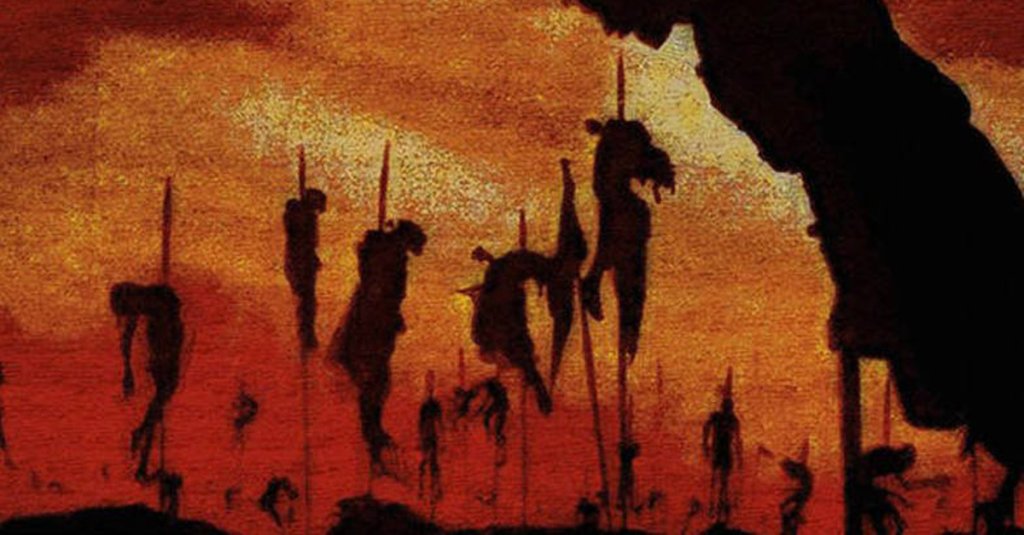
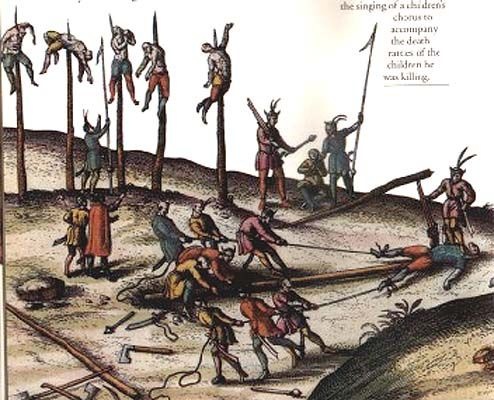
Inside, as they rode around, they were treated to a “forest of the impaled” along the roadside, a span of an estimated 60 miles. Vlad impaled some 20,000 enemy soldiers and sympathizers. Historical accounts aren’t clear on the sultan’s reaction, so no one is really certain if Mehmed was horrified or impressed, but they do agree that he decided to leave Wallachia the very next day.