
How an aircraft carrier saved Christmas in Tacoma

Aircraft carriers are essentially floating cities. One Christmas, the USS Lexington came to the rescue to save an another city: Tacoma.
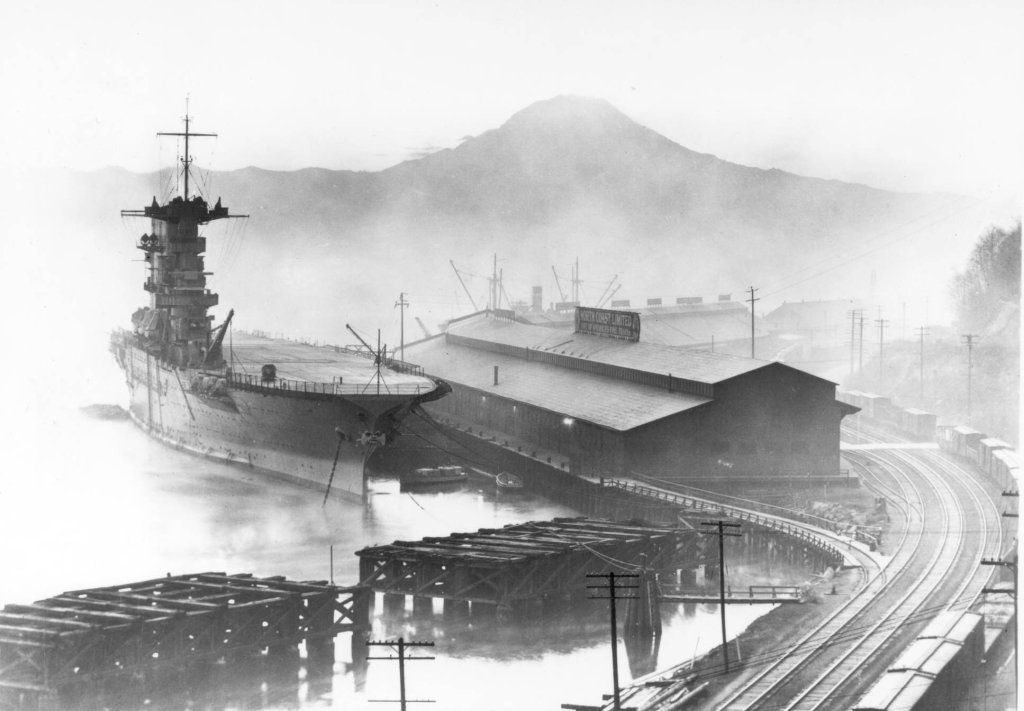
A large battleship docked at a pier beside a warehouse labeled "North Coast Limited." The scene is misty with a mountain visible in the background. Railroad tracks and freight cars run alongside the pier. The image is in black and white, suggesting it is historical.
(Tacoma Public Library)

Aircraft carriers are massive, floating airports that host thousands of personnel. Equipped with barber shops, post offices and convenience stores, flattops can be likened to miniature cities on the water. They even carry their own plumbing systems, water treatment facilities and electric generators. In fact, one of America’s first aircraft carriers used its generators to save Christmas.

A large battleship docked in a dry dock, viewed from the front. The ship's bow is prominent, with anchors and chains visible. Several sailors or workers stand at the base of the bow, and the ship's superstructure rises above. The dry dock is surrounded by industrial buildings and equipment, with a few people and vehicles visible on the dockside. The image is in black and white, suggesting a historical setting.
USS Lexington in dry dock c. 1928 (U.S. Navy)

USS Lexington (CV-2) was originally designed as a battlecruiser. However, the Washington Naval Treaty of 1922 effectively terminated all battleship and battlecruiser production. Instead, the ship was completed as an aircraft carrier and entered service in 1929. Upon delivery to the Navy, Lexington was assigned to the Pacific Fleet and sailed from Massachusetts to California.

A large aircraft carrier sailing on the ocean, viewed from an elevated angle. The flight deck is clear with no visible aircraft, and the ship has a prominent island superstructure with antennas and radar equipment. The ship is creating a wake as it moves through the water. Another smaller ship is visible in the distant background on the right side. The image is in black and white.
USS Lexington c. 1929 (Naval History and Heritage Command)

On April 7, 1928, Lexington arrived at San Pedro, California. From her home port there, she made a high-speed run to Honolulu in June and set a record sailing time of 72 hours and 34 minutes. The ship was America’s most advanced at the time and helped the Navy prepare for the new kind of maritime combat it would see in the next war.
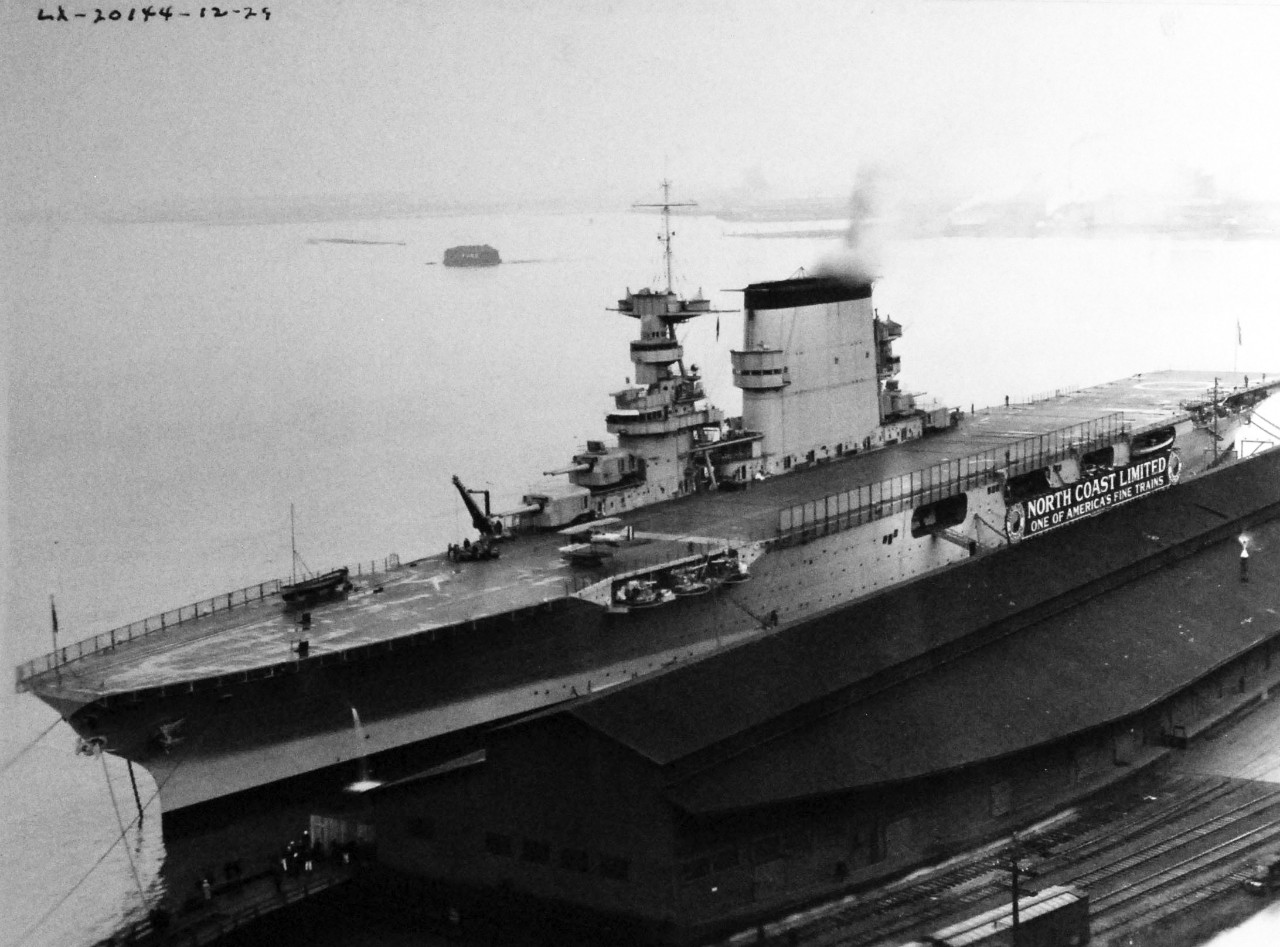
A large aircraft carrier docked at a pier, with a flat flight deck and a prominent island superstructure emitting smoke. The ship has a banner on its side that reads "NORTH COAST LIMITED ONE OF AMERICA'S FINE TRAINS." The photo is in black and white and appears to be historical. The water and distant shoreline are visible in the background.
Lexington running in port to power factories in the background (U.S. Navy)

In January 1929, Lexington went up against her sister ship, USS Saratoga (CV-3), in Fleet Problem IX. The naval exercise saw Lexington and the Navy’s Scouting Force fail to defend the Panama Canal against an aerial attack launched by Saratoga. From this, the Navy developed and refined the carrier tactics that it would employ during WWII.
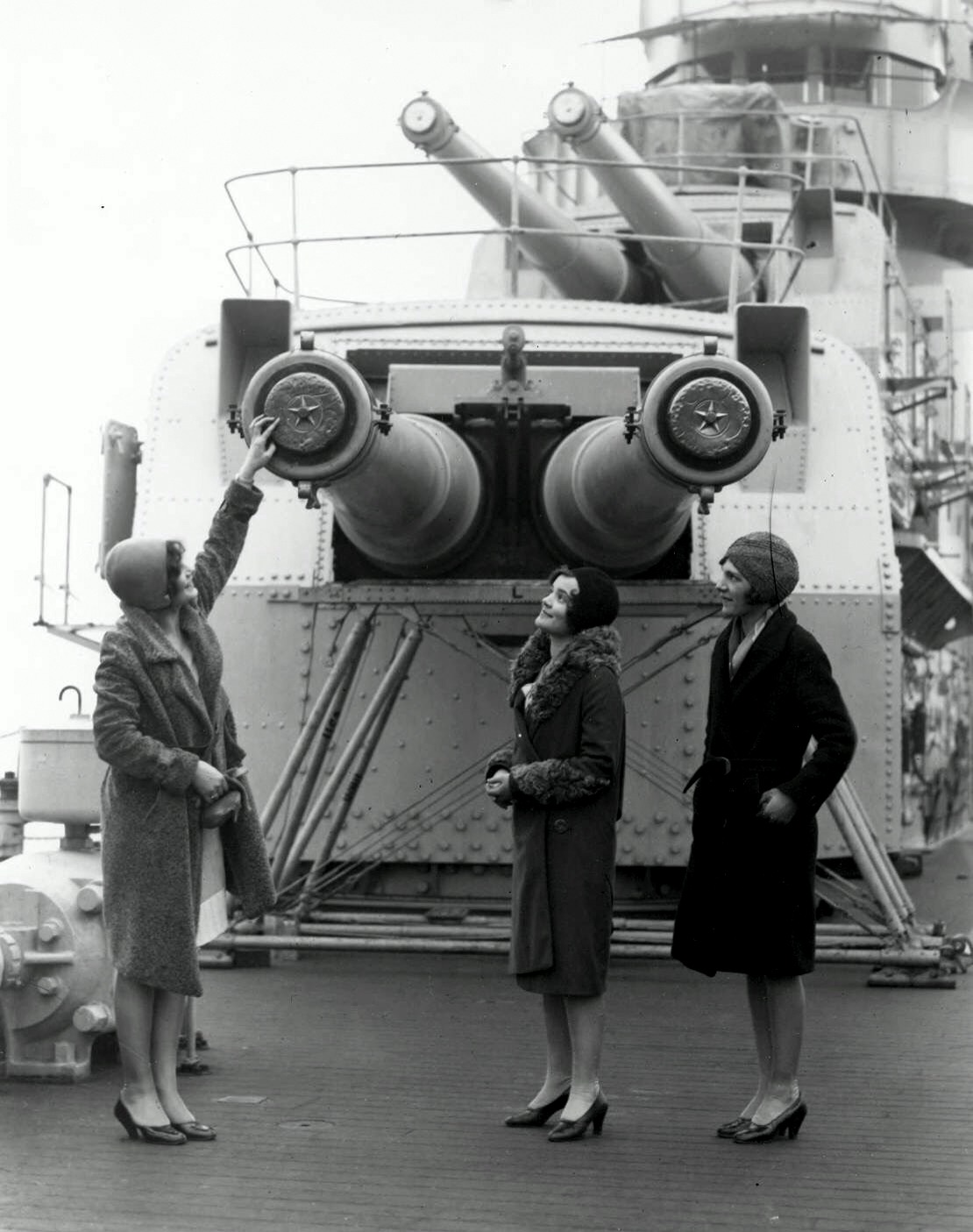
Three women in coats and hats stand on the deck of a battleship, posing in front of two large naval guns with star emblems on their covers. The women appear to be admiring or interacting with the guns, with one woman reaching up to touch one of the gun covers. The image is in black and white, suggesting it is from an earlier era.
Tacoma ladies tour Lexington on December 23, 1929 (Tacoma Public Library)

Also in 1929, Washington state experienced a severe drought that drastically lowered the water level in Lake Cushman. With low water levels, the hydroelectric generator at Cushman Dam No. 1 struggled to produce electricity. As the primary power source for the city of Tacoma, the dam reached a critical point in December 1929 when the water level dropped below the plant’s intake. Desperate, the city asked the federal government for help.
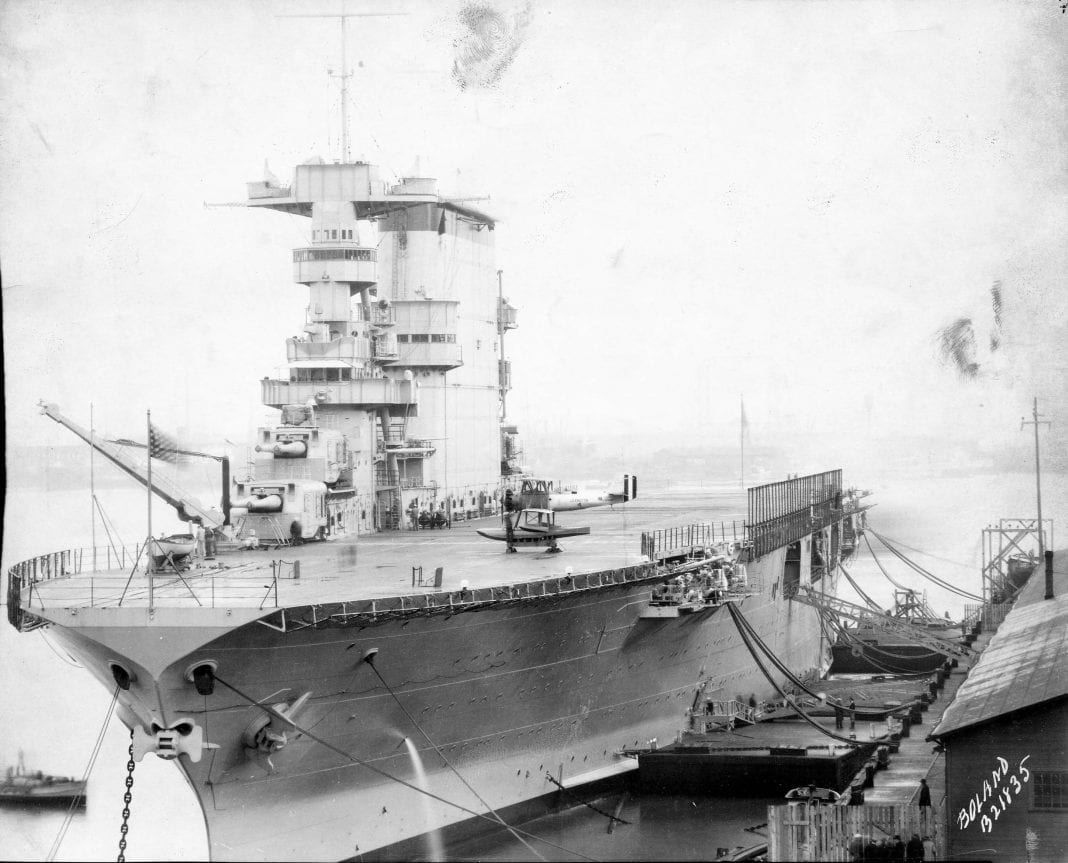
Large aircraft carrier docked at a pier, featuring a prominent island superstructure with multiple observation decks and gun turrets. A seaplane is positioned on the flight deck near the center. The ship is moored with several thick ropes, and the pier has various equipment and structures alongside it. The photo is black and white, with a handwritten note "BOLAND 321435" visible on the right side near the pier.
Lexington docked and plugged into the city’s power (Tacoma Public Library)

Luckily, Lexington was docked at nearby Puget Sound Naval Ship Yard in Bremerton, Washington. Directed by the federal government, the Navy sent the carrier to Tacoma and rigged heavy electric lines from the ship to the city’s power system. From December 17, 1929, to January 16, 1930, Lexington provided the city with 4,520,960 kilowatt hours that powered factories, homes, and Christmas lights.
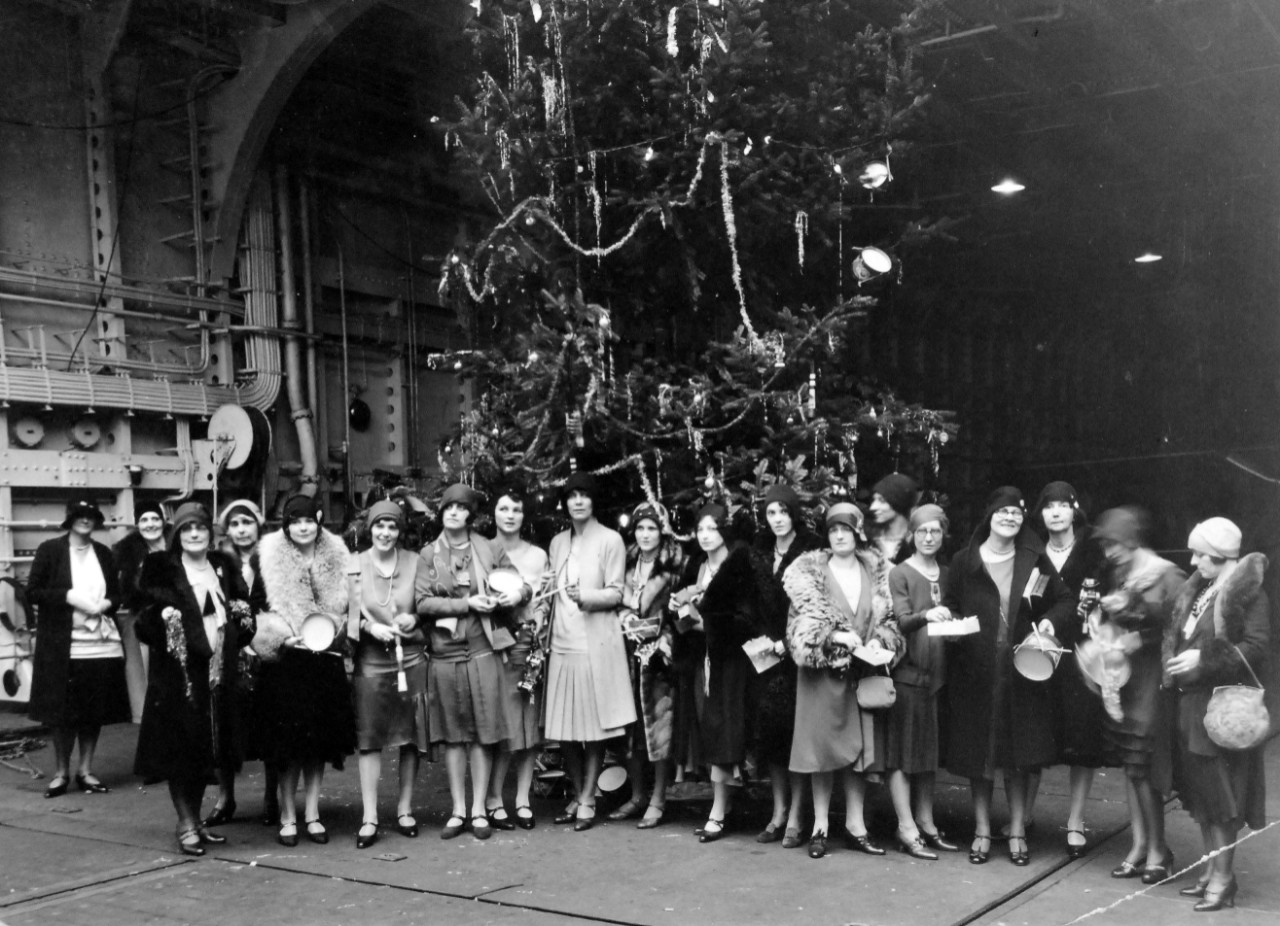
A group of women dressed in 1920s-style clothing, including cloche hats and fur coats, standing in front of a large decorated Christmas tree inside an industrial or ship interior setting. The women are holding various items such as drums and papers, and the scene has a festive atmosphere.
The Christmas tree aboard USS Lexington (U.S. Navy)

To bring Christmas cheer to the struggling city, a Christmas tree was set up on the ship’s hangar deck. Wives of Lexington‘s officers and charity organizations in Tacoma helped to decorate it. Children were even treated to a visit from Santa who came down an aircraft elevator instead of a chimney. In January, melting snow and much-needed rain raised the water level in the lake to provide sufficient power and allowing Lexington to depart after saving Christmas in Tacoma.

Miguel Ortiz Avatar

Miguel Ortiz

Senior Contributor, US Army Veteran

Miguel Ortiz graduated from San Diego State University and commissioned as an Army Officer in 2017. His passion for military culture and history led him to freelance writing. He specializes in interesting and obscure military history. When he’s not writing, Miguel enjoys traveling and watch collecting.


Learn more about WeAreTheMighty.com Editorial Standards