Vladimir Putin wants the collective West—but especially the U.S. and NATO—to be afraid of his nuclear arsenal. To scare us, he’s rattling new nuclear weapons once again. The problem: They’re super dumb, and they’re nothing compared to the ballistic missiles that have defined a potential nuclear war for decades.
And it’s probably worth noting that the new threats came right after Trump considered sending Tomahawk missiles to Ukraine, a move that would actually influence the war in which Russia is currently hemorrhaging massive amounts of blood.
Why Russia says you should care about its new nuclear weapons
Russia has two new nuclear weapons and a new submarine to deliver one of them. The idea behind the new tripod is that it could wipe out entire cities or even states.
The Burevestnik, which is being dubbed “Skyfall” by NATO, is a nuclear-powered cruise missile.
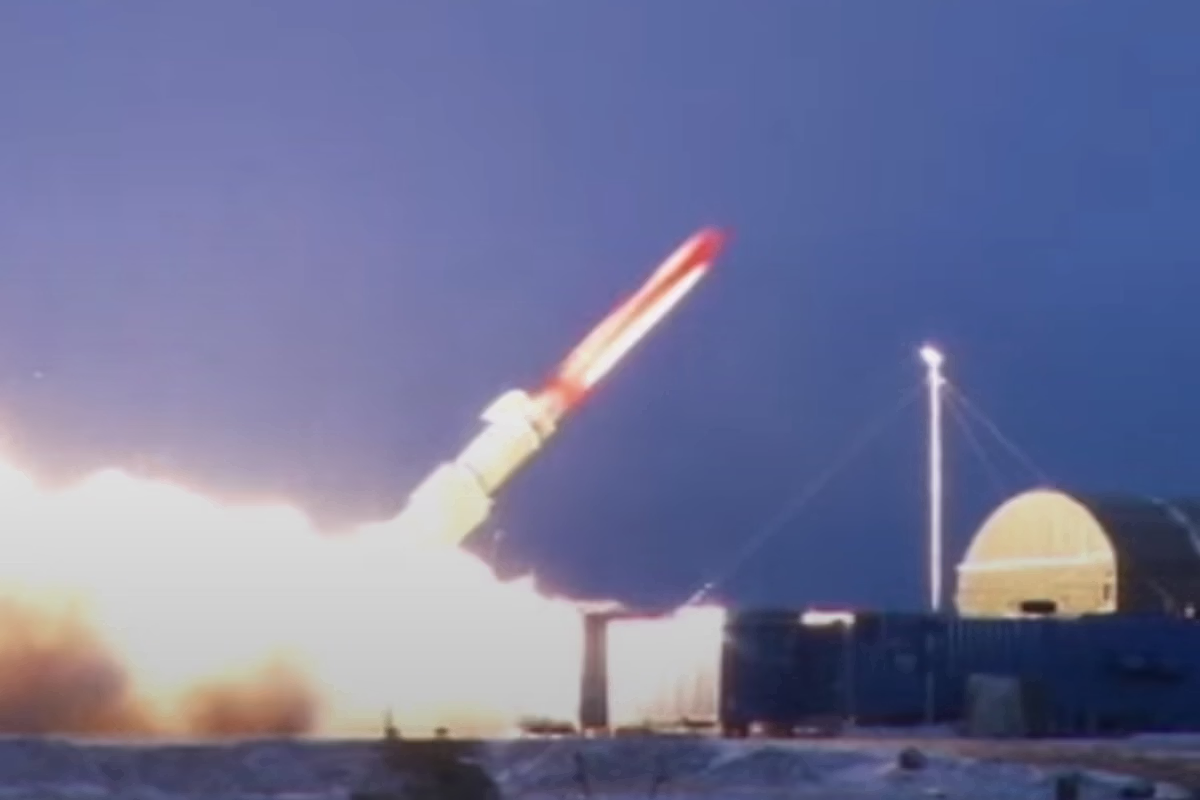
The Poseidon is a high-speed, nuclear-powered underwater drone that would use a nuclear warhead to trigger a tsunami.
Side note: it’s named after a Greek god of the sea, which sure does feel like a propaganda play for Western audiences more familiar with Poseidon. Especially since the Slavic equivalent is Veles, a god of the sea, earth, and underworld, and this is a drone that triggers a tsunami in the sea to destroy cities on the earth and send the inhabitants to the underworld. So, Veles would literally be the perfect namesake.
Related: Putin says Russia tested a nuclear-capable torpedo dubbed ‘Doomsday Machine’
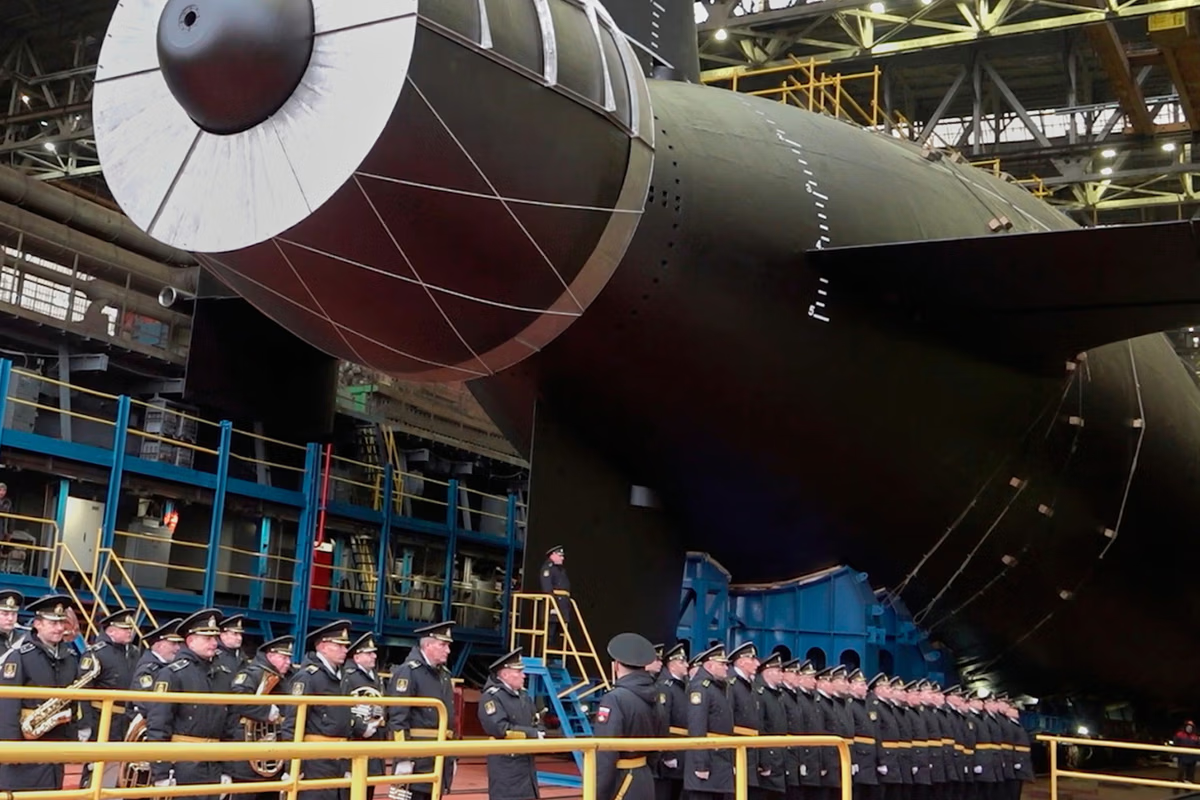
And finally, there’s a new nuclear-powered submarine, Khabarovsk, which can carry Poseidon drones. Put them all together, and Putin is threatening the West with nuclear missiles of unlimited range, nuclear underwater drones of unlimited range, and a nuclear submarine that can lurk for months before rising to destroy multiple coastal cities.
So, you know, kinda scary.
Russia is throwing a tantrum
This is not the first time that Russia has threatened to deploy super weapons. Actually, it’s not even the first time that Russia has threatened the West with these super weapons.
If the missile and drone sound super familiar, that’s because Putin originally announced the first two weapons in 2018, along with four others that have seemingly disappeared from the conversation.
In that 2018 address, Putin said, “No one has listened to us. You listen to us now.” Yeah, he announced these like an overdramatic teenager who wants everyone to finally listen to their poetry. He’s wielding these weapons like it will finally make his stepdad—and us in the West—respect him.
But you shouldn’t. Russia is likely brandishing these costume swords, once again, to try to keep Trump from increasing aid to Ukraine. The new rattles came right after Trump publicly discussed sending Tomahawk missiles to Ukraine and said the U.S. would provide targeting intelligence again.
“Listen to me, stepdad! I’m super serious this time!”
A history of weaponry built for parade
Russia is always threatening the world with super weapons like the two super carrier projects in the 2010s that both quietly fizzled out. Most of them never make it to prototype, let alone production.
So, you know, good on Russia for reportedly getting the Skyfall into testing and the Khabarovsk submarine into the water. But even when weapons reach full production, Russian research and its industry seem incapable of making almost anything worth fielding.
Just take a look at their recent conventional weapons.
While the S-400 is performing alright, it’s still an expensive air defense system that has been repeatedly defeated by Ukrainian weapons, often drones. S-400s were guarding Crimea when Ukraine hit multiple large ships, the naval headquarters, and even the S-400s there.

S-400 Radar (92N6E) Destroyed By Ram-X Drone in Crimea
The Su-57 “fifth-generation” fighter is still not seen in significant numbers in the Russo-Ukraine War, likely because Russia isn’t sure it can survive against Ukrainian air defenses, and a single shootdown would be disastrous for morale and future sales. Despite reports in August that Su-57 deployments were increasing, there is still no footage or changes in the frontline situation that indicate a real change. These are still like the vaunted Russian spetsnaz: forces hailed in propaganda that can’t prove themselves outside of Russia.
And that’s nothing compared to the T-14 Armata tank. Russia says the tank is in low-rate production but still keeps it out of combat. Rumors in 2022 and 2023 that the T-14 went to combat turned out to be false. Recently, Sergei Chemezov, the head of Rostec, admitted that the tank is too expensive for war. But maybe it’s just the right price for parades?
Neither the Skyfall nor Poseidon make sense, even assuming they work
Both weapons use nuclear reactors in addition to their nuclear warhead. That means that they have an ongoing nuclear reaction when launched. Since both weapons had to be made as small as possible to quickly transit the air and sea, this means that both of them have very little shielding for their reactors.
The Skyfall will be a slow-flying beacon of nuclear radiation. Emitting nuclear energy in flight means that it will be hot in both temperature and radiation terms. There are thousands of military and civilian satellites and sensors that will pick this thing up the moment it comes within their range. The missile has previously broken apart during testing, likely because it literally tore itself up at high speed. In its publicly touted “successful” test, it flew a bit over 500 miles per hour for 15 hours. That’s fast compared to you and me, but it’s nothing compared to the speed of most cruise missiles, and a pale fraction of ballistic missile speed. It would take about 8 hours for a missile fired from Russia’s northern bases to reach New York, and it would be detectable right after launch.
A Patriot missile team could get an alert, grab their trucks from the motor pool, and drive to an intercept point on the border before the missile reached Fort Drum or New York City. That’s only scary if you’re a Patriot crewmember who likes to sleep in. Or if you live in Canada, where a missile shot down would land.
The Poseidon, meanwhile, has to be a supercavitation torpedo to reach the claimed speeds, meaning it would jet bubbles out the front of the weapon to swim quickly with less water resistance. Super cavitation torpedoes exist, and they’re super easy to detect because of all the bubbles and motor noise. This one, specifically, would also leave a massive radiation trail that any military submarine could detect and follow. Russia claims it’s too fast to intercept, and they’re right that no submarine could chase it down. But a U.S. sub could easily detect it and report it, and stopping its progress toward a target is likely as easy as disrupting its path with an explosion, since cavitation torpedoes are moving so fast that encountering water outside of the bubble path is as disruptive to the weapon as slamming into mud or dirt.
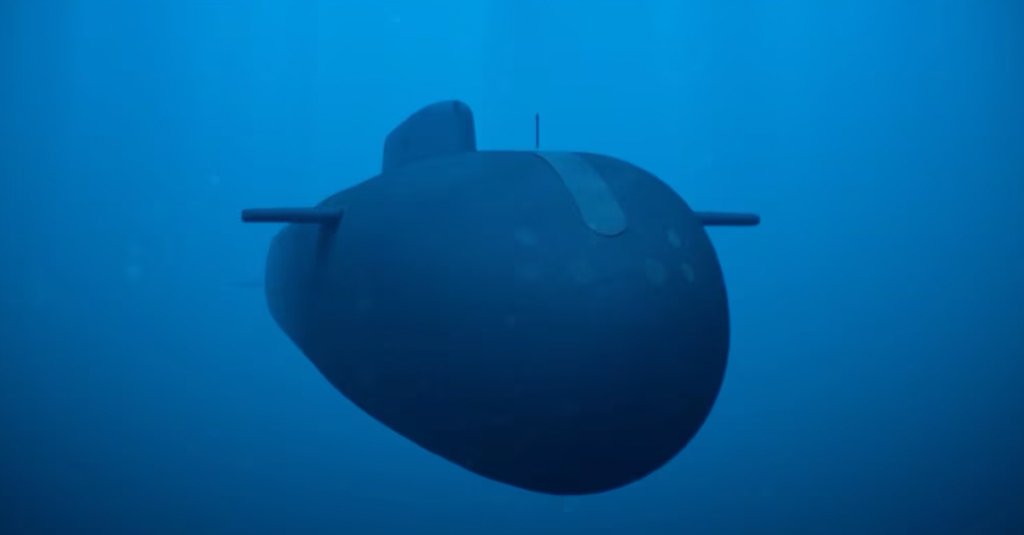
That’s not to say these weapons pose no threat. A Skymissile shot down would still act like a dirty bomb, and a Poseidon that detonated, even way off target, could still trigger a large tsunami on American shores.
But compare either of those effects to the nuclear threat we already face: Russia has the world’s largest nuclear arsenal at over 5,500 publicly acknowledged warheads. It has stealthy submarines that can fire ballistic missiles, and it has remote missile siloes across its sparsely populated north.
Russia can be an existential threat to the U.S., which makes it really seem like these super weapons are really a super tantrum, designed to win an information battle rather than for actual deployment to combat.
Sleep tight, America. The only Russian nuclear threat you have to worry about is the existential threat of ballistic missiles and nuclear war, the same threat you’ve likely lived under your whole life, or at least most of it.