
This article originally appeared on RFE/RL.
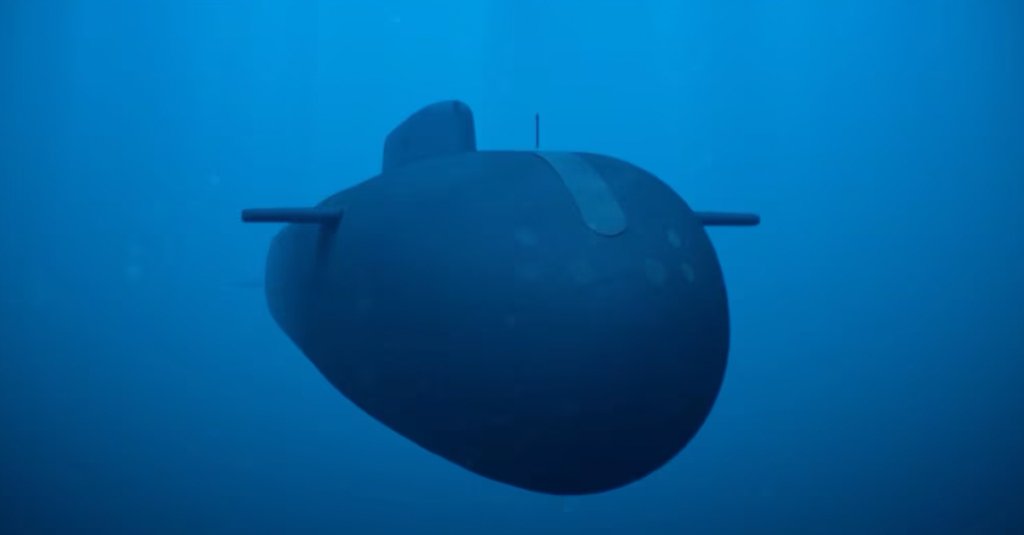
Russia has tested a new nuclear-capable, nuclear-powered long-range remote torpedo, President Vladimir Putin said, a weapon that some experts have dubbed a “doomsday machine.”
The October 29 announcement came days after Putin and Russia’s top military officer announced what they said was a successful test of another new weapons system: a long-range, nuclear-powered cruise missile. Speaking in an informal setting at a Moscow hospital, drinking tea with soldiers wounded in the Ukraine war, Putin said the test of the torpedo—called the Status-6 or the Poseidon—occurred a day earlier.
“For the first time, we succeeded in not only launching it with an engine from a carrier submarine, but also to start the nuclear power unit on it,” he said. “There is nothing like this.”
“This is a huge success,” he added.
-
The P320 is so safe and reliable that SIG released the P385
Sig Sauer has had some problems over the years. Is the P385 the answer?
-
Army takes delivery of first XM30 combat vehicle to replace M2 Bradley fighting vehicle
A Lynx prototype reportedly already saw combat with a Ukrainian crew.
-
Jordan Salinas used a silenced FN 5.7 inspired by ‘Splinter Cell’ to help stop the In-N-Out shooter
Anyone who says they haven’t wanted a firearm because of a video game is lying.


There was no independent confirmation that such a test took place. However, Russia had hinted at the existence of such a weapon, “an intercontinental nuclear-powered nuclear-armed autonomous torpedo” as far back as 2015. In a bellicose speech in 2018, Putin bragged about several new weapons systems Russia was developing, including the Poseidon torpedo. U.S. analysts later confirmed Russia had plans to build such a device.
Western analysts have said that, if such a torpedo were deployed and actually detonated off the US East Coast, for example, it would shower radioactivity on major cities and render huge swaths of territory uninhabitable. Some experts have called it a “doomsday machine” because of the indiscriminate destruction it would wreak.
The missile, which Putin and the chief of the general staff, General Valery Gerasimov, said had been tested on October 21, is called the Burevestnik, or Skyfall, under its NATO designation. Powered by a small nuclear reactor, the nuclear-capable missile is theoretically able to fly for hours, if not days, before striking a target.

Russia Tests New Nuclear Torpedo Weapon, Putin Claims It As 'Great Success' | BREAKING
Since mid-summer, observers had been closely watching the Russian Arctic archipelago of Novaya Zemlya amid an uptick of construction and an influx of ships and specially designed aircraft—hints that a test of the Burevestnik might be imminent or underway. Gerasimov told Putin that the missile had traveled 14,000 kilometers and was aloft for 15 hours.
In a statement to RFE/RL, Norway’s Intelligence Service confirmed the missile’s test at Novaya Zemlya, and said it had flown “significantly longer than before.”
“The missile remains in development,” Vice Admiral Nils Andreas Stensoenes said. “Russia has been testing Burevestnik since 2016. It will take time before development is complete and the missile is ready for deployment to the armed forces.”
Copyright (c) 2025. RFE/RL, Inc. Reprinted with the permission of Radio Free Europe/Radio Liberty, 1201 Connecticut Ave NW, Ste 400, Washington, DC 20036.
Don’t Miss the Best of We Are The Mighty
• Why Ukraine and Russia still need infantry
• Wounded Ukrainian soldiers with bionic arms want to return to the front lines
• An experimental technology is grinding Ukraine’s war rubble into recycled concrete



Loading comments…
Comments couldn’t be loaded. Please refresh the page.