
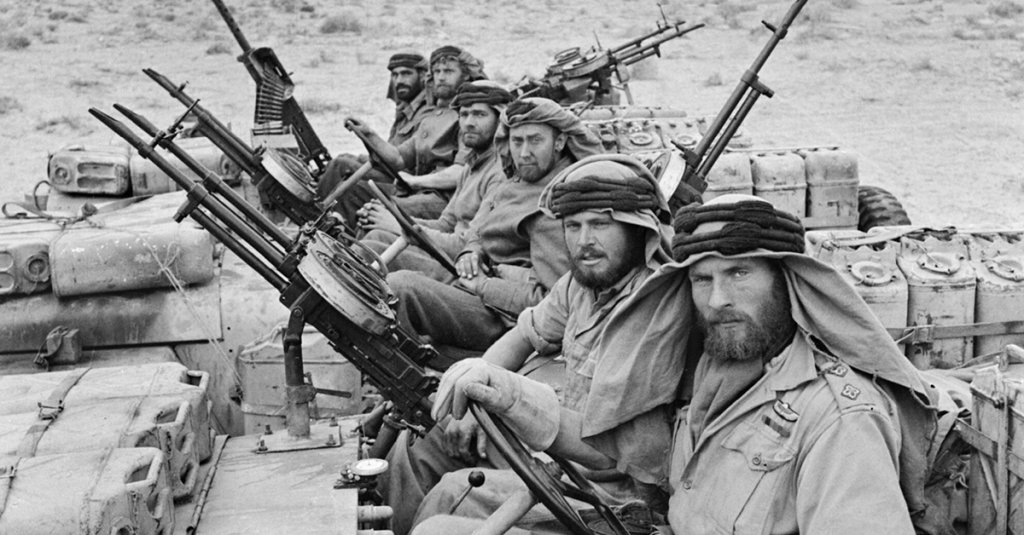
In the world of special operations, the United Kingdom’s Special Air Service (SAS) is as good as they come. They are the British government’s elite counterterrorism unit, specializing in rescuing hostages and covert reconnaissance. The SAS generally takes the fight to unsuspecting bad guys all over the world.
Formed during World War II, they were the blueprint for the U.S. Army Delta Force, Israel’s Sayeret Matkal, and almost any other special operations force the world over.
Related: The true, bloody story of Delta Force’s ironman
After World War II, the elite SAS served in nearly every UK military action around the world. They hunted down communist rebels in Malaya and conducted surveillance and ambushes during the Troubles in Northern Ireland. The SAS was involved in conflicts from the Falklands to the Global War on Terrorism.
With each mission, standout soldiers overcome incredible odds and become legends even among special operators. Here are five of the most legendary soldiers of the United Kingdom’s Special Air Service:
1. Lt. Col. David Stirling
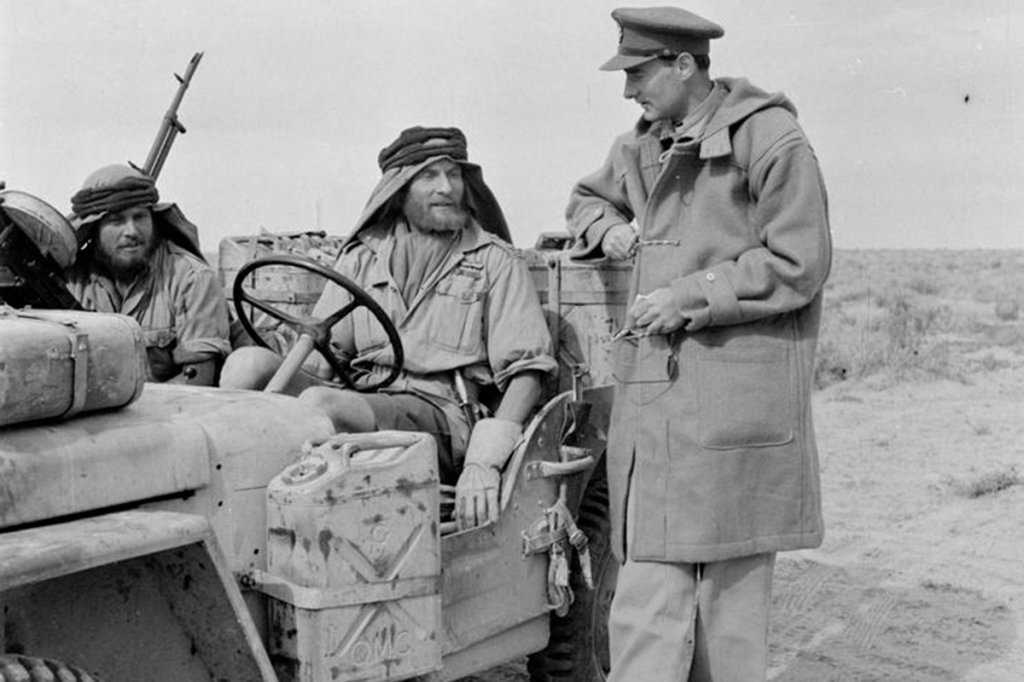
As an officer in the No. 8 Guards Commando, Stirling first saw action at the capture of Rhodes, and the Battles of Crete and Litani River. While fighting these pitched battles, he realized a small team of special soldiers could be much more effective, doing extreme damage with minimal casualties. How Stirling pitched the idea of creating the Special Air Service is worthy of its own article, but by 1941, the SAS was operating in North Africa.
Using stripped-down Jeeps and a new kind of demolition bomb, Stirling and his new SAS wreaked havoc on Axis airfields across North Africa. German Field Marshal Erwin Rommel dubbed Stirling the “Phantom Major,” and captured the British officer. After a series of escape attempts with mixed success, Stirling was finally caught for good. He was sent to Colditz Castle in Germany, where he spent the rest of World War II.
2. Sgt. Talaiasi Labalaba

Prince Harry unveils a statue commemorating British-Fijian Sergeant Talaiasi Labalaba
In 1972, the SAS arrived in Oman to train the Sultan’s soldiers to fight a communist insurgency from neighboring Yemen. Nine SAS troopers with small arms and a Browning machine gun defended a small fortification near the port city of Mirbat. The SAS soon realized that 300 communist fighters were making their way toward the house. They weren’t close enough, however, for the British troopers’ small arms to be effective.
Labalaba ran out of the house to a 25-pounder artillery gun some 200 meters away and began to fire it at the oncoming human wave. While operating the gun was a six-man job, Labalaba managed to fire off a round every minute by himself as bullets whizzed by.
He was wounded after an hour of firing the gun, and another trooper, Sekonaia Takavesi, came to his aid. Labalaba and Takavesi fought on for 2½ hours until the gun was out of ammo.
Labalaba and two others died defending Mirbat, but they held their ground because of Labalaba’s skill with artillery.
3. Lt. Col. Robert Blair ‘Paddy’ Mayne
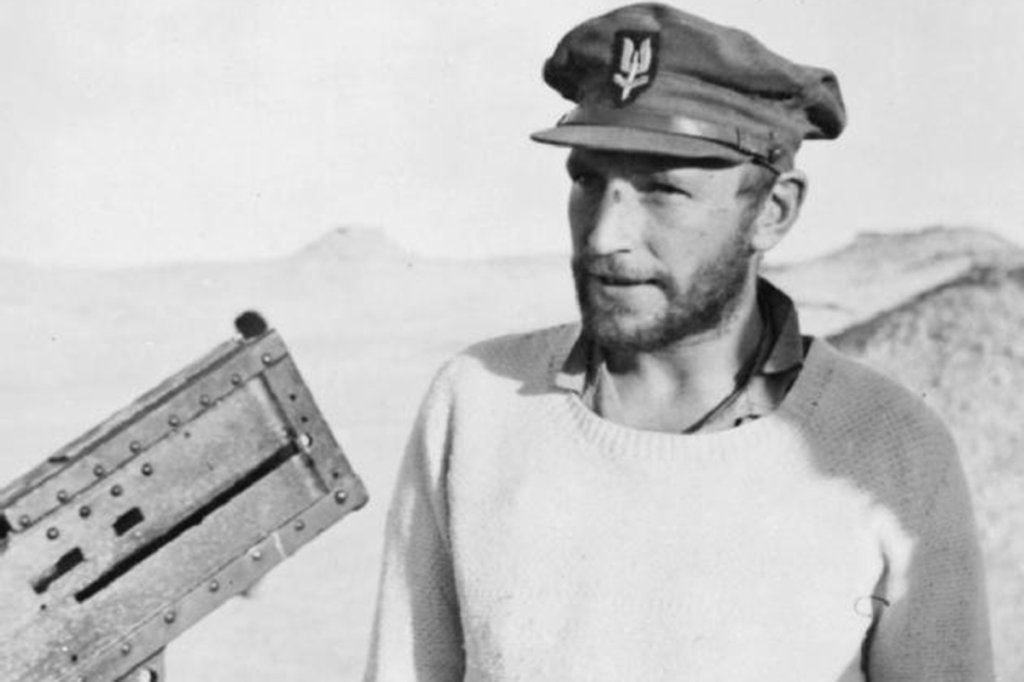
Mayne was an early member of the Special Air Service. He was one of the UK’s most decorated soldiers of World War II and picked up where Stirling left off. Initially the head of an anti-aircraft battery, the Irishman was transferred to the Royal Ulster Rifles and then No. 11 Scottish Commando. There, he invaded Vichy-held Lebanon and Syria. His skills in combat saw him transferred to what was then called the “parachute unit,” but soon became the Special Air Service.
His first combat with the SAS came during night raids in North Africa, destroying aircraft, fuel supplies, and ammo dumps in 1941. He soon commanded the SAS, fighting behind enemy lines in France, the Netherlands, Belgium, Norway, and even into Germany. His exploits earned him four Distinguished Service Orders, the French Legion d’Honneur on Croix de Guerre.
4. Lt. Jock Lewes

John "Jock" Lewes – The INSTRUMENTAL Founder of The SAS
As a SAS trooper, Lewes discovered that explosives used by Stirling and his men in North Africa weren’t as effective as they should be. The bomb he developed used diesel oil and plastic explosives to ensure Axis planes and vehicles could never be used again. The Lewes bomb, as it came to be called, was used throughout the war to devastating effect.
Lewes was one of the first men to volunteer for Stirling’s new SAS unit. He was killed by enemy aircraft while raiding an Axis airfield in Libya in 1941.
5. Staff Sgt. John McAleese

Iranian Embassy siege remembered
Scotsman John McAleese is one of the UK’s most decorated soldiers of all time. He saw fame while serving as the world watched the UK’s response to terrorists taking over the Iranian Embassy in London in 1980. For six days, the British government lay siege to the embassy. On the sixth day, they killed a hostage and the SAS were called in.
The world watched live as McAleese and his blue team followed the red team into the embassy by blowing their way into a first-floor window. In 17 minutes, the SAS killed all but one of the terrorists, losing only one hostage. McAleese also served in the Falklands War and earned medals fighting the Irish Republican Army during the Troubles.