
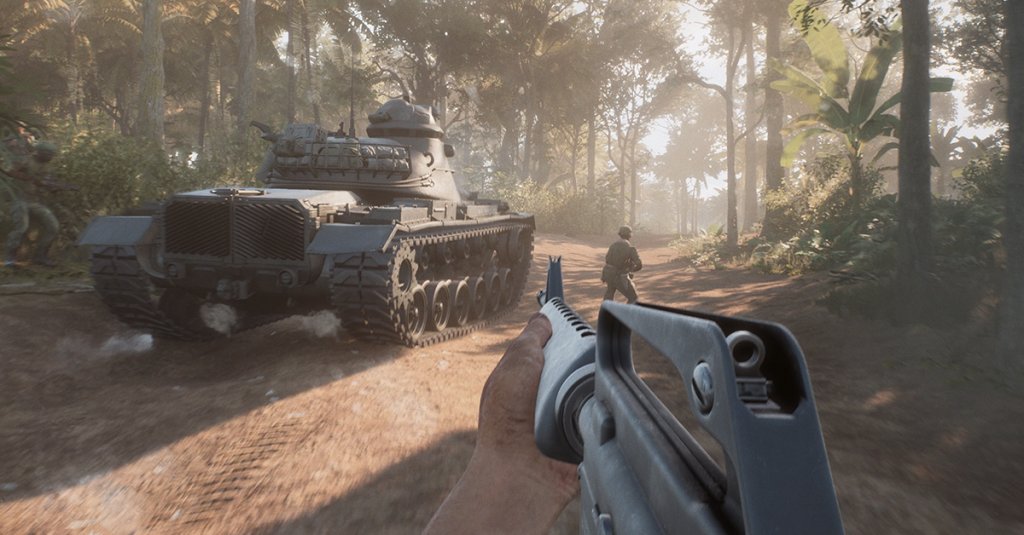
I still remember the early 2000s, playing video games in my basement bedroom and counting down to high school graduation. When it came to shooters and strategy games, one metric was the most important of all to me and my friends: Realism. We wanted realistic military games.
Read Next: The inside joke names soldiers have for different unit patches
I remember the rumors that World War II veterans had seen their grandkids play “Medal of Honor” games and had flashbacks at the D-Day level. I asked for “Medal of Honor: Frontlines” and breathlessly recounted those tales to my sister as the Normandy coast emerged from the fog on Christmas morning 2002. In 2007, I joined the Army for real, cycling through basic training, job school, and then airborne school, partially inspired by the paratroopers from games like “Brothers in Arms: Road to Hill 30.”
And the biggest differences between those games and my actual deployment to Afghanistan? More than the crap weather, the uncomfortable gear, or even the pain of trying to hold a rifle steady while exhausted and out of breath? The vast spaces and constant information vacuum in real life.
Video games have to calculate every detail, both in mathematical simulations of what is happening and a concurrent mathematical simulation of what everything should look like. And hardware, especially in 2006 when I graduated high school, but still today when I crank up “Hell Let Loose,” just isn’t capable of modeling the entirety of Utah Beach, all the rounds and shrapnel in the area, and the thousands of people on each side of that battle, minute-to-minute. Making a realistic military video game is hard.
But there are games that do what they can to deliver on realism. They get rid of unnecessary heads-up display elements, cut off players from communications that real soldiers wouldn’t have, use ranges for weapons that are at least proportional to the real deal, and more. Here are seven games that work really hard to give a realistic experience, even if you don’t have to change your socks and choose whether to use your helmet or your body armor as a pillow.
7. Company of Heroes 3
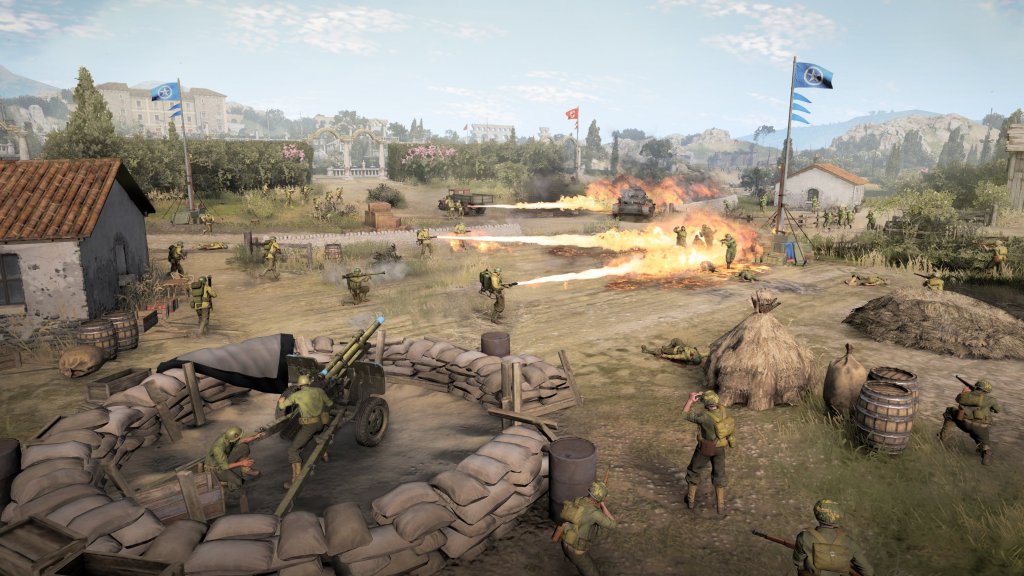
The first and only real-time strategy game on our list, Company of Heroes 3 features combined-arms combat across North Africa and Italy during World War II. The game has some cool realism features, like soldiers using flamethrowers to flush out enemies, who can set wooden buildings on fire until the building burns completely down. Infantry can ride tanks into combat, at risk of their own lives. The game has a number of vehicles for each faction, and different unit types have realistic-ish visibility and strengths and weaknesses.
But “Company of Heroes 3,” like its predecessors and most real-time strategy games, has a number of weaknesses in the realism department. First, in a campaign that was even more about logistics than most, players make few logistical decisions. Rommel lost in North Africa, in part, because he could never get sufficient supplies through his limited ports, especially with the absolute mess that was Italian ammunition and spare parts for his allied partners. But in the game, units just have ammo appropriate to their weapons. No worries about British submarines near Tobruk or the variety of Italian weapons at Bardia.
Other gripes include pinpoint airstrikes within seconds of requesting them, a narrator who spoon-feeds you each objective, and a birds-eye view of the battlefield that often gives more detail and certainty than any commander can reasonably achieve. Worst, differences in unit types are fairly standardized across factions, so German, American, and Italian tanks don’t feel all that different, or planes or infantry or anything else.
Still, the game allows for, and rewards, combined-arms maneuver, has a good number of different factions and unit types, and features a variety of environments from the Mediterranean theater. Just don’t compare the ranges of rifles, flamethrowers, and hand-thrown grenades in the game (they’re essentially the same).
6. Hell Let Loose
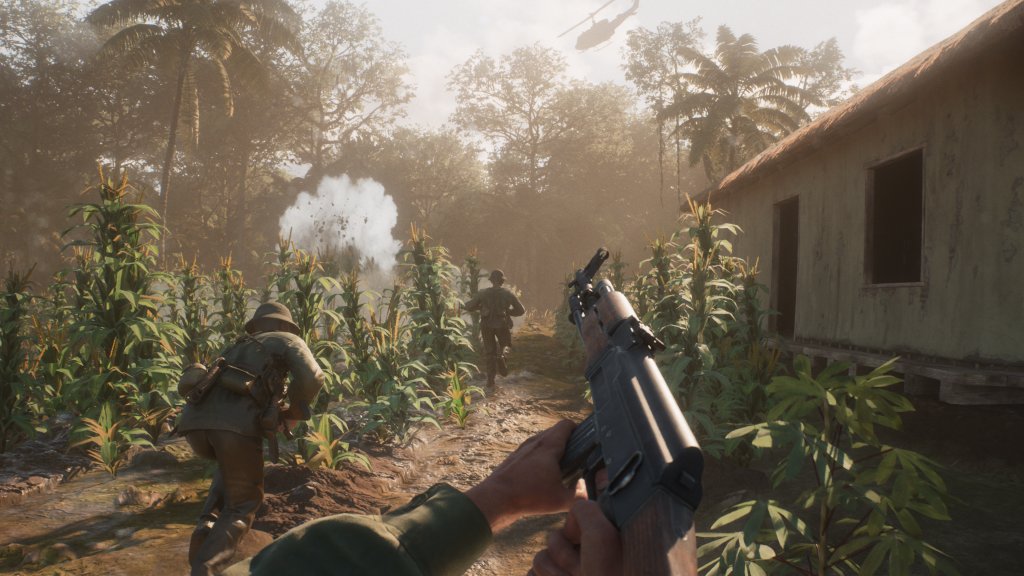
As alluded to in the intro, “Hell Let Loose” is a World War II game with battlefields from El Alamein to Utah Beach to Hürtgen Forest. The game allows for fights of up to 50 players vs. 50 players. That’s obviously still a far cry from the real battles, but that’s large enough to allow two real-world platoons to fight each other in the game, with a squad attached to each of them, to boot.
My favorite bits of realism are the spread-out maps and minimal HUD elements, so it requires that players advance carefully to find enemies while they have advantage and to use their iron sights, to count ammo, and to pick good firing positions to hit enemies accurately.
But it does have some elements, especially in the minimal HUD, that still give an unrealistic advantage. For instance, players can see where nearly all friendlies and tagged enemies are, in a game set many decades before Blue Force Trackers that still don’t give pinpoint accuracy. And, the most common and unrealistic HUD element in most shooters, to me: A little message pops up whenever a player kills another player, confirming kills from sometimes 100 meters or more. But it features different unit types, good sound design that lets you hear enemies before they reach you, and a real fog of war.
A new version of the game, “Hell Let Loose Vietnam,” is in the works.
The game still has over 5,000 players most nights, so it’s easy to find a game to join.
5. Squad 44
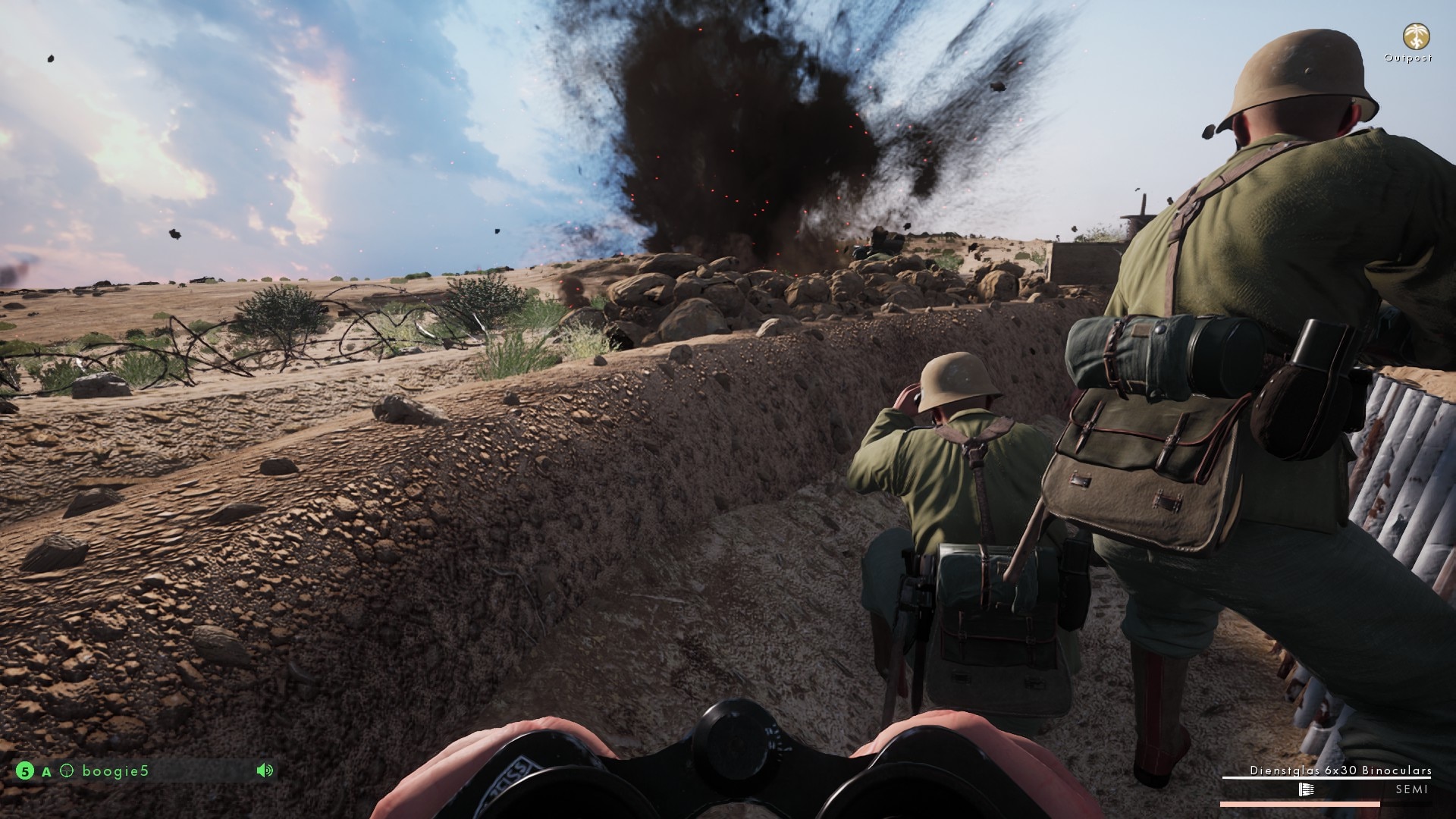
A pet peeve about “realistic” military games: When you can bandage your way out of nearly any injury (which you can do in “Hell Let Loose,” by the way). So my eyebrows shot up when I first learned about “Squad 44” in a video where a player took a bad hit and the game told him, “Hey, no medic within 50 meters. You wanna go ahead and give up?”
“Squad 44” is a well-done redevelopment of “Squad” (more on that game next) that takes all the gameplay to 1944. And it doesn’t label enemy players. Or friendly players, for that matter. Or grenades on the ground. Or incoming mortars and vehicles (the game does have mortars and vehicles).
It is more realistic than “Hell Let Loose,” but “Squad 44” does have some realism drawbacks. For instance, you need a medic for serious injuries, but light injuries you can walk off, like the stray bullet or two. Some weapons, like those mortars, have firing rates way too high for realism. And ammo is essentially unlimited.
The game has dropped in popularity after some gameplay changes that were eventually rolled back. If you want to try it, aim for Sunday nights when player counts peak in order to find more games.
4. Squad
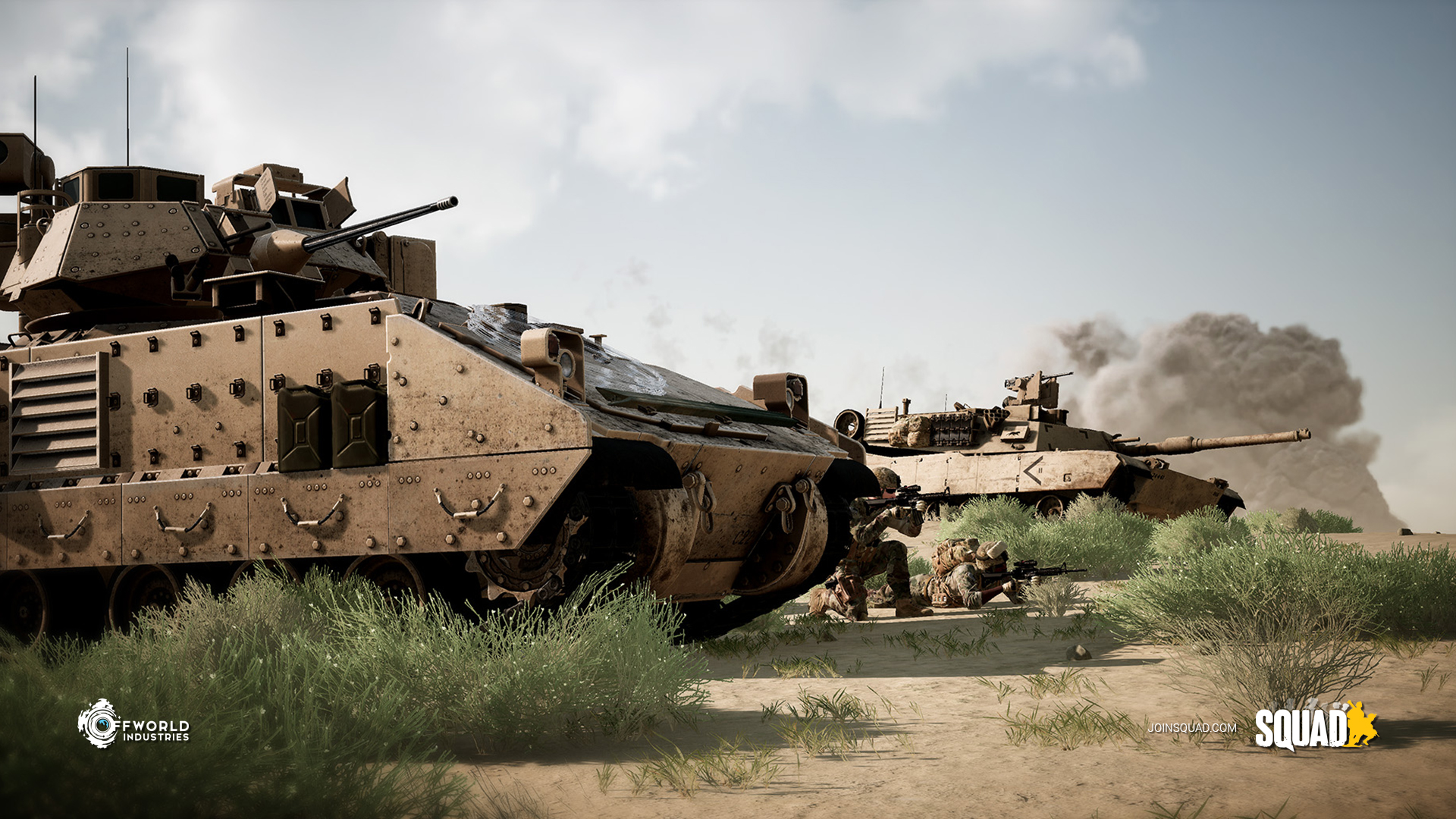
“Squad” is well-established in the military simulator community, hence why it got a World War II spinoff. It has many of the great features we mentioned in “Squad 44,” like a minimal HUD. It also has realistic, modern weapons and camouflage, which is important since it also lacks most friend and foe identifiers. Get ready to spend 10 seconds tensely trying to figure out if that’s an enemy rifleman about to blow you away or a friendly wondering why you’re staring down your scope at them.
The best, realistic part of “Squad:” communications networks. Players can engage on the commander channel for squad leaders and above, the squad channel for everyone within the squad, and a local squad that works by distance: The players closest to you can hear your regardless of whether they’re friendly or enemy. As someone who was blown away by how much time a platoon leader, platoon sergeant, and radio telephone operator spend hopping from channel to channel in real life, these segmented networks were an awesome feature of “Squad.”
3. Arma 3
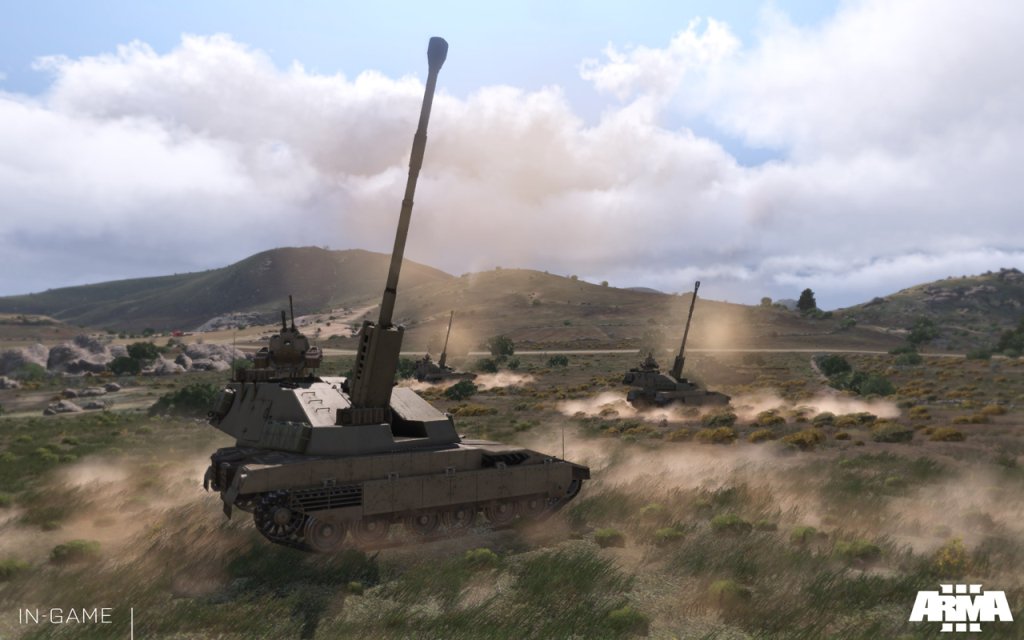
“Arma 3” was the game that really launched the current military simulator craze almost 10 years ago. It has featured realistic gear, decent damage and weapon ranges, vehicles, and more for a long time. The Arma engine even formed the basis of the Army’s Virtual Battlefield Simulator, an actual training simulator for troops (even though most of us only get to do the simulated zero and qualification range in VBS, which is objectively hilarious). When the military chooses simulators based on your software, you know you have a realistic military game.
The really great thing about “Arma 3” and its sibling games is that it allows for custom games and modifications with no player cap. So you can pick servers with realistic injuries and medical procedures, ones with more players, ones with less. Some have communities that focus on realistic tactics, and some are more run-and-gun. Most games have 100 players or fewer, but games can surge well past that with strong servers.
Most nights, this game tops 4,000 players.
2. Arma Reforger
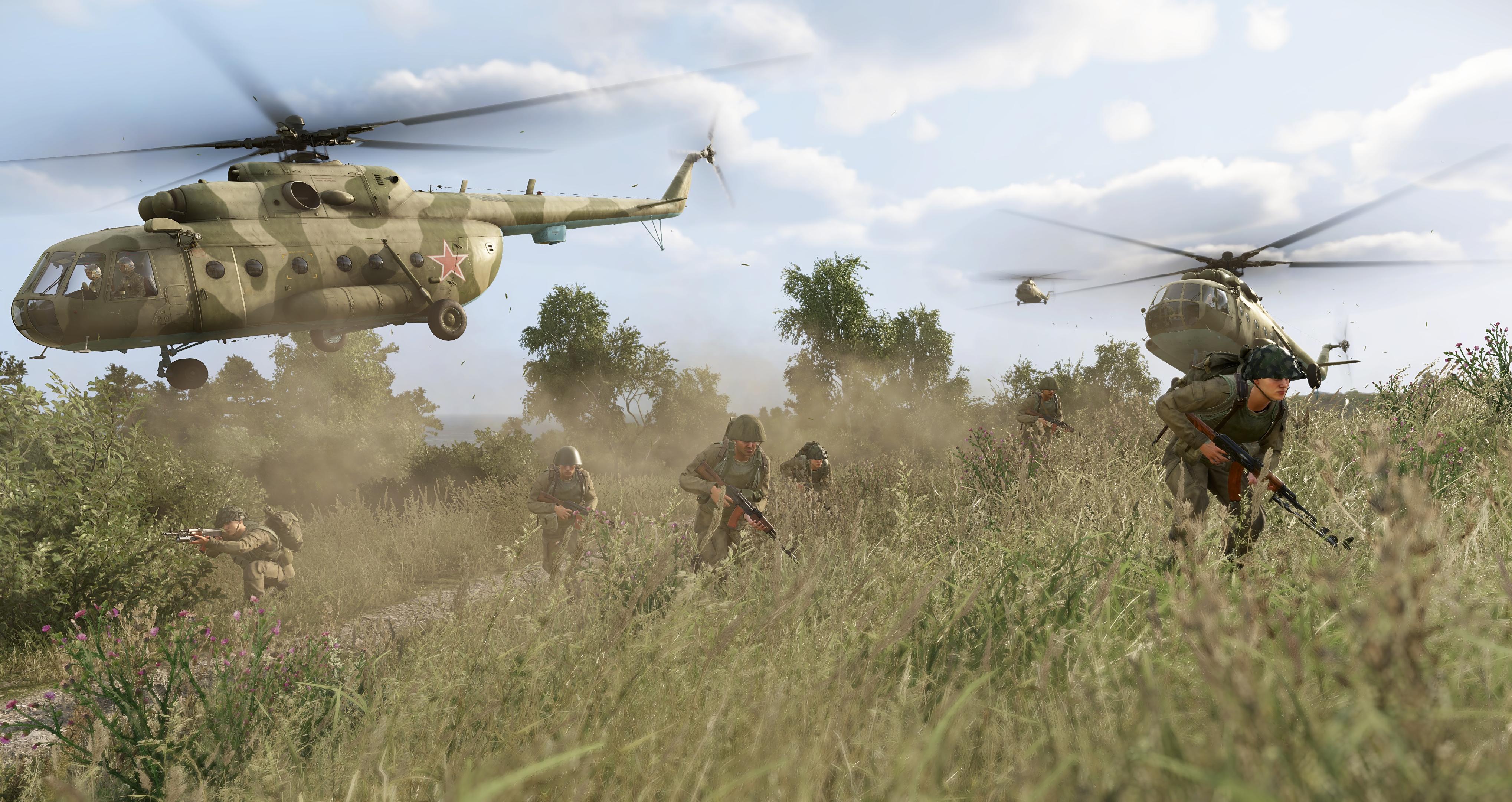
“Arma Reforgers” is, you guessed it, a continuation of the “Arma” series. But it’s actually the game developer’s stepping stone to “Arma 4,” a way to test the upgraded systems as they start making the next main title in the series.
It has most of the features of “Arma 3” including in the realism department, but its assets and maps are all focused on the late Cold War. The name is a reference to the Reforger exercises from 1969 to 1993, so-named because the exercise was practice for a REturn of FORces to GERmany if the Warsaw Pact invaded Western Europe.
If the Cold War makes it sound like everything in the game would be dated, I actually used Vietnam-era M16s in the Army Reserve, and the game features period-accurate armored vehicles that are in use in Ukraine today, albeit with significant upgrades. Humvees, M4s, Hind helicopters, and more are all available.
The game is not nearly as developed as “Arma 3” and has a fraction of the mods, but it still draws essentially the same number of players, with about 4,000 logging on most nights.
1. War Thunder
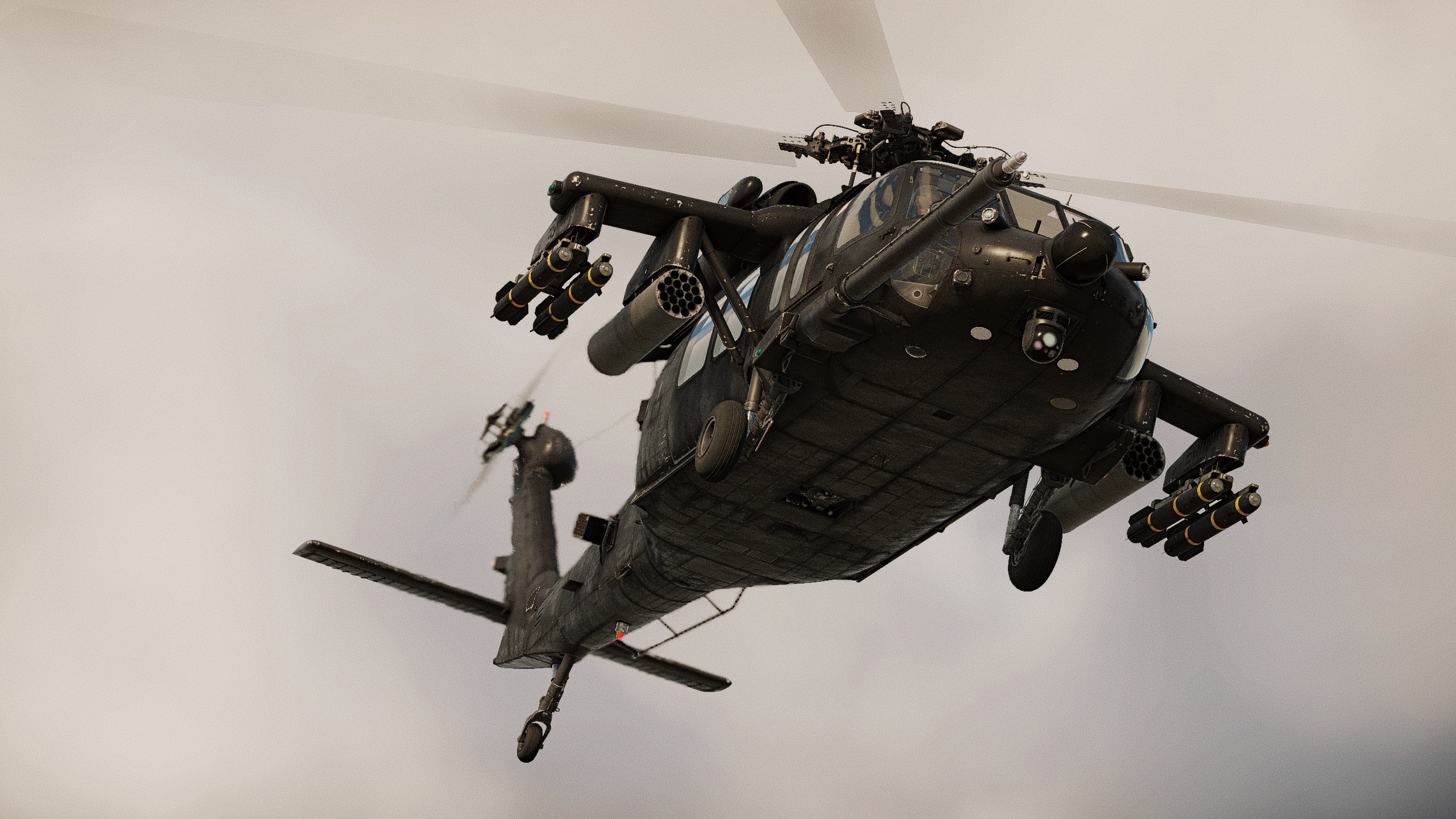
“War Thunder” has become a bit of a meme because the arguments over its realism have gotten so serious that, on multiple occasions, people have leaked sensitive and classified material online to prove their points.
“War Thunder” only does vehicular combat, no foot soldiers slogging their way across Europe. But it features realistic depictions of all types of vehicles from World War I to modern day. One great detail of “War Thunder” over other games: Instead of a pool of hit points that decides whether a vehicle is alive or dead, it has modules, like engine, ammo storage, etc. A hit to a vehicle either pierces the armor or doesn’t, and if it pierces, then it destroys the module or doesn’t. So a single hit in the perfect place can wipe out an enemy vehicle, but a dozen glancing blows on thick armor won’t do much.
This module system also allows for “mobility kills,” an important part of vehicle combat in real life that doesn’t often get represented in media. If you take out an enemy’s engine, you can cripple it and then finish killing it at your ease, even employing air strikes to finish the job.
And it allows for combined-arms combat, since helicopters, jets, tanks, and warships can all play on the same battlefield. (If you only want to play with one vehicle type, the competing series from Wargaming—”World of Tanks,” “World of Warships,” and “World of Warplanes”—is also good and realistic, and each game features just the one vehicle type.)
One thing you can’t do, though, is indirect fire. “War Thunder” has larger maps than most games, which is crucial if you want jets to play with tanks, but it still does not have realistic indirect fire. The artillery platforms in the game are essentially all limited to direct fire, a sometimes frustrating limitation in an otherwise expansive game design.
Of course, there’s no perfectly realistic military game
Obviously, none of these games can simulate what it’s like to be exhausted and cold with a weapon that needs cleaning and that middle-of-the-night guard duty that guarantees you won’t get a good REM cycle in before or after your watch. But these games do a good job of representing vehicles, weapons, and most tactics and battlefield confusion in a simulated world.
Better than most, anyway.
Don’t Miss the Best of We Are The Mighty
• ‘Ramage’s Rampage’ saw a World War II sub sink 5 ships in 40 minutes
• This Intrepid pilot went from zero to ace in 13 minutes
• The first ‘walkie-talkie’ saved thousands of Allied lives


Sponsored Content