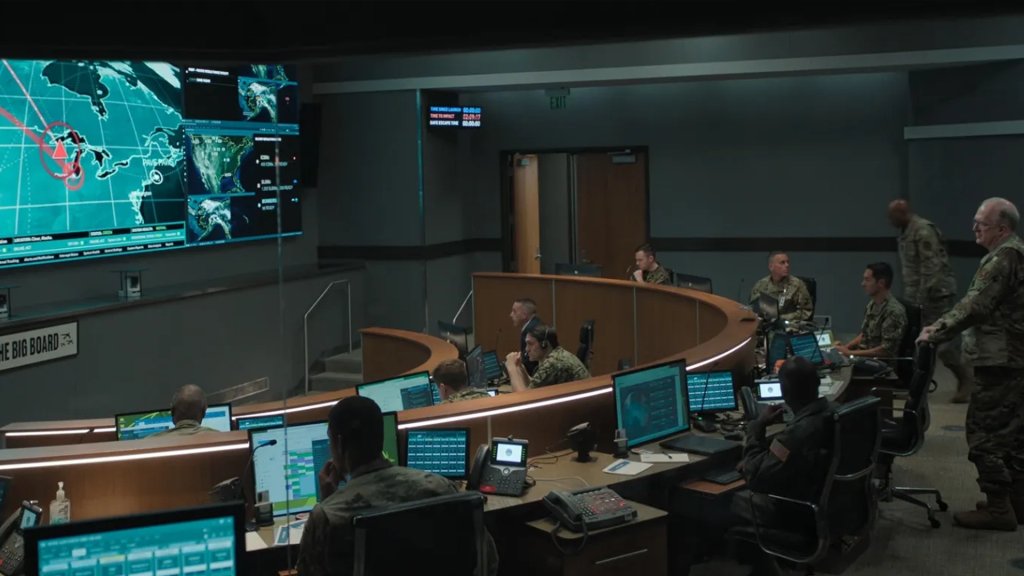
The movie “A House of Dynamite” is causing a lot of buzz, and it’s actually an interesting look at how a nuclear exchange might unfold in modern times, rather than in Cold War scenarios.
Related: Here’s how to survive a nuclear attack
Should be obvious, but: spoiler alert. We’re discussing how the movie’s plot corresponds to real security questions. Expect that the entire plot will be ruined if you read this.
There are a number of nitpicky things we could disassemble in the movie. Like, no, it’s not plausible that the U.S. would have no idea where the missiles came from. It’s also doubtful that a single ICBM could breach the American defense network. And so on.
It was actually a Reddit discussion that introduced me to the movie. People on r/military correctly said that military intelligence would almost certainly be able to list a few most likely shooters. But those issues are for the nerds who read up on missile offense and defense all the time. Or in the case of a missile launch from the Sea of Japan, which is what a recurring graphic in the movie appears to show, SSBN nerds.
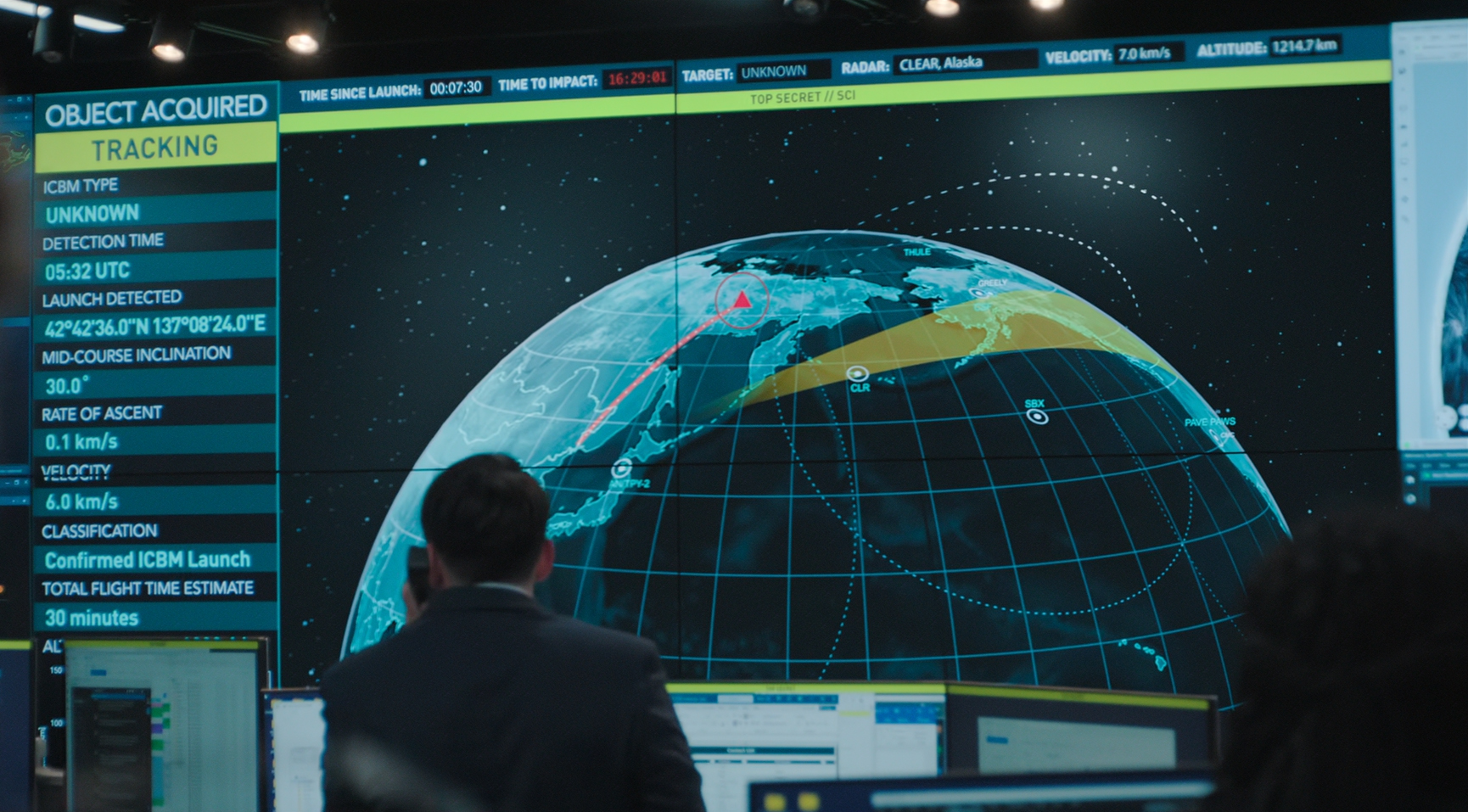
But for the layperson, the movie shows the real flaws in our current nuclear approach. Even smart, diligent people would likely be overwhelmed if our nuke fears were realized. In the movie, this takes the form of a single, mysterious ICBM launched from eastern Asia toward Chicago.
It has technical flaws, but it’s an illuminating story
Despite any valid nitpicks, the narrative in “A House of Dynamite” highlights, for normies, major problems with current nuclear strategy. And it shows how the general public’s thinking about nuclear war is largely a relic of Cold War history.
There are some interesting points from the movie that we want to go into here. First, we might not know what motivated a nuclear first strike, even if we knew with any certainty who launched it. Second, the options on how to respond to a nuclear strike are bad and still rooted in a policy of mutually assured destruction, hence the house of dynamite analogy. And third, the pressure to respond militarily to a strike is real, but it’s not necessarily the best response. But good luck getting a group of scared, pissed off men, most of them civilians without battlefield experience, to listen to their better angels and prevent nuclear apocalypse.
Discretion under fire is hard and hard-learned. And only a few dozen living people have experience saying no to nukes in a perceived apocalypse.
We won’t be sure why nukes were launched
During the Cold War, the nuclear combatants could basically be summarized as NATO vs. the Soviet Union. And it was widely accepted that the other NATO countries were going to follow America’s lead, so, really, the U.S. vs. the Soviet Union.
In that context, an unannounced nuclear strike meant that one quarter of the planet was trying to destroy another, and all of the world might burn. Both sides knew that, if a nuclear war started, each would throw the magazine at the other. Mutually Assured Destruction was an official policy and strategy.
But with the increase of nuclear-armed countries, we need to start wrestling with the possibility of what I call the “Pearl Harbor Scenario.” This ties to a bit of military history. The original impetus of the Pearl Harbor strike was to knock the U.S. out of the war. With the Americans out of the way, Japan could then kick the Europeans out of the Pacific. Japan thought America lacked the stomach for a long war and that the Pearl Harbor attack would essentially end U.S. involvement, not increase it.
With nine nuclear-armed countries and a 10th on the threshold, some of which hate each other and all of which have mixed relations with the others, a strategic miscalculation like Japan’s World War II gambit is much more likely than it was 50 years ago.
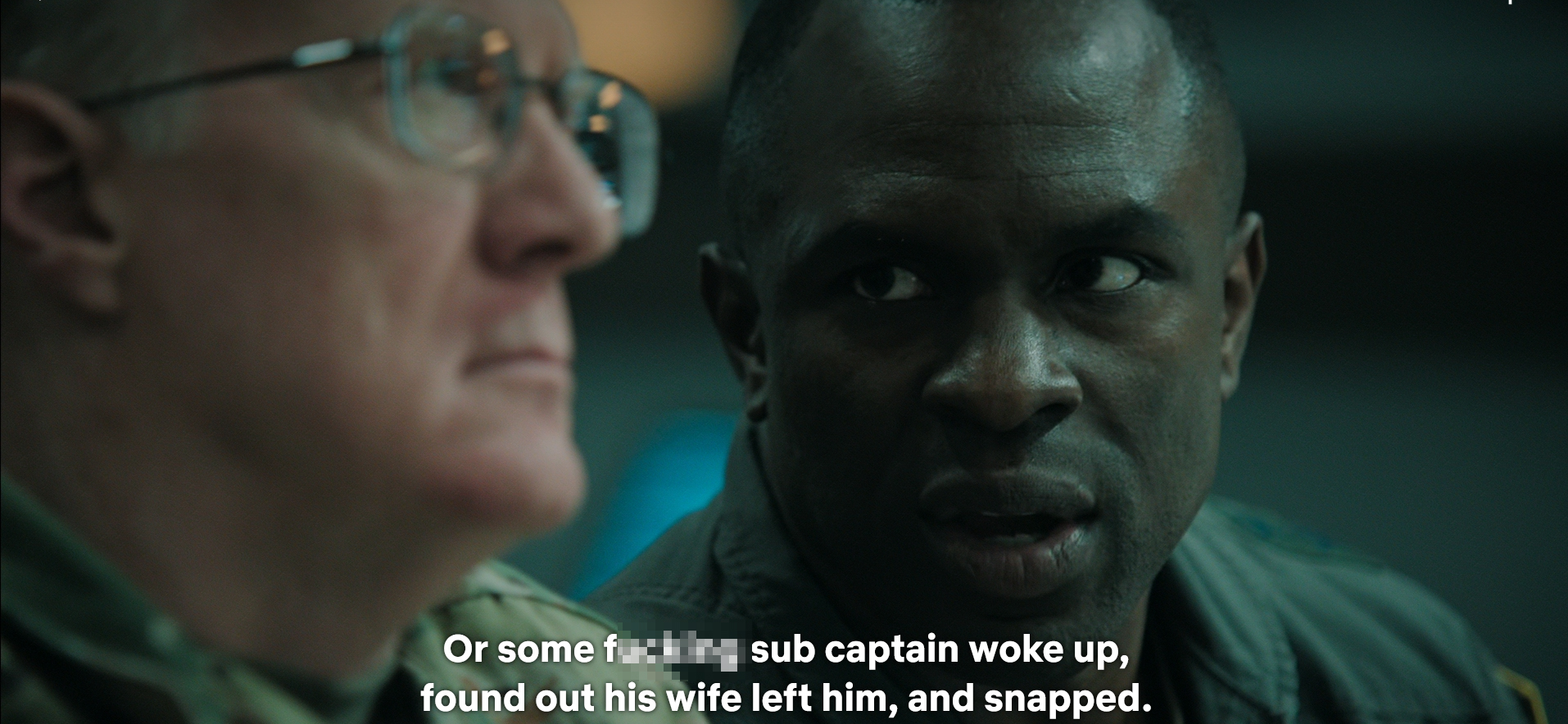
In “A House of Dynamite,” this is summed up in a couple of conversations. My favorite came between two generals at Strategic Command. As the missile makes it through the defense shield and barrels toward Chicago, the four-star asks a two-star for his best guess on who sent it. After giving soft cases for North Korea or Russia, the two-star says, “Or some f–king sub captain woke up, found out his wife left him, and snapped.”
Our publicly acknowledged strike responses are outdated
At least publicly, the nuclear response strategy is to, at the discretion of the president, respond to any weapon of mass destruction launched against the U.S. with American nukes. The U.S. has no other weapons of mass destruction. So chemical, biological, or nuclear attack can only be met with conventional or nuclear weapons.
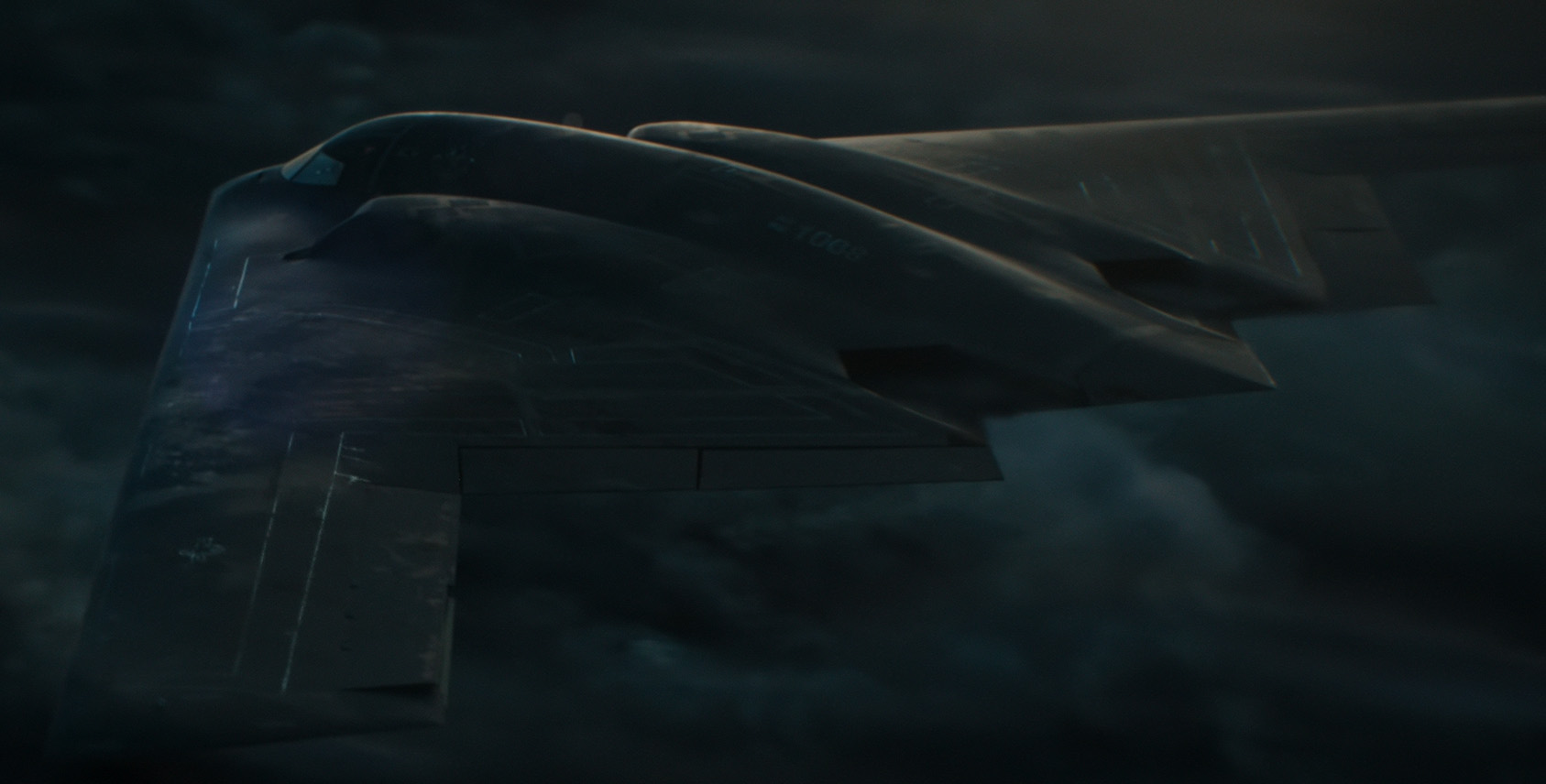
Remember in 2017, a concerning North Korean launch resulted in staffers briefing President Donald Trump and Japan’s Prime Minister Shinzo Abe at a dining table at Mar-A-Lago by phone light? If that launch had carried a WMD and hit U.S. Navy assets in the region, someone would have walked up to the president and, after hopefully wrangling him into a SCIF, briefed him on nuclear response options. It would have been at his sole discretion whether he ordered a launch right then and there.
That made a lot of sense when, again, a Cold War launch meant that the enemy was almost certainly trying to wipe out our arsenal (and before we knew about nuclear winter), but it makes a lot less sense when a launch could be North Korea trying to blackmail the world into more foreign aid.
As I watched the movie, I thought about how much better it would be in the real world if the default response to a nuclear launch was that high-ranking members of all nuclear-armed nations immediately convened a secure call. Then, at least, everyone would be talking, and they could be suspicious of whichever sniveling punk didn’t show up.
The pressure to respond militarily to a strike will be real
One of the most teeth-grinding themes of the movie was the pressure on the fictional president to respond to the missile by launching a counter-strike, even though the missile had not impacted, might be an inert or dud warhead, and no one had any idea who had launched the missile. It frustrated me, but it’s actually realistic.
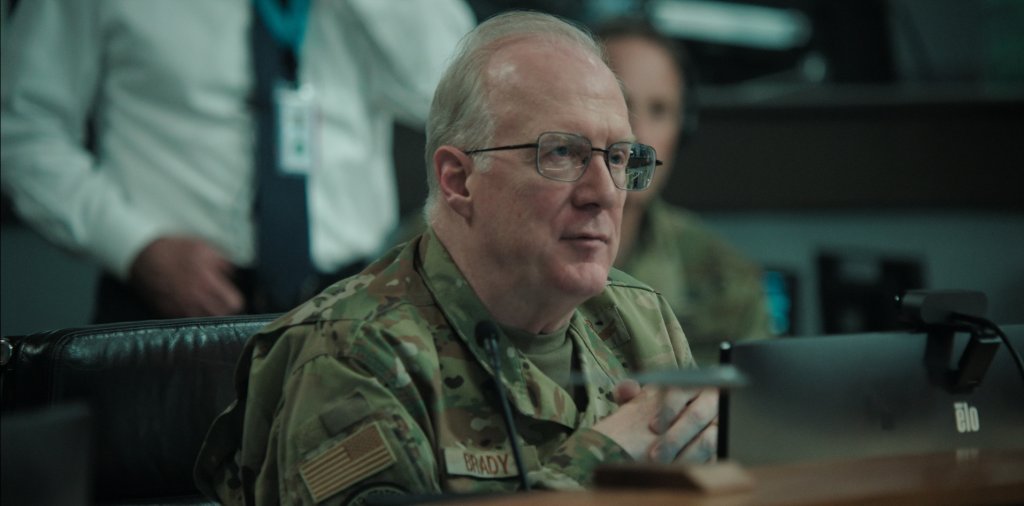
While we have a good history of senior military and civilian leaders saying no to nuclear holocaust, it does come down to a handful of people having resisted overwhelming pressure. There are at least five publicly acknowledged times that training or technical SNAFUs during the Cold War almost caused one country to respond to a nuclear false alarm. Those are in addition to other near-misses, like when a Soviet sub almost launched during the Cuban Missile Crisis.
If a nuke gets in the air, the pressure to launch lots of weapons at rivals will be very real. Some arguments for a mass retaliation do make a little sense. “If the first strike is to paralyze us, then we need to hit all of their weapons before they can follow up with more strikes against us.” Or maybe, “If we let a nuclear strike go unanswered, then all our enemies may try to take advantage of us while we’re down. We need to lash out.”
But some of them would just be political. “We’ll look weak if Chicago is wiped out and we haven’t launched a retaliation.”
Which is basically saying, “Nuke Moscow and trigger mutually assured destruction to save face. Hopefully it was Moscow who did it, but who cares?”
While it might sound crazy to wipe out thousands of bases or a few megacities before you even know who is responsible, it’s likely a real response in the president’s menu of options. And his decision is not subject to any debate or oversight. Physically, it can’t be. There’s no time for Congress to vote when weapons can cross the Arctic or the Pacific in 20 minutes.
“A House of Dynamite” is technically flawed, but it’s worth talking about
The fact is that our understanding of nuclear war, especially in pop culture, is still mostly about a nuclear World War III, or occasionally it’s stolen warheads and dirty bombs. It’s “Fallout” on Amazon Prime, or it’s terrorists stealing yellowcake.
But there are a whole lot of other potential scenarios in the modern world. Russia prides itself on its grey war tactics, where it exploits Western countries’ reaction speed, like soft invading Crimea and taking it over with almost no shots fired in 2014. North Korea has done legitimately crazy stuff, like kidnapping at least 17 Japanese citizens to use in their spy programs in the 1970s and ’80s. And France offered its nuclear umbrella to Europe, further splitting Western nuclear strategy amidst worries that America is no longer a stalwart ally.
Oh, and Russia has a submarine with 16 nuclear missiles and 96 warheads. Sixteen missiles could easily overwhelm the missile defense shield.
So while it feels unrealistic that a single missile made it through the missile shield, it’s quite realistic that a salvo would get missiles through. Decision-makers would face nearly identical scenarios. Even very smart people working very hard don’t have good answers for navigating a nuclear doomsday.
And as an odd aside, I thought it was a coincidence that one of the air defense officers looked exactly like my brigade commander from my first deployment. While it didn’t affect this article, since I wrote most of it before learning this, it actually is him. Retired U.S. Army Lt. Gen. Daniel Karbler, former commander of the Army’s Space and Missile Defense Command, appears in the movie as a chief of staff, a role he really held. And the writers say they spoke to him and similar experts when writing.
A cameo shouldn’t be seen as an endorsement. But it says something that a top commander who wrestled with these exact situations appeared in this movie. Our real-world house of dynamite probably kept him up more than once.
Don’t Miss the Best of We Are The Mighty
• Rattling the world’s dumbest nuclear sabers
• The 7 weirdest nuclear weapons ever developed
• One of the closest brushes with nuclear war was Russia vs China