
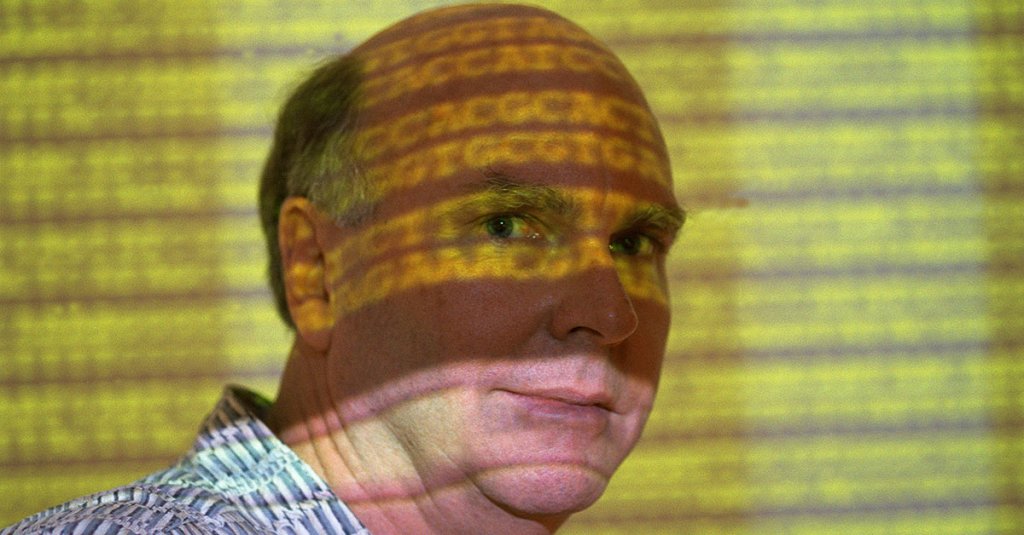
When the Human Genome Project was announced in 1990, its leaders specified three main goals. They sought to sequence the 3.2 billion letters in the human genome, or DNA; map other genomes important to studying biology; and improve DNA analysis.
Realizing the challenge ahead of them, organizers set a timeline of 15 years to complete the project. Scientists from the United States, United Kingdom, Japan, France, Germany, and China didn’t need that long. The International Human Genome Sequencing Consortium announced the project’s completion on April 14, 2003.
Related: 8 of the most terrifying Vietnam War booby traps
Coming in ahead of schedule might not have been possible if not for a Vietnam War veteran with an independent streak, bold vision, and a propensity for courting controversy and pushing boundaries without apology.
What Venter Learned During the Tet Offensive
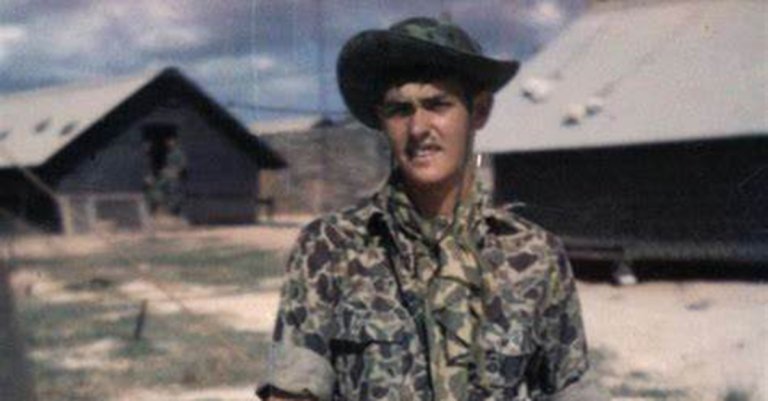
J. Craig Venter, who died Wednesday at the age of 79, usually figured there was a better way.
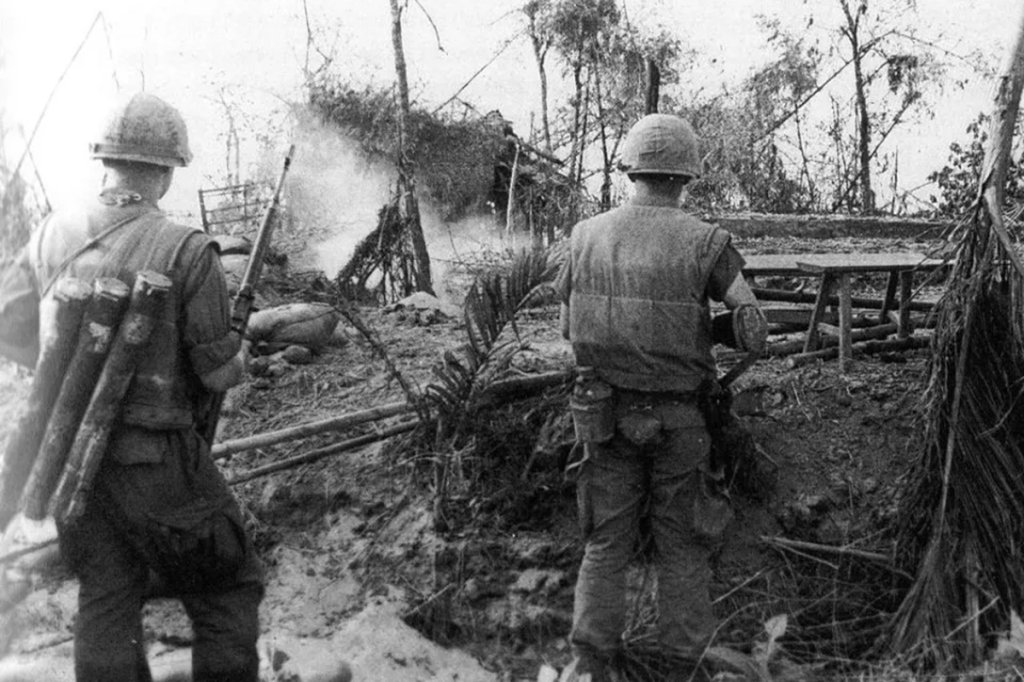
That mindset was reinforced after he enlisted in the United States Navy in 1965. He became a medical corpsman at Da Nang hospital in Vietnam. Venter was there during the Tet Offensive.
“I got introduced to medicine in probably the toughest way possible,” Venter once said. “I got fascinated with the lack of knowledge we had and had a desire to do something more.”
After being discharged in 1968, Venter considered a career in medicine but pivoted to studying biochemistry instead. He joined the staff at the National Institutes of Health as a researcher in 1984. During his tenure there, Venter occasionally butted heads with others, because he believed their process of identifying genes took too much time.
Venter didn’t want to wait, and true to his nature, he did something about it.
He developed a means involving something called expressed sequence tags to identify thousands of human genes more quickly. Not surprisingly, the establishment viewed Venter’s discovery with a fair amount of skepticism. Controversy ensued after Venter tried to patent his idea, leading him to leave the NIH in 1992 and start his own nonprofit, the Institute for Genomic Research.
Making Landmark Scientific Breakthroughs
The use of expressed sequence tags to pinpoint a gene responsible for colon cancer in 1993 validated Venter’s work. Venter didn’t stop there, though. In the mid-1990s, the iconoclast helped pioneer a faster way to identify genomes.
Known as whole genome shotgun sequencing, it first gained prominence in the scientific community in 1995. This method involves dividing a genome into small pieces of DNA, sequencing those pieces, and then reassembling them to determine the full sequence.
Along with molecular geneticist Hamilton Smith of Johns Hopkins University, Venter made history by using whole genome shotgun sequencing to plot out the genome for a bacterium that causes earaches and meningitis in humans.
While Venter was making these discoveries, the Human Genome Project was ongoing. He began sequencing the human genome after founding a biotechnology company, Celera Genomics, in 1998.
Collaboration Helped Complete the Project
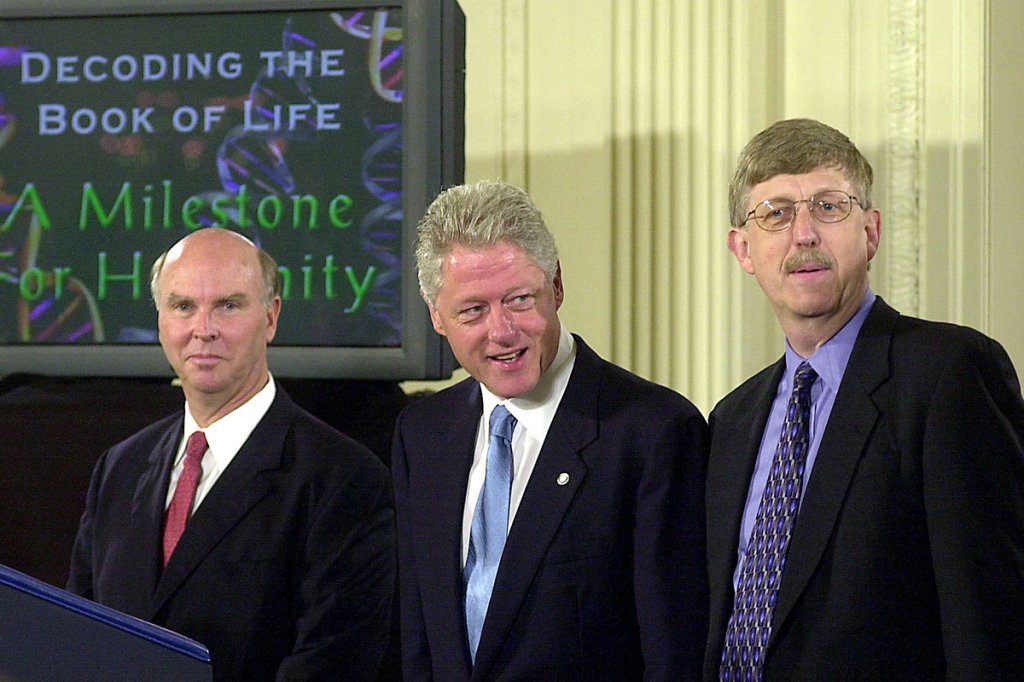
As a private company, Celera Genomics was in competition with the government-run Human Genome Project. Venter actually donated his own genome for Celera to study. Having geneticist Francis Collins, director of the NIH’s National Human Genome Research Institute, and Venter work together began in 1999 and gained momentum the following year when it was emphasized that all of the project’s findings would be free and available to the public.
That prompted the two entities to work together, accelerating progress. On June 26, 2000, President Bill Clinton, Venter, and Collins appeared at a White House news conference to announce a working draft of the human genome. (The anonymous donor whose genome Celera used during its research
Three years later, they officially completed it.
“Useless Information”?
Venter’s contributions to “one of the most ambitious and important scientific endeavors in human history” can’t be understated. Because of his relentless search for answers, he challenged others to work faster as well.
Some of those answers remain out of reach. While the Human Genome Project was widely successful, Venter expressed disappointment about what we still don’t know while speaking to the digital publication Spiegel International in 2010.
“We couldn’t even be certain from my genome what my eye color was,” Venter said. “Isn’t that sad? Everyone was looking for miracle ‘yes/no’ answers in the genome. ‘Yes, you’ll have cancer.’ Or, ‘No, you won’t have cancer.’ But that’s just not the way it is.
“… We have, in truth, learned nothing from the genome other than probabilities. How does a 1% or 3% increased risk for something translate into the clinic? It is useless information.”
Others might disagree with Venter. Something tells us he didn’t care.
Don’t Miss the Best of We Are The Mighty
• Before 3 tours in Vietnam, this fighter pilot dropped nearly 20 miles from high above
• The shortest soldier in American history was a Green Beret who fought in Vietnam
• The real story of Jane Fonda and the Vietnam vets who hate her
Featured



Loading comments…
Comments couldn’t be loaded. Please refresh the page.