
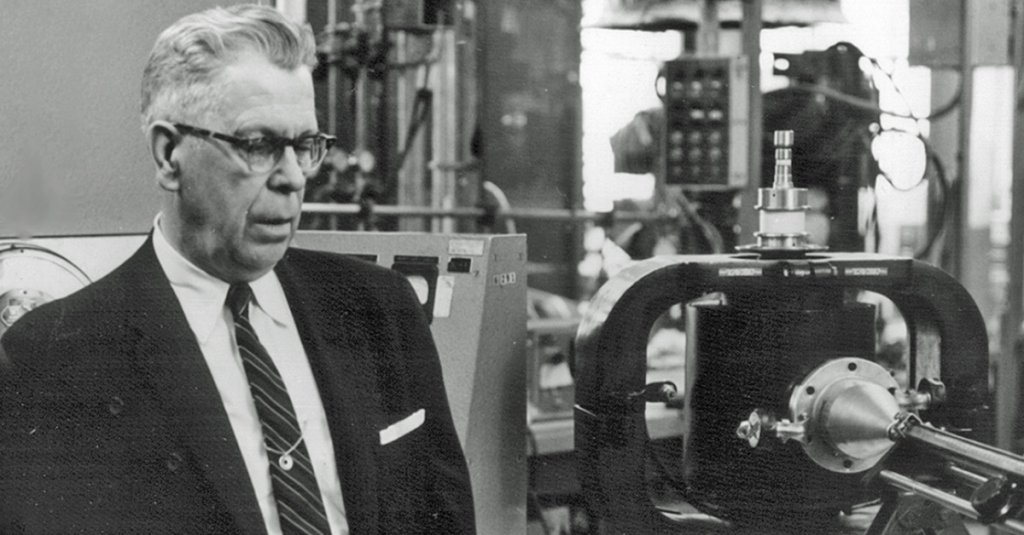
Lacking much formal education because of difficult family circumstances, Percy Spencer was determined to learn on his own.
The emerging wireless technology industry of the early 20th century intrigued Spencer, who enlisted in the United States Navy in 1912 intent on becoming a radio operator. The sailor served less than two years in the military, but in that relatively short span, he acquired as much knowledge as possible while in uniform.
Also Read: These everyday inventions came from failed military experiments
“I just got hold of a lot of textbooks and taught myself while I was standing watch at night,” Spencer said.
A chronic ear condition ended Spencer’s time in the Navy. It did nothing to blunt his rampant curiosity, however. Holder of more than a hundred patents, Spencer became a prolific inventor. One of Spencer’s inventions looms above all the rest, primarily because of its impact on everyday Americans’ lives.
It is extremely rare today to step into any kitchen in the U.S. and not find a microwave oven. The road to this now-common kitchen appliance becoming so ubiquitous started with Spencer, whose work led to the first patent for the device in 1945.
Earning the Navy’s Top Civilian Honor
Originally from a small town in Maine, Spencer’s disciplined approach broadened his hopes for a better life. He taught himself very complex math and science principles, and after World War I, Spencer accepted an offer of employment from what later became the Raytheon Manufacturing Company.
Spencer was around at the perfect time.
Once World War II broke out, England sought a way to produce radar systems quickly to allow them to detect the presence of German planes and submarines, according to the Atomic Heritage Foundation. It contracted with Raytheon to provide a solution.
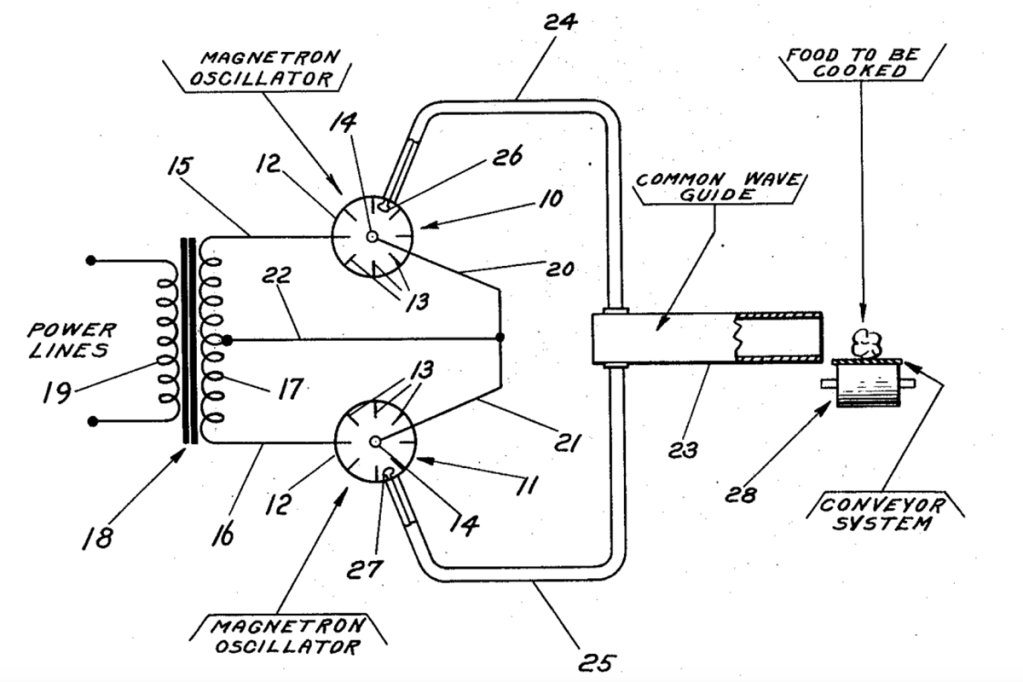
Spencer and his colleagues devised a method to produce the cavity magnetron in mass quantities. Invented by British physicists John Randall and Harry Boot in 1940, the magnetron was the primary component in radar at the time. Spencer, et al., helped increase magnetron production to approximately 2,600 per day. For his efforts, the Navy bestowed upon Spencer the Distinguished Public Service Award—the service’s top civilian honor outside the Department of the Navy.
Besides its other qualities, magnetrons generate microwaves. Spencer soon discovered they could be useful for something other than radar.
Not an Instant Success
One day, Spencer stood near a magnetron with a candy bar coincidentally on him. The chocolate treat melted, which peaked the inquisitive Spencer’s interest. He requested someone bring home some unpopped popcorn. When he placed the kernels in front of the magnetron, they popped.
For his next impromptu experiment, Spencer notched a hole into a kettle, fetched an egg, and put it inside. The microwaves from the magnetron caused the egg to violently break its shell; not only that, but they projected pieces of yolk onto the face of one of Spencer’s co-workers who positioned himself in front of the hole.
What’s a little egg on the face, though, in the name of progress?
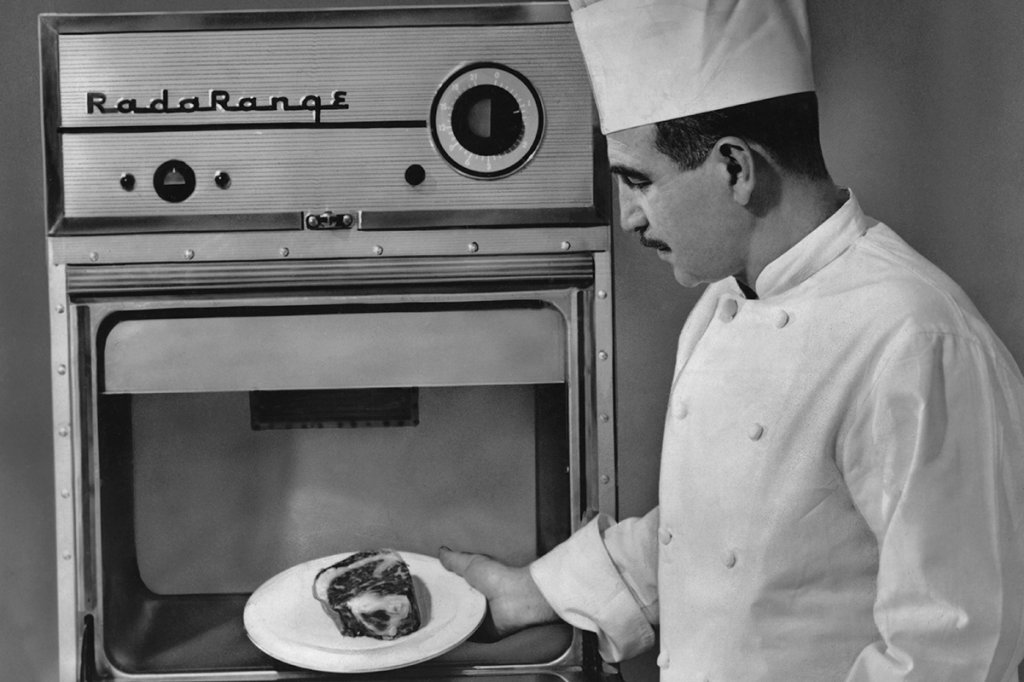
Five years after Raytheon applied for a patent for the microwave oven, the U.S. Patent Office approved it on January 24, 1950. Despite the success that followed, the microwave—originally called the Radarange—was hardly an overnight hit.
Its lack of immediate popularity was understandable. For one, it cost thousands of dollars, placing it above the price range of most U.S. households. At 6 feet tall and weighing nearly 750 pounds, it required lots of space, convenience be damned. And, perhaps most importantly, there was the issue of potential exposure to radiation. Those safety fears were so pronounced that a NASA scientist reportedly offered to sit atop a Radarange for a year to prove it was suitable for household use.
A $2 Bonus
Over the ensuing decades, the Radarange became smaller, more affordable, and morphed into the instruments of convenience that we know today. Any safety issues surrounding the microwaves were also resolved, and nowadays, the U.S. Bureau of Labor Statistics estimates that over 90% of households own one.
We’d say that’s pretty good market saturation.
While Spencer—who died in 1970 at the age of 76—received proper credit for his invention, he never saw microwave sales really take off. Spencer never achieved generational wealth for his family because of his discovery, either, with Raytheon awarding him only a $2 bonus for his invention.
Spencer’s ingenuity shouldn’t go unappreciated. It’s evident whenever someone nukes a Hot Pocket, pizza rolls, or frozen dinner for a quick snack or meal. Just keep any candy bars a safe distance away.
Don’t Miss the Best of We Are The Mighty
• Here’s what happened when North Korea actually hit an American battleship
• The history of Rip It, the beverage that fueled the War on Terror
• Basic Allowance for Housing went up. Your out-of-pocket expenses did too.
Featured

-
Sponsored Content
Fuel to Serve: The mission starts at the meal



Loading comments…
Comments couldn’t be loaded. Please refresh the page.