Before the first bomb fell, the conflict in Iran was already being dominated from 22,000 miles above it.
On an uneventful evening in February 2026, hours prior to F-35s screaming off carrier decks and B-2s beginning their long trek toward Tehran, U.S. Space Command and Cyber Command were already at work, relentlessly severing the connective tendons of Iran’s military.
Satellite communications would go dark, sensor networks would lose sight. Radar systems that were supposed to warn Iranian commanders of incoming strikes began feeding them nothing. By the time the kinetic portion of Operation Epic Fury began, Iran was fighting blind.
Chairman of the Joint Chiefs Gen. Dan Caine confirmed what space professionals had been saying for years, but few were willing to hear: USSPACECOM and USCYBERCOM were the vanguard in Epic Fury.
Coordinated space and cyber operations disrupted Iran’s ability to shoot, move, or communicate effectively. Some are already saying it was the most “explicit public acknowledgment” of offensive space-enabled warfare in a live combat scenario in American history.
And it happened six years after half the world was making Netflix jokes about these men and women.
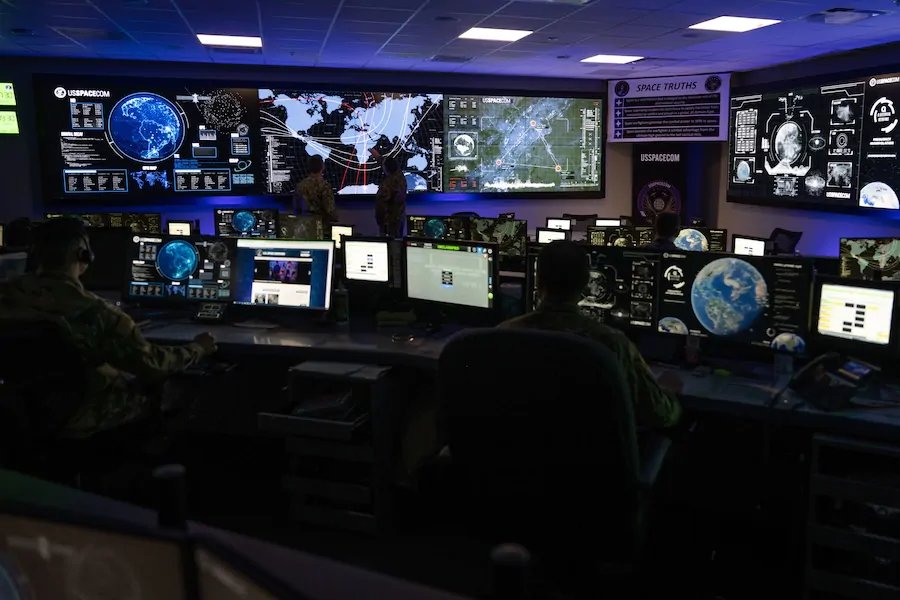
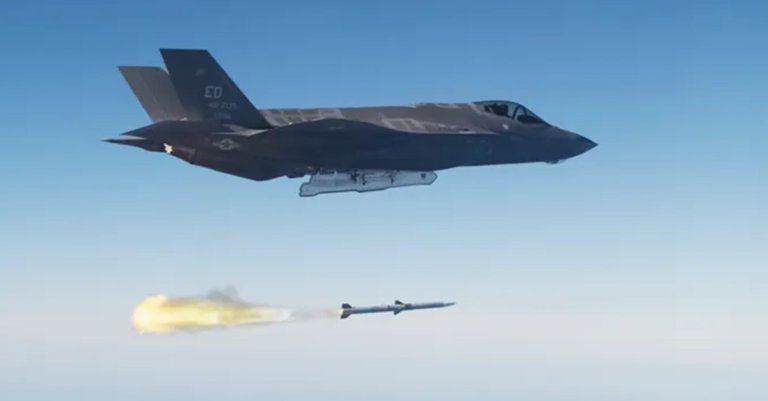
You may not like it, but this is what peak performance looks like. (U.S. Space Command)
Who’s Laughing Now
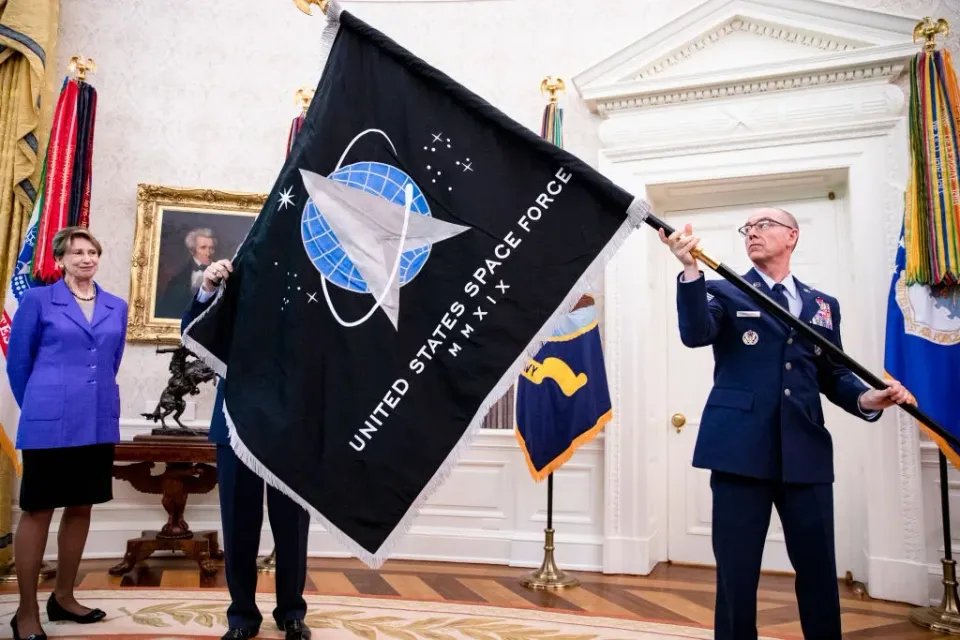
When President Trump willed the Space Force into existence, the reaction was pretty much what you’d expect. Late-night hosts used it as fodder for their bits. Social media let the memes fly.
Even some in the defense community questioned whether a separate branch was necessary, considering that the Air Force had been handling, admittedly imperfectly, these same missions for decades.
Understandable skepticism given the scale of standing up a new force, however, while the jokes spread, Space Force leadership began building something special. They stood up combat units, trained electromagnetic warfare operators, and integrated satellite constellations into joint kill chains. They did this all with a budget smaller than what the Navy spends on shipboard coffee, relatively speaking, and a force so lean it could fit inside a college football stadium.
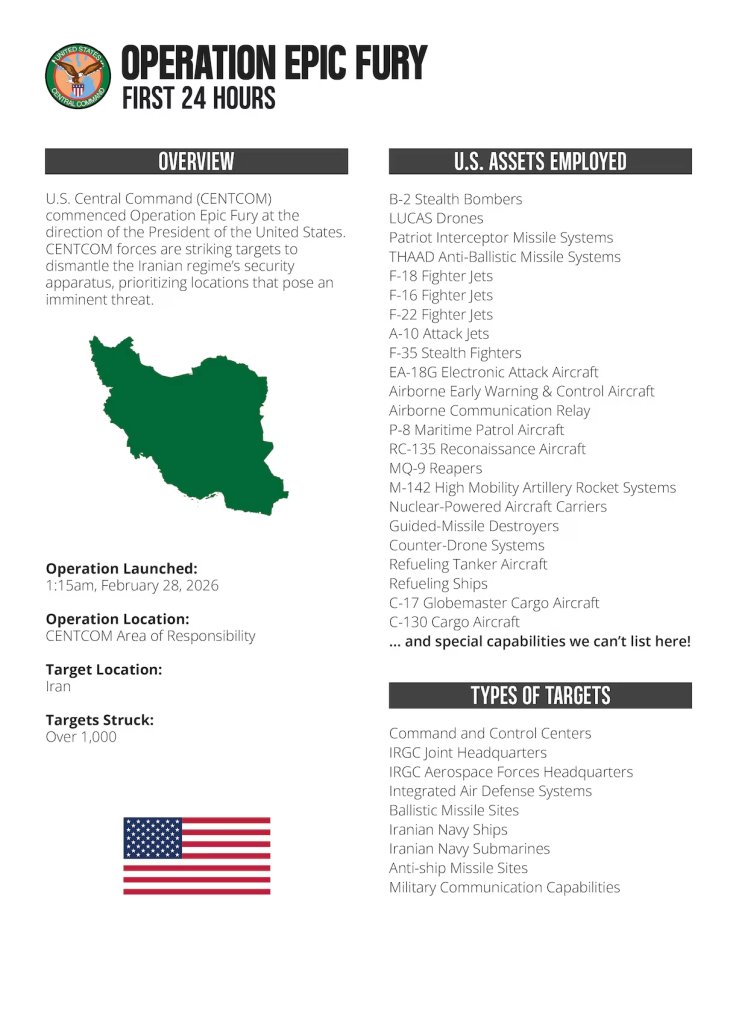
Then Iran became a thing. Operation Epic Fury is the largest U.S. military operation in the Middle East since the 2003 invasion of Iraq. In the first 72 hours alone, American forces struck approximately 1,700 targets, destroyed more than 200 Iranian ballistic missile launchers, reducing drone and missile attacks by over 70%.
Numbers like these do not happen by luck, good weather, or a positive attitude; they were shaped on the battlefield before the first missiles flew. Shaping provides a tactical advantage prior to friendly maneuvers.
Typically, they are designed to limit enemy mobility and create vulnerabilities before or during combat; this was achieved, mostly, by ground stations in Colorado, radar domes around the United States, and orbital platforms circling our blue marble.
Space Force’s contribution to Epic Fury breaks down into three main mission areas, none of which involve bullseyeing womprats in a T-16 (If you know, you know).
First: non-kinetic disruption (i.e., no explosions necessary). Before conventional forces engaged targets, Guardians worked alongside cyber operators to degrade Iran’s communications and sensor networks.
The Pentagon has been deliberately vague about specifics, understandably so, but Caine’s public acknowledgment that space and cyber operations left Iran unable to “see, coordinate, or respond” paints a clear enough picture.
We don’t need a classified briefing to understand what it means when an adversary’s command-and-control apparatus goes quiet at the exact moment you’re about to hit them.
Second: missile warning and tracking. Here, the 5th Space Warning Squadron out of Buckley Space Force Base in Colorado operates the Joint Tactical Ground Station.
JTAGS use an advanced missile warning system called Overhead Persistent Infrared (OPIR) satellites to detect launches as they occur. Satellites can then track rocket heat signatures in real time, relaying targeting information to interceptor systems and field units within seconds.
When Iran fired retaliatory ballistic missiles at U.S. installations across the Middle East, Guardians detected those launches almost immediately, giving people time to reach shelters and allowing Patriot and THAAD batteries to engage threats.
The squadron’s mission was considered so important that its commander issued an alcohol prohibition for all personnel the same day Epic Fury began. This is a unit that understands its margin for error is measured in single-digit seconds.
Third: targeting support. Space-based surveillance platforms are constantly monitoring Iranian missile launch activity as it occurs, feeding coordinates to strike aircraft and naval assets positioned to destroy launchers before additional weapons can be fired.
Admiral Brad Cooper, the CENTCOM commander overseeing Epic Fury, confirmed that U.S. forces struck Iran’s equivalent of Space Command, a facility tied to the Islamic Revolutionary Guard Corps’ aerospace forces, further degrading the regime’s ability to coordinate.
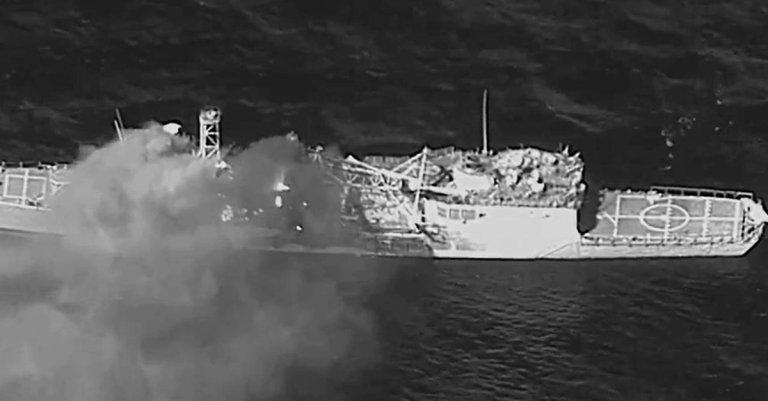
(Department of Defense)
Midnight Hammer
Epic Fury is dominating headlines, but the Space Force’s combat cred began nine months earlier. During Operation Midnight Hammer in 2025, B-2’s struck against three Iranian nuclear facilities, with Guardians providing the GPS support that ensured 30,000-pound bunker busters hit their precise aim points inside hardened, deeply buried targets.
They also employed electromagnetic warfare to protect the successful arrival and exit of seven B-2 bombers flying an 18-hour round trip from Missouri into Iranian airspace and back.
Lieutenant Gen. David Miller, then commanding Space Operations Command, would later confirm it was the first time the Space Force could publicly acknowledge that electromagnetic warfare forces were employed in association with a combat mission, specifically to ensure those B-2s got in and got out at the time and place of America’s choosing.
Guardians from Mission Delta 3, responsible for spectrum warfare, described it as the most tangible example of their unit’s impact since its creation.
Once Iran retaliated with missile strikes against American bases, it was Guardians fueled by caffeine and duty; working 24/7 shifts, in Colorado, in Europe, in Asia, who detected those launches within seconds and pushed warnings to the forces in the field.
Lieutenant Gen. Gregory Gagnon, commander of the Space Force’s Combat Forces Command, described the scope plainly: hundreds of Guardians were on mission from the other side of the planet, connected through a global sensor network that delivered the high ground.
The Space Force After Iran
Here’s where the story gets intriguing. The same leaders who are praising the Space Force’s performance are also warning that the service is dangerously undersized to meet the threats it now faces. Gagnon has stated publicly that the Space Force needs to double its current size to meet demand.
A Heritage Foundation report released ahead of Epic Fury was even more blunt: the Space Force lacks the capacity and capability to be ready for conflict in a contested space environment, and its current systems, while effective when no one is shooting back, are insufficient against an adversary with its own space capabilities.
Iran’s space threat, to be clear, was never the primary concern. Experts noted that the IRGC’s space command, which the U.S. struck during Epic Fury, was in its infancy. Iran had launched 26 satellites since 2005, only 13 of which were still operational, and its counter-space abilities were largely limited to jamming commercial signals.
The actual test, perhaps, isn’t Iran at all, even though it appears that way; it’s the adversary Gagnon keeps asking people to think about: one with a space force even bigger than ours.
China has been building exactly that. And the systems that performed brilliantly against a regional power with limited orbital capabilities may not hold up against a potential near-peer competitor that has spent two decades studying how to blind, jam, and destroy American satellites.
Space got Serious
(Samuel Corum-Pool/Getty Images)
Six years ago, the Space Force was a comedy bit; the name Space Farce was thrown around in some circles. Today, it is the reason an air defense operator in Qatar had enough warning to reach a bunker before an Iranian ballistic missile hit his base.
It is the reason B-2 pilots flew into and out of Iranian airspace without a single surface-to-air missile engaging them. It is the reason the United States degraded half of Iran’s missile arsenal in 72 hours while sustaining single-digit casualties.
Those heroes who made that possible did it from crew positions thousands of miles from the explosions, staring at screens inside radar domes that look like oversized golf balls, running endless shifts in windowless rooms.
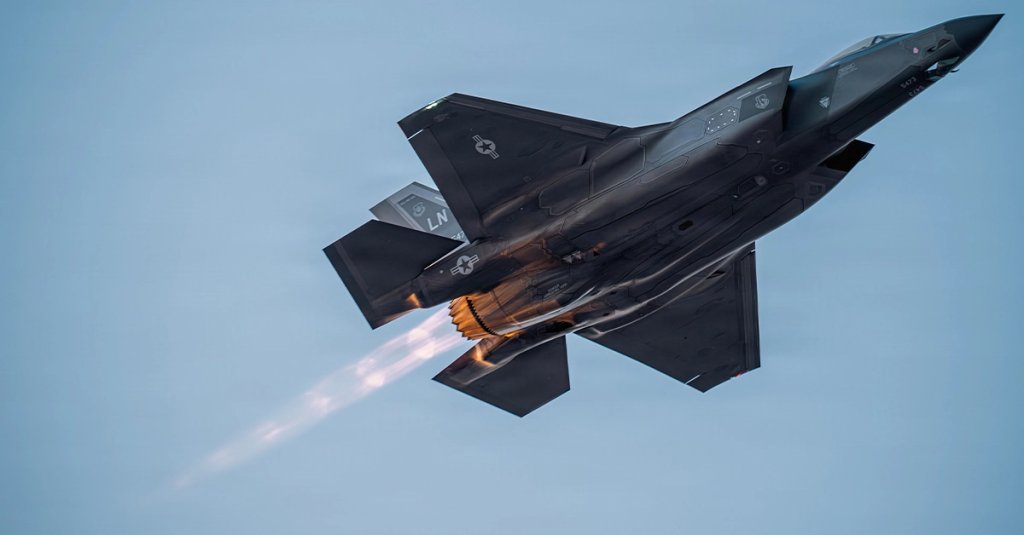
There will be no dramatic footage of their work, no helmet-cam clips going viral on TikTok. There will be no flight-deck launches with afterburner glow. Just data moving at the speed of light, and the quiet, precise work of people who understood what their service was for long before the rest of the country caught on.
The jokes wrote themselves in 2019. Space Force Guardians are currently writing their rebuttal.