
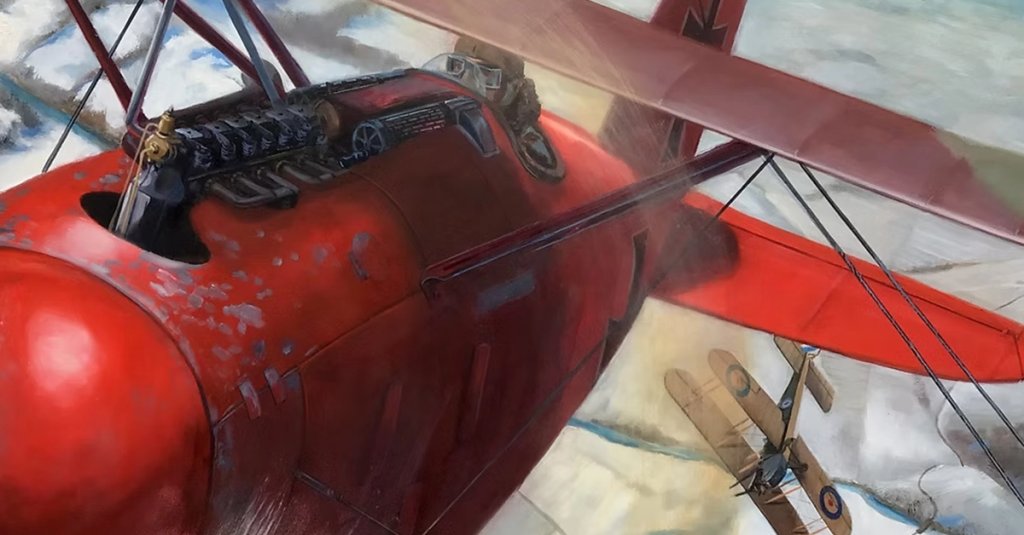
The Combat Air Museum in Topeka, Kansas has a new collection: 80 painstakingly accurate World War I paintings that tell the history behind the real-life aerial kills credited to the famed German fighter ace Manfred von Richthofen—the Red Baron. The paintings are the creation of New York artist Thomas La Padula, who donated the collection.
Also Read: How machine guns on World War I biplanes never hit the propeller
Manfred von Richthofen is known for his prowess as a World War I fighter pilot, credited with 80 combat victories in his blazing red Fokker triplane. He is often called the “ace of aces” for his prolific aim and wartime victories, all of which were accomplished before his 26th birthday: Von Richthofen died at age 25 while pursuing a Canadian plane.
La Padula used after-action reports, weather logs, and more to make his depictions as accurate as possible.
“It’s not 100% accurate due to the fog of war and people’s recollection of that day,” he told We Are The Mighty. “But it’s as accurate as possible because I used a historical document.”
La Padula worked with friends who helped him translate German documents, and had a contact in Belgium who would send him pictures in different seasons and times of day.
“I had to repaint two,” he said. “One was the wrong time of day and another was the wrong type of plane.” He added that some of his feedback came from military historians online.
La Padula has been a painting and illustration instructor for more than 48 years, said he was looking for a new project. Plus, he likes airplanes— he remembers spacing out in math class to draw planes instead.
“I was looking for something to sink my teeth in and work on for a while,” he said. “I decided to do something different. It came about when I said, ‘Who was this first guy?’ and I did a painting.”
It was the Red Baron’s first victory, and he posted it on Instagram. La Padula said the feedback was larger than he expected, so he painted the next kill.
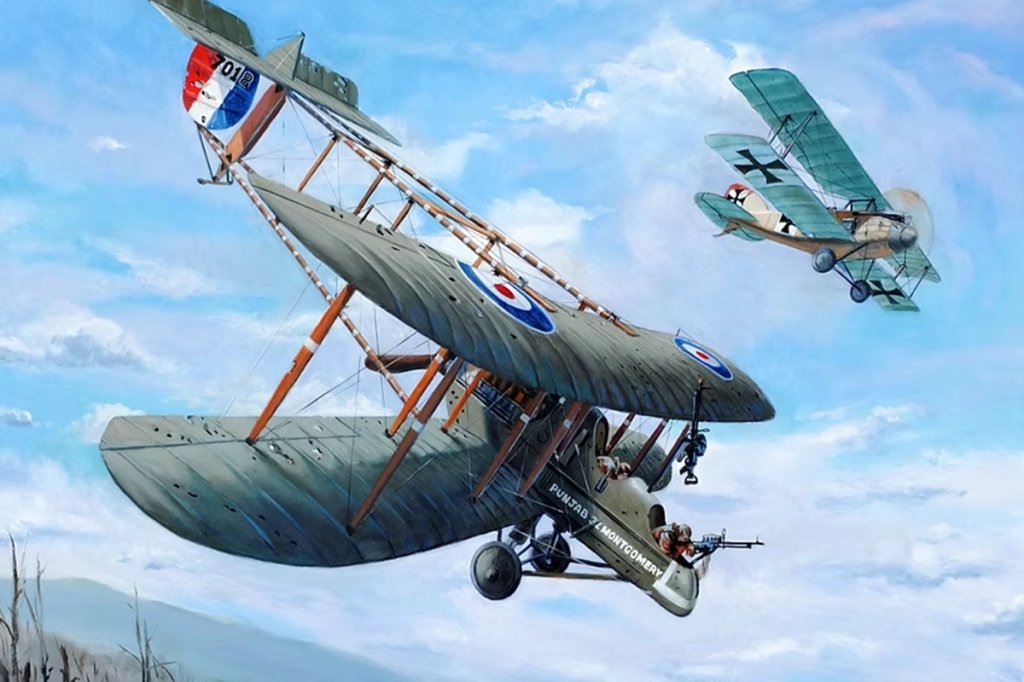
“I look up the second one and it’s a plane I’ve never heard of. It did ok too,” he said. Then, when he painted the Red Baron’s third kill, he was contacted by a family member.
“That one got really interesting,” he said. “The guy was an heir to a beverage company in England, and it’s his first flight, and he’s shot down by the Red Baron.”
The man’s distant relative wanted to purchase a copy.
“It was a really strange request, but I had lunch with him and his family and they were nice, but he looked at it as it wasn’t going to change anything, and he wanted a copy of the painting.”
Meanwhile, La Padula noted he was also getting negative feedback from his art.
“Some of the comments were not very nice; it was more about the fact that I was glorifying a German,” he said. “It’s just an interesting subject; I never thought a topic that was 100 years ago was going to have people yell at me. When I’ve given talks, I’ve said, ‘I don’t have an opinion on this, I’m just presenting the facts and the pictorial narrative.’ You make your own judgment, but you need to know the story before you can make up your own mind.”
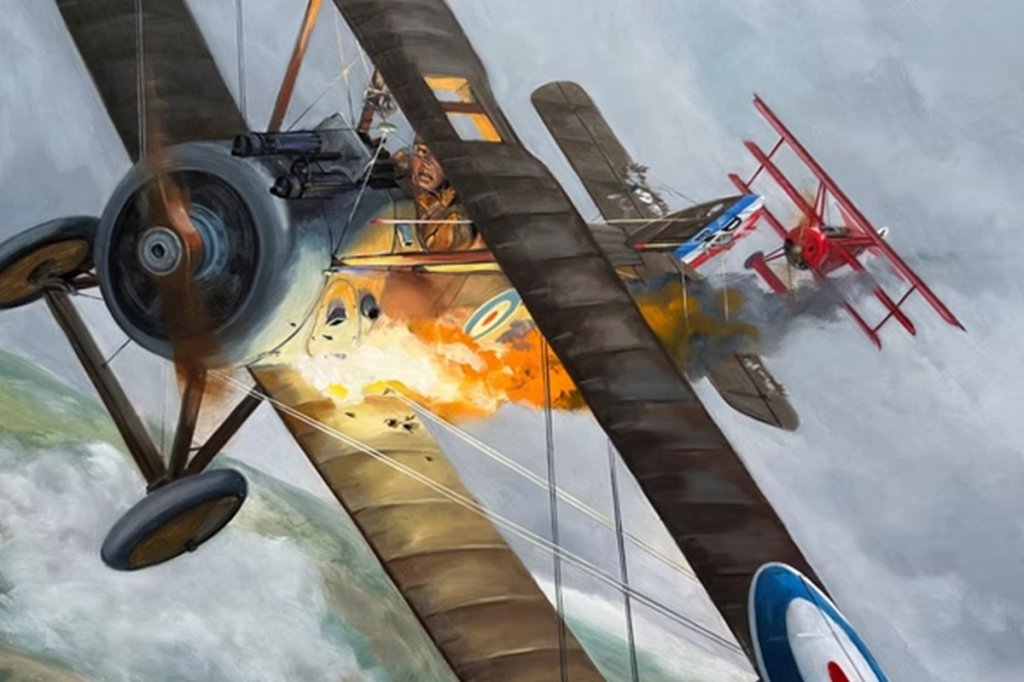
For the next two-and-a-half years, he completed the series, painting each of the Red Baron’s 80 kills. Each is 20”x16” oil on Masonite. He calls the paintings simple, meant to evoke the viewer.
“You put the detail where you need to put the detail and you let the imagination work for everybody.”
However, there was more to La Padula’s love for planes that led him to the Red Baron. He said he read DC comics as a kid, which included “Enemy Ace,” drawn by Joe Kubert.
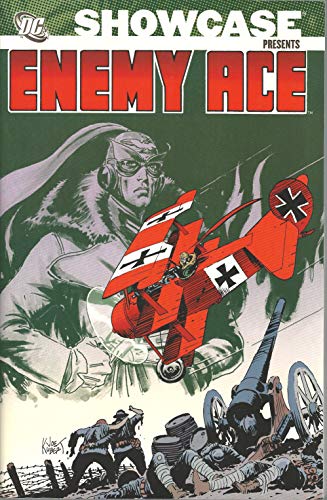
“He flew a tri-fokker red and I thought that was great,” he said, referencing the Fokker Dr. I Dreidecker/triplane. In addition, La Padula said he chose World War I as it’s less often covered, and had more colorful planes.
In addition, swastikas can’t be displayed on social media, meaning he’d have to distort any historical accuracies paintings through censoring.
“We all know the connotations, but it really happened,” he said, noting that his father was a World War II veteran. “But I leaned more into the first [world war], their planes are more interesting to paint. If you’re an artist, do you want to paint this big gray-looking thing or do you want to paint the red plane?”
Along the way, La Padula was also contacted by a book publisher who wanted to turn the pieces into a book. He incorporated the research with his images to create a soon-to-be-published, tentatively titled “The Red Baron Kills.” He said it will come out in late fall and early winter from Pen & Sword Books.
For years prior, he’d been volunteering with an organization that creates World War II biographies for a local cemetery.
“I found that helped me a lot because I was about to have a better idea of how to look for things; it trains you how to do research,” La Padula said. “And it got me back into writing.”
Meanwhile, the entire collection is on display, first at the Combat Air Museum in Topeka, followed by a traveling stint in Liberal, Kansas, before its return to the capital city.
They landed there after La Padula’s daughter spent a short trip in the area.
“She cannot stay home if she has a three-day weekend and jumped on a plane to get some BBQ,” he recalled. “She and her wife, they’re never home and I get to be the Uber to the airport. Usually, I get something out of it like a shirt, and this time I got a show because she gave them the hard New York sell.”
A few months later, he and his son took a three-day road trip to drop off the paintings. His son suggested donating the paintings, keeping them together. Then his wife made the same suggestion.
“I sat on it a while and emailed them asking if they wanted it, then they can charge to rent it out and get something out of it,” he said. “I have a lot of artwork over the years, and now I have 80 more. I wasn’t looking for anything out of it.”
La Padula has since begun work on a second book with accompanying artwork, this one of American pilots.
“I just thought, ‘let me do the Americans; maybe it has a broader reach with people.”
His artwork is available on Instagram and on his website.
Don’t Miss the Best of We Are The Mighty
• Snoopy was much more than just a World War I flying ace
• Ukraine is using a World War I ‘creeping barrage’ tactic to turn the tide of the war
• Your battle buddy was originally supposed to check your feet in the trenches of World War I



Loading comments…
Comments couldn’t be loaded. Please refresh the page.