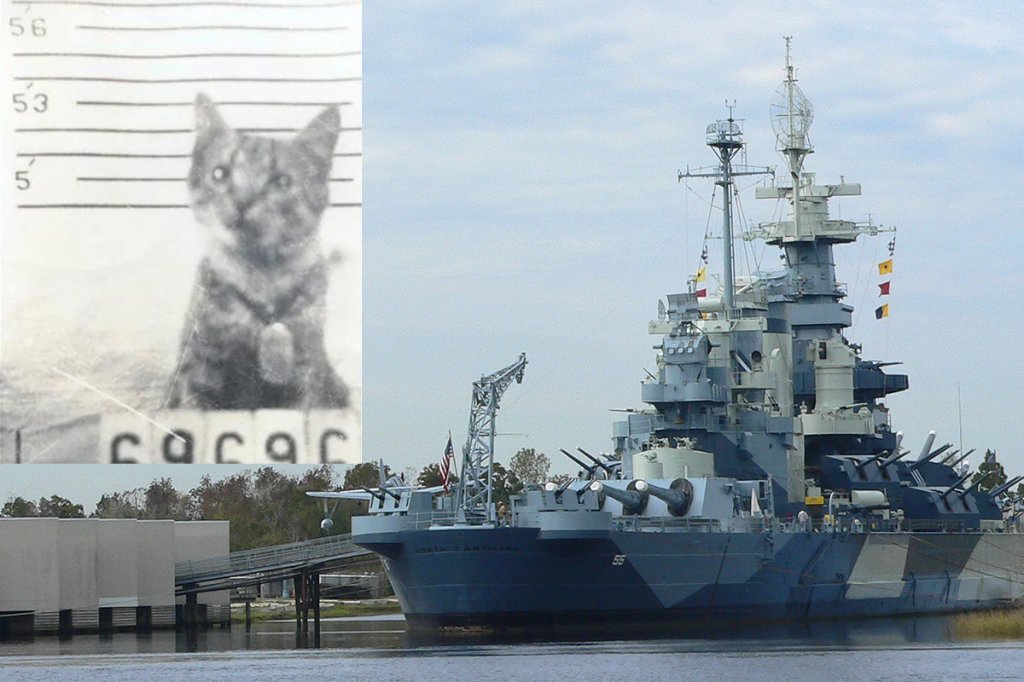
Sailors in World War II, like most sailors across time, enjoyed having a few pets hidden between the decks. One sailor aboard the fast battleship USS North Carolina was famous for his numerous pets, including a cat named George, whom he enlisted into the Navy in 1944 with the serial number 69_69_69_.
Yes, they numbered a pussycat 696969, and, yes, that meaning of “69” was already fairly well-known (at least among sailors) in 1944.
George the cat and his sailor, Ed Cope
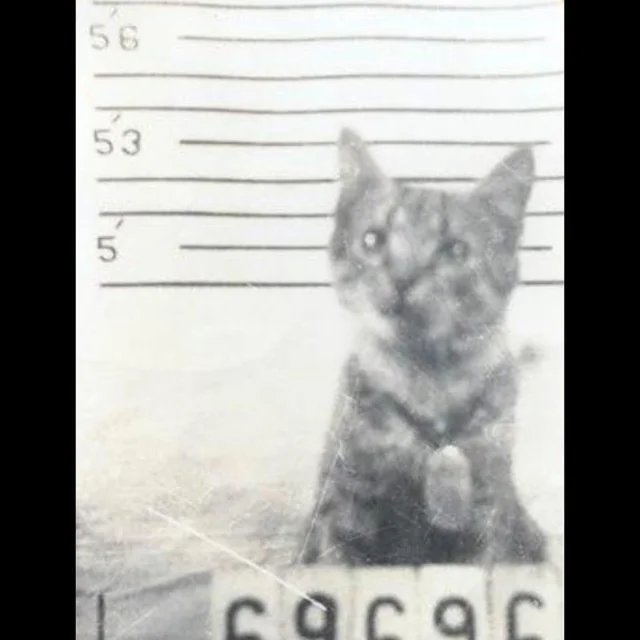
According to sailor Edward F. Cope, he had several pets onboard the USS North Carolina, mostly animals rescued or captured when he was on shore in the Pacific. Since Cope also scooped up more exotic animals like lizards, his coming on board near Australia with a cat must’ve seemed like a pleasant change to his shipmates.
Cope said in a USS North Carolina’s official archive record that he found the cat in the bay at Noumea in New Caledonia. A ship’s photographer named Knight offered to make a liberty card for the new cat, and the crew went a little overboard, fully “enlisting” the cat in the Navy.
They dubbed him “George,” but gave him the Christian name of General Electric on his paperwork. They also marked his religion as “Catholic.” His next of kin was “Any old alley cat” in the hometown of “Hogan’s Alley.”
Luckily, George survived the war, so there was no awkward ceremony where a priest had to decide whether he would provide last rites to a cat. And no one had to deliver a folded flag to random cats in Hogan’s Alley until one took the flag.
Most of George’s paperwork is, obviously, a joke.
A physical description of George the battleship cat
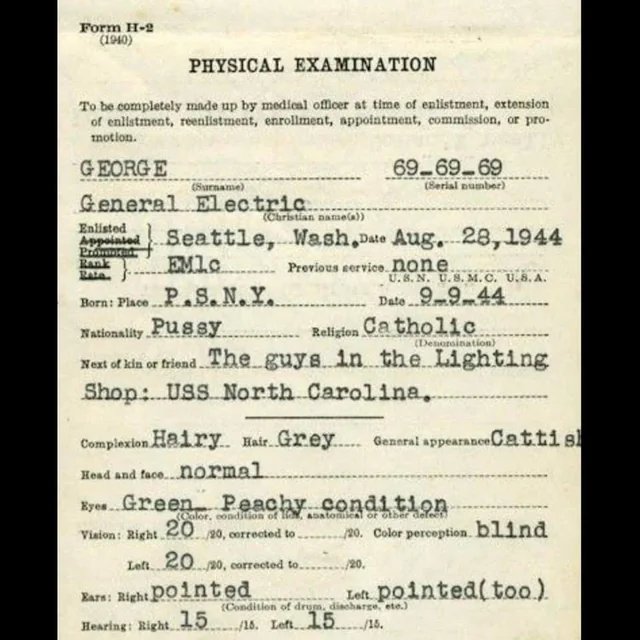
He’s quite small in his enlistment photo, and the men estimated his birth as August 9, 1944. He was quickly found qualified for submarine duty, aviation duty, diving, shore duty, and sea duty.
Dude was a beast, is what we’re saying.
The best part is probably where the men had to describe the cat and its identifying markings. The form has a little silhouetto of a man (Scaramouche, Scaramouche). So the men, naturally, drew cat paws, ears, and a tail over the silhouette and then marked where George’s fur was different colors.
And some of the best descriptions of his body are below:
- Mouth, nose, and throat: You should see them
- Skin and Glands: Can’t see it. You worried?
- Neck: Hollars like Hell!
- Respiratory system: He does alright
- Pulse before exercise: 69, after exercise: 69, after rest: Still 69
- Genito-urinary system: Smells
A couple of notes on those entries. First, “Can’t see it. You worried?” is a hilarious response to being told to describe a kitten’s genitals. Cope worked in the lighting department, and it would have been great to be sitting with the rest of the shop as they teased Cope or whoever was filling out the forms about describing the cat’s genitals.
Same with the genito-urinary system “Smells.” Sure hope no one leaned in to actually check. To be fair, though, a single litter box can give you a good idea of what you would find by sniffing a cat’s genito-urinary system.
Another 69 joke centered on a pussycat
But the best note is probably the heart rate one, because 69 is suspiciously low for a young cat. Cats typically have a resting heart rate averaging 120, with 80 being the lower limit of normal. So there’s a chance that they actually took George’s heart rate once and then repeated the number three times. But it seems more likely that they simply found the number 69 amusing–for some reason or another –and repeated the joke.
This cat was definitely enlisted.
George served aboard the USS North Carolina, a particularly heavy assignment. The North Carolina and the crew earned a record 15 battle stars, and Japan claimed six times to have sunk the USS North Carolina.
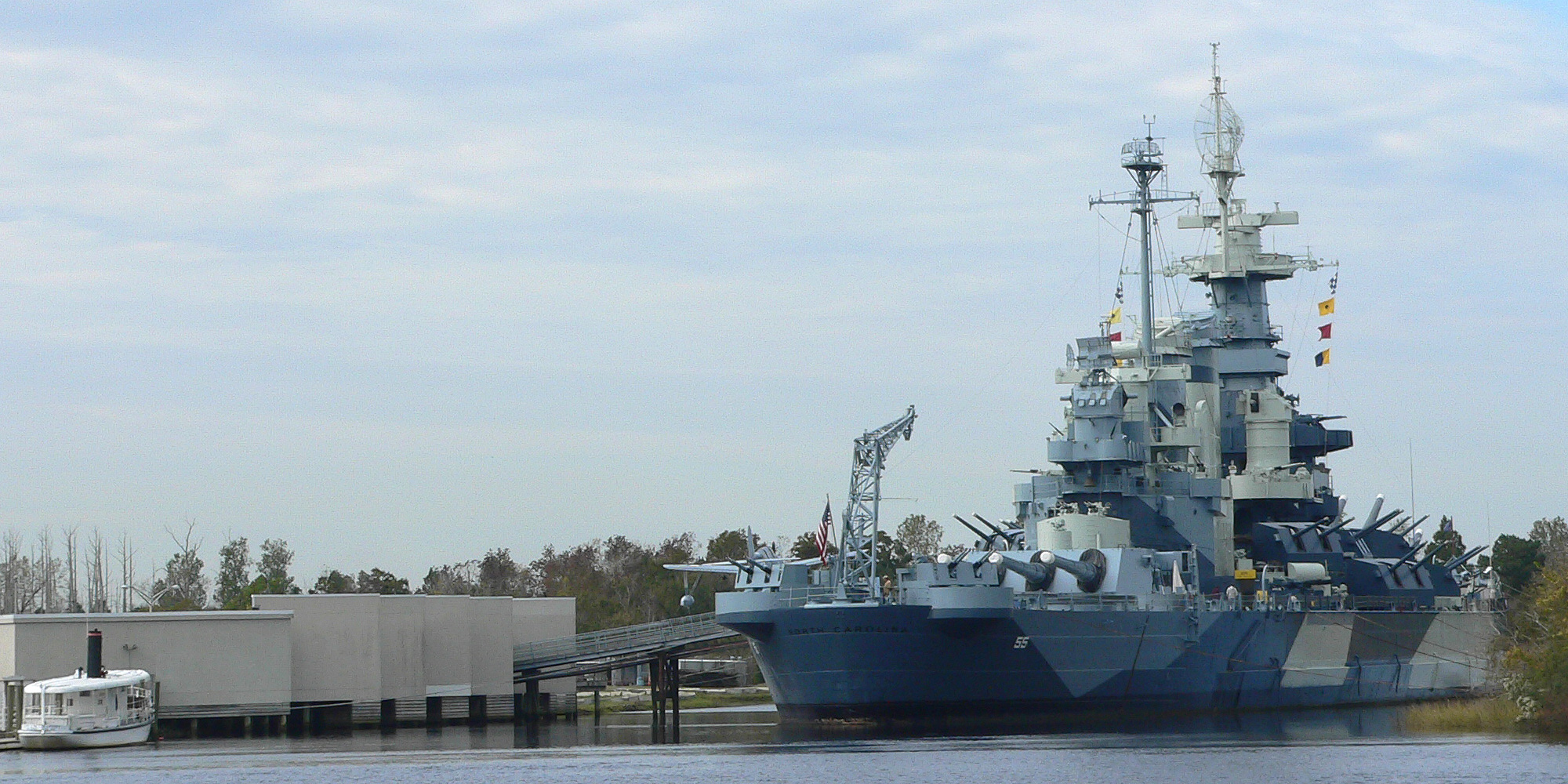
But it appears that George escaped heavy fighting. He arrived on the ship in August 1944 and then escaped to Washington state when the ship reached Seattle, according to Cope.
USS North Carolina’s last visit to that area was for an overhaul in October 1944. So George might have gone over the hill in Seattle just a month or two after his arrival on board, escaping the heavy fighting that USS North Carolina was famous for.