For three decades, the official word on Gulf War Illness (GWI) was a collective shrug from the Department of Defense. When you came home from Kuwait or Iraq in ’91 with a brain that felt like it was wrapped in a wet woobie, a stomach that digested food harder than a Sarlac Pit, and joints that cracked like chemlights every time you climbed out of a chair, the medical records usually just called it “undiagnosed.”
It was an unexpected visitor, a shadow that followed nearly 300,000 service members home from the sand and then sat in their living rooms, asking spouses to make them a sandwich. The hope was that one day science would catch up to the suffering and their house could become a home again.
Related: 21 Facts about the First Gulf War
Usually, when the Pentagon talks about “long-term engagement,” they’re referring to a multi-billion-dollar weapon system that takes fifteen years to build and five minutes to break. But for the veterans of Desert Shield and Desert Storm, the longest engagement wasn’t the hundred-hour ground war; it was the fight to prove that the air they breathed and the pills they were ordered to swallow actually did the damage they claimed.
As of 2026, the rules of engagement for that fight have finally shifted in favor of the veteran, but the victory comes with a catch. We are no longer waiting for a “game-changing” announcement. The future of Gulf War health care arrived this year.
Irony defines the American military experience: we spend billions on the hardware of war, but when it comes to the service members, the very people who operate it, the bureaucracy requires a law degree just to get a fair shake.
Explaining the “Unexplained”
Significant for 2026 isn’t a new VA form or a glossy brochure; it’s a medical code that finally extinguishes the gaslighting. On Oct. 1, 2025, the CDC officially rolled out ICD-10 code T75.830 specifically for Gulf War Illness.
For 30 years, doctors said there was “no such thing” as GWI because they couldn’t find it in their textbooks, often leading to a “psychosomatic” label that felt like a slap in the face to anyone who actually lived through the oil well fires. Now, it has a formal medical disorder status that removes the “it’s all in your head” stigma once and for all.
Now, by using this specific ID, your civilian doc can finally speak the same language as a VA rater, effectively bypassing the “undiagnosed” NFL-ready offensive line that has historically acted as a gatekeeper for thousands of denied claims. It turns your medical file into a record of service-connected reality rather than a list of “not service-connected” complaints.
Beyond the code, the CDC also introduced specific exposure-related markers like Z77.31, which explicitly identify (suspected) exposure to the Gulf War theater. This provides a secondary layer of armor for your medical records, essentially flagging any veteran who crossed into the Southwest Asia theater of operations as someone with a high probability of toxic contact.
In a military where we are trained to identify targets with confident precision, having a specific diagnostic code is the equivalent of moving from iron sights to a thermal optic. It allows clinicians to provide a definitive diagnosis that the VA can no longer brush aside as a vaguely defined symptom.
The DoD Finally Flinches
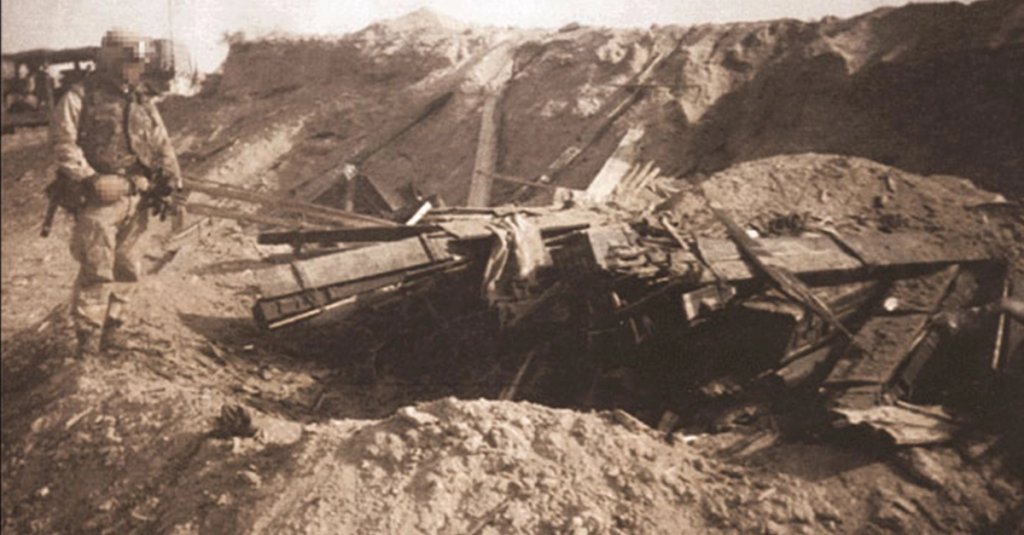
While the medical codes are catching up, the War Department finally flinched on the intelligence side of the house as well. In early 2026, the Department of Defense faced renewed pressure to declassify and release hundreds of thousands of documents related to the 1991 demolition of the Khamisiyah chemical depot.
We have known for decades that over 100,000 troops were likely exposed to low-level sarin and cyclosarin gas when that facility was blown, but the paper trail was always mysteriously missing or buried under a “classified” stamp. The latest push aims to uncover nearly one million unreleased records that veterans and researchers believe contain critical interview transcripts and chemical sampling data from the March 1991 mission.
If you were within the fallout radius of those plumes, specifically near An Nasiriyah or Tal al-Lahm, your nexus for neurological and respiratory issues just got a lot easier to prove. The government has periodically sent out notification letters to service members whose units were participating in the demolition operations, urging them to call the Persian Gulf Incident Hotline.
The ongoing release of these documents is the kind of transparency we usually only see in science fiction. Today, it is becoming a fundamental requirement for evidence-based claims. If you were there when the bunkers went up, these files are the proof that your “invisible wounds” had a very physical, chemical origin.
The PACT Act Overlap
A rise in recognition is only good if the logistics check out, and the current landscape is cluttered with confusion regarding the PACT Act. There is a common misconception in the VFW halls and the Reddit feeds that the PACT Act “replaced” the old Gulf War Syndrome claims. It didn’t, and assuming it did is a mistake that could cost you thousands in back pay.
Think of the PACT Act as a broad-spectrum tool for toxic exposure, handling the respiratory issues from burn pits and the rare cancers that popped up after 9/11, while the GWI remains a specialized tool for those chronic multisymptom illnesses like IBS, fibromyalgia, and chronic fatigue syndrome.
You do not have to choose one or the other. In fact, filing for GWI under the 38 CFR § 3.317 regulations alongside your PACT Act conditions is the only way to ensure the VA captures the full scope of your service.
For example, the PACT Act recently added hypertension as a presumptive condition for certain veterans. The 2026 financial landscape for veterans is a different entity entirely, and if you aren’t maximizing both paths, you’re leaving your own purchasing power on the table.
How to Claim Your Benefits
First, ensure your medical records reflect the chronic nature of your illness. The VA defines a disability as chronic if it has existed for six months or more. This doesn’t mean you need six months of appointments, but it does mean the “start date” of your symptoms must be documented.
Gather your lay evidence, the “buddy letters” from the guys who remember you vomiting in the back of a Bradley or the spouse who remembers when you stopped being able to sleep through the night. These letters bridge the gap when your 1991 medical records look like they were written in disappearing ink.
Second, be wary of claim sharks. These are predatory organizations that charge fees to assist with filing VA disability claims, which is a violation of the law. You should only work with VA-accredited claims agents or Veterans Service Organization (VSO) representatives who are officially recognized by the VA to assist you for free. In the era of the hyper-vigilant warfighter, managing your own medical logistics is the most important job you have left.
Ultimately, the goal of this 2026 reckoning isn’t just about a disability percentage or a monthly payment that helps offset the price of eggs. It’s about the recognition. This is about the United States government finally looking a generation of people in the eye and admitting that the unforgiving battlefield followed them home in their bone marrow.
We spend billions building stealth drones and nuclear batteries designed to fit in shipping containers, but the most advanced piece of tech in the entire inventory remains the human being who signed the contract. If that person is broken, they are owed repair, not a pat on the rear and being told to suck it up.
Check your records, you had a blank space, baby, now write in the new CDC codes, then take back the narrative of your service.